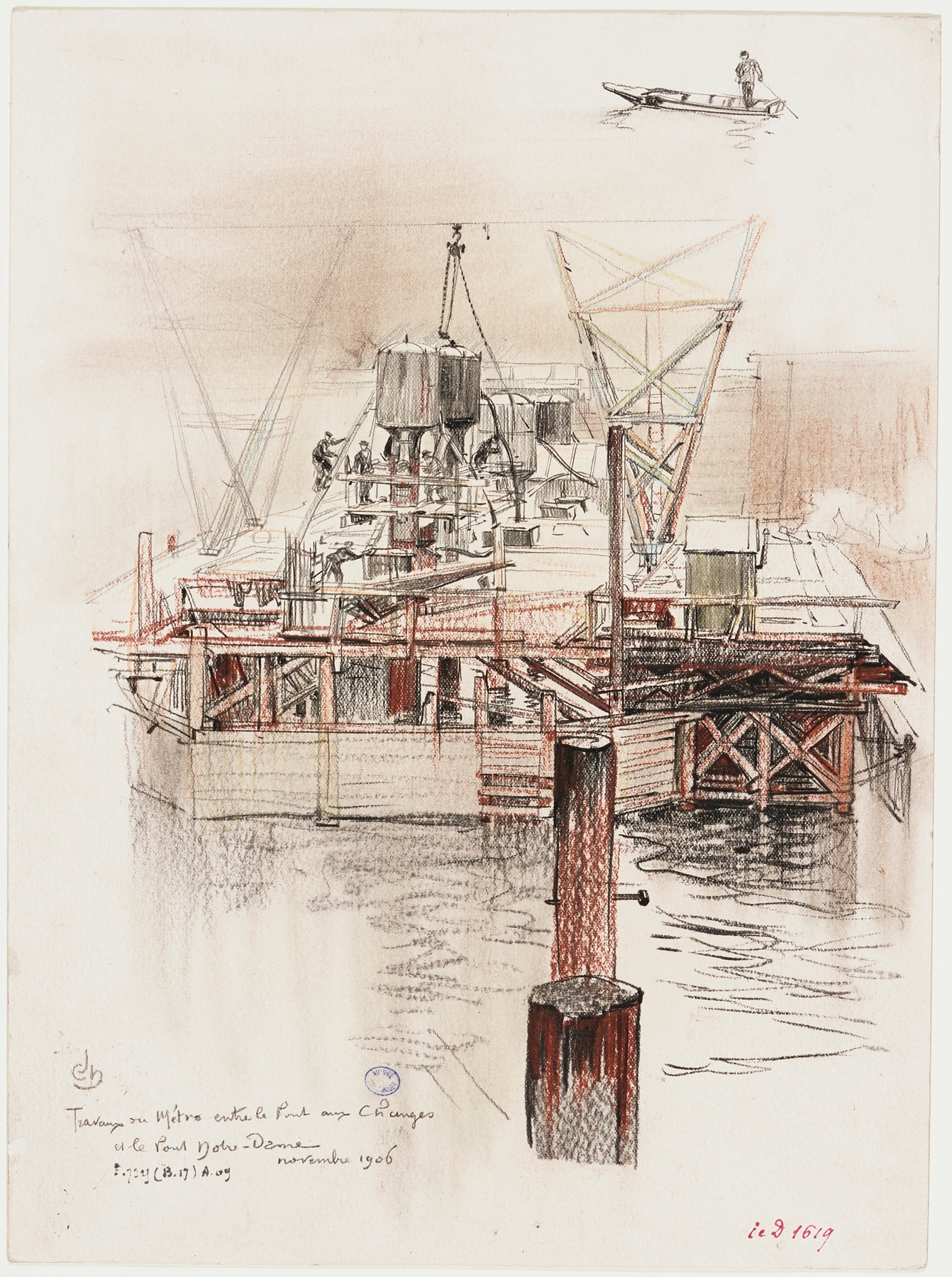
Travaux du métro entre le pont au Change et le pont Notre Dame — History & Analysis
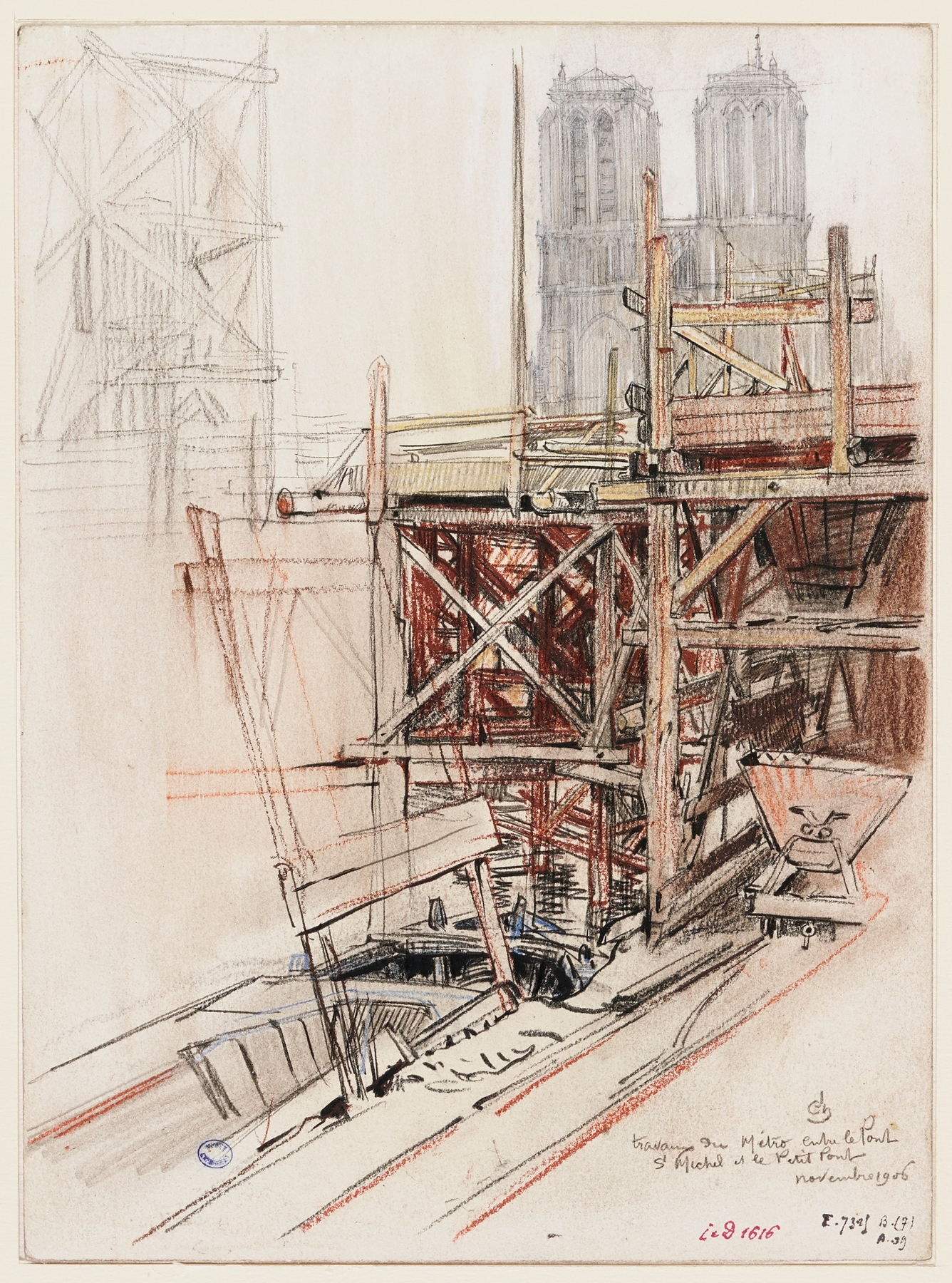
“Art reveals the soul when the world turns away.” In the shadows of human endeavor lies the often-overlooked beauty of decay, a reminder that transformation is the only constant. Focus on the foreground, where weary laborers toil, their silhouettes stark against the crumbling backdrop of Parisian architecture. Notice the muted palette of browns and grays, the colors of a city both vibrant and weary. The interplay of light and shadow creates a sense of depth, illuminating the workers' strained expressions and the dust swirling around them, capturing the grit of their daily grind.
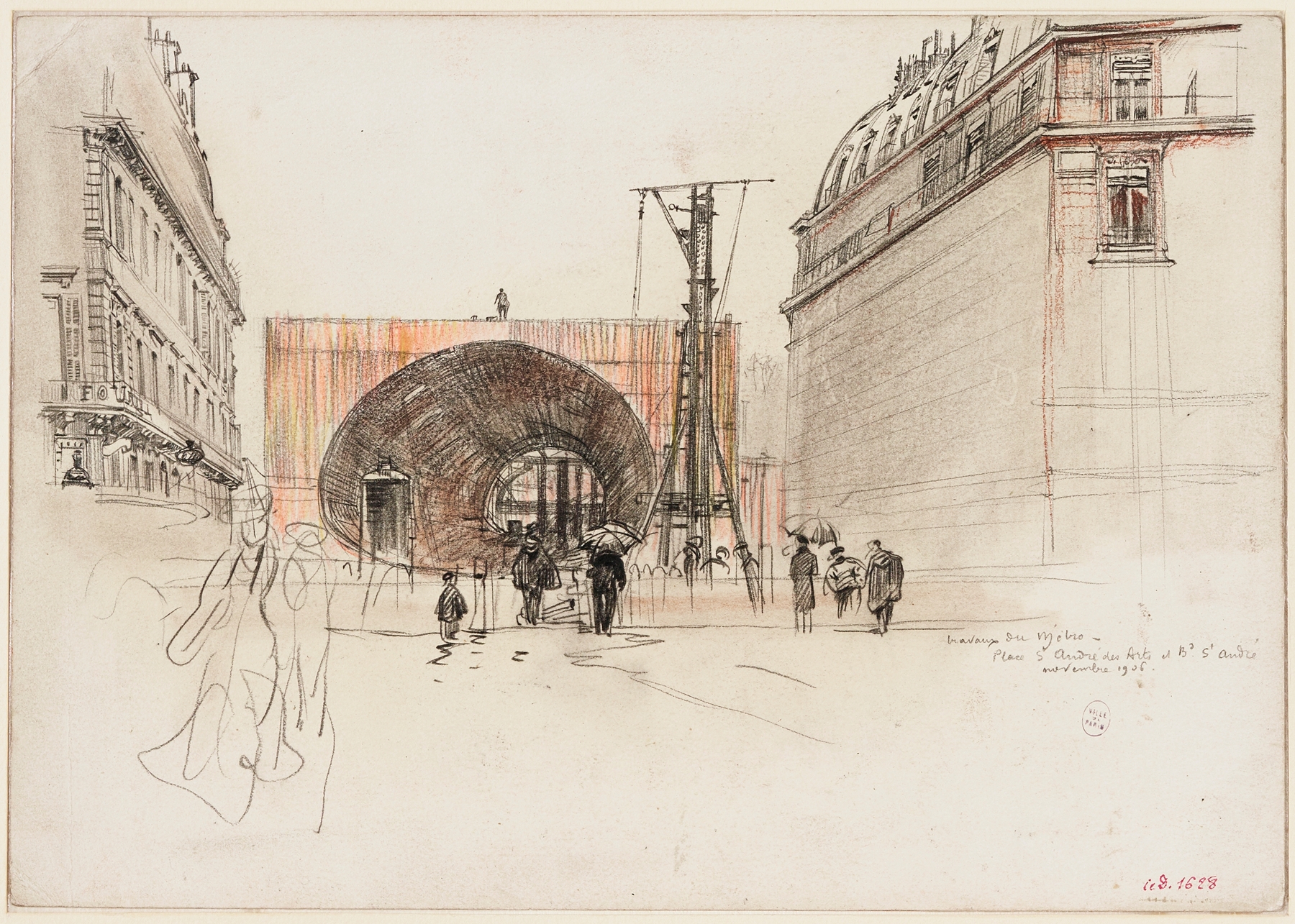
The juxtaposition of the grand, historic bridges with the raw, unfinished underground evokes a poignant tension. Here, the weight of history meets the harsh reality of progress, as the ancient beauty of the city is momentarily marred by the intrusion of construction. The viewer is invited to reflect on the transient nature of urban life and the sacrifices made in the name of progress — a reminder that what is built may someday decay, just as what was once solid can crumble.
In 1906, the artist found himself in a rapidly changing Paris, a city on the cusp of modernization. While others painted the glamour of high society, he turned his gaze towards the underbelly of urban life, capturing the spirit of an era defined by change. This work emerged from a time when the city was bustling with development, mirroring the tensions and triumphs of a civilization in flux.