Fording a River, Algiers — History & Analysis
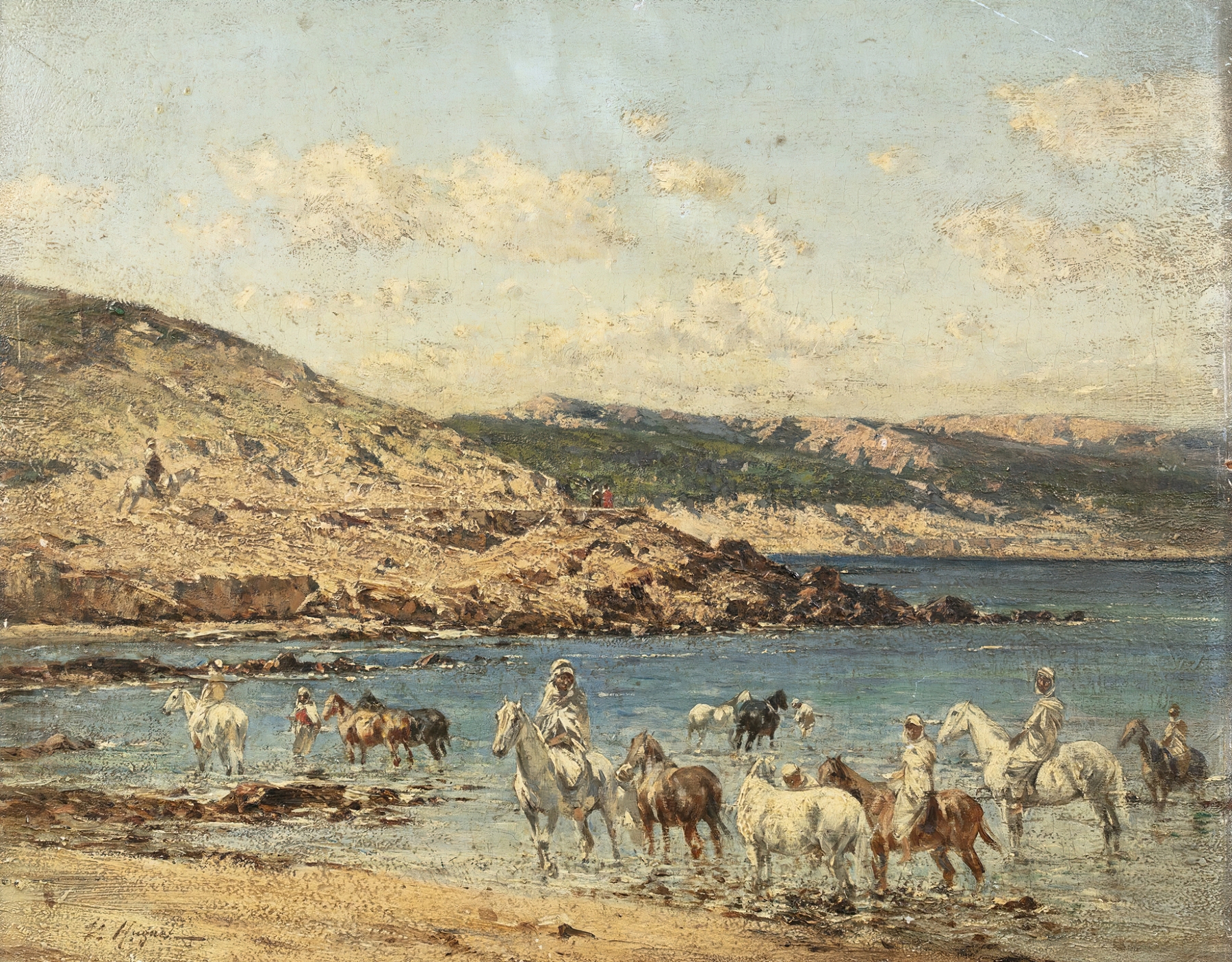
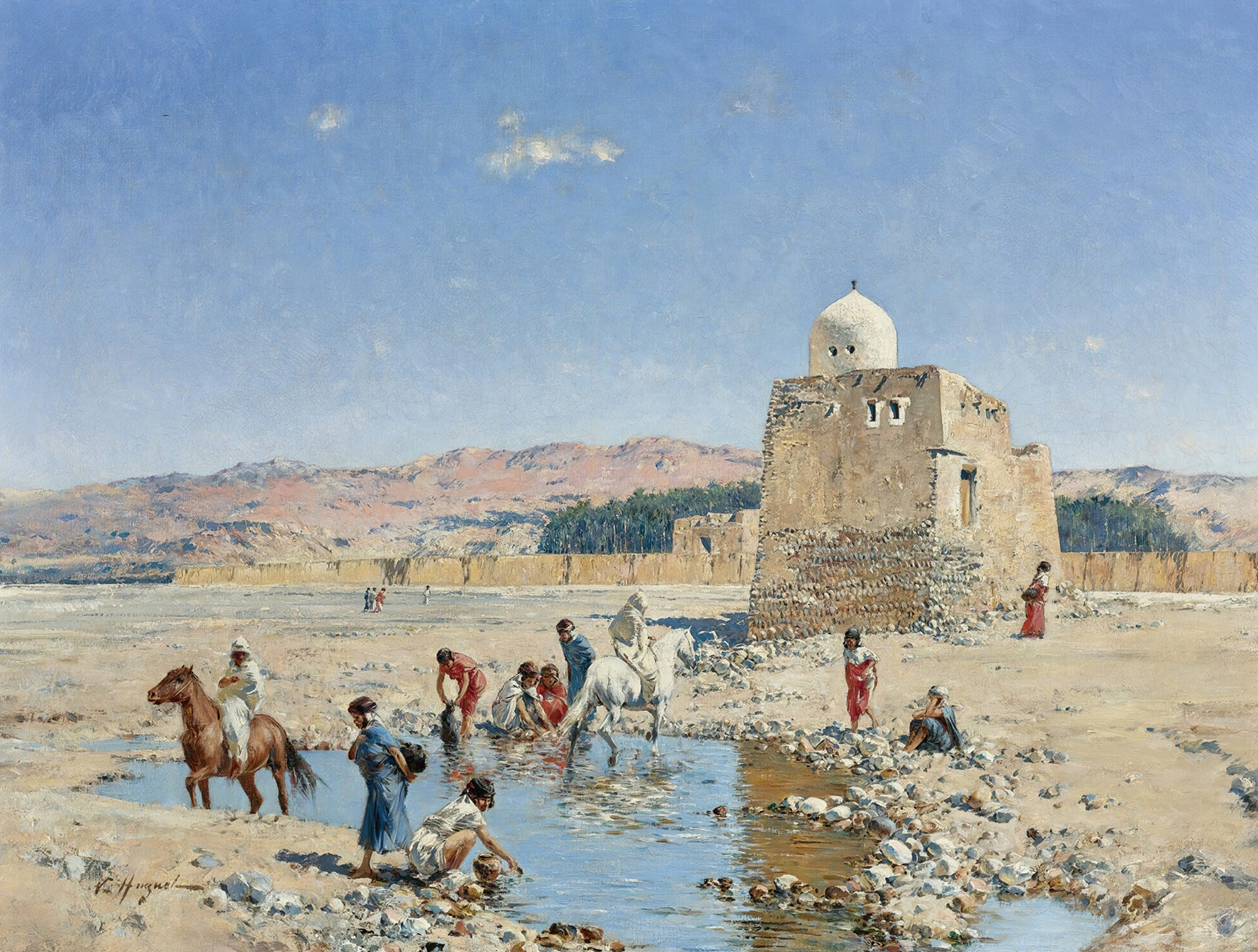
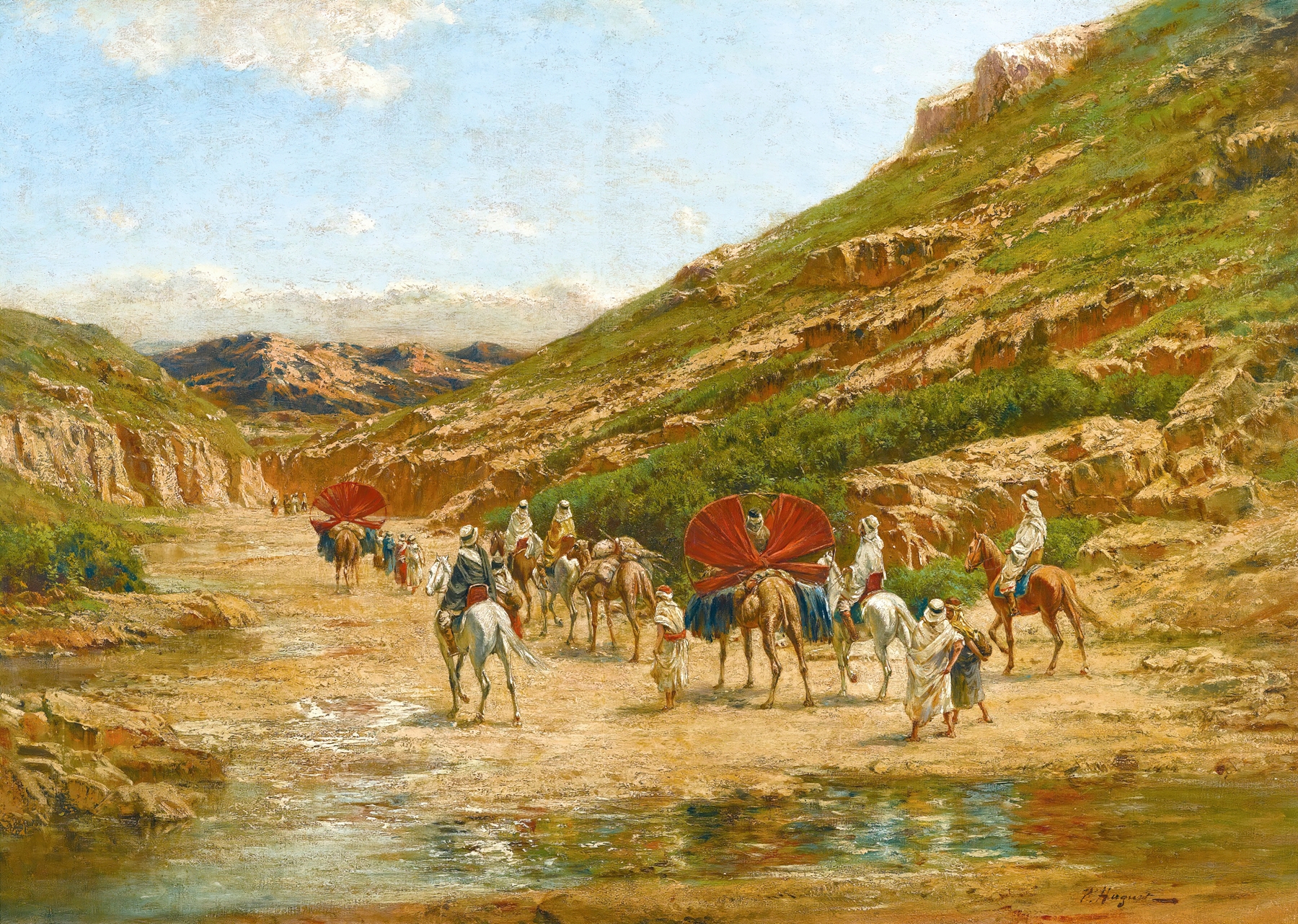
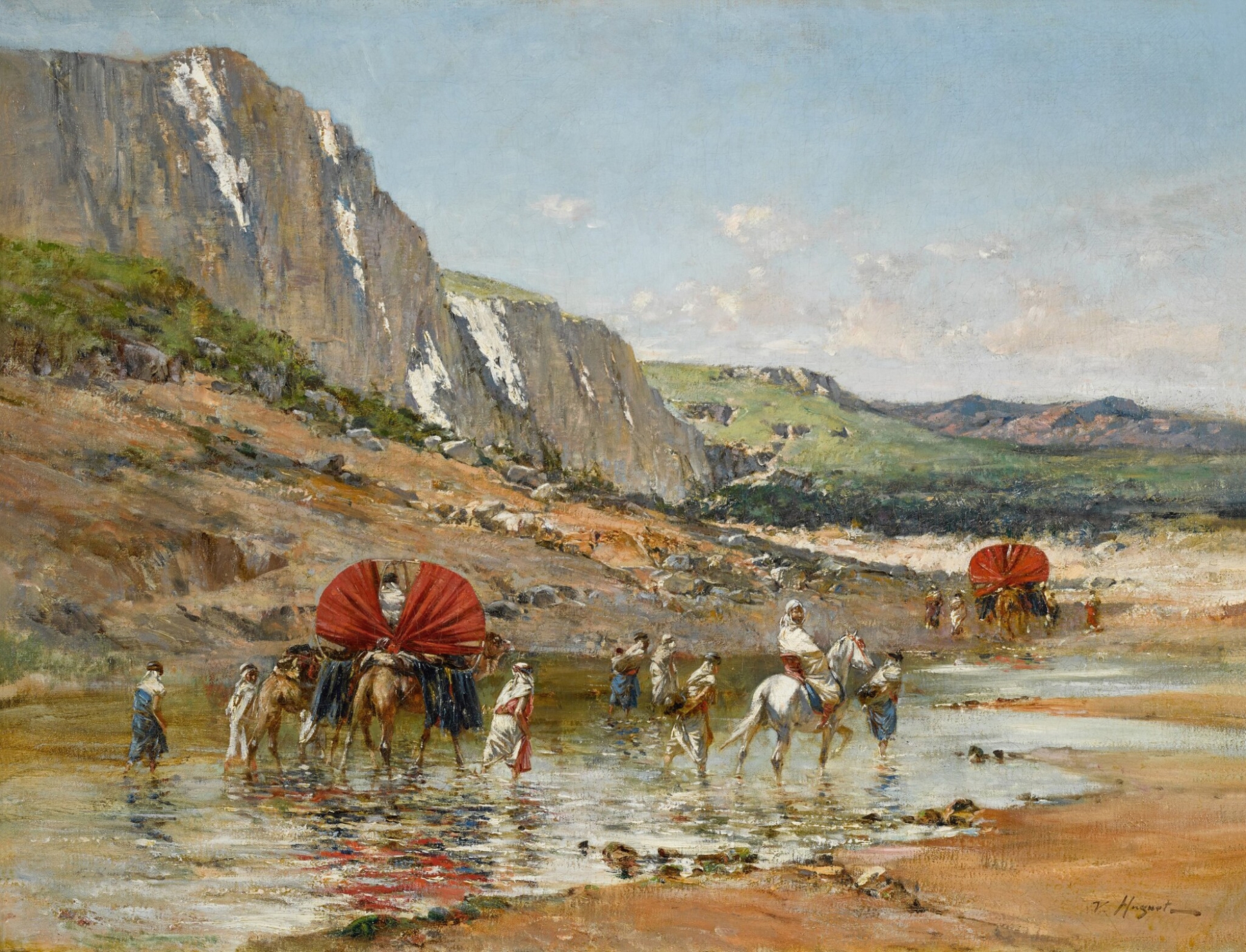
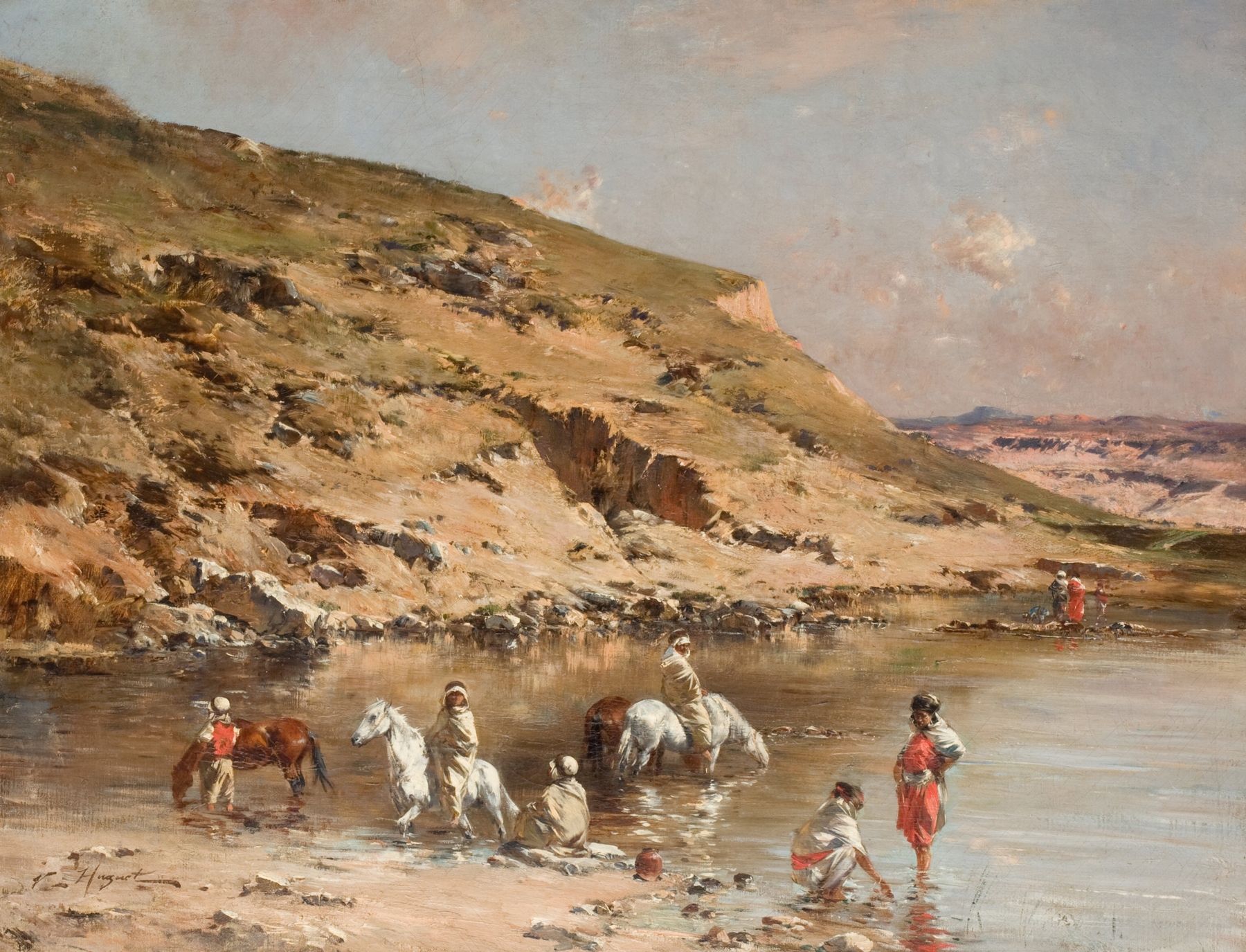
“Sometimes beauty is just pain, disguised in gold.” In Fording a River, Algiers, the shimmering waters reflect both the brilliance of sunlight and the hidden struggles of those who traverse their depths. Obsession permeates this scene, manifested in every stroke and hue, revealing the duality of nature's allure and its inherent peril. Look to the left at the figures battling the current, their postures embodying a fragile balance between determination and surrender. Notice how Huguet deftly employs splashes of turquoise and amber to capture the river’s fluidity, while the surrounding landscape swathes them in earthy browns and greens, creating a palpable tension.
The contrast between the flowing water and the steadfast terrain underscores the struggle of man against the elements, inviting contemplation on vulnerability and resilience. Delve deeper into the details — the strain etched on the figures’ faces hints at their inner turmoil, perhaps an obsession with conquering adversity or a desperate need to forge ahead. Each splash of water becomes a metaphor for the challenges of life, while the shimmering highlights suggest fleeting moments of beauty amidst struggle. This interplay between light and dark evokes both hope and despair, making the viewer question the cost of ambition.
Victor Huguet painted this work during a time when the art world was undergoing significant changes, influenced by the rise of impressionism and the exploration of new subjects and techniques. Working in the late 19th century, Huguet was captivated by the landscapes and cultures he encountered during his travels, particularly in North Africa. This painting reflects not only his personal journey but also a broader narrative of artists grappling with the complexities of life and nature in a rapidly changing world.