Caravane Dans Le Desert — History & Analysis
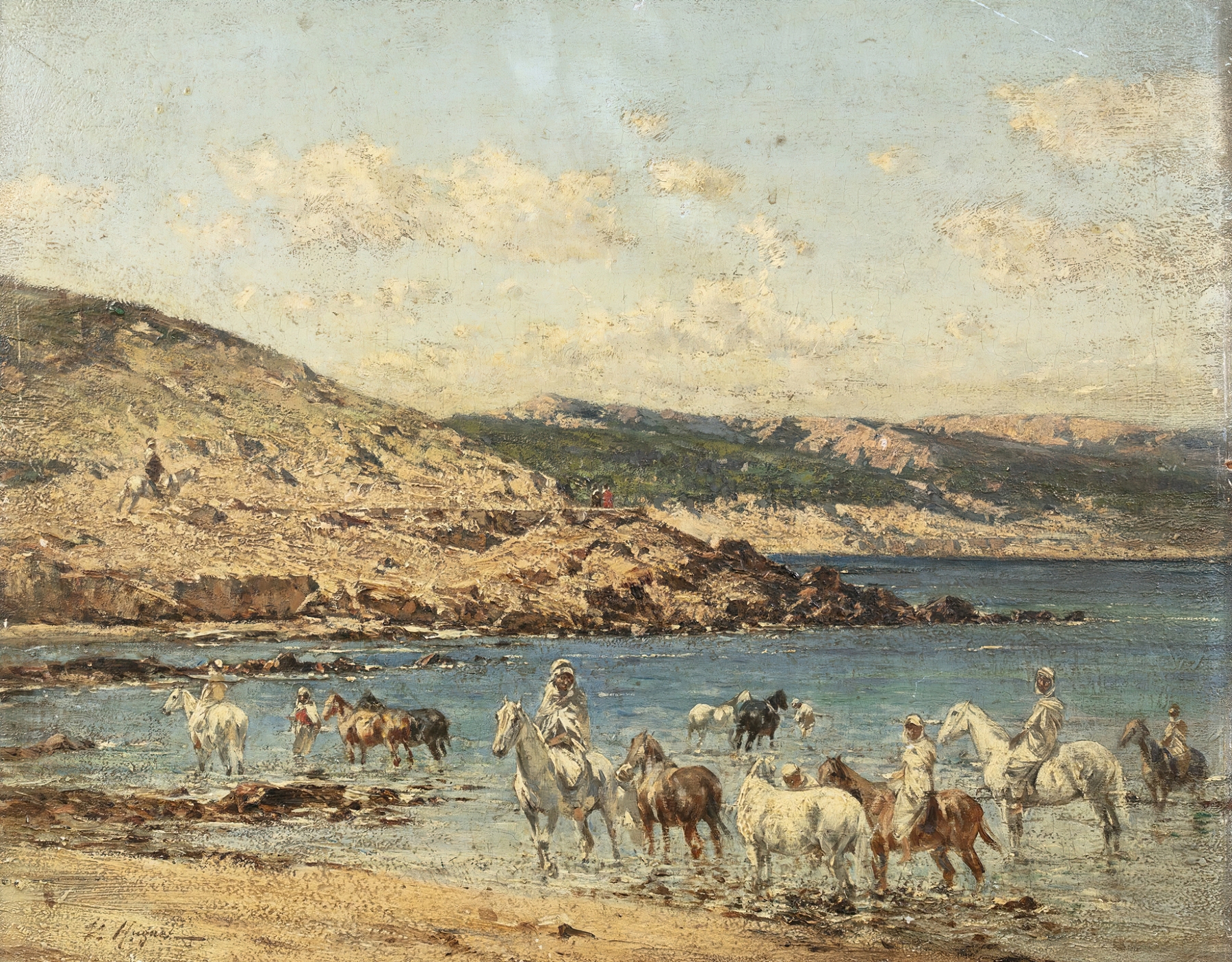
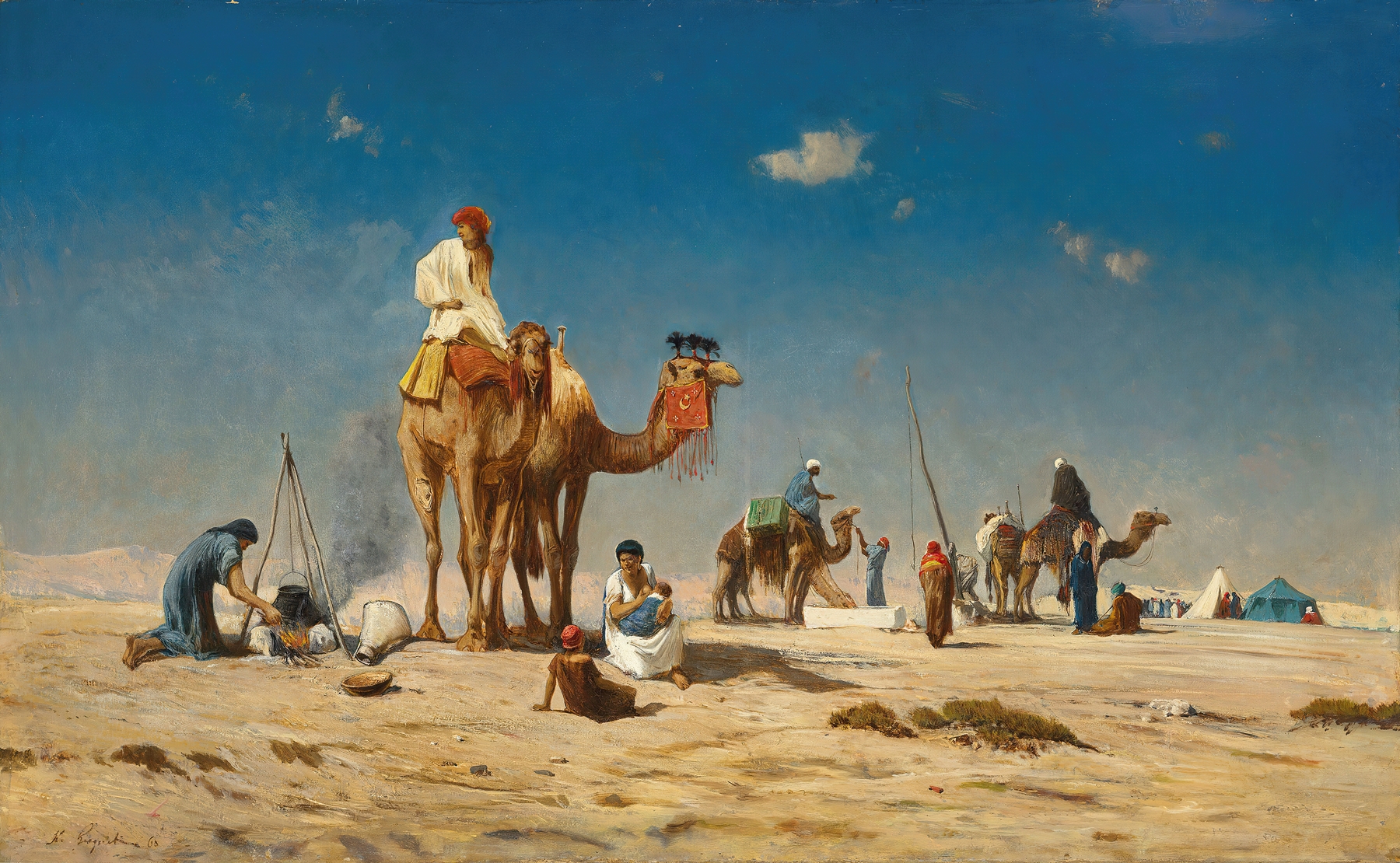
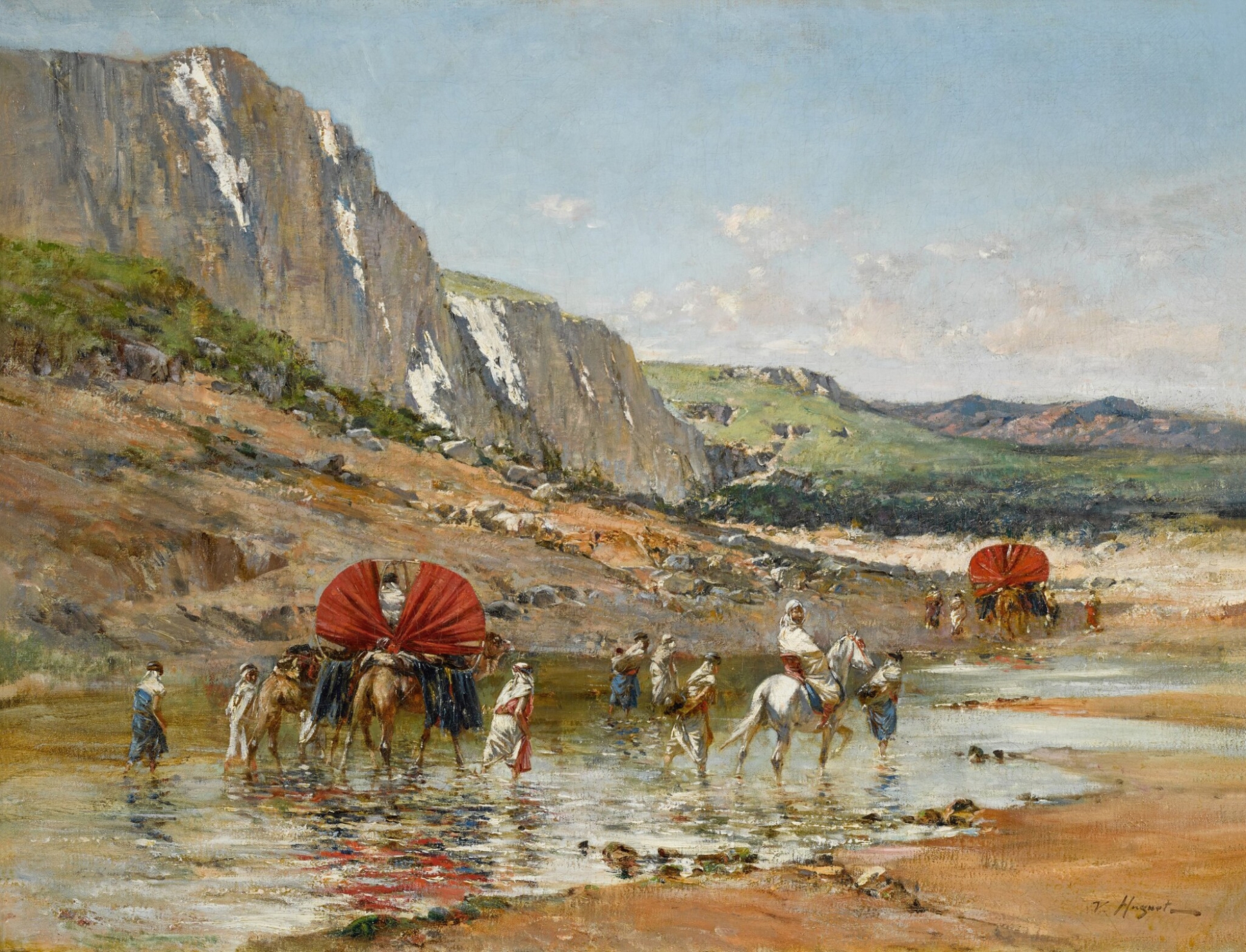
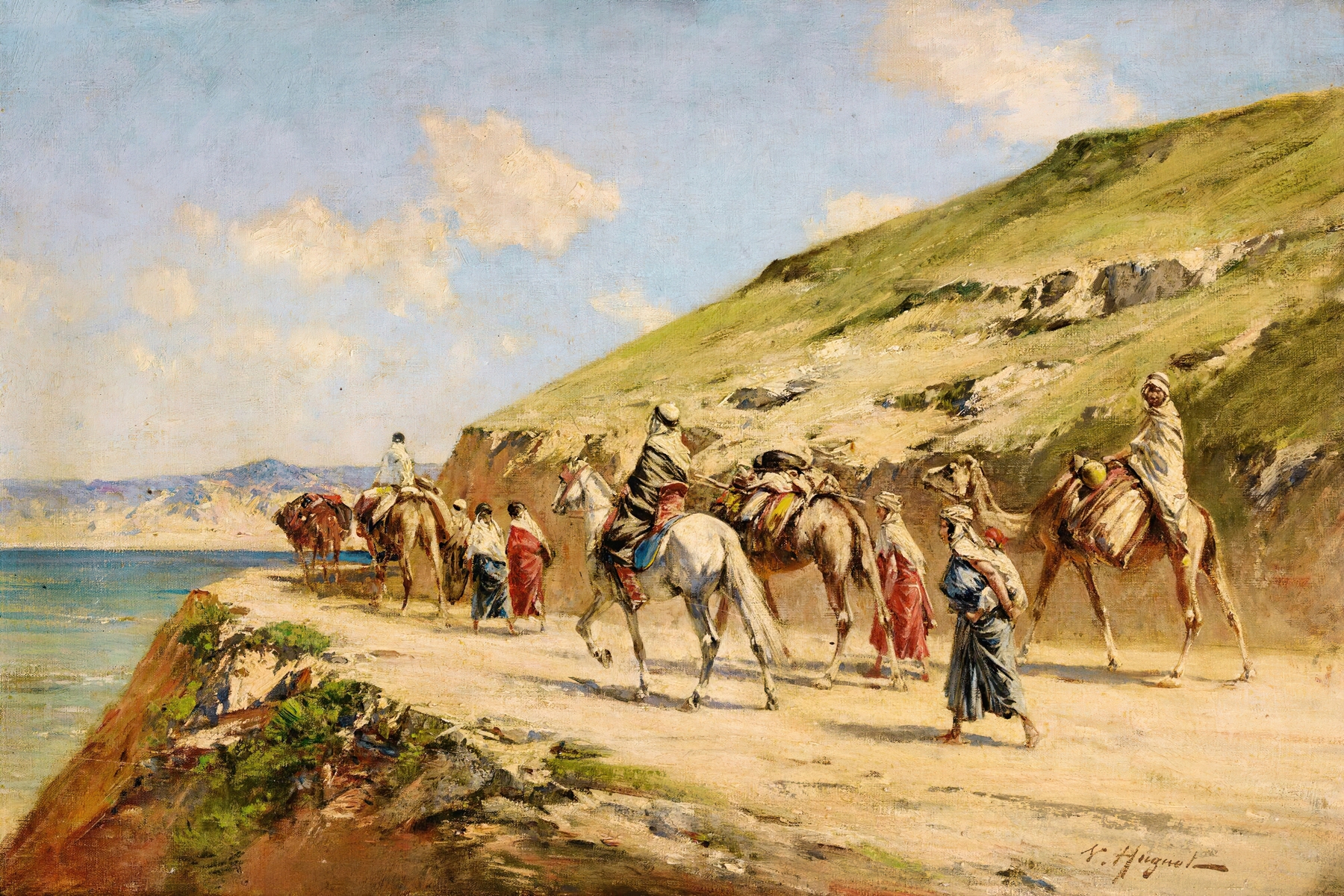
What if silence could speak through light? In the stillness of a vast desert, the whisper of wind carries tales untold, inviting us to ponder the profound depths of solitude. Look to the left, where a caravan of weary travelers moves in rhythmic unison, their silhouettes softened against the expansive horizon. The warm ochres and golden hues of the sand blend seamlessly with the vibrant textiles draped over the camels, hinting at the richness of their journey.
Notice how the late afternoon sun bathes the scene, casting long shadows that stretch across the dunes, creating an interplay of light and dark that evokes a sense of timelessness. Yet beneath the surface lies a tension between movement and stillness. The travelers, though in motion, seem encased in their own thoughts, each figure representing the solitude that accompanies the journey. The vast emptiness surrounding them is mirrored in their expressions, suggesting a reverie brought on by the silence of the desert.
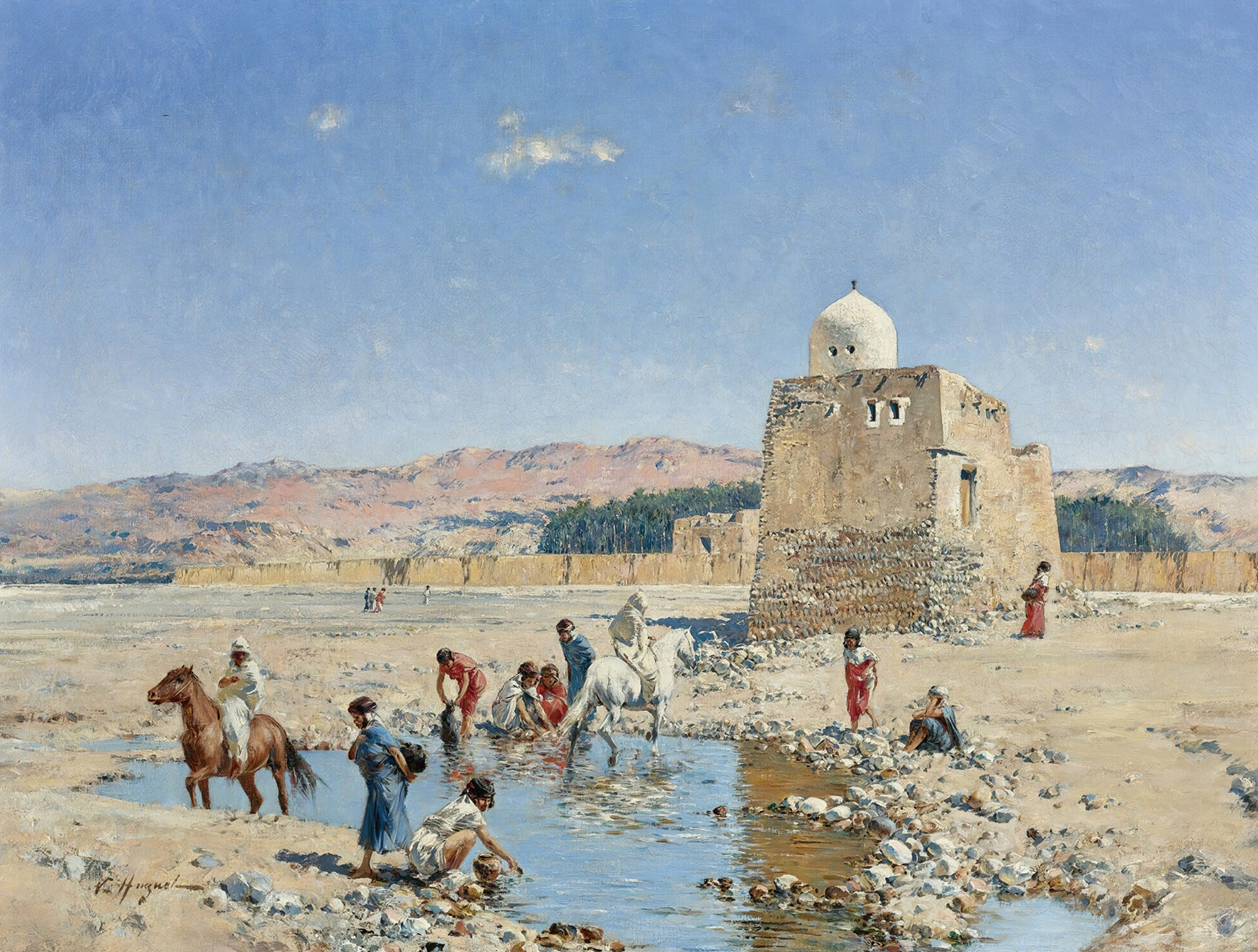
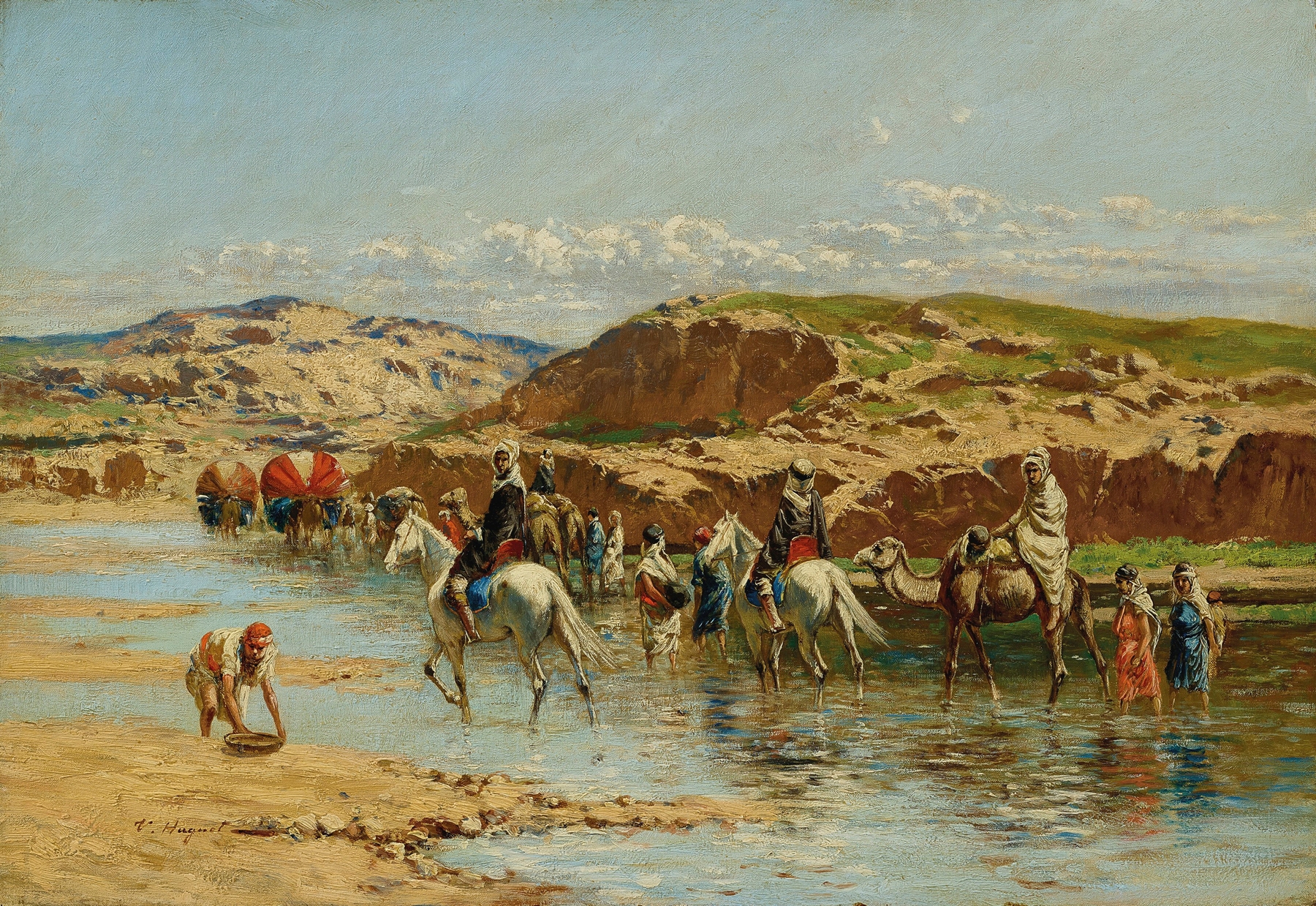
This contrast between the vibrant colors of their garb and the muted tones of the landscape encapsulates the internal struggle of those who traverse both physical and emotional landscapes. Victor Huguet painted this evocative scene during the late 19th century, at a time when he was deeply influenced by his travels to North Africa. The period was marked by a growing fascination with Orientalism in art, where Western artists sought to depict the exotic allure of Eastern cultures. Huguet’s work reflects not only the enchanting aesthetics of the region but also an introspective journey that transcends the canvas, encapsulating the universal experience of longing and silence.