Ravine Near Biskra — History & Analysis
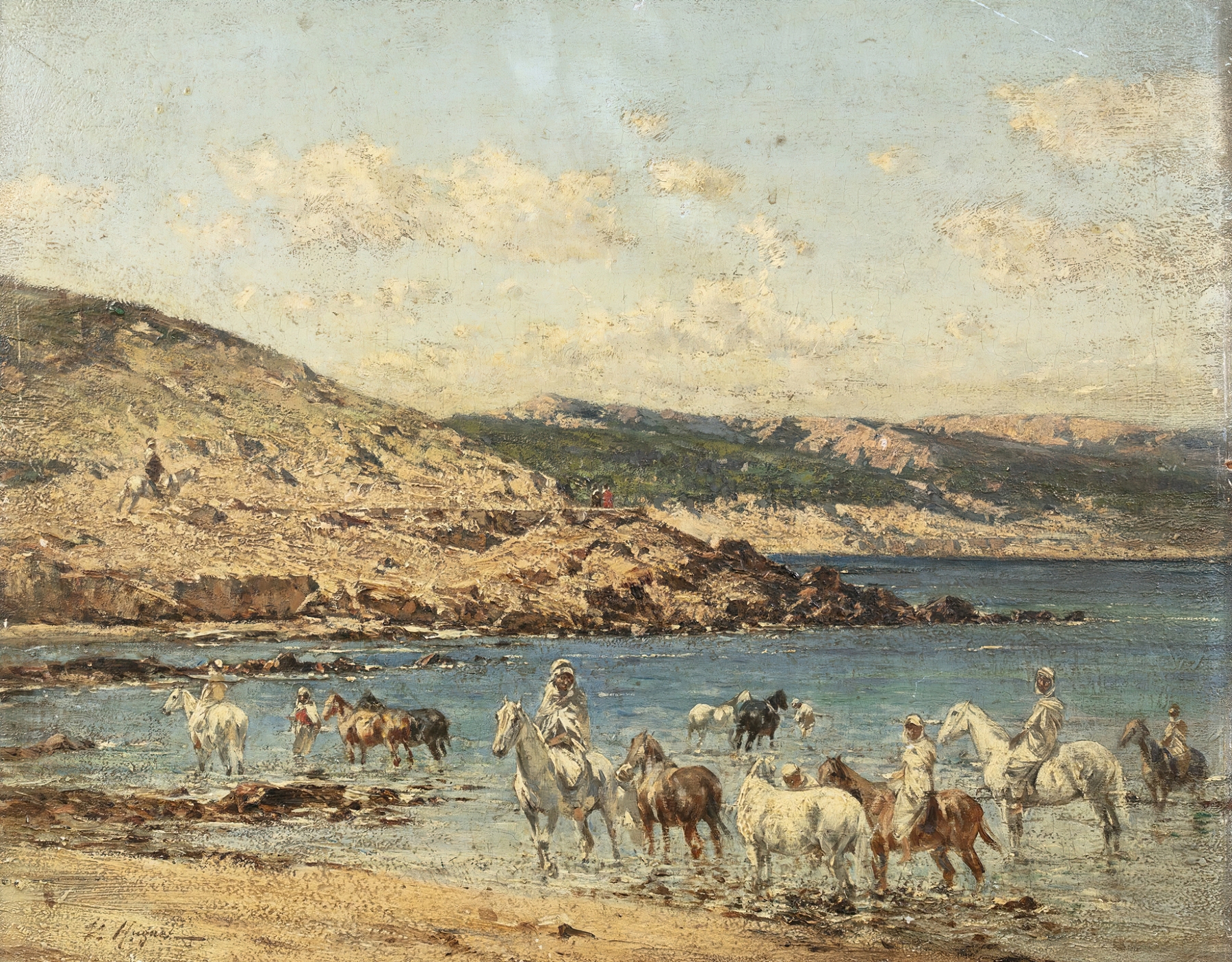
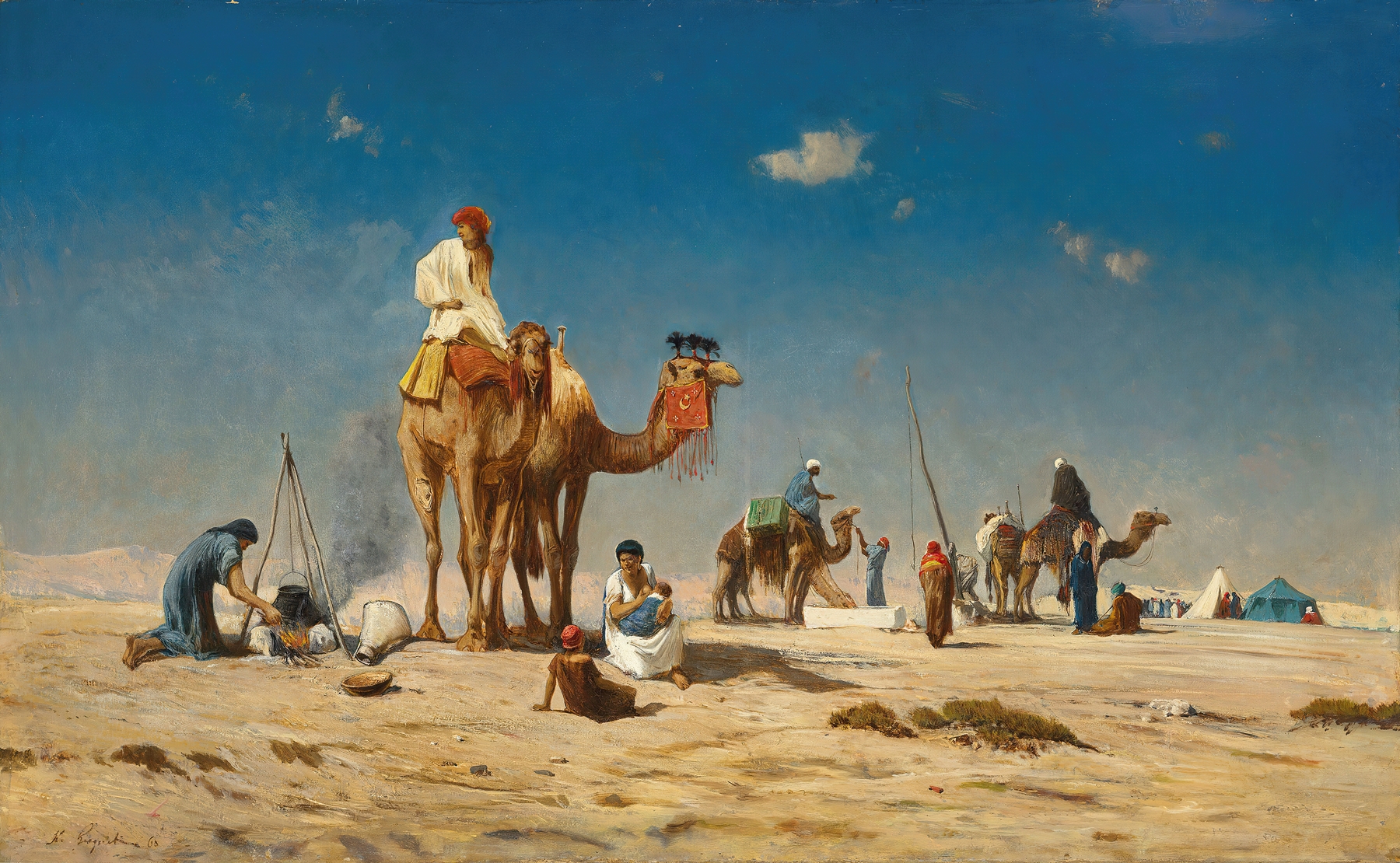
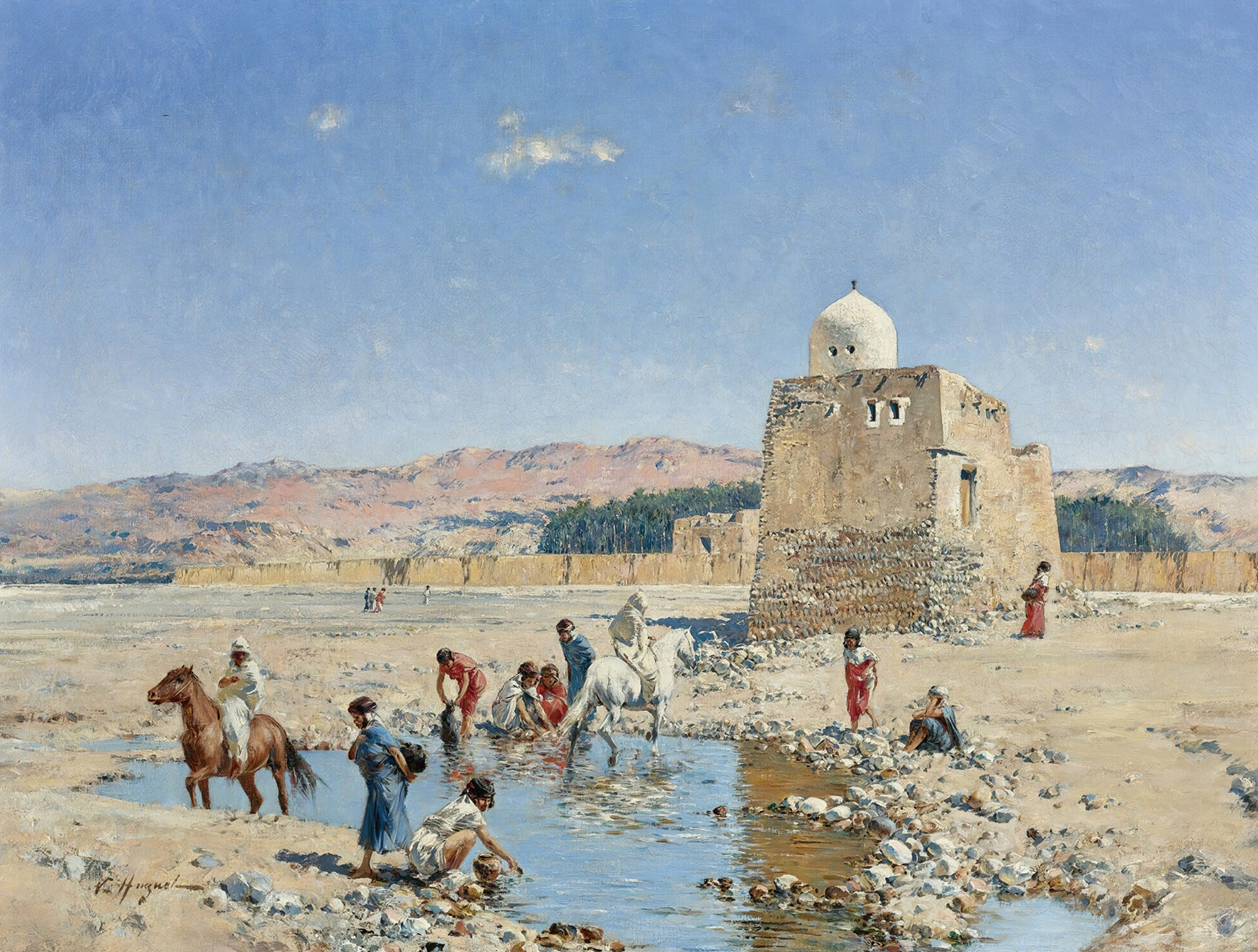
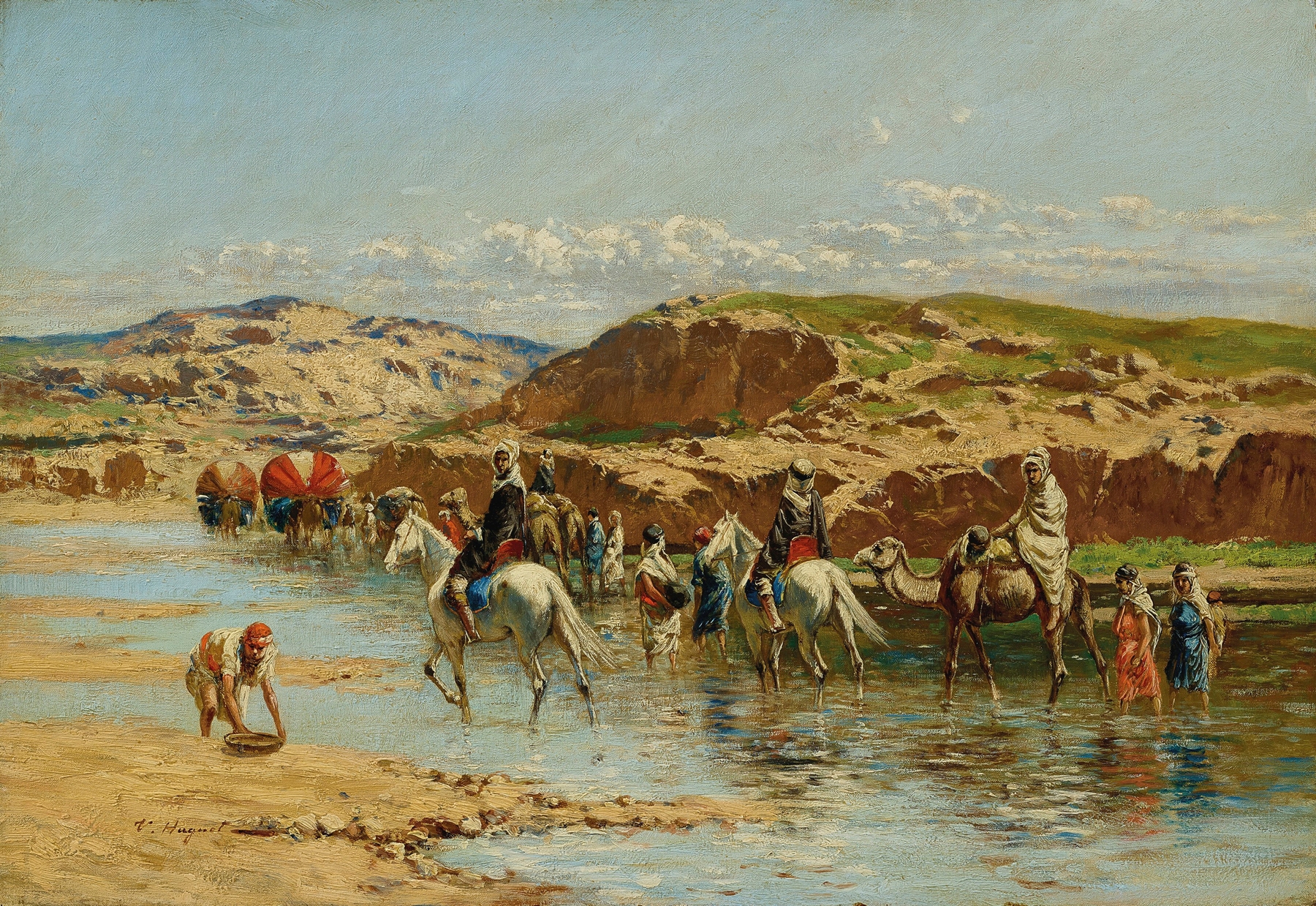
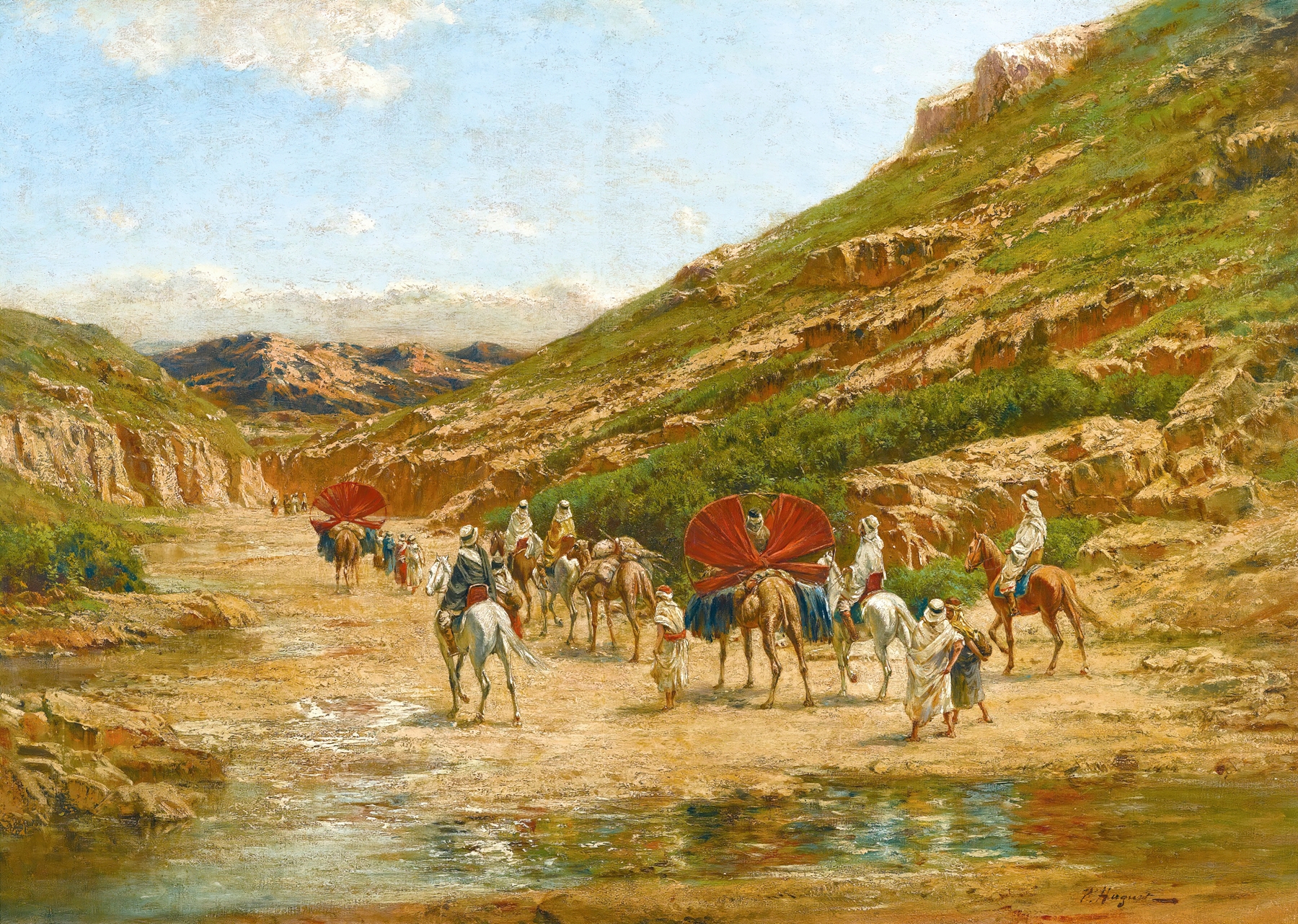
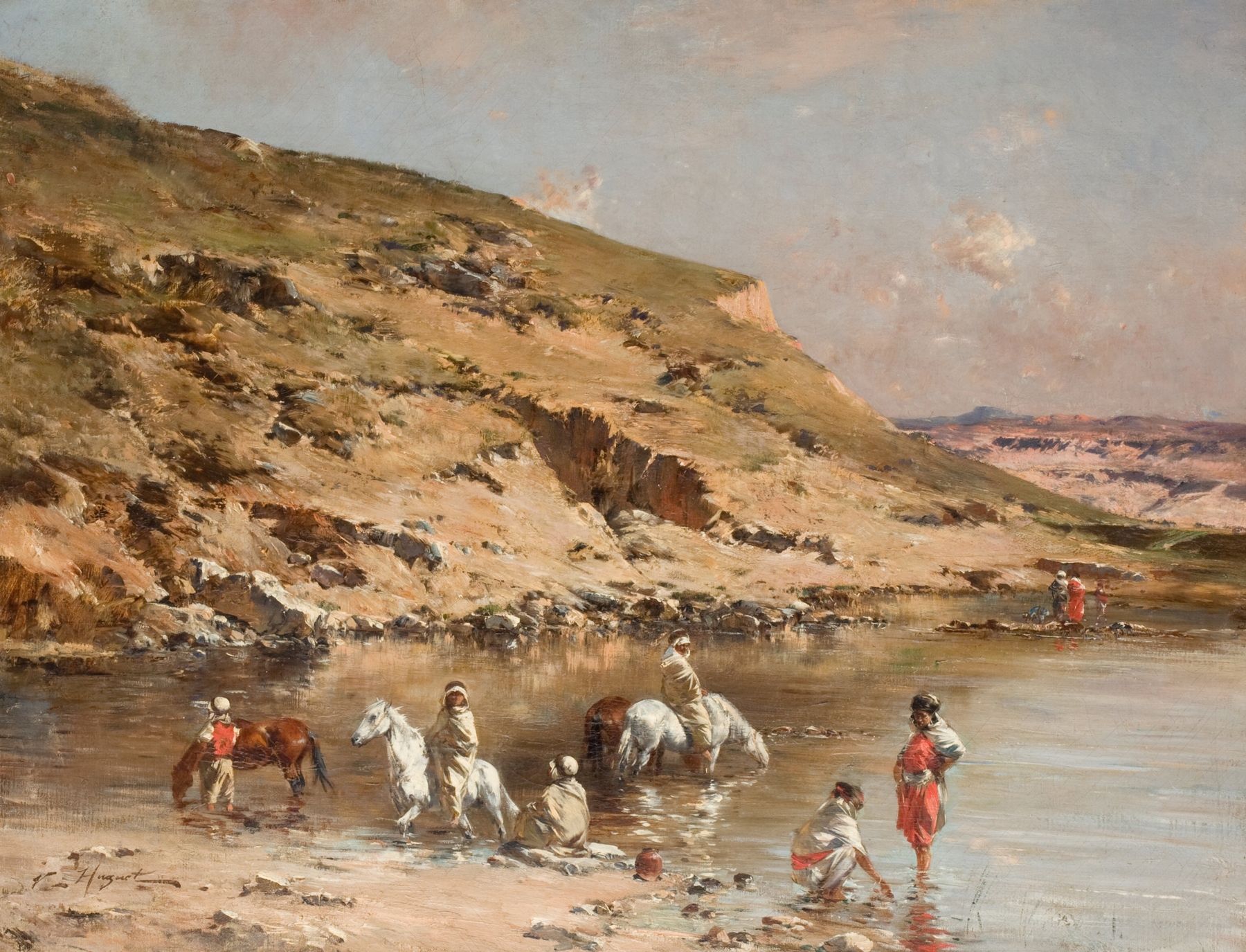
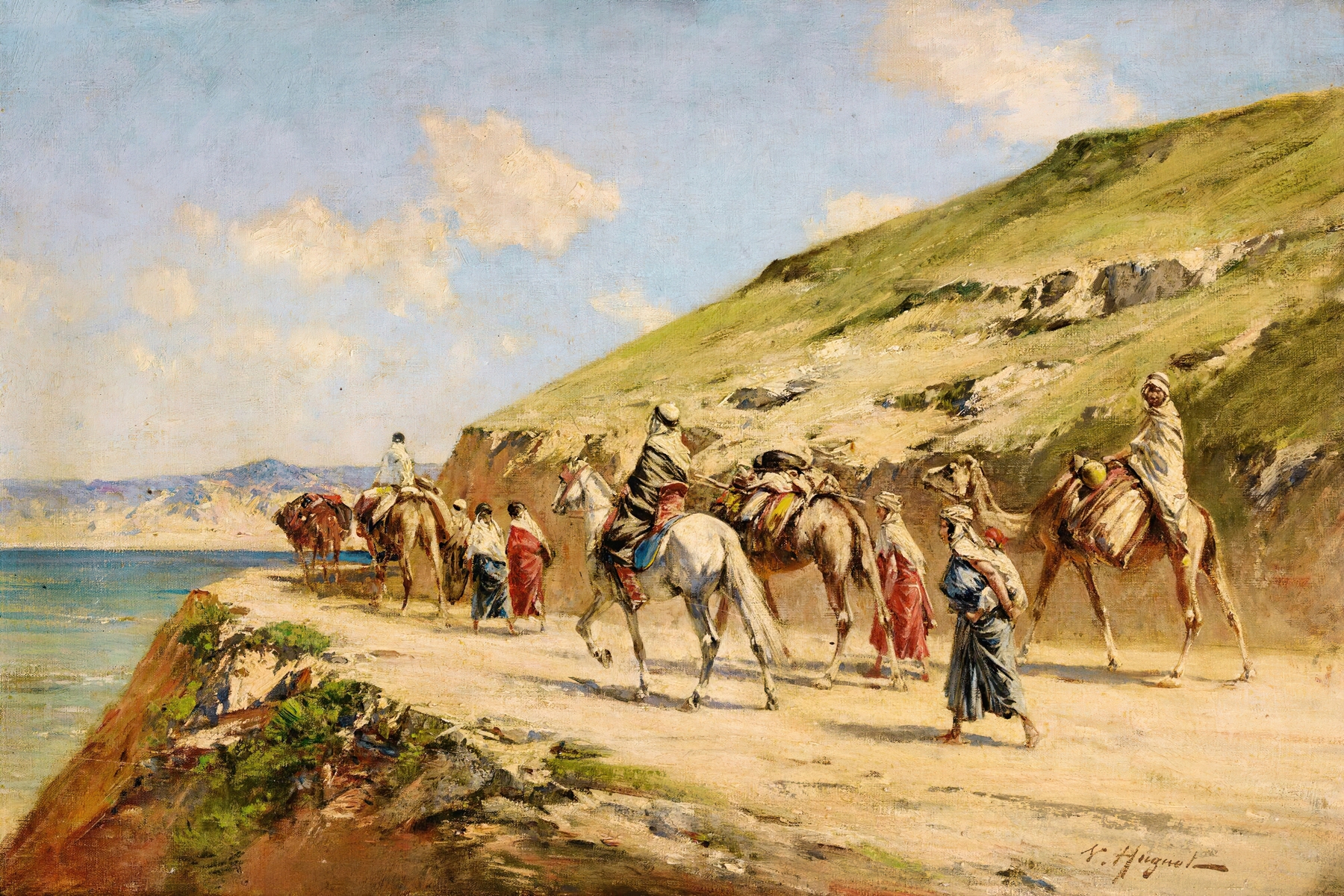
“Art reveals the soul when the world turns away.” In the hush of a painted landscape, illusion dances with reality, inviting us to witness the serenity that lies within nature's embrace. To begin your exploration, look closely at the sweeping contours of the ravine that dominate the canvas. The warm, sun-kissed earth tones meld seamlessly with vibrant greens and soft blues, drawing your eye toward the gentle meandering path that leads through the landscape. Notice how the light cascades down the rocky edges, illuminating the intricate textures of the cliffs while casting delicate shadows that hint at the mysteries hidden within.
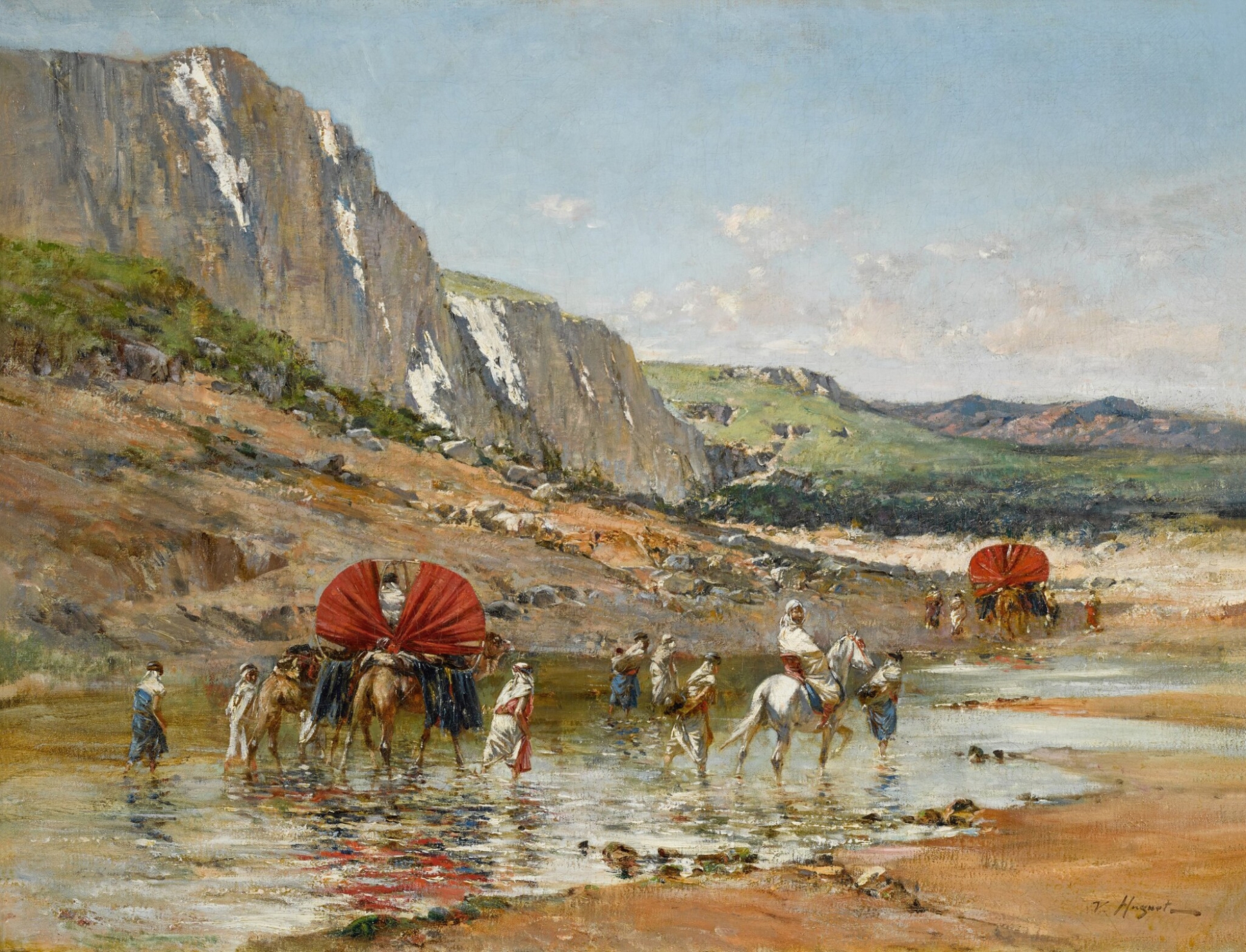
Huguet’s deft brushwork creates an almost tactile quality, inviting you to run your fingers along the contours of the land. Within this tranquil scene, contrasts emerge—between light and shadow, stillness and the whisper of wind. The juxtaposition of the bold rock formations against the gentle flow of vegetation speaks to the balance of strength and fragility in nature. Each stroke reveals an emotional tension, suggesting a deeper narrative of solitude and reflection, as if the ravine is a sanctuary for those seeking refuge from the world.
The illusion of distance prompts contemplation, allowing viewers to ponder their own place within this expansive landscape. Victor Huguet painted Ravine Near Biskra in 1890, during a period when he was deeply inspired by the landscapes of North Africa. Living in Paris at the time, he was influenced by the emerging Impressionist movement, yet he retained a distinctive approach that blended realism with a poetic sensitivity to light and color. This work reflects both his personal artistic journey and the broader exploration of exotic locales that captivated many artists of his era.