Travellers in the desert — History & Analysis
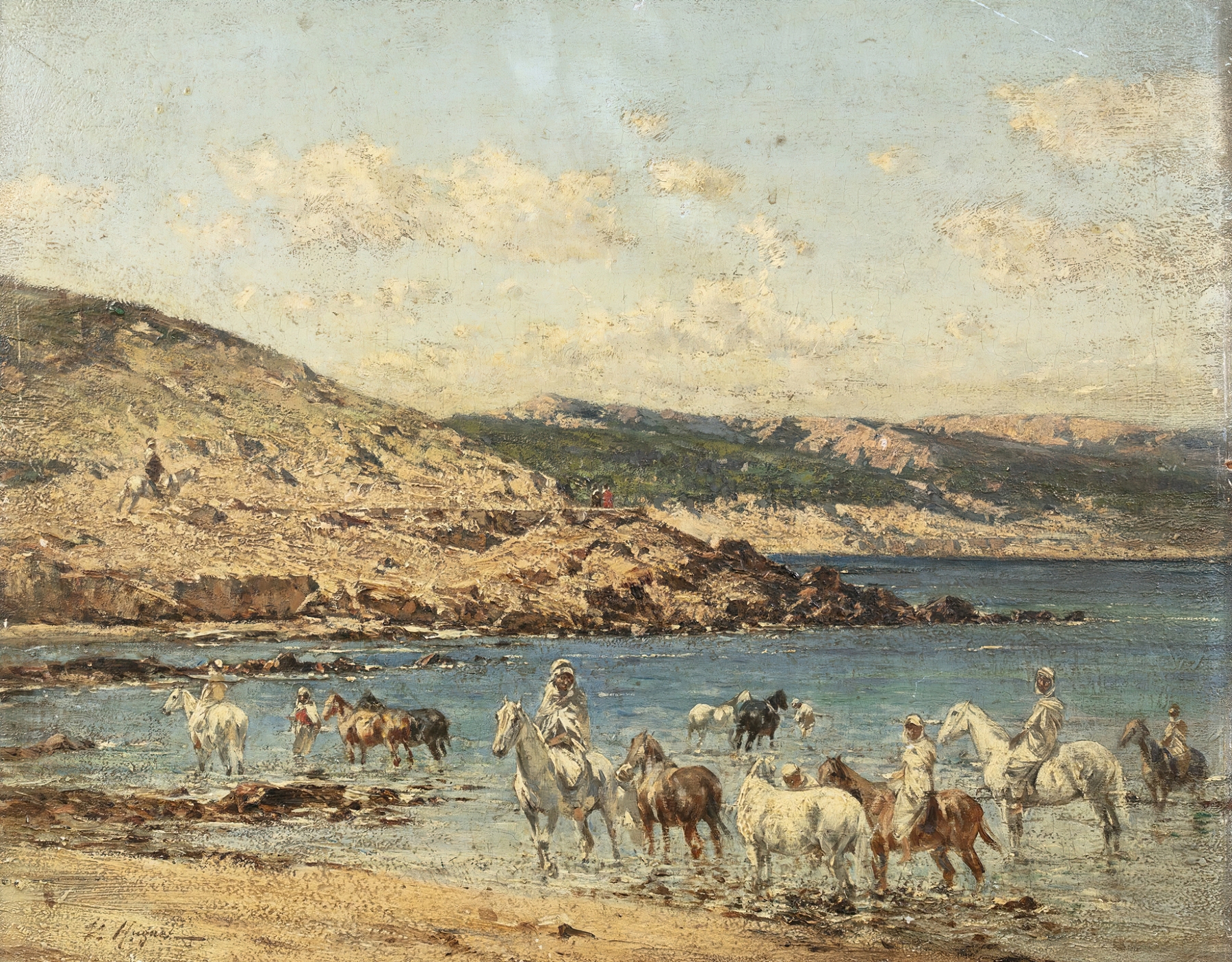
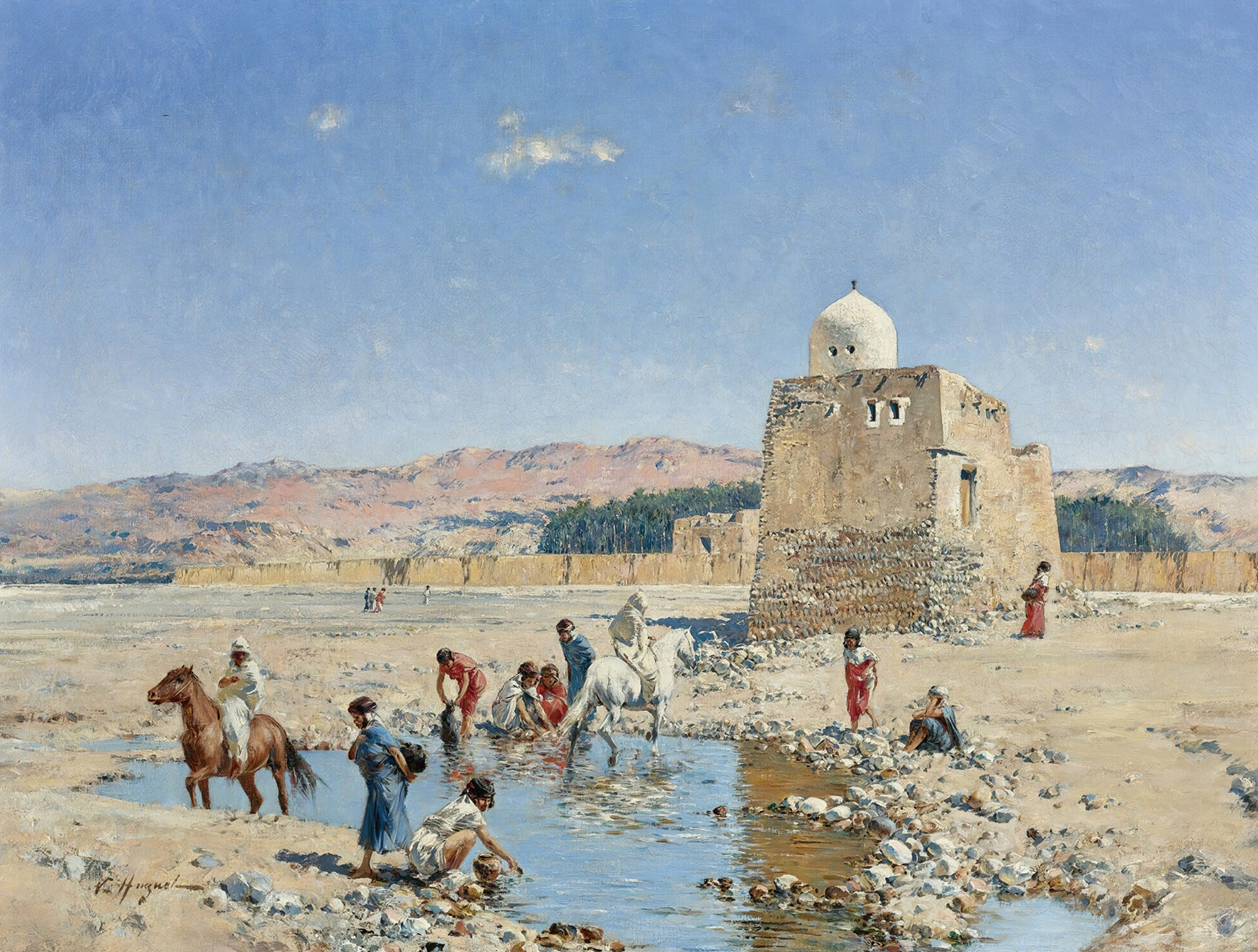
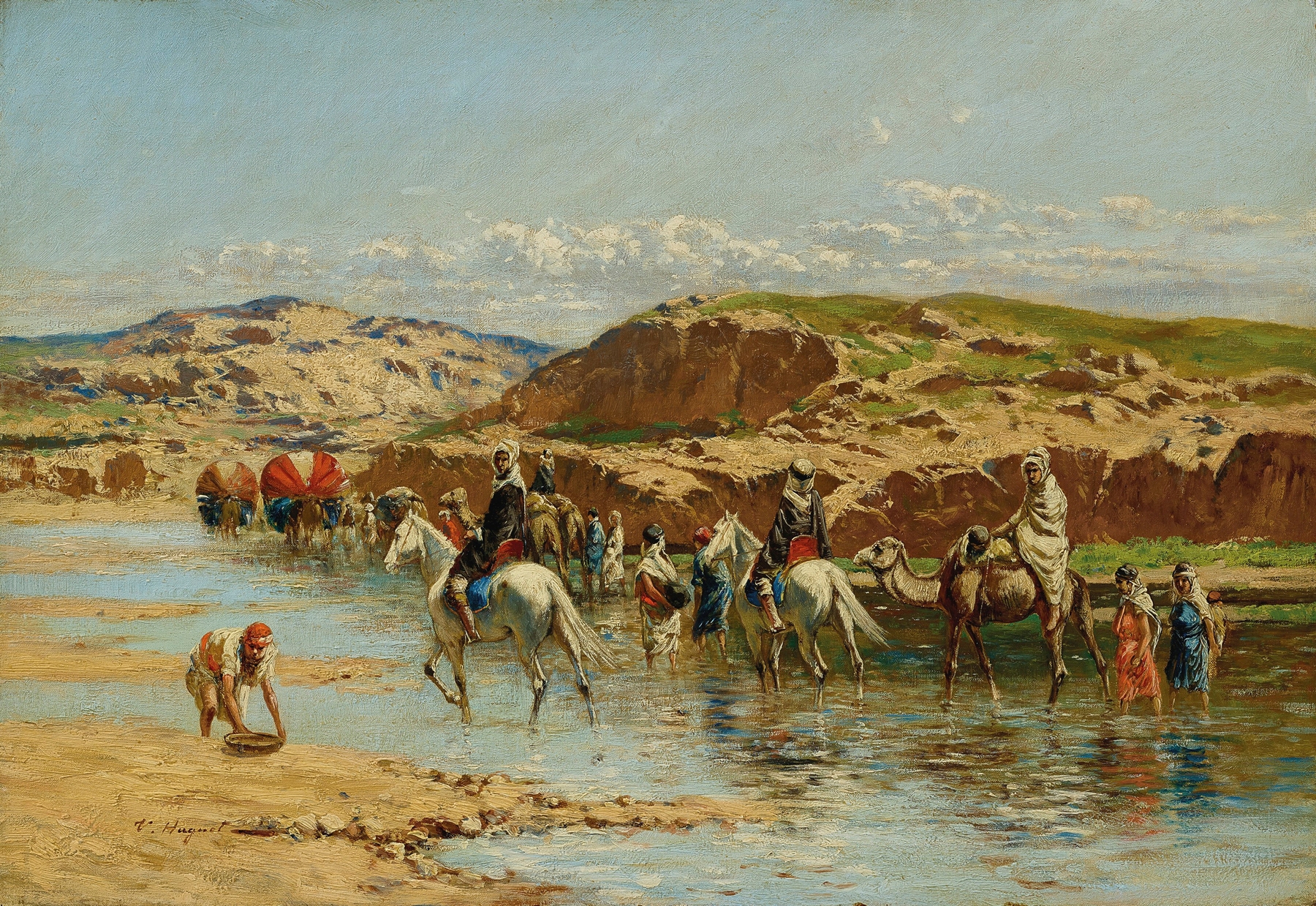
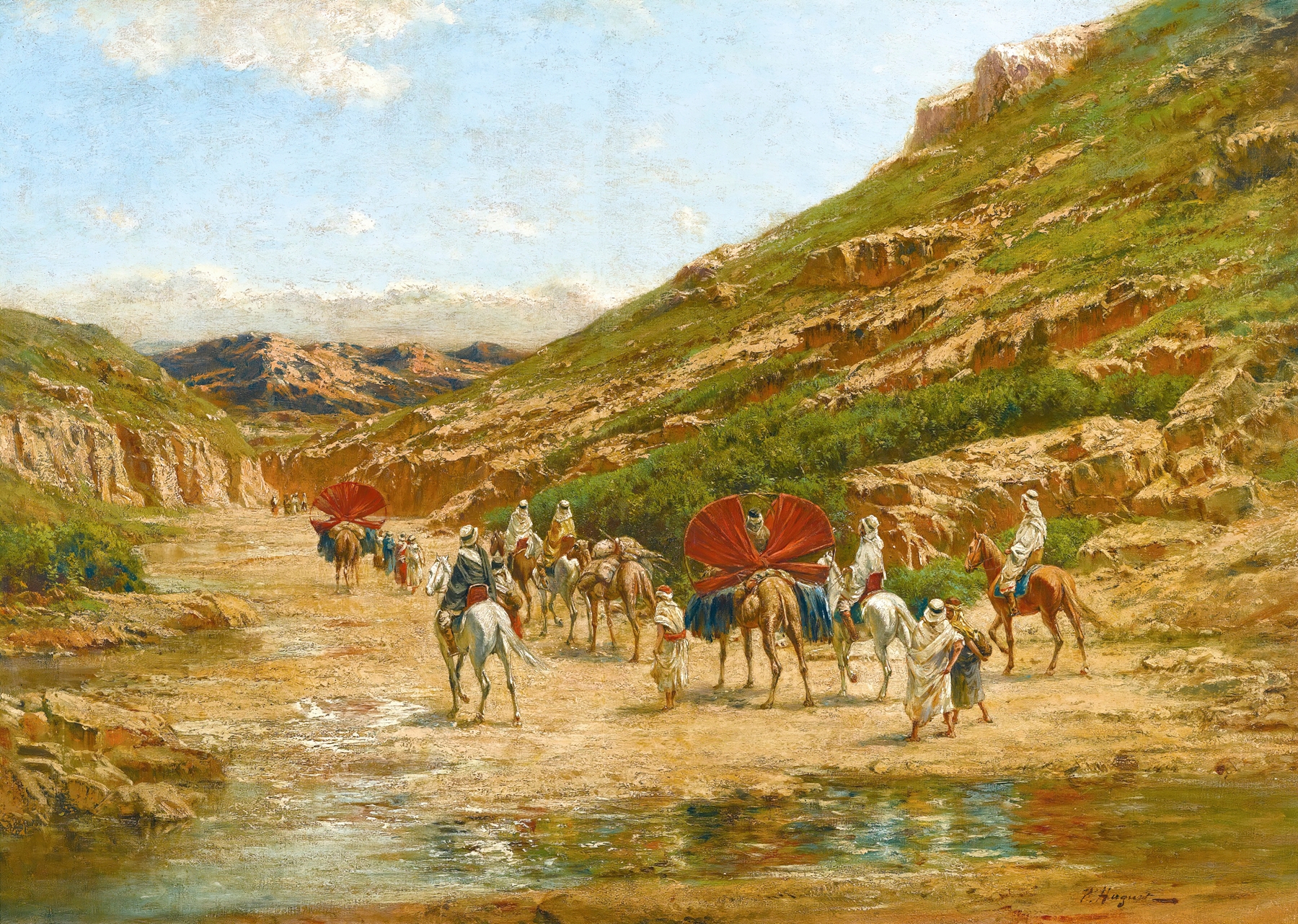
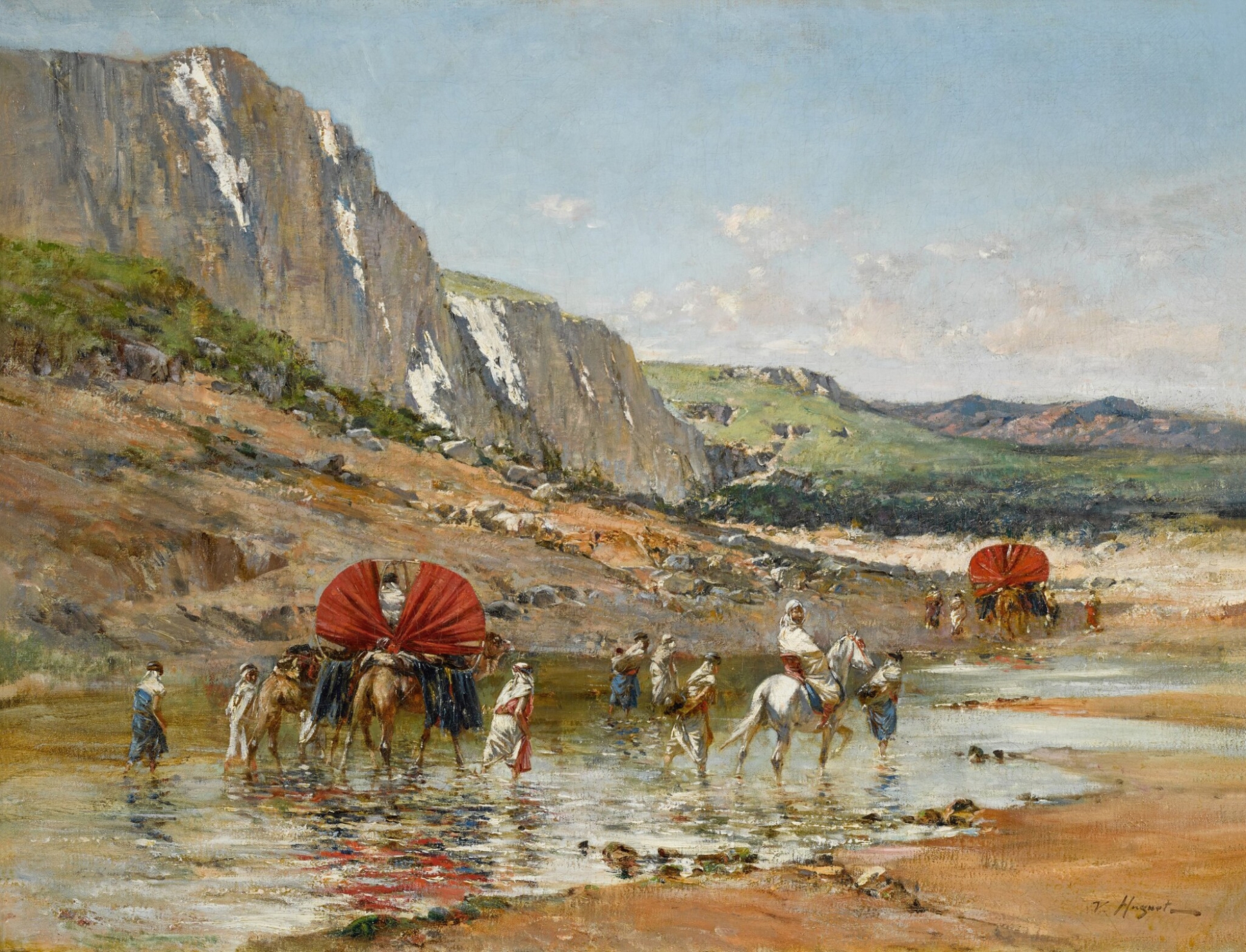
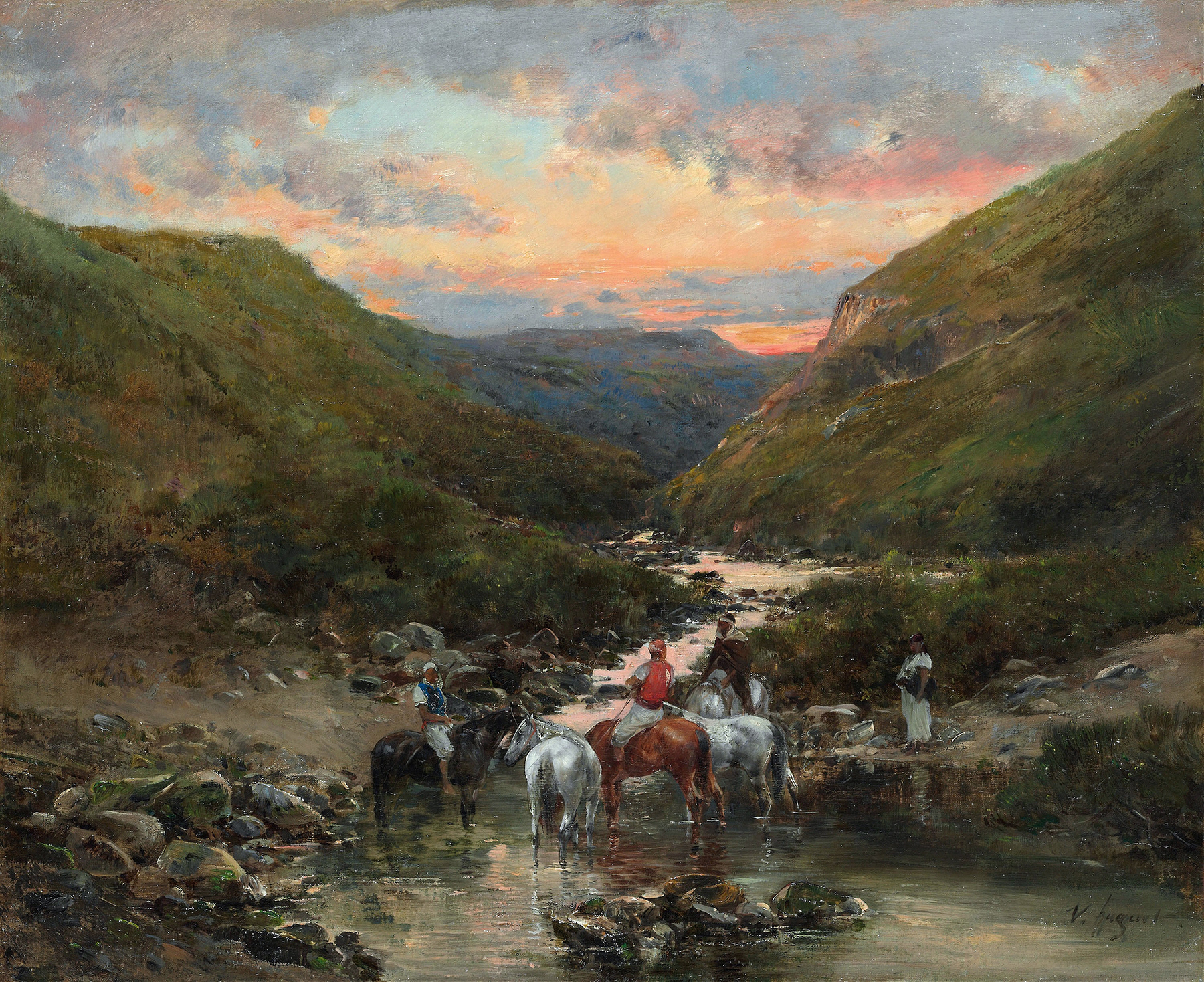
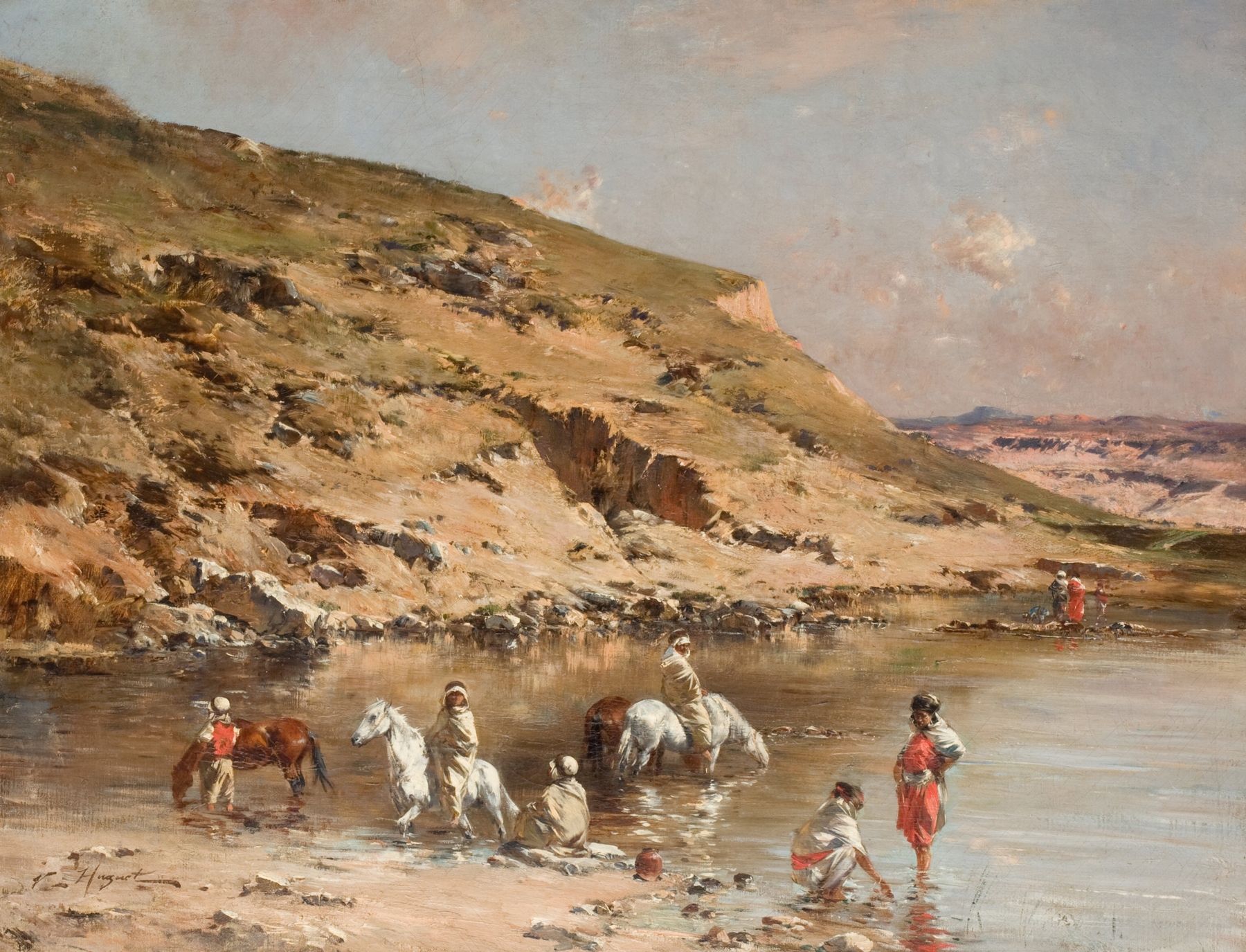
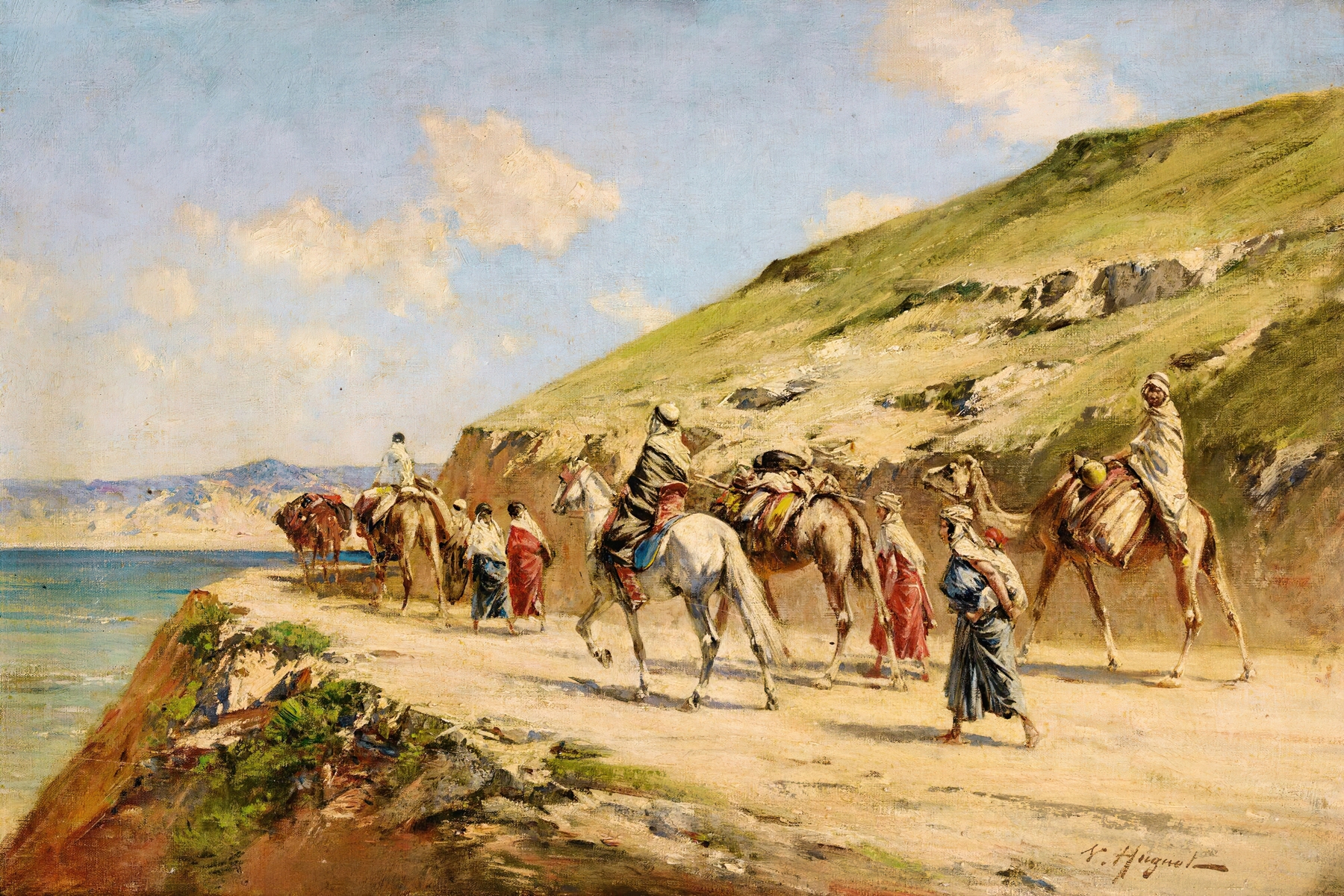
What secret hides in the quiet of the canvas? Travellers in the Desert invites you to ponder the depths of solitude and the uncharted paths of the human experience. Look to the right at the solitary figure draped in a flowing robe, gazing out over the vast expanse of sand that stretches endlessly toward the horizon. Notice how the warm, golden hues of the sun-drenched landscape contrast with the cool, shadowed area where the travelers gather, creating a palpable tension between light and dark.
The meticulous brushwork reveals the undulating dunes, each grain of sand painted with care, as if the artist sought to capture the very essence of the desert's shifting nature. Beneath the surface lies a rich tapestry of emotions—a juxtaposition of isolation and companionship. The figures, though together, seem lost in their own reflections, embodying a shared journey yet marked by individual thoughts. The play of light and shadow symbolizes the duality of hope and uncertainty, inviting the viewer to explore not just the physical journey but the internal struggles that accompany it.
In 1868, Victor Huguet created this piece during a time of burgeoning interest in Orientalism, where Western artists were enchanted by the exotic allure of Eastern landscapes and cultures. Living in Paris, Huguet was influenced by his travels throughout North Africa, which deeply informed his visual language. This work reflects both the romantic ideals of adventure and the stark realities faced by those traversing the unforgiving desert terrain.