Horses Drinking — History & Analysis
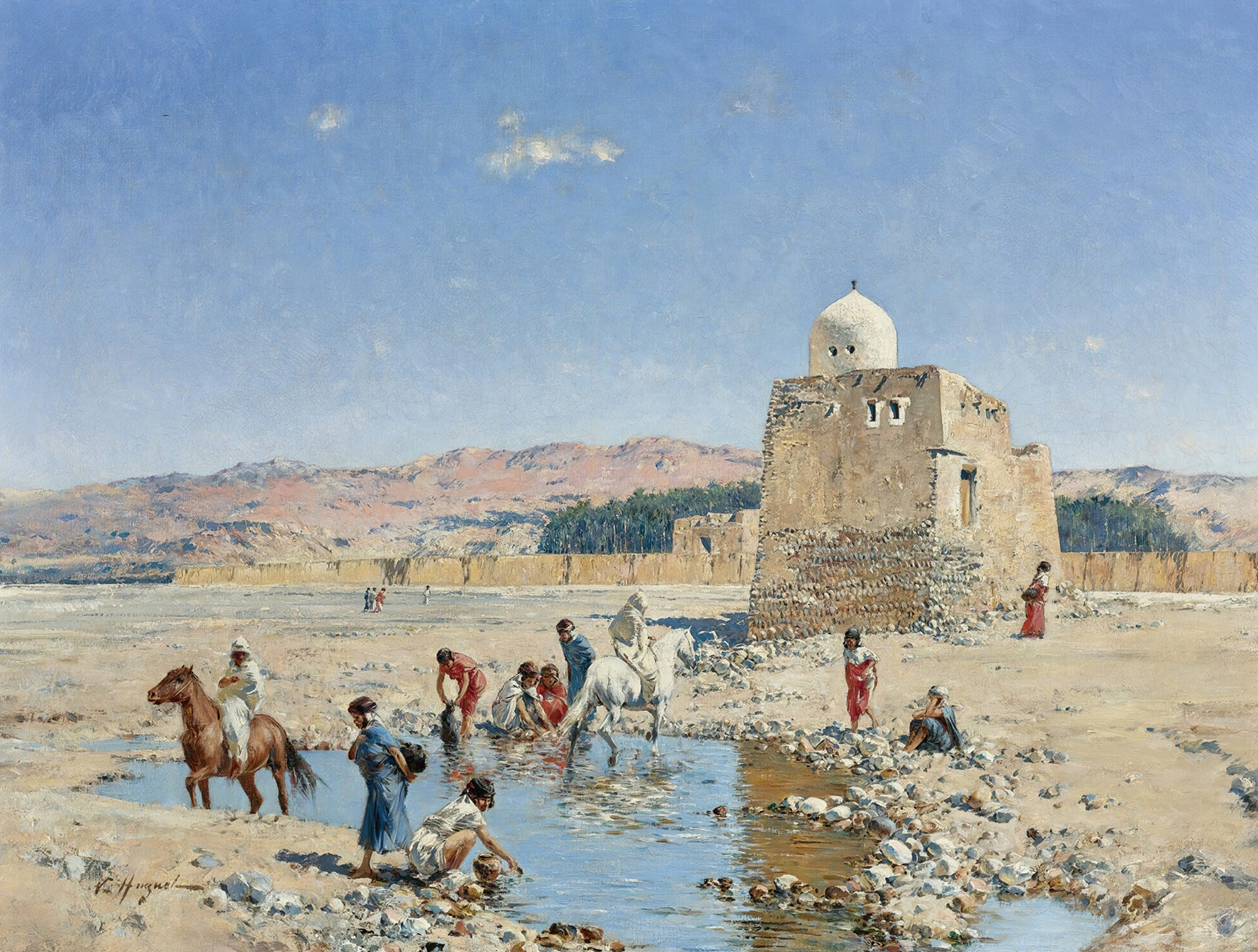
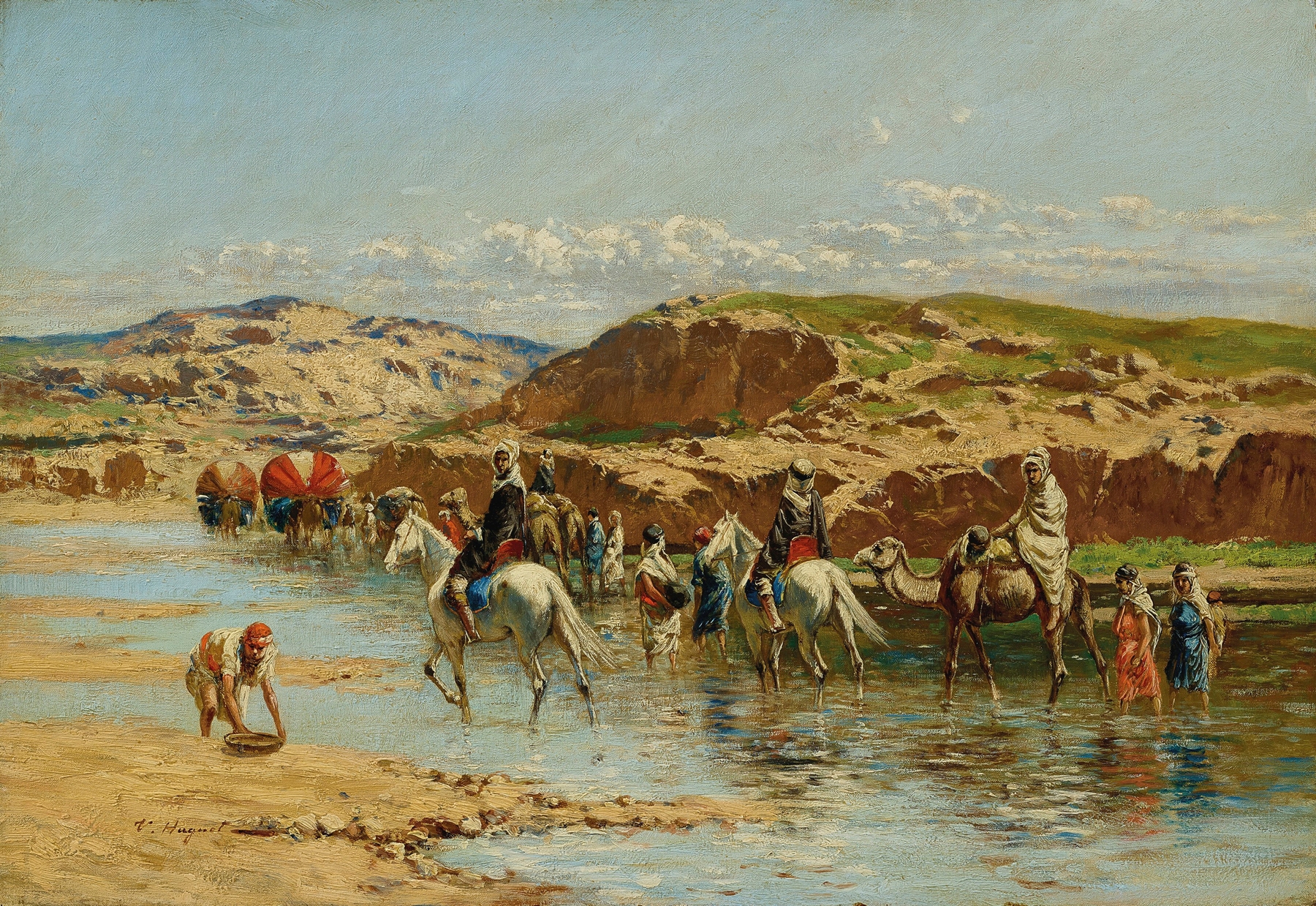
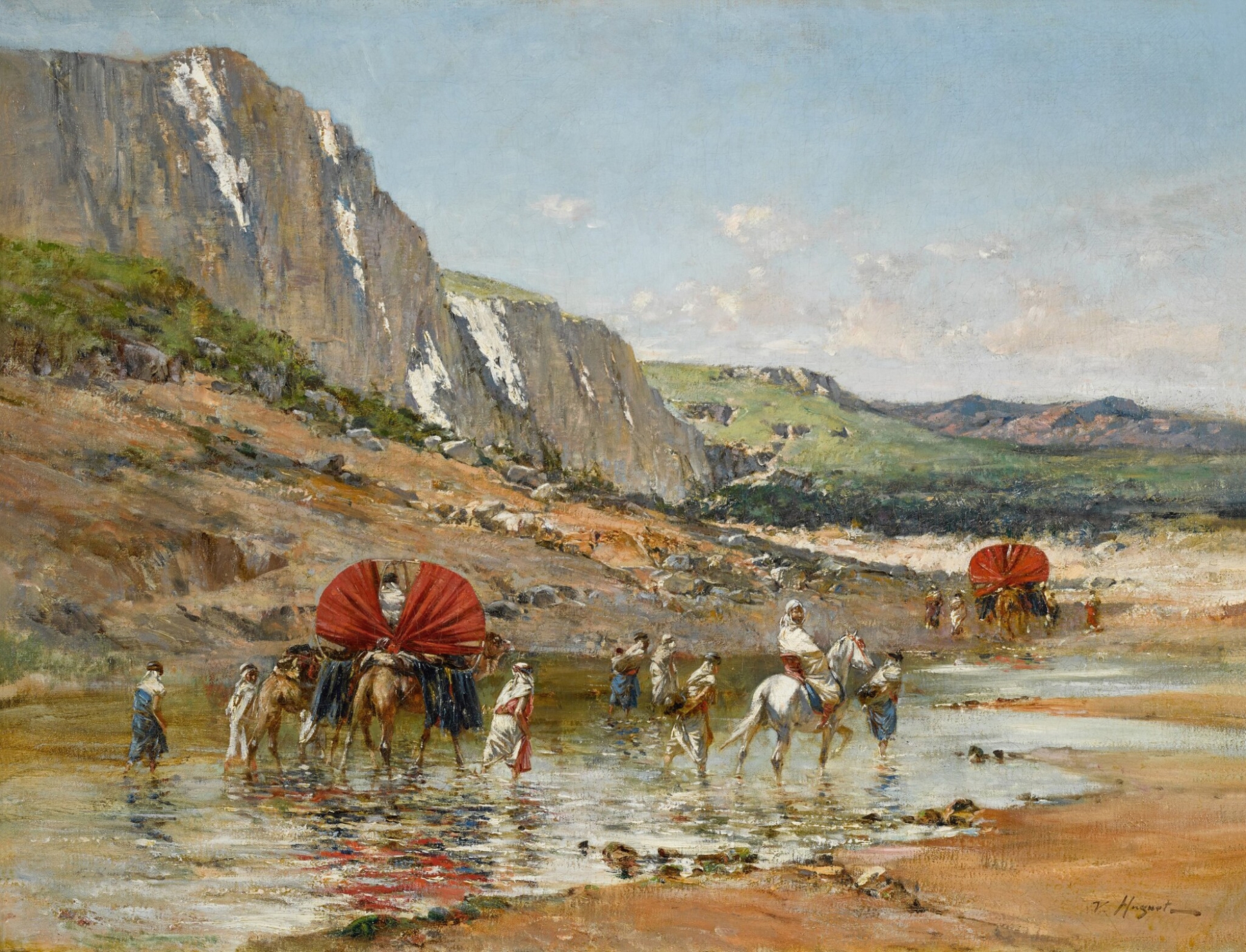
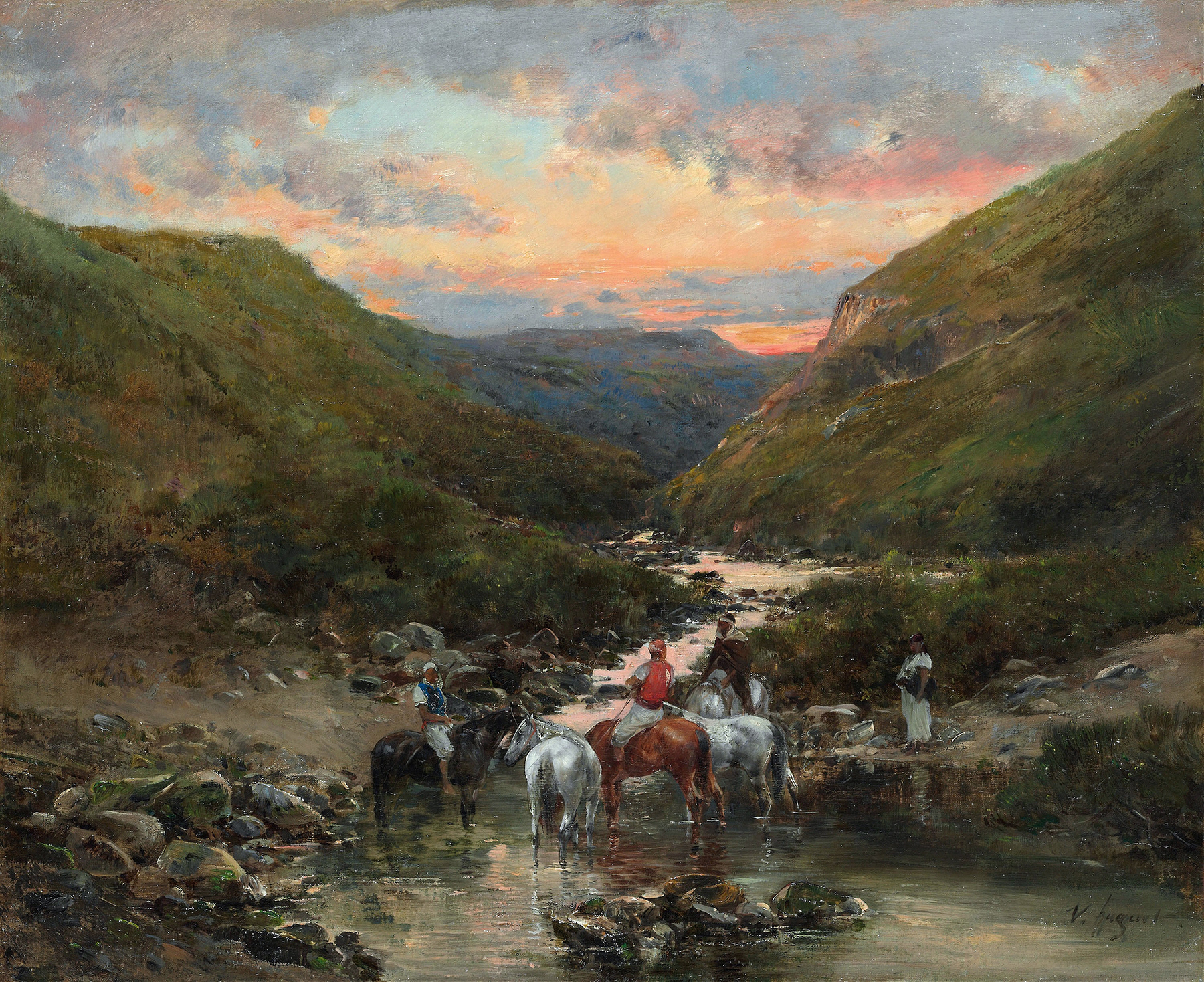
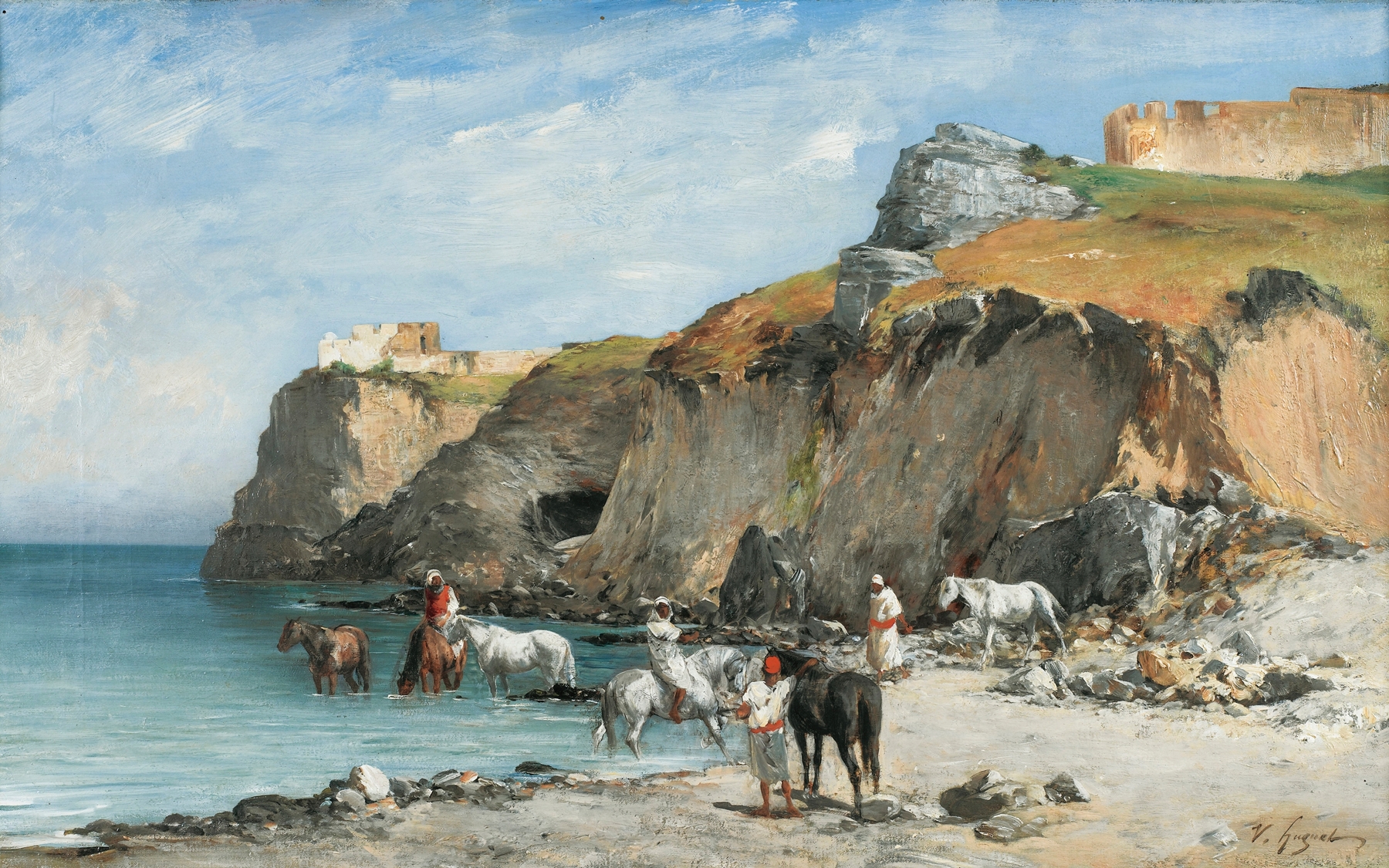
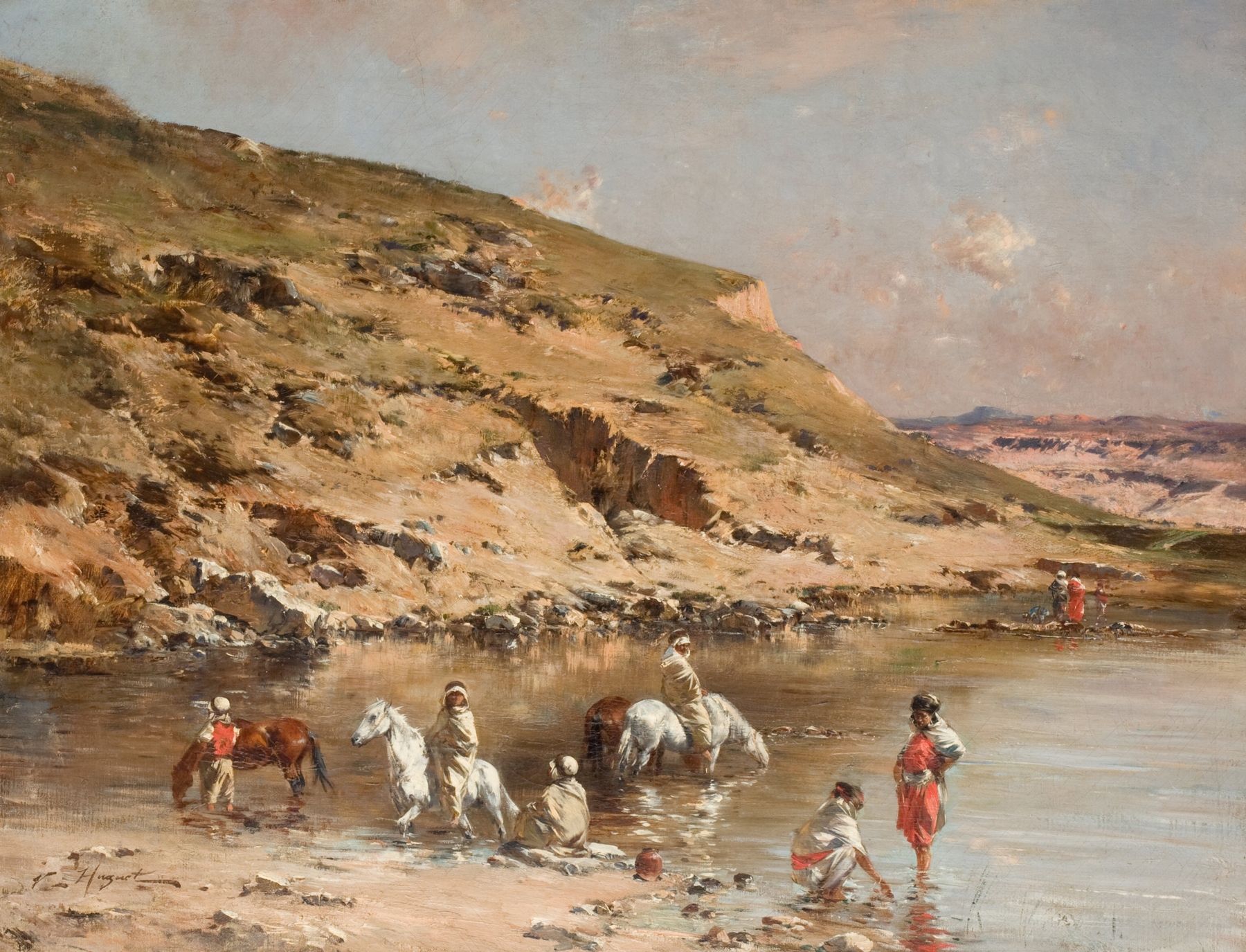
Where does light end, and longing begin? In the realm of art, this question often finds its answer not in the grand gestures, but in the simplest of moments, as captured in Horses Drinking. Focus on the gentle curve of the horses' necks as they lean toward the shimmering water, their forms becoming almost ethereal in the growing twilight. Notice the soft hues of browns and grays juxtaposed against the cool blues of the liquid, each stroke revealing Huguet’s delicate brushwork.
The light dances upon the water's surface, drawing your gaze to the reflections that seem to ripple with unspoken desires, embodying a serene yet poignant ecstasy. As you delve deeper, observe the way the horses' eyes convey a sense of yearning—each gaze absorbed in the act of drinking, yet hinting at a restless spirit. The surrounding environment is painted with a sense of stillness, contrasting the dynamic movement of the horses, as if time itself has paused to honor their moment of sustenance. Here, nature’s beauty intertwines with the animals’ quiet thirst, a delicate interplay of need and fulfillment, echoing the broader themes of existence and connection.
Victor Huguet created this piece during a time when the art world was shifting toward realism, capturing the raw essence of life and nature. Working in France, likely in the late 19th century, he was influenced by the Barbizon School, which sought to depict rural landscapes and everyday occurrences with authenticity. These elements of his life and context shaped his portrayal of the intimate relationship between the horses and their surroundings, revealing the emotional depth within ordinary scenes.