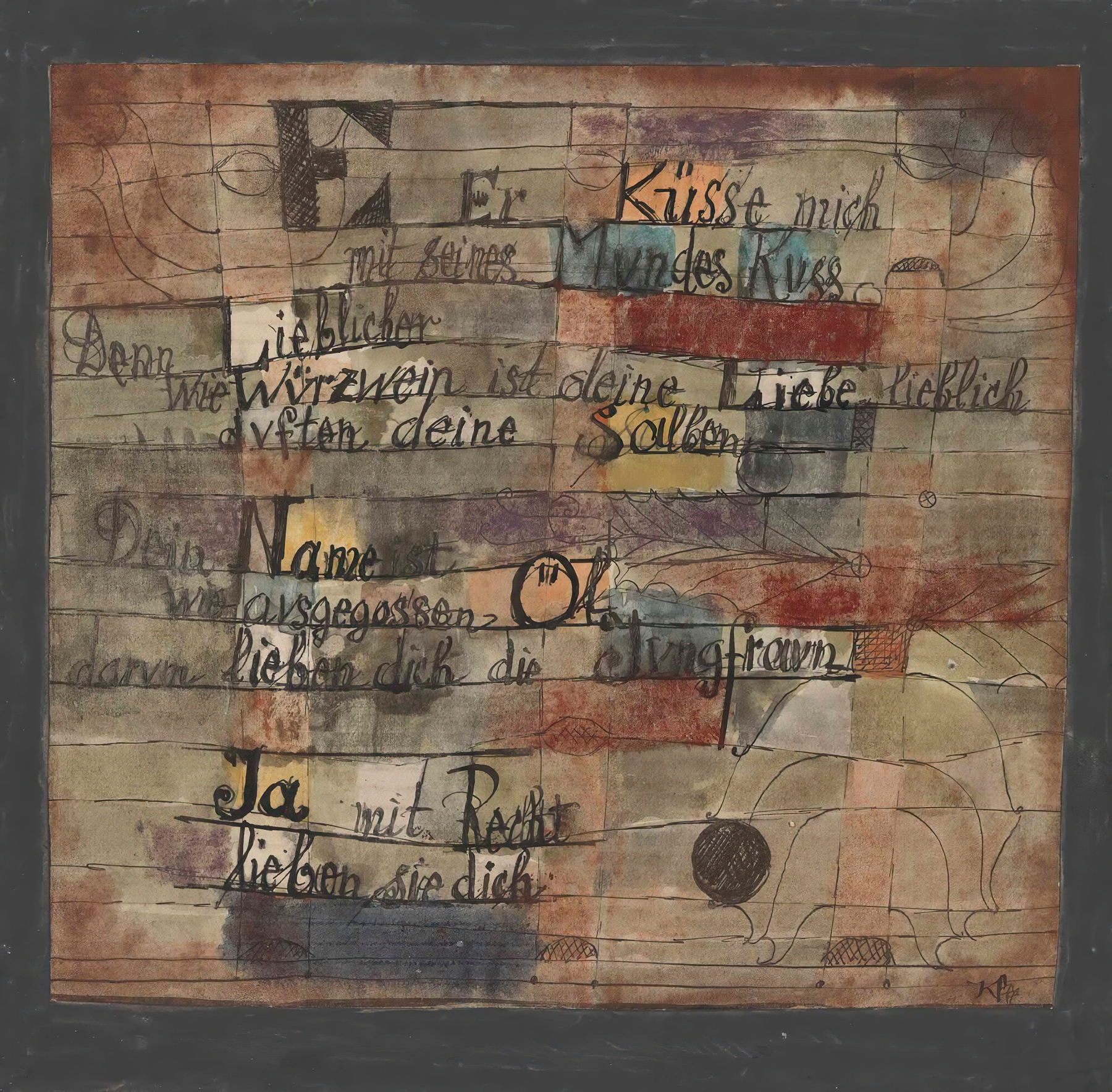
(From the Song of Songs) Version II. — History & Analysis
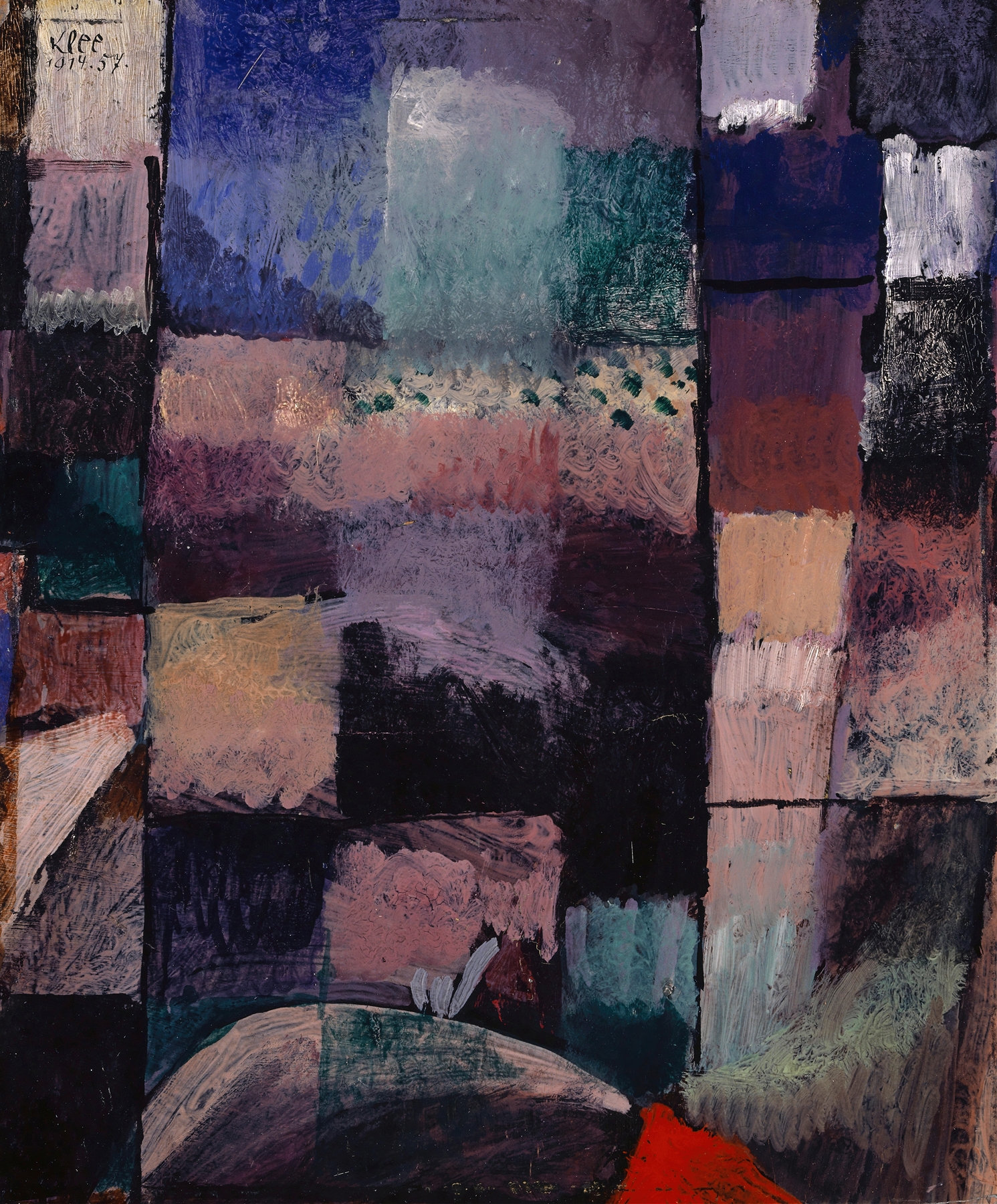
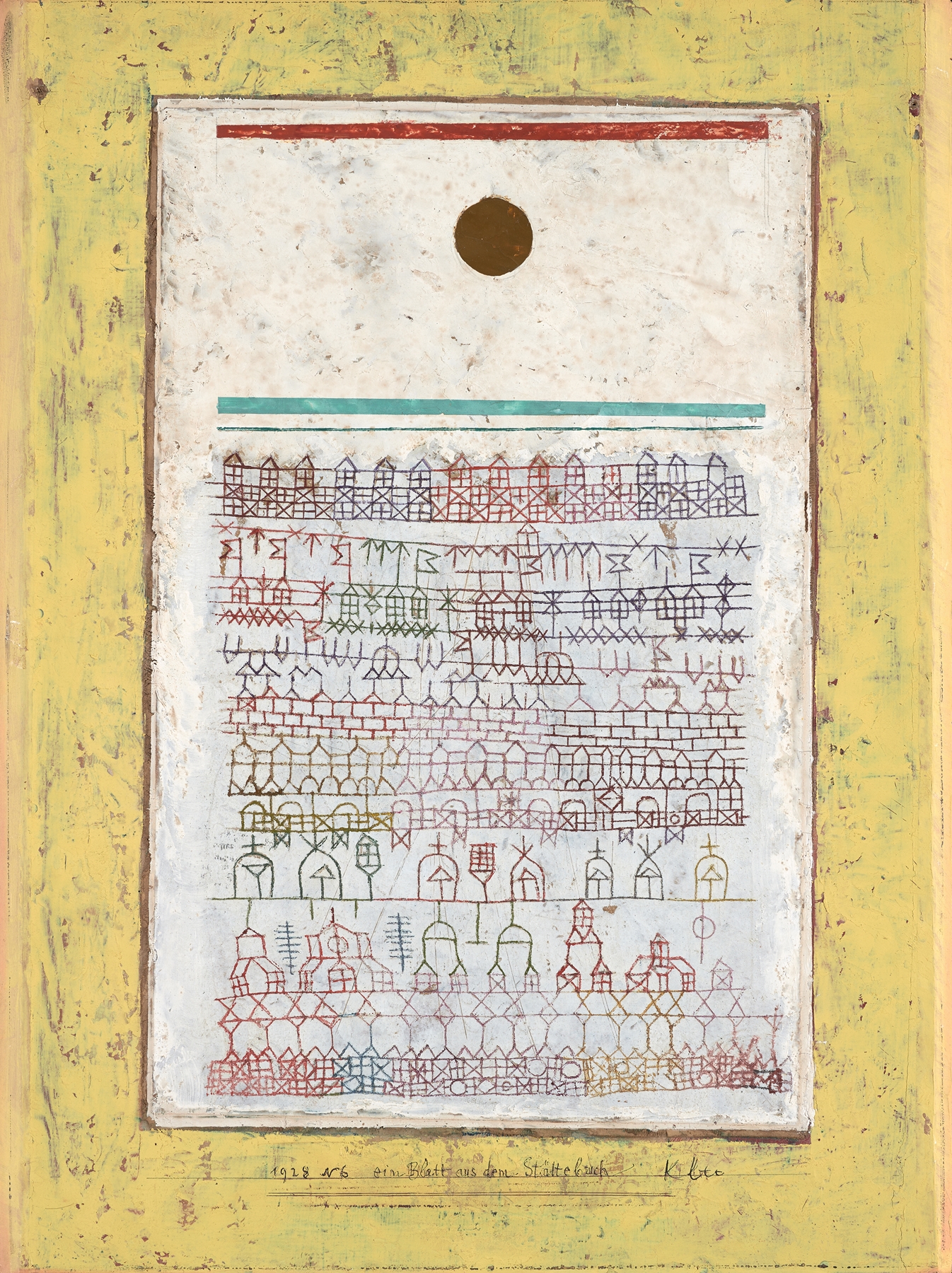
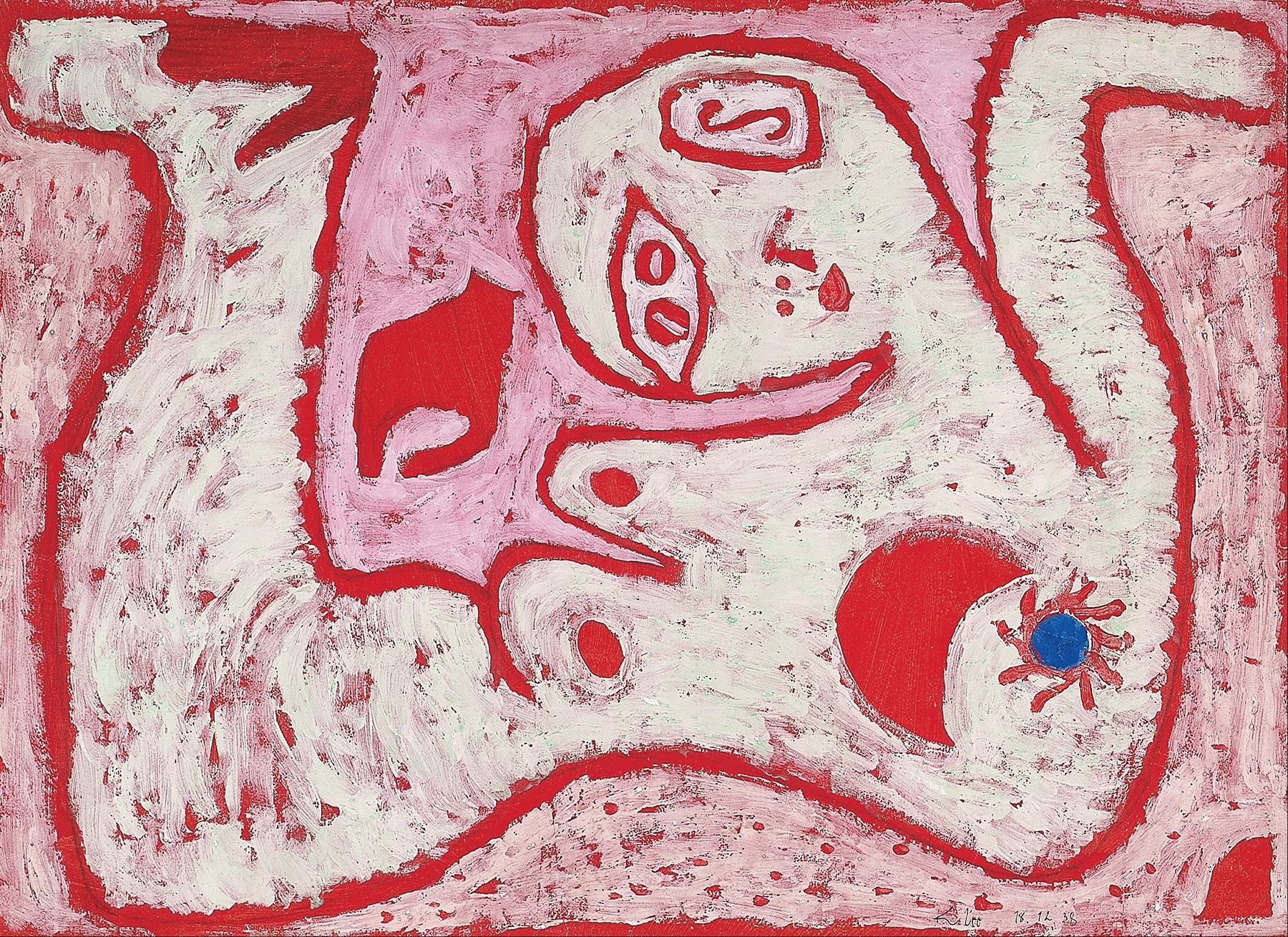
When did color learn to lie? In the heart of Klee's world, where vibrant hues dance and whisper secrets, the essence of rebirth pulses through every brushstroke. Look to the center of the canvas, where a radiant burst of red and orange draws you in, almost pulsating with warmth. Surrounding this core, softer shades of blue and green create a delicate balance, inviting the viewer to explore the intricate layers.
Notice how the overlapping forms weave a tapestry of geometric patterns, each shape meticulously placed yet seemingly alive, as if they too yearn to unfold and transform. The interplay of colors reveals an emotional tension; the vibrant energy of the warm tones contrasts with the cool, serene hues. This duality suggests a dialogue between the fervent passion of life and the tranquil embrace of stillness, hinting at the cyclical nature of existence. Small, almost hidden details—like the faint strokes of gold—speak to the idea of rebirth, illuminating the canvas with a sense of hope and renewal amidst the complexities of life.
In 1921, Klee painted this piece during a period of great experimentation and reflection. Settling in Germany after the upheaval of World War I, he was deeply influenced by the changing tides of the artistic landscape. This era saw Klee exploring abstraction, infusing his work with personal symbolism and emotional resonance, as he sought to articulate the transformative power of art in a world yearning for renewal.