About the Town — History & Analysis
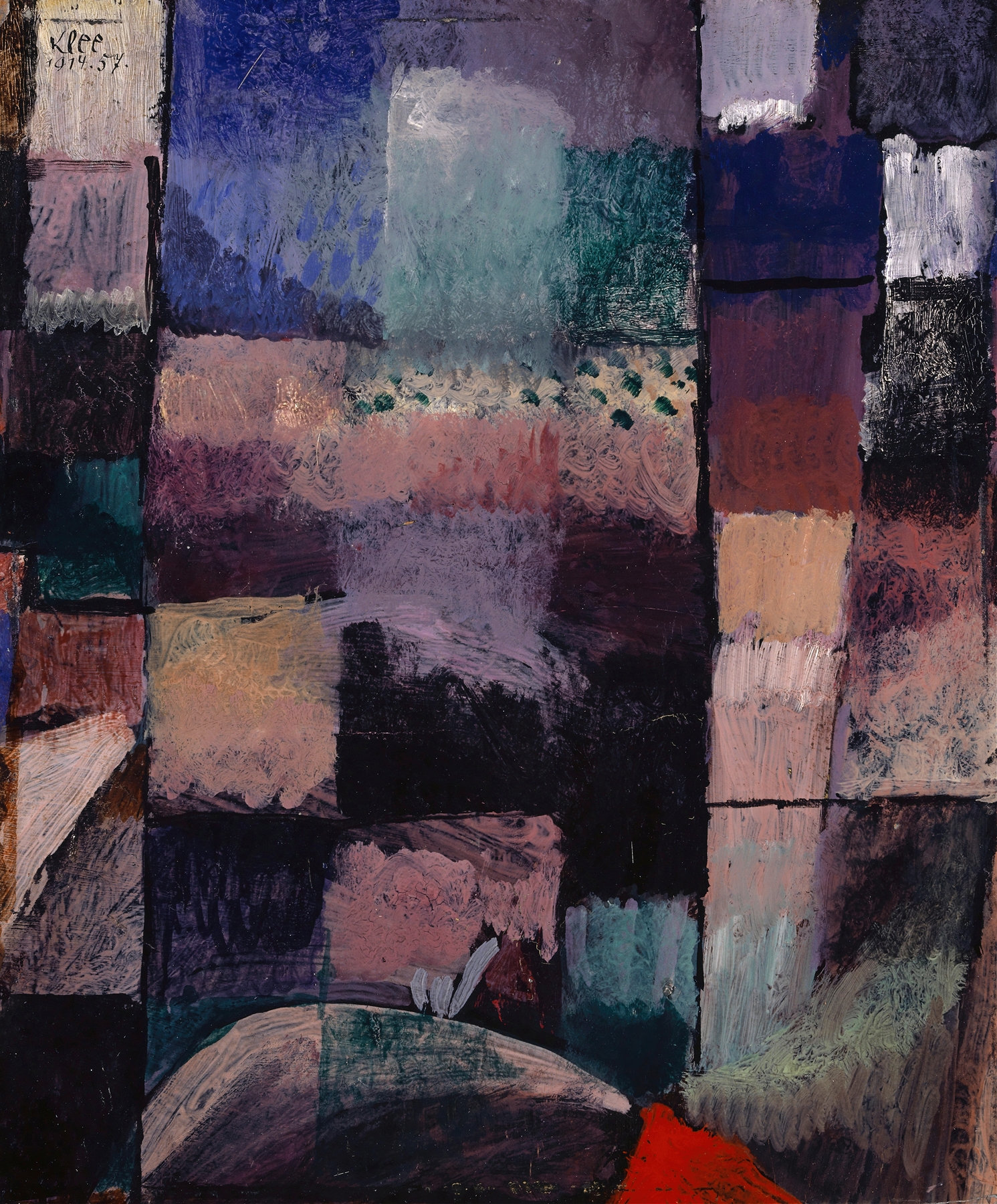
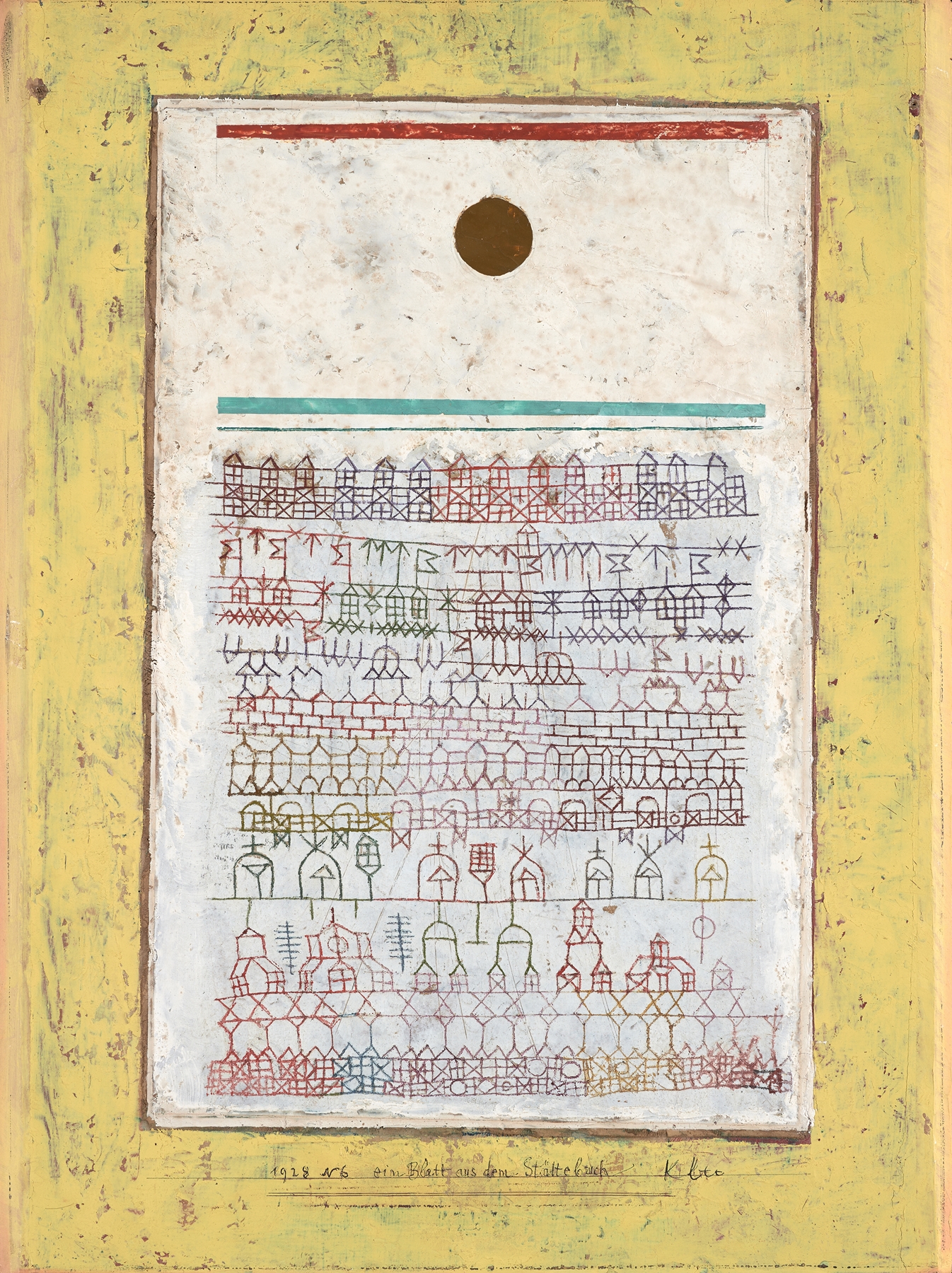
“To paint is to remember what time wants us to forget.” Memory, fleeting yet persistent, captured in vibrant strokes and shapes. Look to the center of the canvas where an intricate arrangement of lines and forms diverges, each a fragment of a forgotten narrative. Klee's use of muted ochres and blues evokes an atmosphere of nostalgia, beckoning the viewer to explore each neighborhood and hidden alley. Notice how the playful geometry interlocks, suggesting a sense of community while the scattered shapes hint at the individuality of each inhabitant—an interplay of unity and separation that defines the essence of urban life.
Delve deeper into the layers; observe how softer hues contrast with bolder colors, revealing an emotional landscape that oscillates between chaos and order. The overlapping forms create a rhythm, reminiscent of footsteps on cobblestones, while the subtle strokes imply the essence of time passing, each moment a brushstroke on the canvas of existence. This tension between stability and flux invites reflection on how we navigate the spaces we inhabit and the memories we forge within them.
In 1926, Klee resided in Germany, an era marked by the aftermath of World War I, which profoundly influenced his artistic vision. This period saw the rise of new movements that challenged traditional forms, and Klee, embedded in the Bauhaus movement, was exploring the relationship between abstraction and representation. About the Town reflects this tumultuous time, where the mundane and the profound converge, capturing the essence of urban life while offering commentary on the passage of time and memory.