Fuji vanaf het dorp Narusawa — History & Analysis
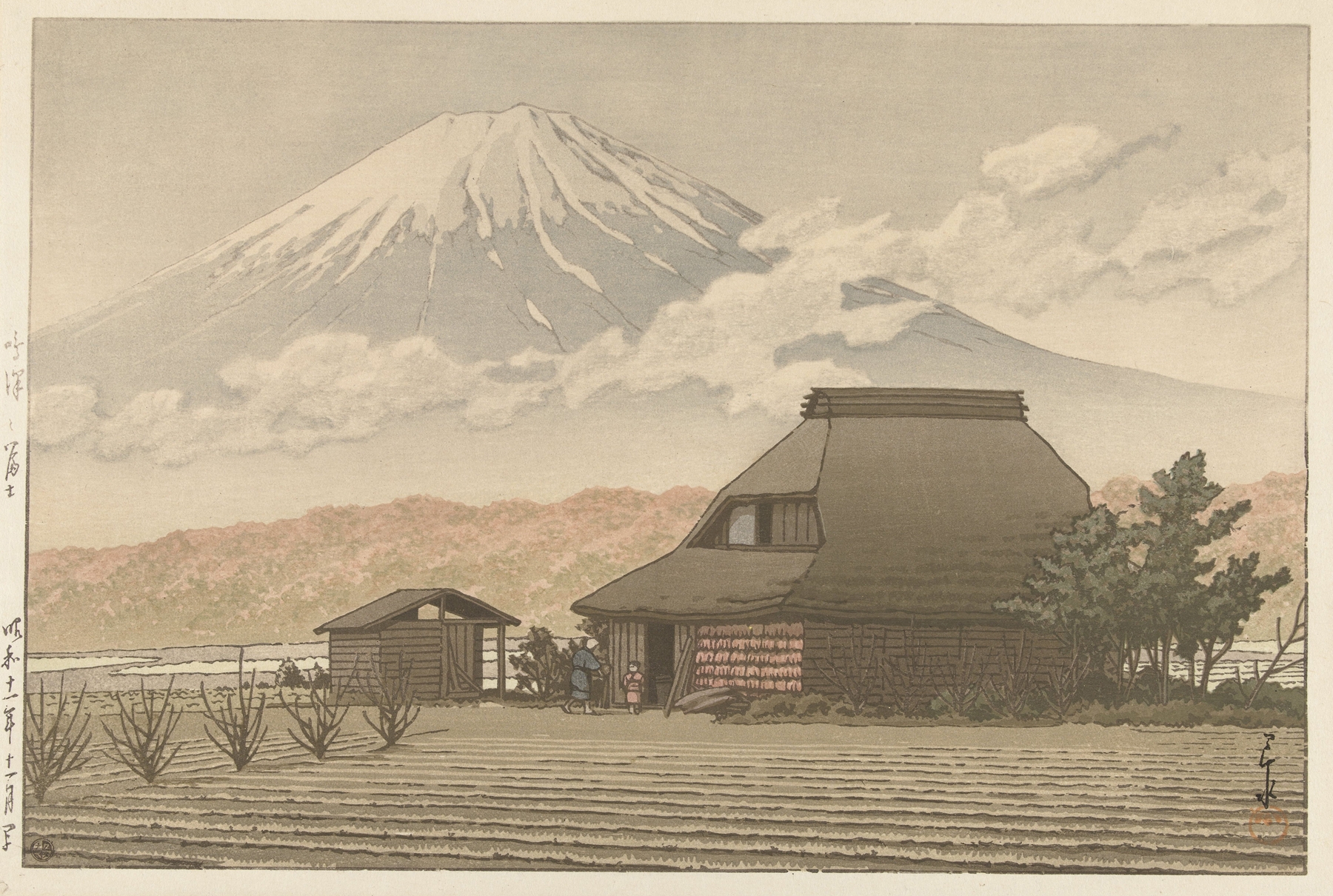
“Every brushstroke is a heartbeat remembered.” In the quiet yearning of landscapes, do we truly see the depths of our desires reflected back at us? Look to the gentle curves of Mount Fuji, its majestic presence dominating the horizon, painted with soft blues and whites that evoke a serene tranquility. Notice how the delicate strokes of green in the foreground bring life to the village of Narusawa, nestled at the foot of the mountain.
The composition draws the eye naturally from the village, through the lush fields, and up to the imposing peak, creating a harmonious flow between earth and sky that echoes the longing for connection, both to nature and to one another. In this artwork, the contrast between the tranquil village and the towering mountain symbolizes a duality of existence: the simplicity of daily life against the grandeur of nature’s beauty. Each element is imbued with emotion, from the subtle touches of warm light that dance across the fields to the lingering shadows that hint at untold stories.
The stillness of the scene captures a moment of pause, inviting viewers to contemplate their own desires and aspirations, much like the villagers gazing up at the iconic peak that has long been a source of inspiration. Kawase Hasui created this piece in November 1936, during a time when he was refining his craft in the Shin-hanga movement, which emphasized a blend of traditional Japanese aesthetics with Western techniques. Living in a rapidly modernizing Japan, his work often reflected a nostalgic desire for the serene beauty of nature, a longing that resonates deeply in Fuji vanaf het dorp Narusawa.