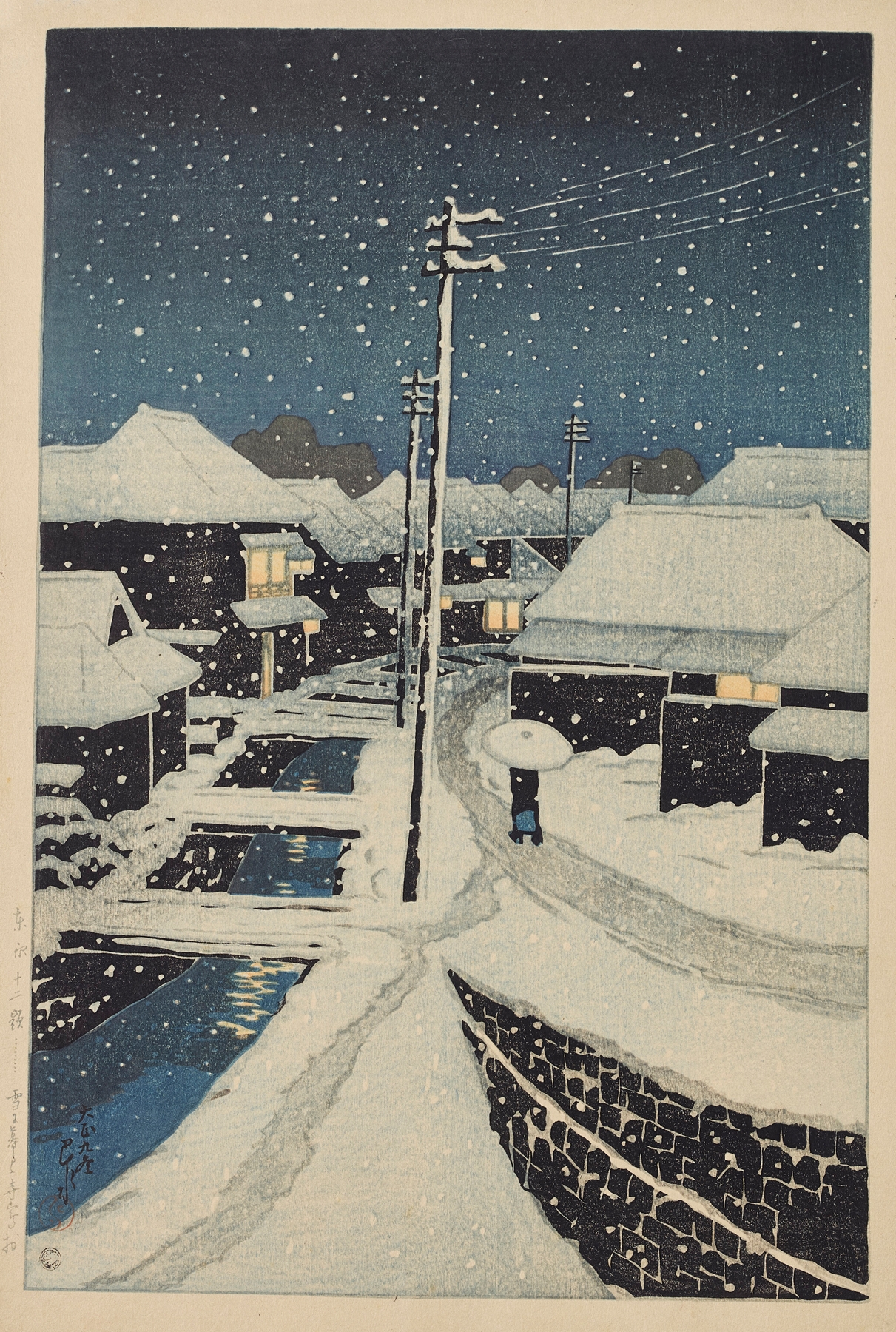
Yuki ni fururu Terajima mura (Evening snow at Terajima Village) — History & Analysis
Could a single brushstroke hold eternity? In the delicate embrace of evening snow, faith takes form, whispering truths that transcend the seasons. Look to the bottom left, where a small wooden structure emerges, its dark silhouette stark against a blanket of white. The gentle curve of the roof contrasts with the crisp, angular trees surrounding it, drawing your eye upward to the intricate layering of snowflakes. Notice how the cool blues and soft grays of the twilight sky blend seamlessly into the landscape, with each hue illustrating the serene stillness that envelops the village. The artist’s masterful use of printmaking techniques captures the texture of falling snow, inviting you to feel its quiet touch. Yet, beneath this tranquil surface lies a deeper story of isolation and introspection. The muted color palette evokes a sense of melancholy, reflecting how nature can envelop both the physical and emotional worlds. The solitary building stands as a testament to resilience, suggesting a connection between humanity and the unyielding forces of nature. Here, faith is not merely a belief but an act of survival amid the relentless chill of winter. In 1920, the artist was deepening his exploration of traditional Japanese woodblock printing, a craft at the intersection of modernity and heritage. Living in Japan, a country moving through rapid change following the Meiji era, he sought to preserve fleeting moments like this one. Amidst the evolving world around him, his work remained a steadfast reflection of the quiet beauty and enduring spirit found in everyday experiences.