Izumo, Yasugi Kiyomizu (Yasugi Kiyomizu Temple at Izumo) — History & Analysis
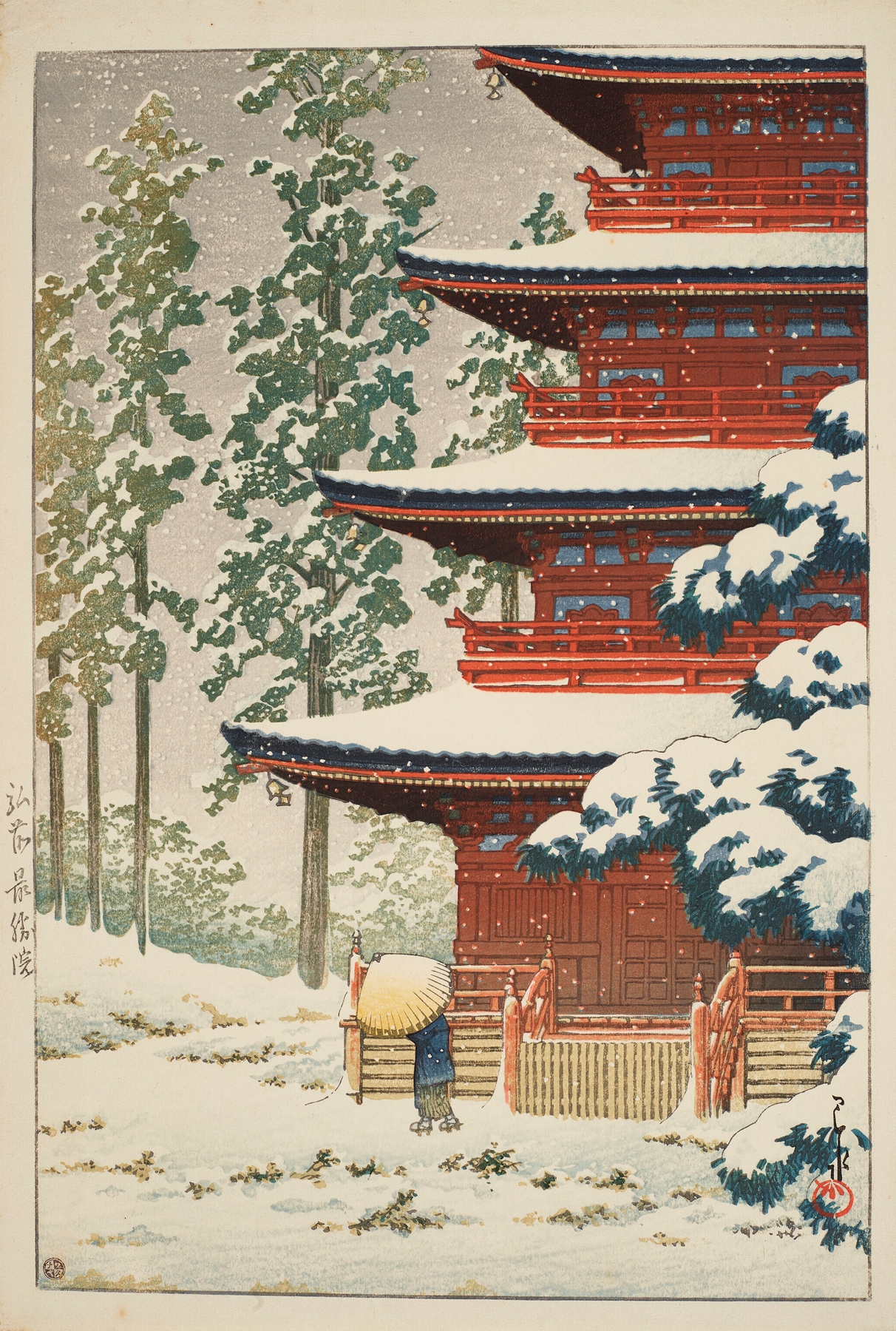
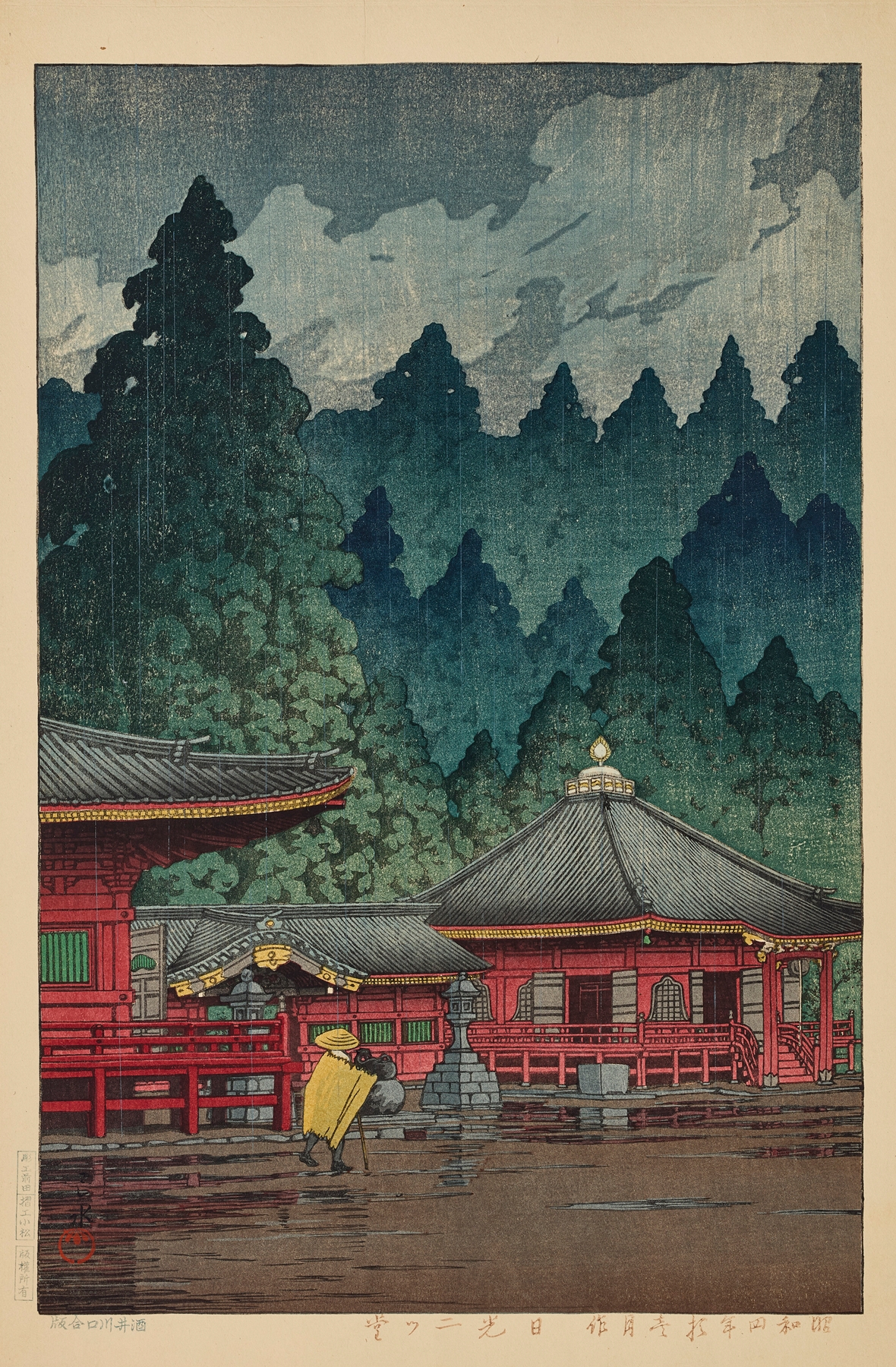
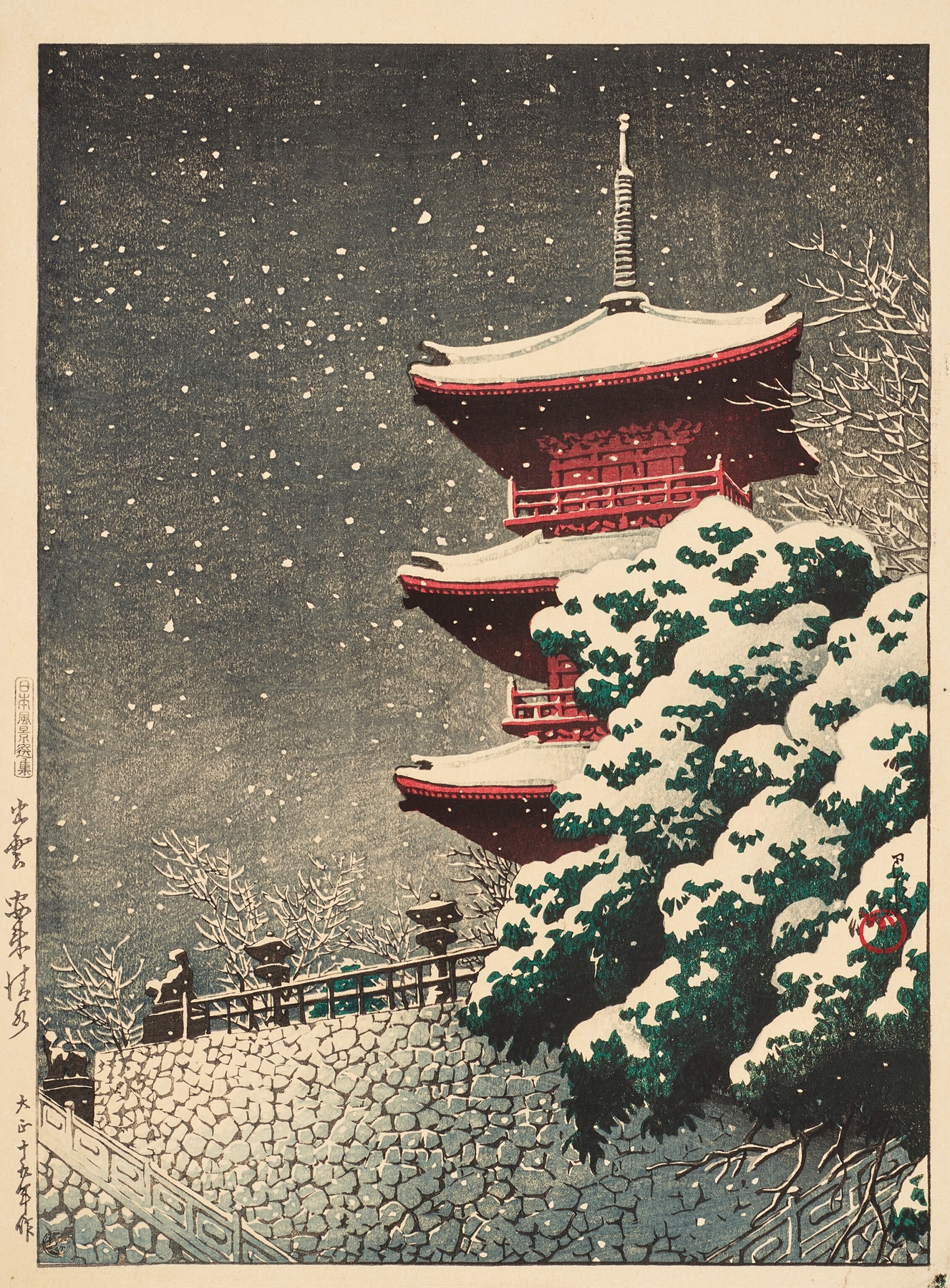
“Sometimes beauty is just pain, disguised in gold.” This thought lingers as one gazes upon the tranquil elegance of a temple scene bathed in the soft glow of twilight. The ethereal beauty captured here speaks to an ecstasy that is both uplifting and melancholic, inviting reflection on the duality of existence. Look to the left, where gentle strokes depict the temple’s intricate architecture, drawing the eye to the sweeping curves of the roof and the delicate shadows that dance along its surface. Notice how the delicate blues and warm ochres meld into a serene harmony, creating a dreamlike atmosphere. The meticulous attention to detail in the trees framing the temple evokes a natural embrace, grounding the sacred structure in its earthly surroundings while the hues of dusk suggest a fleeting moment of perfection. Hidden within the layers of this work is a profound emotional tension. The harmony of the scene contrasts with the ephemeral nature of beauty, evoking a sense of longing that transcends the visual. Each brushstroke resonates with the viewer, hinting at stories untold—the whispers of winds that have mourned and rejoiced beneath the temple eaves. The soft play of light among the leaves seems to echo the delicate balance between joy and sorrow, encapsulating that very essence of ecstasy and pain intertwined. In 1926, the artist painted this piece during a time when Japan was undergoing significant changes, both socially and artistically. Kawase Hasui was a key figure in the shin hanga movement, which sought to modernize traditional woodblock printing. This artwork emerged during his exploration of landscapes, where he infused contemporary sentiments into historical subjects, celebrating both the past and the evolving identity of Japan.