Hizen Yobuko no asa (Morning in Yobuko, Hizen) — History & Analysis
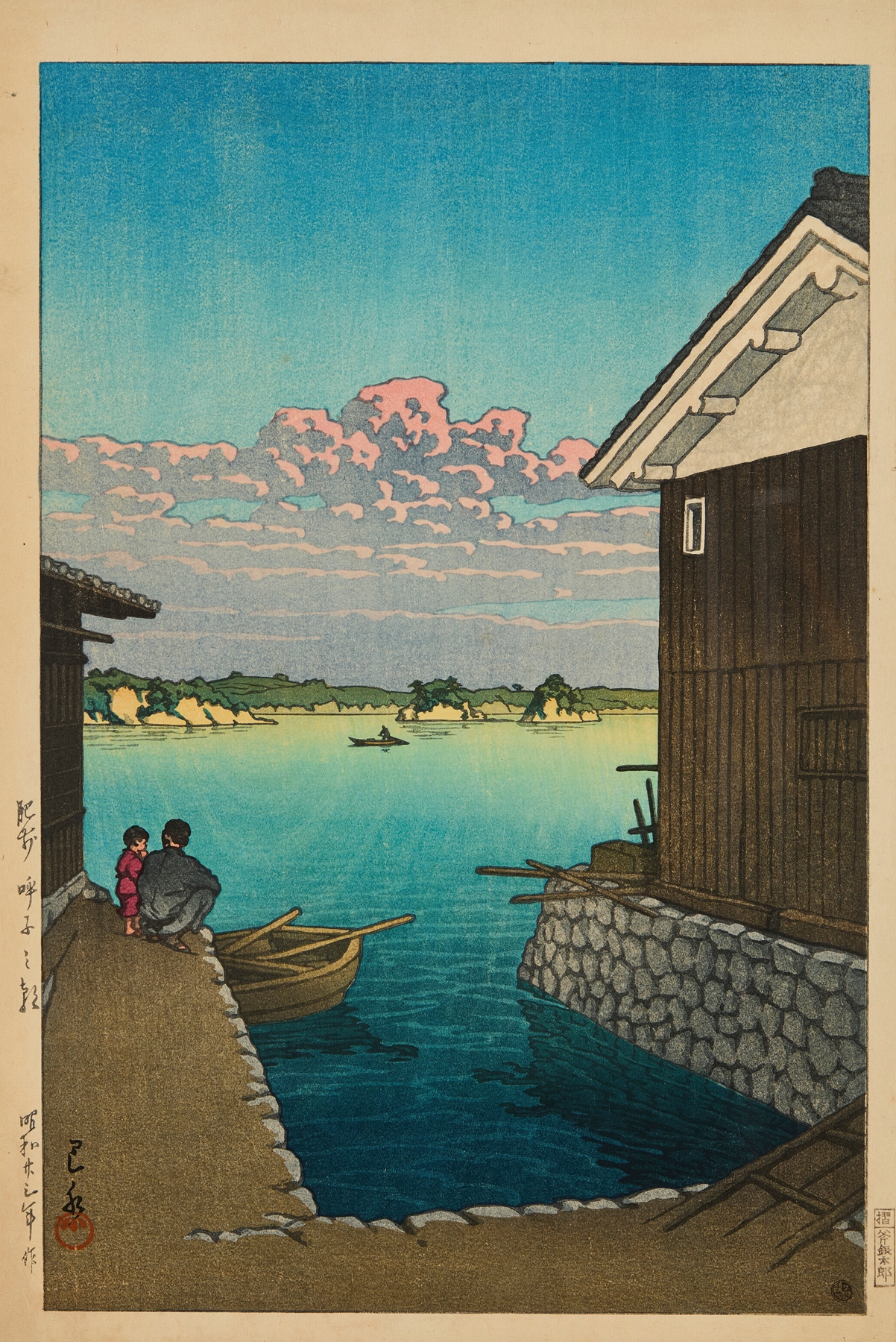
Where does light end, and longing begin? In the stillness of *Hizen Yobuko no asa*, a delicate harmony unfolds between nature and human presence, inviting us to linger in the moment. Look to the foreground, where gentle waves lap against the shore, their rhythmic movement drawing your gaze inwards. Notice how the soft dawn light spills across the water, casting a serene glow that envelops the fishing boats anchored nearby. The artist employs a masterful blend of subtle blues and warm earth tones, creating a visual balance that reflects both tranquility and the promise of a new day. The contrast between the stillness of the scene and the potential for activity holds emotional weight. Each boat, ready for the morning's toil, represents a bridge between serenity and labor, a moment suspended before the day's chaos. The light, infused with warmth, serves as a reminder of the fleeting nature of time, balancing the peace of the dawn with the anticipation of life’s unending cycles. Kawase Hasui painted this work in 1948, during a period of post-war recovery in Japan. As a prominent figure in the shin-hanga movement, he sought to revitalize traditional ukiyo-e printmaking techniques while adapting to modern sensibilities. This artwork reflects his deep appreciation for the Japanese landscape and the intricate interplay between light and shadow, encapsulating the essence of a serene morning in Yobuko, where nature and humanity coexist harmoniously.