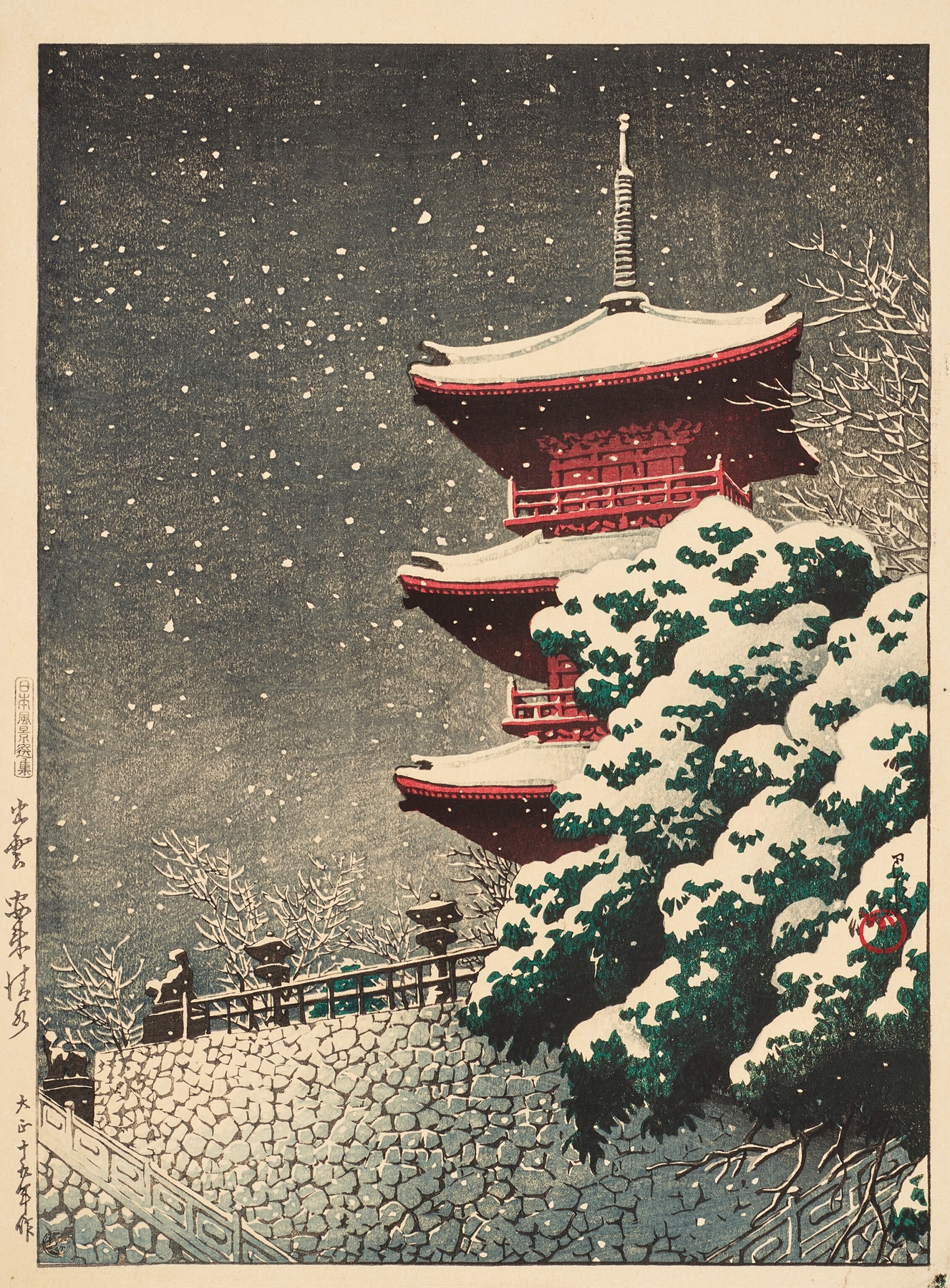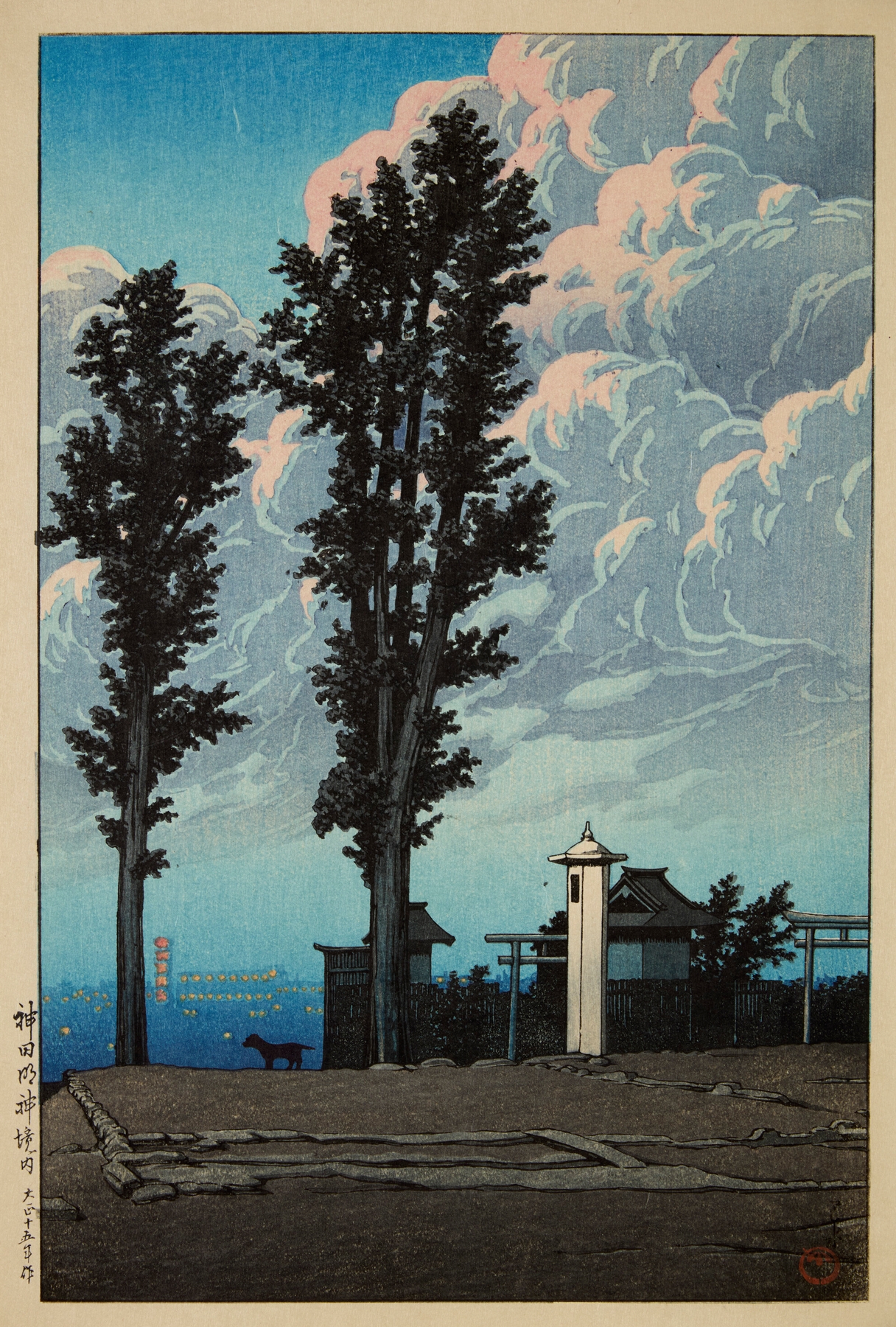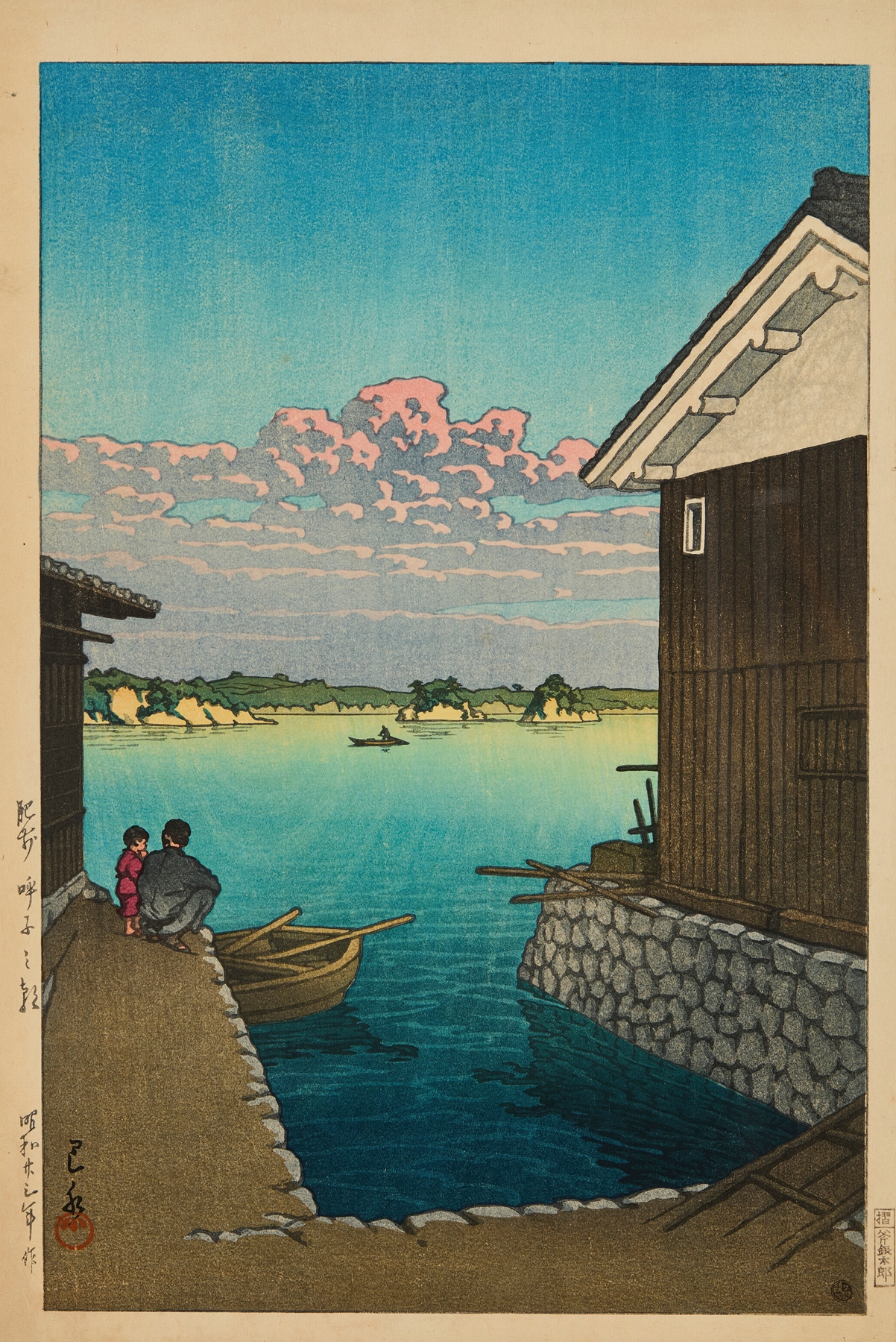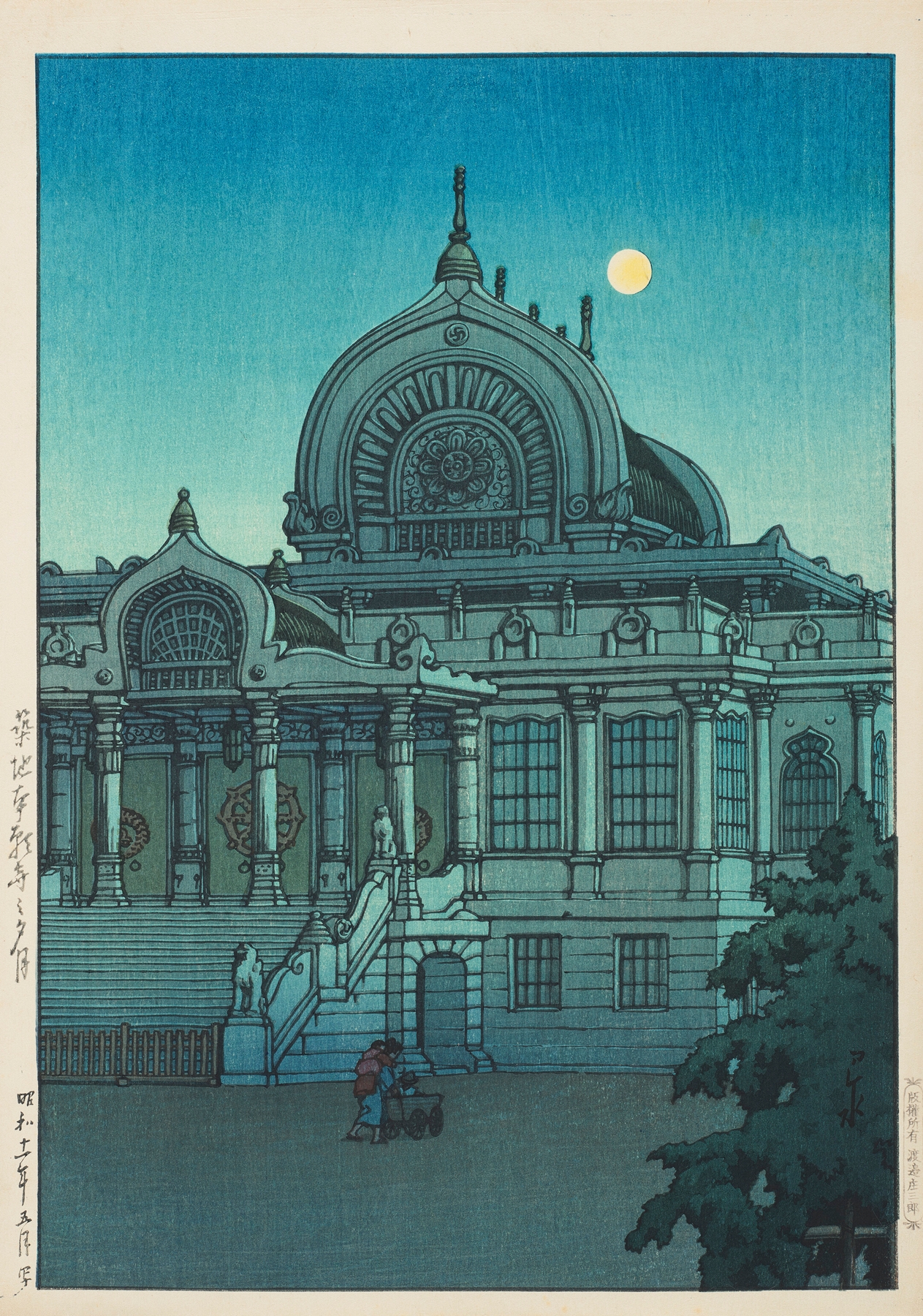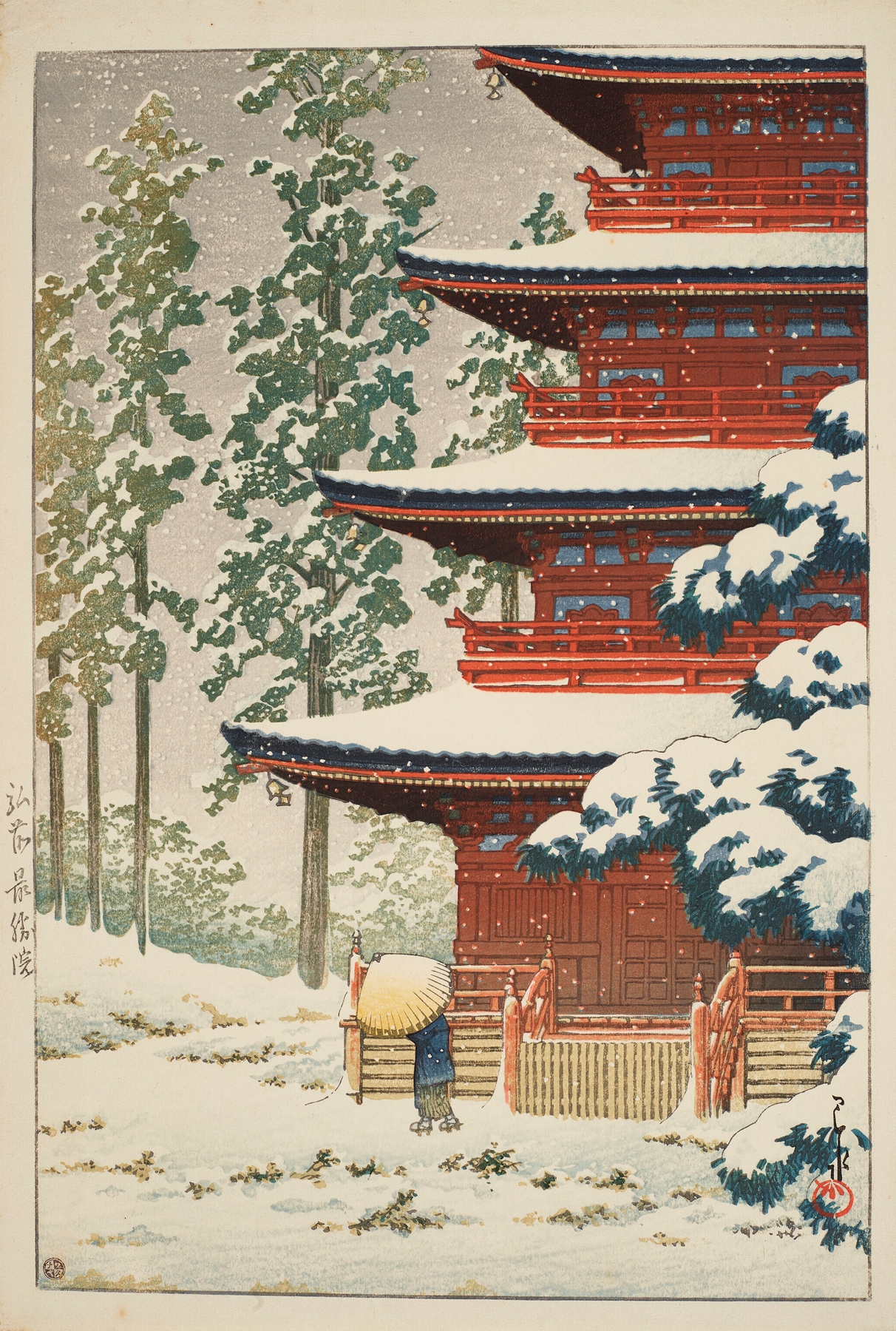
Can beauty exist without sorrow? In *Saisho-in Temple, Hirosaki*, Kawase Hasui presents a serene landscape that holds fragility at its core, where delicate beauty and an undercurrent of melancholy coexist harmoniously. Look to the foreground where a gentle cascade of cherry blossoms spills over, their soft pink hues contrasting beautifully with the quiet, muted colors of the temple's architecture. Focus on the way the light filters through the branches, casting a dappled glow on the stone pathway that leads to the temple's entrance. The composition invites a contemplative gaze, guiding your eyes from the blossoming trees to the solemn, almost protective presence of the temple itself, nestled amidst nature. Hidden within this tranquil scene are layers of emotional tensions. The cherry blossoms, ephemeral in their beauty, remind us of the transient nature of life, invoking a sense of fragility that resonates deeply with the viewer. Meanwhile, the sturdy, wood-paneled temple stands resolute against the delicate blooms, symbolizing endurance amidst the fleeting moments of beauty. This juxtaposition evokes a poignant reflection on the balance between joy and sorrow, suggesting that each moment of beauty is intertwined with the awareness of its impermanence. In 1936, while living in Japan, Kawase Hasui was deeply influenced by the shin-hanga movement, which sought to blend traditional woodblock techniques with modern sensibilities. During this period, he navigated a world on the cusp of change, as Japan faced both cultural transformation and the shadows of conflict. *Saisho-in Temple, Hirosaki* reflects his mastery in capturing the essence of his surroundings, merging the ephemeral beauty of nature with the enduring spirit of traditional architecture.