Fukagawa Kaminohashi (Kaminohashi Bridge in Fukagawa) — History & Analysis
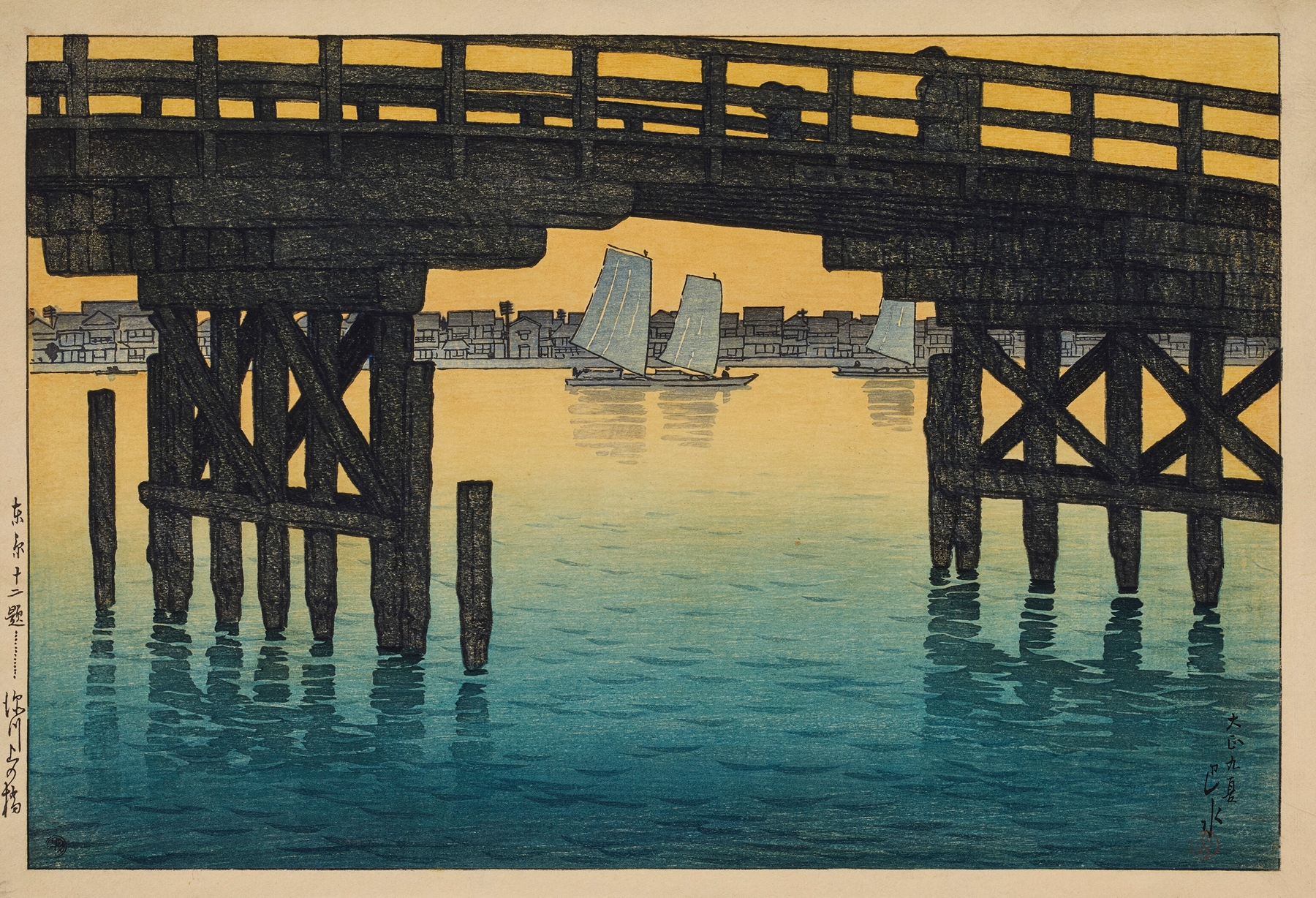
Can paint confess what words never could? In the stillness of a silent night, a bridge stands as a testament to longing, its sloping arch inviting the viewer into a world of quiet obsession. The soft blues and silvery tones shimmer under an ethereal moonlight, hinting at the secrets that linger in the shadows of the trees lining the embankment. It’s a moment suspended in time, where nature’s beauty entwines with human vulnerability. Look to the left, where the bridge’s gentle curve leads your eye toward the distant hills, guiding you through the composition. Notice how the water beneath reflects the deepening hues of twilight, creating a sense of tranquility and depth. The meticulous lines of the bridge contrast sharply with the fluidity of the waves, illustrating a delicate balance between human architecture and nature’s chaos. Each brushstroke reveals the artist's deft hand, further enhancing the dreamlike quality of the scene. There’s a tension here, a juxtaposition between the stability of the bridge and the ephemeral nature of the water below. The rising mist adds an air of mystery, suggesting that the connection between the two realms is both fragile and profound. This visual dialogue mirrors the human psyche, exploring an obsession with both the seen and the unseen, as if inviting the viewer to ponder their own unvoiced desires and fears. In 1920, Kawase Hasui painted *Fukagawa Kaminohashi* during a transformative period in Japan, marked by the Taisho era’s embrace of modernism and the revival of traditional ukiyo-e printmaking. Settled in Tokyo, Hasui was captivated by the changing landscapes of his city and the introspective nature of the people who inhabited them. His work reflects a moment where art began to bridge the past and present, serving as a meditative space in a rapidly evolving world.