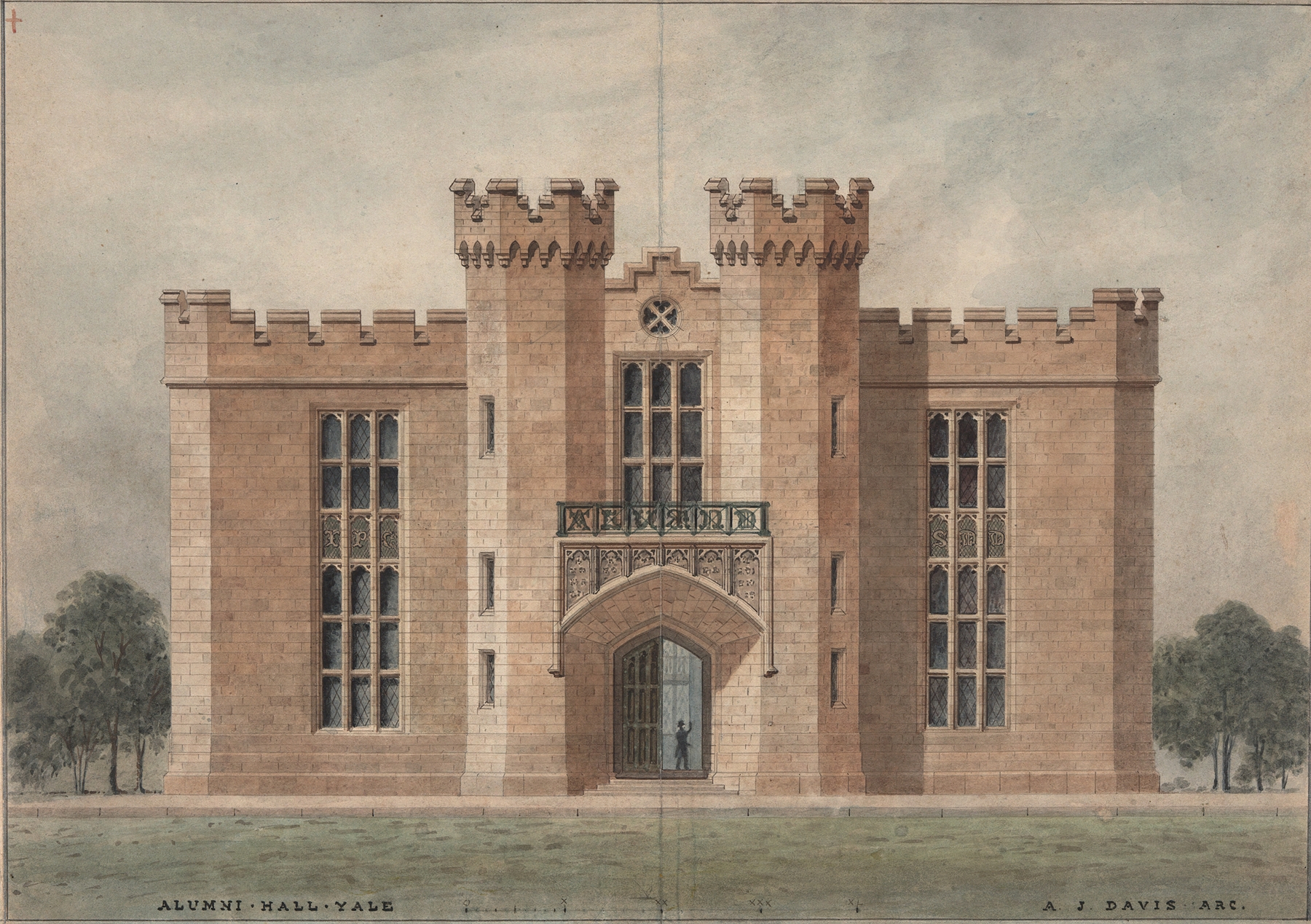
Gate Lodge for Amos G. Hull, Newburgh, New York (front elevation) — History & Analysis
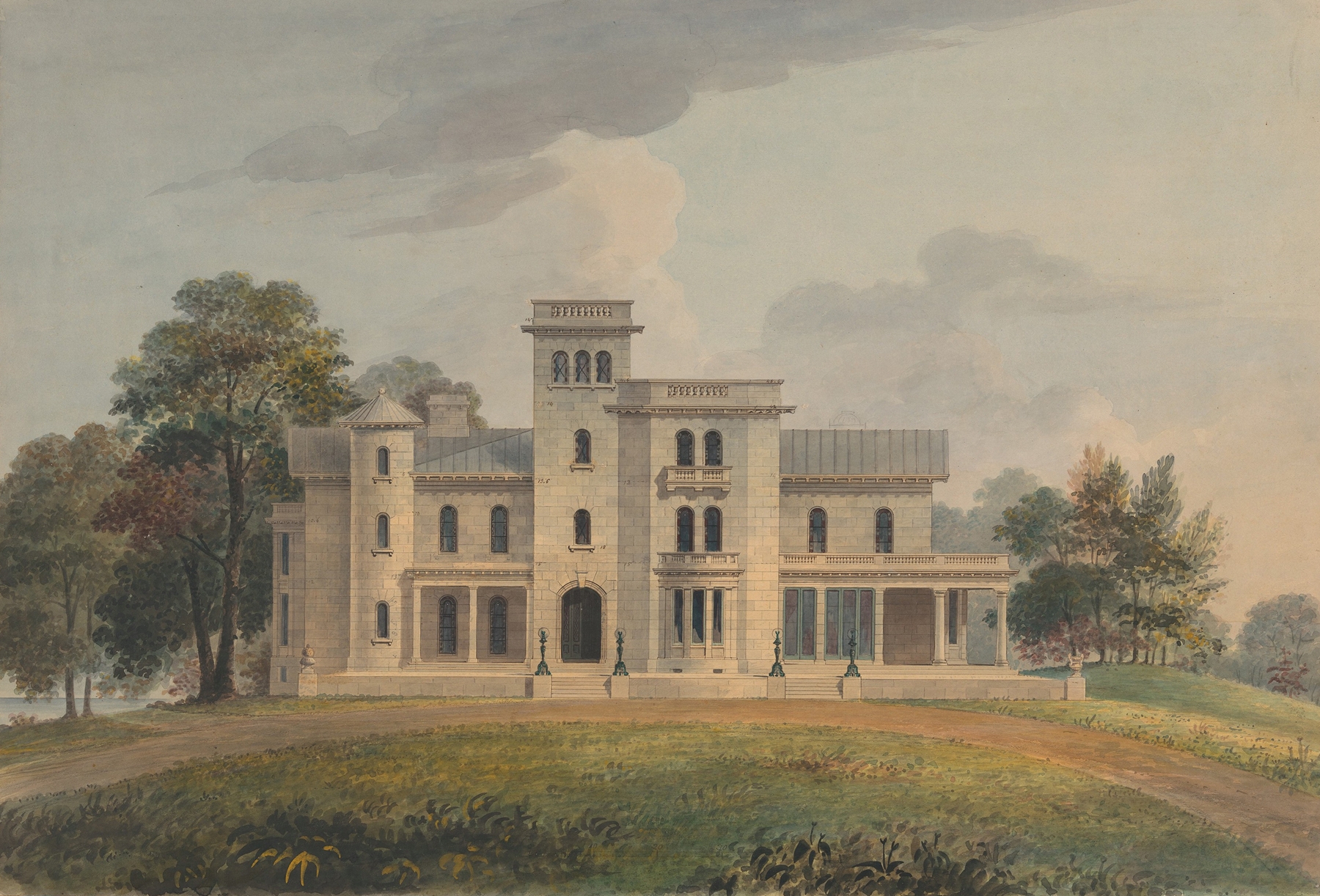
What if silence could speak through light? In Gate Lodge for Amos G. Hull, an architectural masterpiece, the interplay of shadows and illumination tells a story of elegance and restraint. Look to the left at the intricately detailed wooden doorway, its carved arches inviting yet mysterious. The light casts a gentle glow on the stone façade, emphasizing the harmonious balance between natural materials and the surrounding landscape.
Notice how the rich hues of green from the trees reflect in the quaint window panes — a testament to the seamless integration of the structure with its environment. The subtle use of symmetry draws the eye naturally toward the central entrance, creating a welcoming yet profound focal point. Within the carefully planned design, there exists an emotional tension between nature and structure, suggesting a dialogue between human ambition and the organic world. The architecture stands not just as a shelter but also as a symbol of a moment in time when man sought to coexist peacefully with the land.
Observe the slight weathering of the stone, hinting at the passage of time and the memories held within its walls, reminding us that even permanence is subject to change. In 1849, Alexander Jackson Davis was immersed in the burgeoning Gothic Revival movement in America, where his designs sought to reflect a romanticized vision of nature and history. Working in Newburgh, New York, he was influenced by the ideals of the picturesque and the sublime. This period in his career was marked by a growing demand for uniquely American structures that harmonized with the landscape, reflecting a cultural shift toward celebrating both beauty and individuality in architecture.