Gathering Flowers, Shinnecock, Long Island — History & Analysis
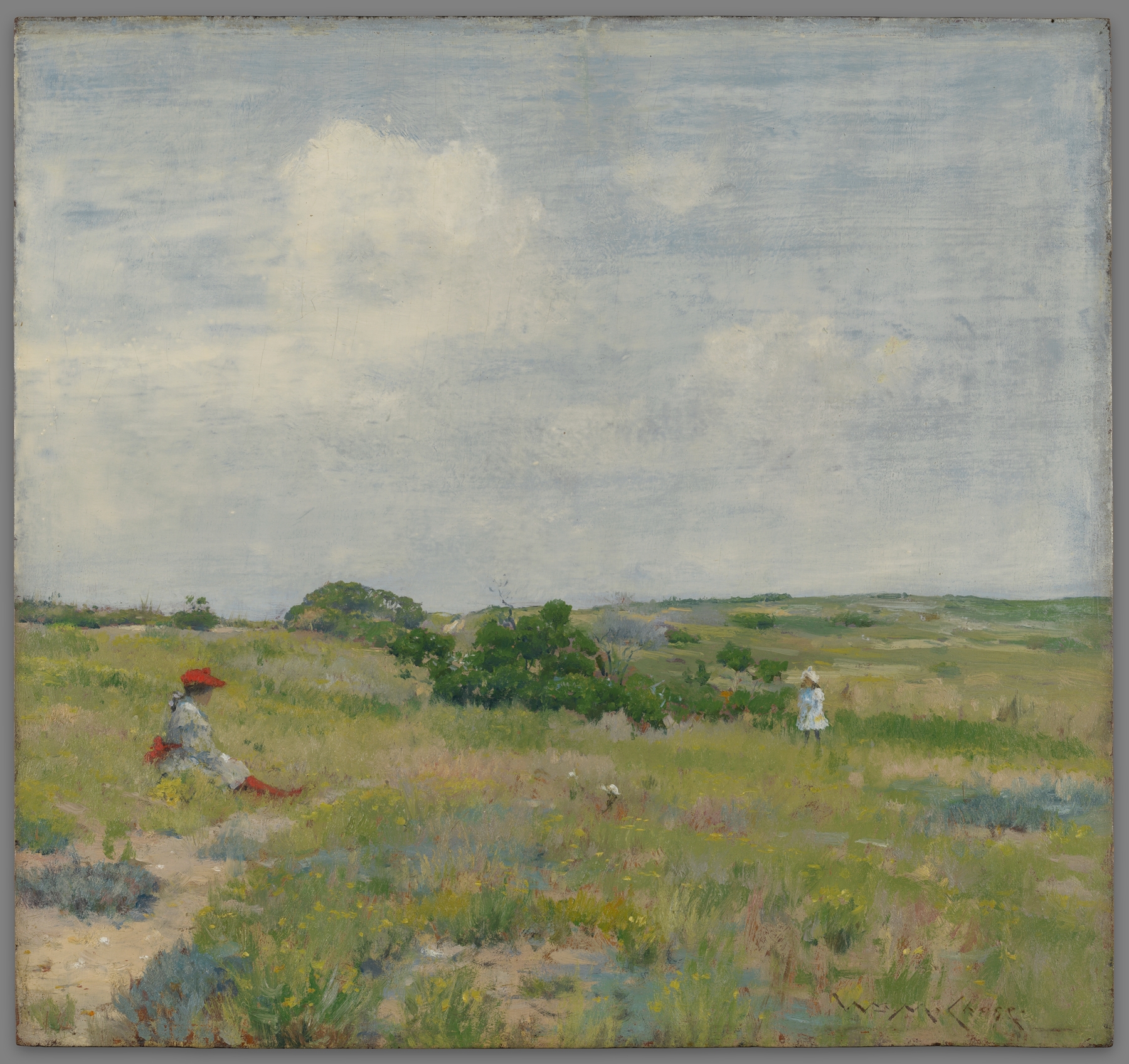
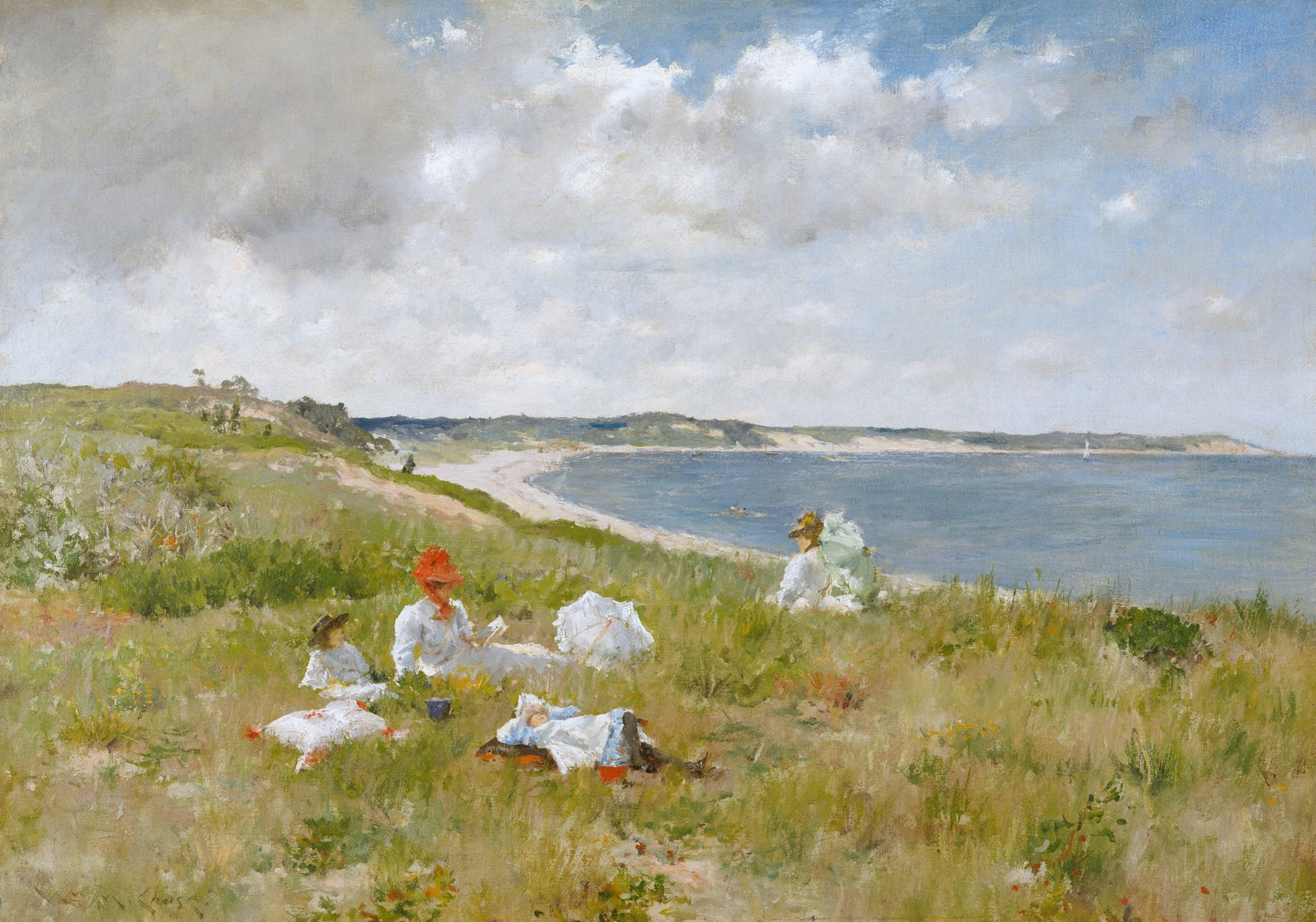
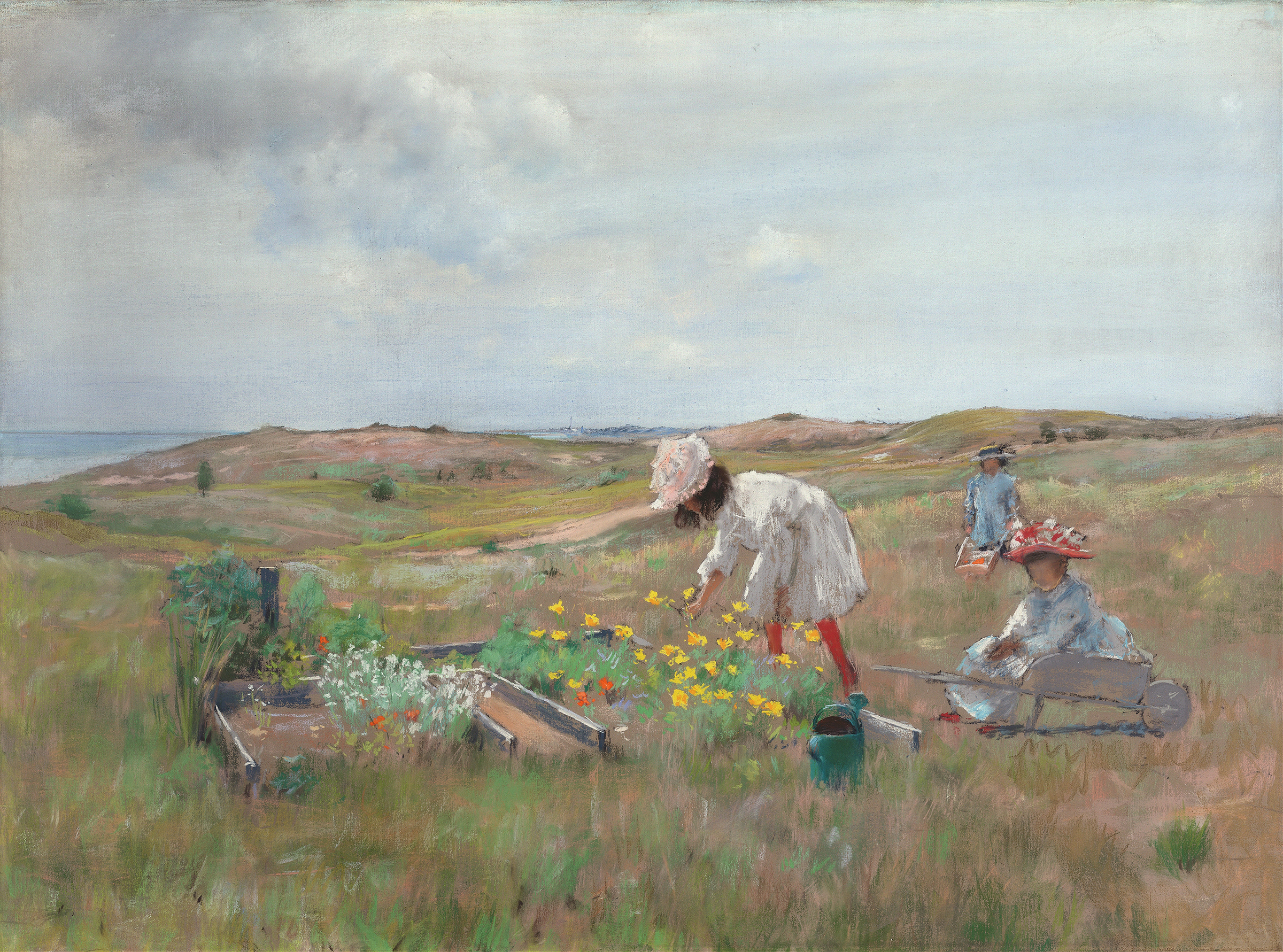
Could beauty survive in a century of chaos? This question echoes through Gathering Flowers, Shinnecock, Long Island, a work that encapsulates a moment of tranquility amidst the tumult of the late 19th century. Look to the left at the vibrant bouquet of wildflowers, their blossoms a riot of color against the muted greens of the grass. The delicate brushstrokes evoke a sense of movement, as if the flowers sway gently in a whispering breeze.
In the background, a figure leans down, hands reaching tenderly to gather the blooms, their soft attire merging seamlessly with the pastoral landscape. Notice how the dappled sunlight filters through shifting clouds, casting playful shadows and illuminating the scene, emphasizing the fleeting nature of beauty. Yet beneath the surface, this composition reveals deeper emotional tensions. The figure’s focused gesture speaks to both the reverence for nature and the transience of life, a poignant reminder that beauty must often be sought and gathered, lest it be lost.
The contrast between the serenity of the scene and the swirling currents of social and artistic revolution of the time hints at a fragile peace, one that could easily be disrupted by the chaos occurring beyond this idyllic setting. In the late 1890s, the artist found himself at a crossroads, both personally and within the art world. Having established a reputation as a leading figure in American Impressionism, he painted this piece while teaching at the Shinnecock Summer School of Art in New York. The influence of new artistic movements and a shifting cultural landscape shaped his work, as he sought to capture fleeting moments of beauty amidst the broader turbulence of society.