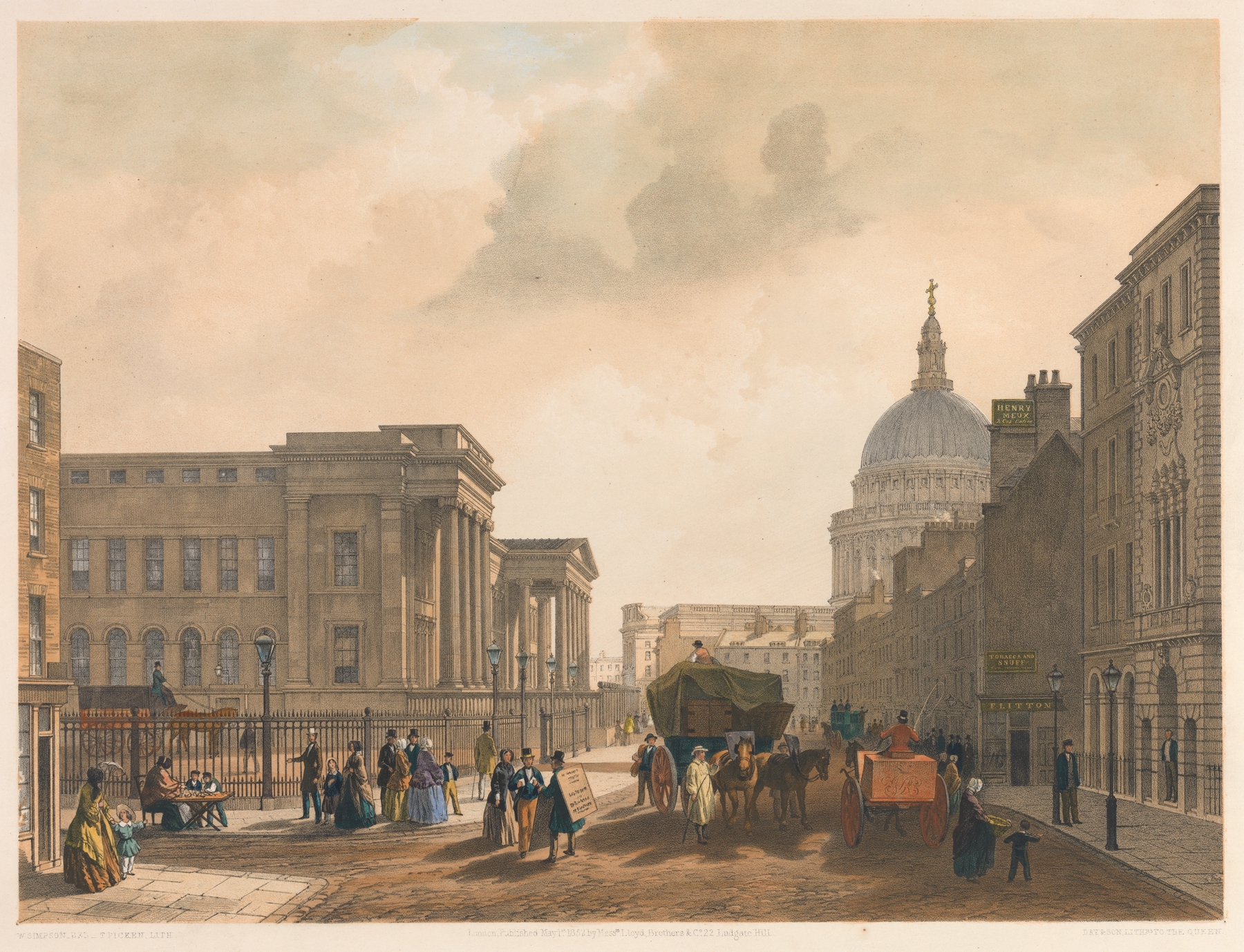
Did the painter know this moment would outlive them? In a world perpetually racing forward, it’s the quiet stillness of time captured in art that offers us a glimpse into the past. Look closely at the sweeping lines of the grand architecture, where the façade of the General Post Office commands attention. Notice how the soft light of a London morning caresses the stone, bringing forth a warm, inviting glow. The richly detailed columns and intricate carvings become more than mere embellishments; they represent the hope and bustling life of the Victorian era. The palette, dominated by earthy tones, creates a harmonious contrast against the cool, gray sky, encapsulating the essence of a city poised between tradition and progress. Beneath the surface, this artwork reveals layers of meaning. The post office, a symbol of communication and connection, stands resilient amidst an ever-changing world, reminding us of the fragile yet enduring threads that bind society. Each passerby, whether depicted or imagined, carries their own story, underscoring the tension between individual lives and collective experience. Time flows inexorably forward, yet captured in this scene, it pauses for contemplation—a moment both ordinary and monumental. In 1852, the artist found himself amidst a transformative period in London, where rapid industrialization reshaped the landscape. As he painted this iconic structure, the city was alive with innovation and social change, reflecting broader movements in art that sought to document reality. Simpson, known for his detailed architectural representations, embraced this moment, encapsulating the spirit of an era that would ultimately leave its mark on history.