George Sand's Garden at Nohant — History & Analysis
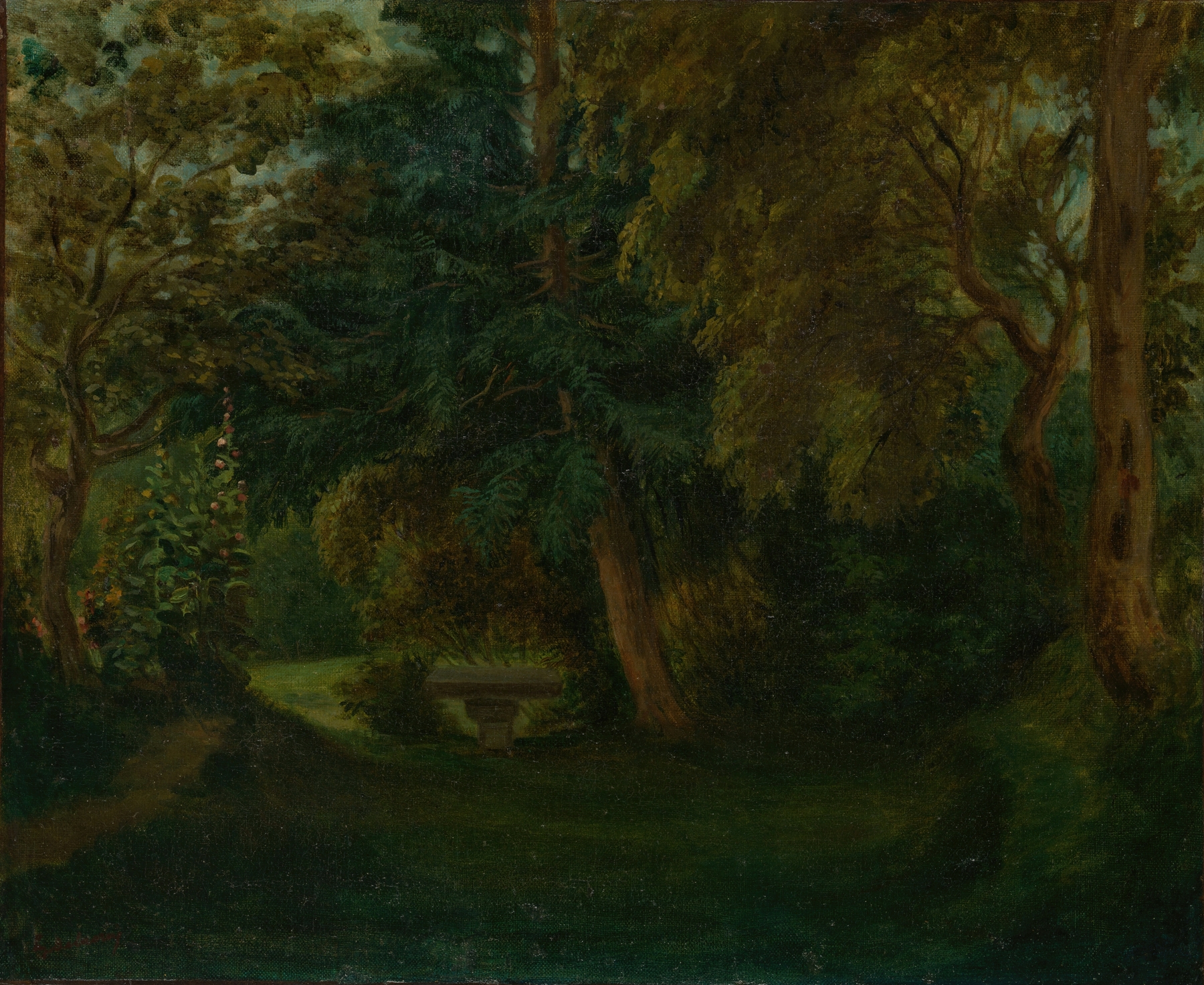
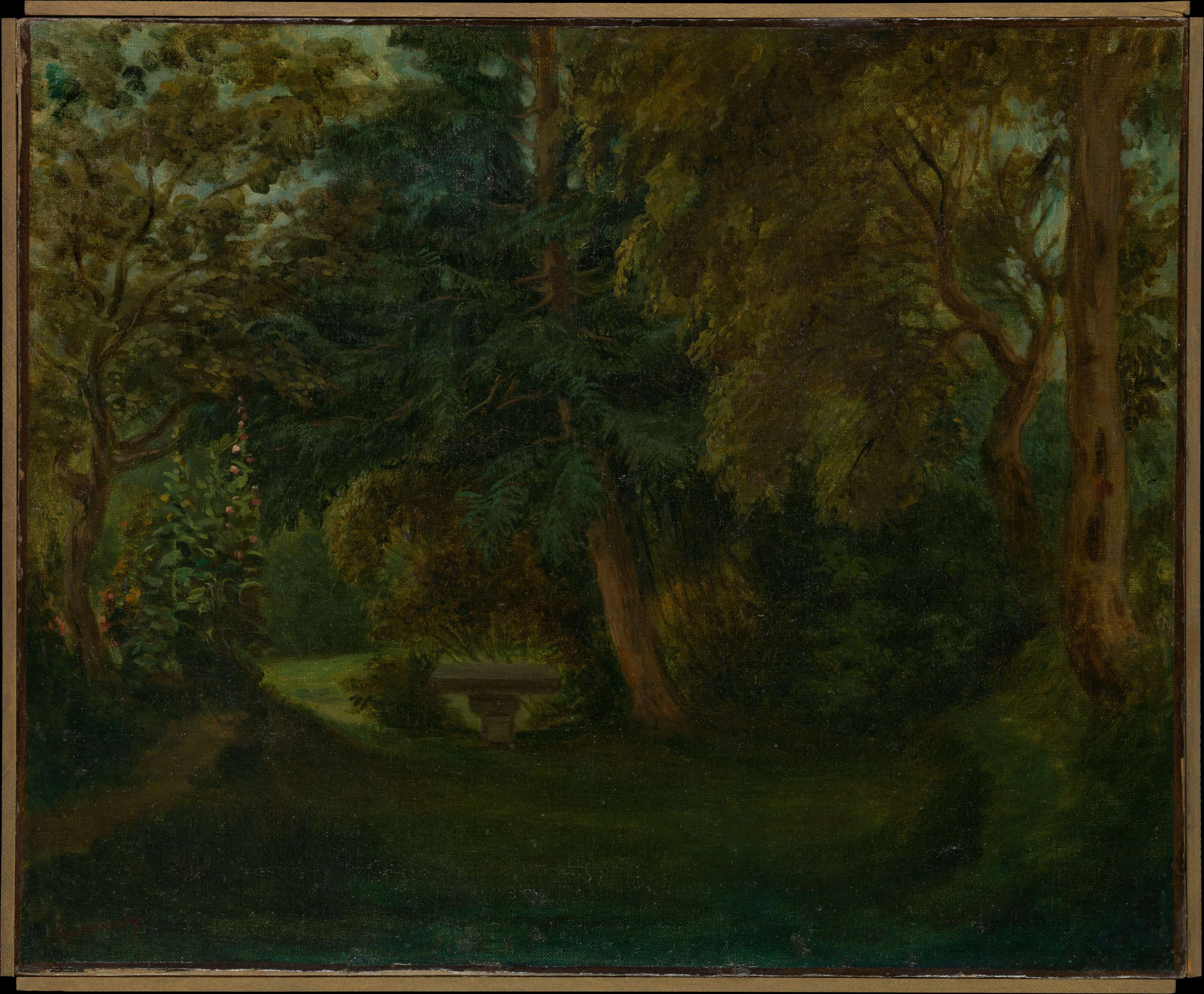
In the heart of a lush garden, vibrant with the chaos of blooming flowers, a figure stands contemplatively, surrounded by wild beauty. The sun filters through the leaves, dappling the ground with playful patches of light and shadow. Here, the air buzzes with life, yet a tremor of madness weaves through the scene, hinting at the unsteady balance between nature's serenity and the tumult within. Look to the left at the tangle of blossoms — their vivid reds and yellows leap out, almost as if they are yearning to escape the confines of the canvas. Notice how Delacroix employs bold brushstrokes, giving the flowers a sense of movement, suggesting a dance of chaos.
The figure of George Sand, dressed in flowing garments, draws your gaze to her intense expression, which captures both introspection and a profound connection with the surrounding wilderness. The green hues of foliage envelop the scene, creating a lush, immersive environment that seems to pulse with emotion. Amidst the vibrant chaos, contrasts emerge; the wild, unkempt flora mirrors the tumultuous passions of its occupant. The light illuminating Sand's face carries an ethereal quality, illuminating her thoughts and perhaps her struggles against societal constraints.
This tension between nature's disorder and human introspection evokes a sense of madness, revealing how deeply intertwined the psyche is with the natural world. Delacroix painted George Sand's Garden at Nohant between 1842 and 1843, during a time marked by romanticism and a shift in artistic expression in France. At this period, he grappled with his own identity and artistic direction, finding inspiration in the bohemian lifestyle of his contemporaries, particularly Sand, who was known for defying social norms. This work reflects not only his deep admiration for her but also the broader conversation about the role of passion and madness in art and life.