Hercules boeit Nereus — History & Analysis
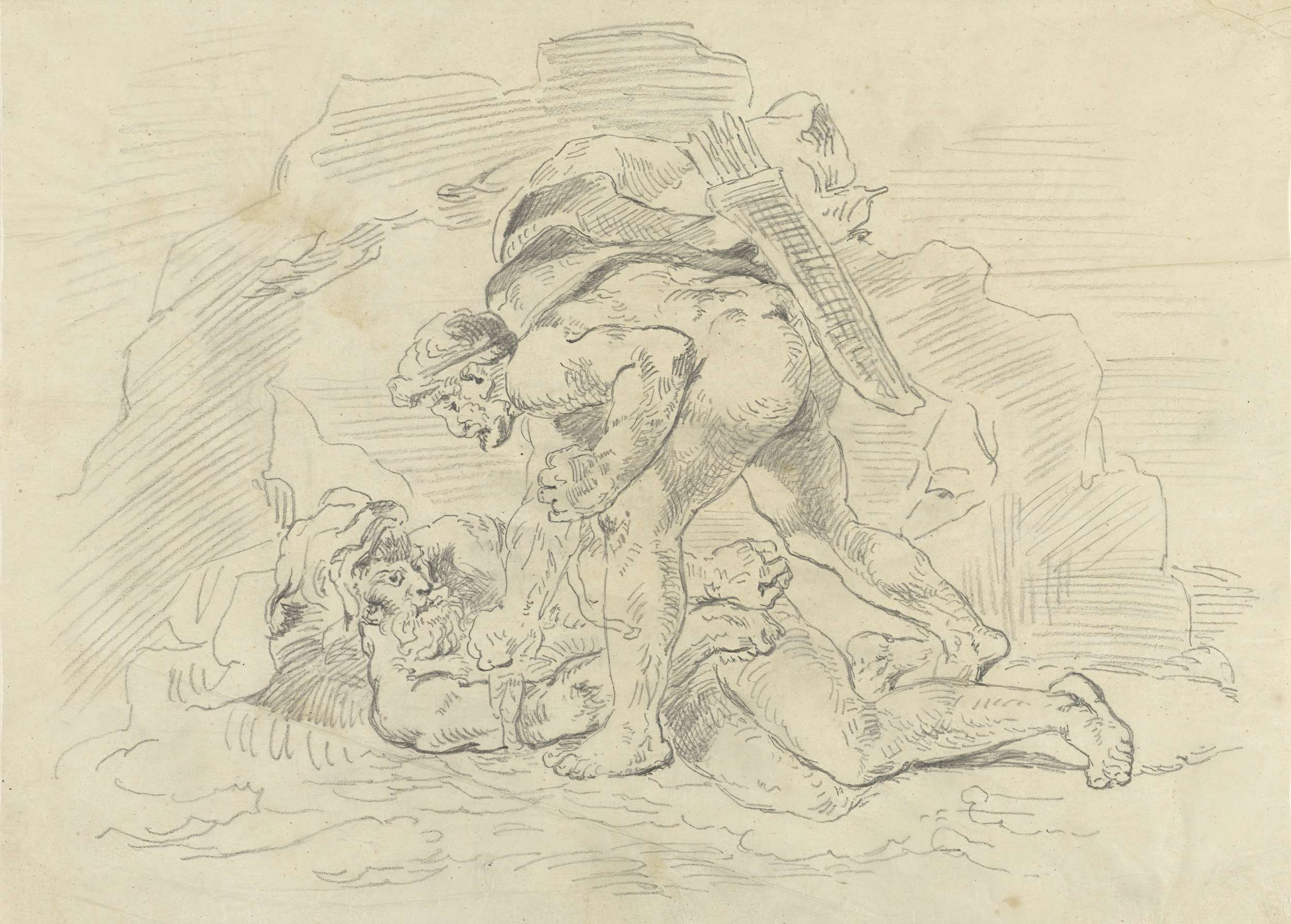
Can beauty exist without sorrow? The tension between joy and grief resonates through time, shaping legacies both personal and universal. Look to the center of the canvas, where Hercules, muscular and resolute, grapples with the soft, ephemeral form of Nereus. The contrasting colors—Hercules's rich, earthy tones against Nereus's ethereal blues—draw the eye into a struggle that embodies the clash of strength and vulnerability. Notice how the light accentuates the sinewy contours of Hercules’s body, while casting Nereus in shadow, suggesting a deeper emotional conflict.
The swirling brushstrokes evoke movement, creating a sense of drama that encapsulates the mythic narrative. Delve into the expressions: Hercules's determined resolve juxtaposed with Nereus’s resigned calmness. This interplay invites contemplation on the nature of power and entrapment. The artist captures not just a physical confrontation but the emotional weight of legacy—Hercules's quest for glory against the backdrop of Nereus’s wisdom and the inevitability of fate.
There’s a poignant reminder that every victory comes with its own price, perhaps hinting at the sorrow lurking beneath even the most triumphant displays of strength. Eugène Delacroix painted this work in 1849 during a transformative period in his career, marked by a shift toward romanticism that embraced emotion and individualism. In a world grappling with political upheaval and artistic innovation, he sought to convey deeper narratives through his dramatic compositions. Hercules boeit Nereus reflects not only a personal exploration of myth but also the broader cultural conversations of his time, as art became a vessel for both expression and legacy.