George Sand’s Garden at Nohant — History & Analysis
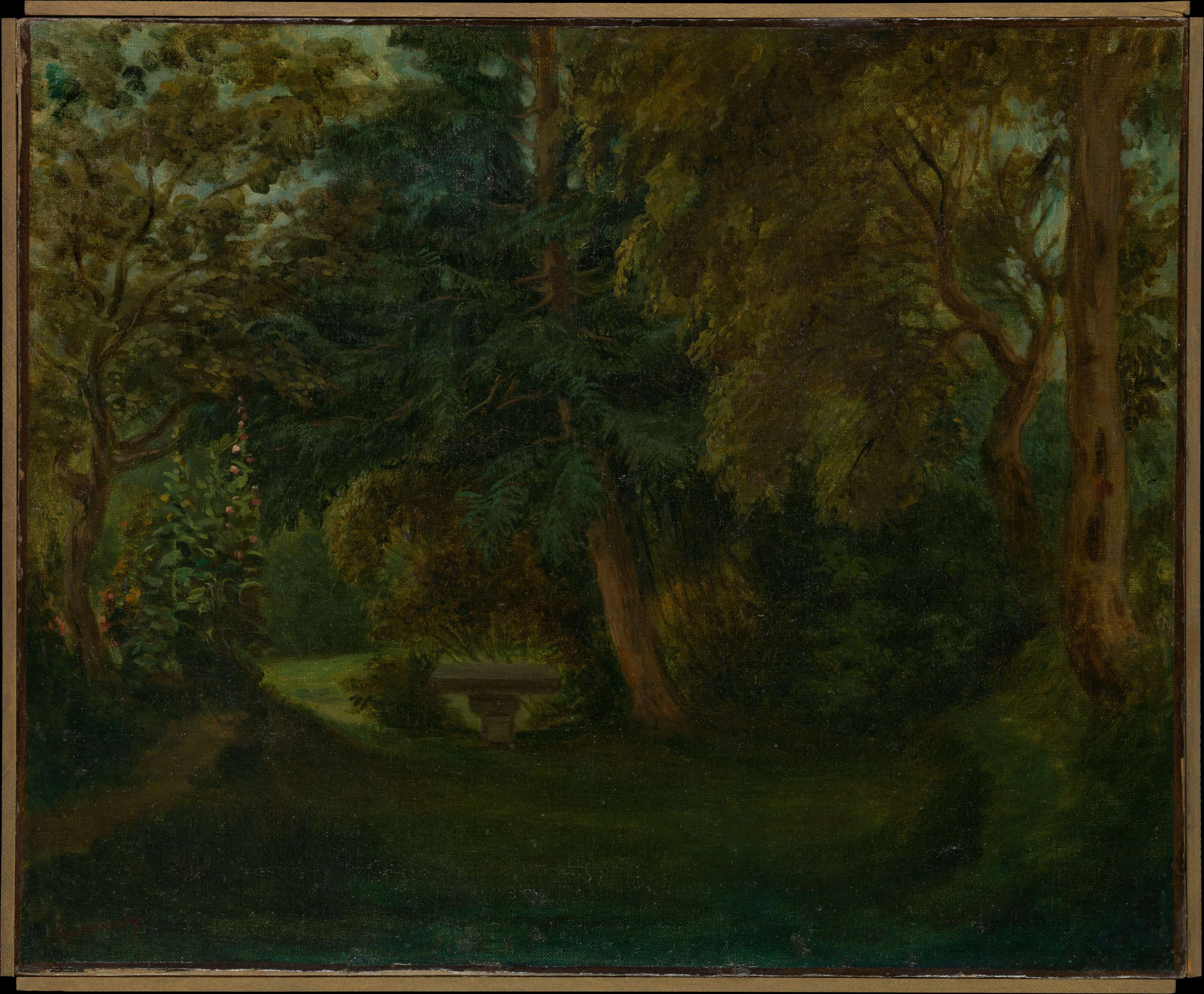
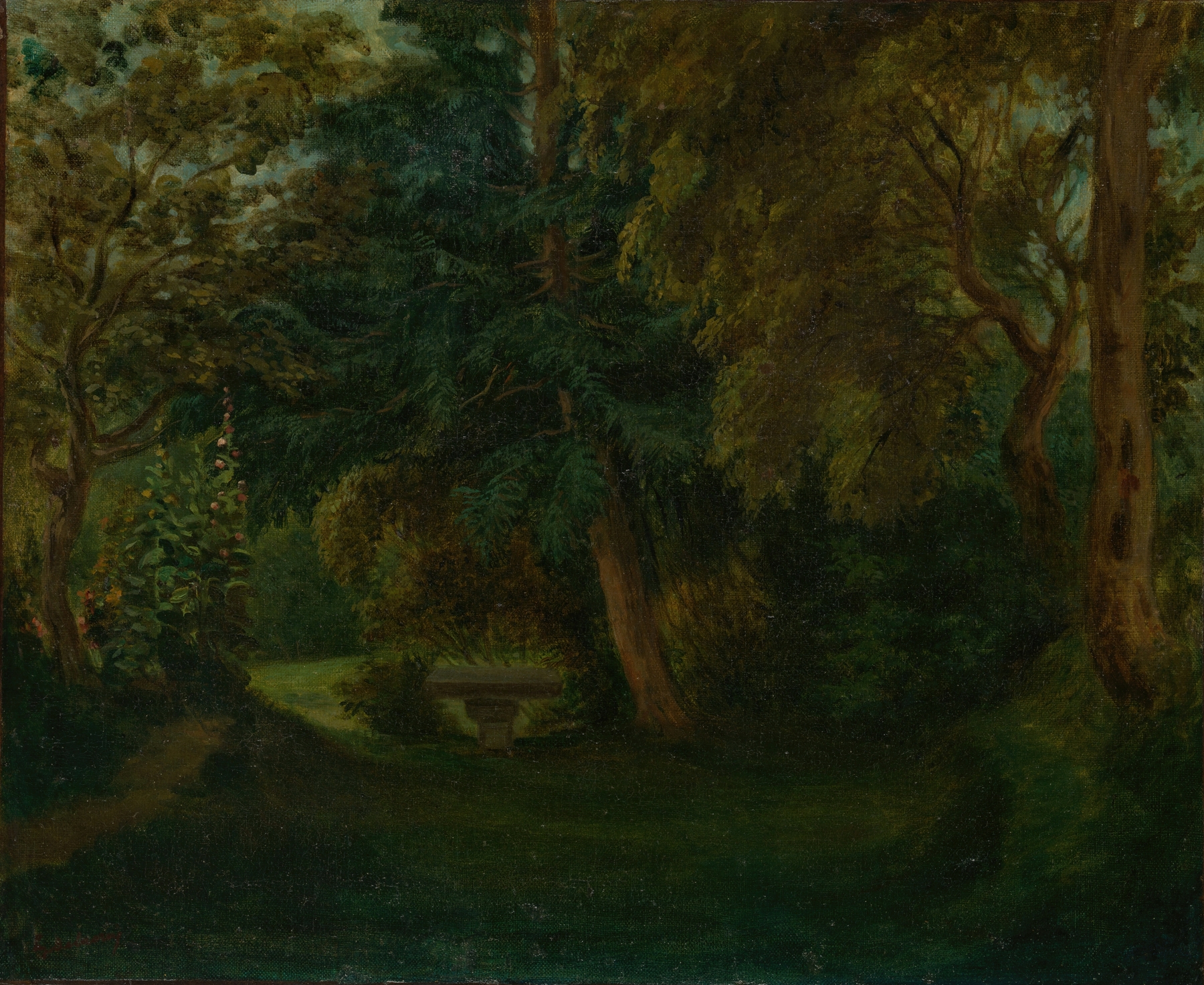
The air is thick with the scent of blooming flowers as sunlight filters through the gentle embrace of leaves. A woman, seated gracefully on a worn stone bench, scribbles in a notebook, lost in thought. The garden, alive with vibrant greens and splashes of color, holds a tranquil yet palpable tension, whispering secrets of creativity and time to anyone willing to listen. Focus your gaze on the woman at the center of the composition, her figure framed by rich foliage. Notice how the dappled light plays upon her face, illuminating her contemplative expression while casting soft shadows that suggest both solitude and inspiration.
Delacroix employs a lush palette of greens and earth tones, imbuing the scene with a warmth that contrasts with the cold rigidity of time passing. The carefully arranged flowers draw the eye, each petal a reminder of fleeting beauty. Delve deeper into the subtle connections woven throughout the scene. The juxtaposition of the natural world against the figure’s introspection highlights the duality of creation and ephemeral existence. The surrounding flora, vibrant yet transient, mirrors the fleeting moments of genius that can either bloom or wither away.
The quiet intensity of this moment suggests a profound relationship between the artist and their environment, where creative energy is both nurtured and constrained by the relentless march of time. During the years 1842 to 1843, Delacroix painted this idyllic garden while visiting George Sand, a prominent figure in French literary circles known for her bold ideas and lifestyle. This period marked a significant exploration of color and emotion for the artist, as he sought to capture the essence of beauty in his surroundings amidst the evolving landscape of Romanticism in France. The painting serves as a testament to both the artist's personal connections and the artistic currents defining that era.