The Edge of a Wood at Nohant — History & Analysis
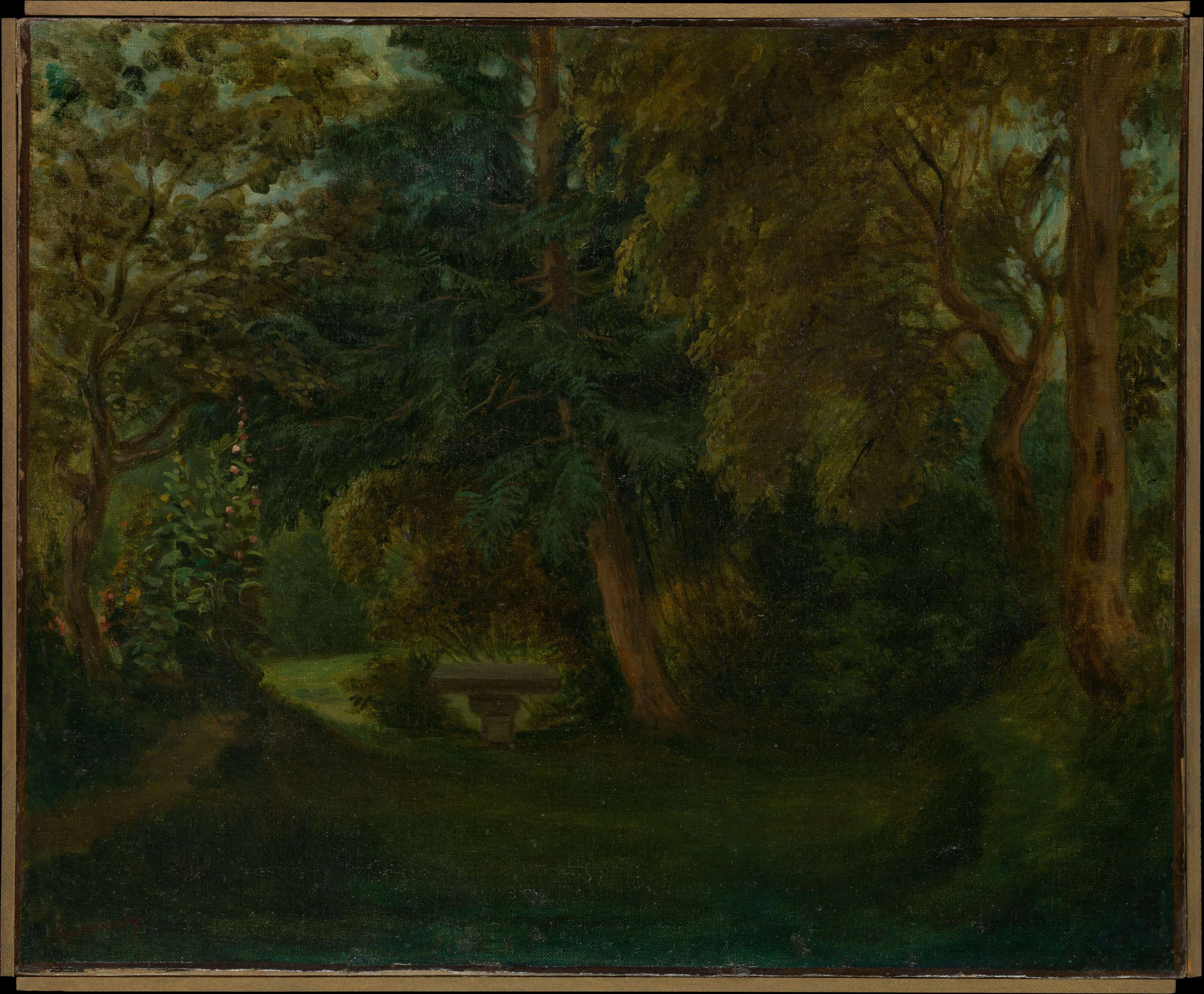
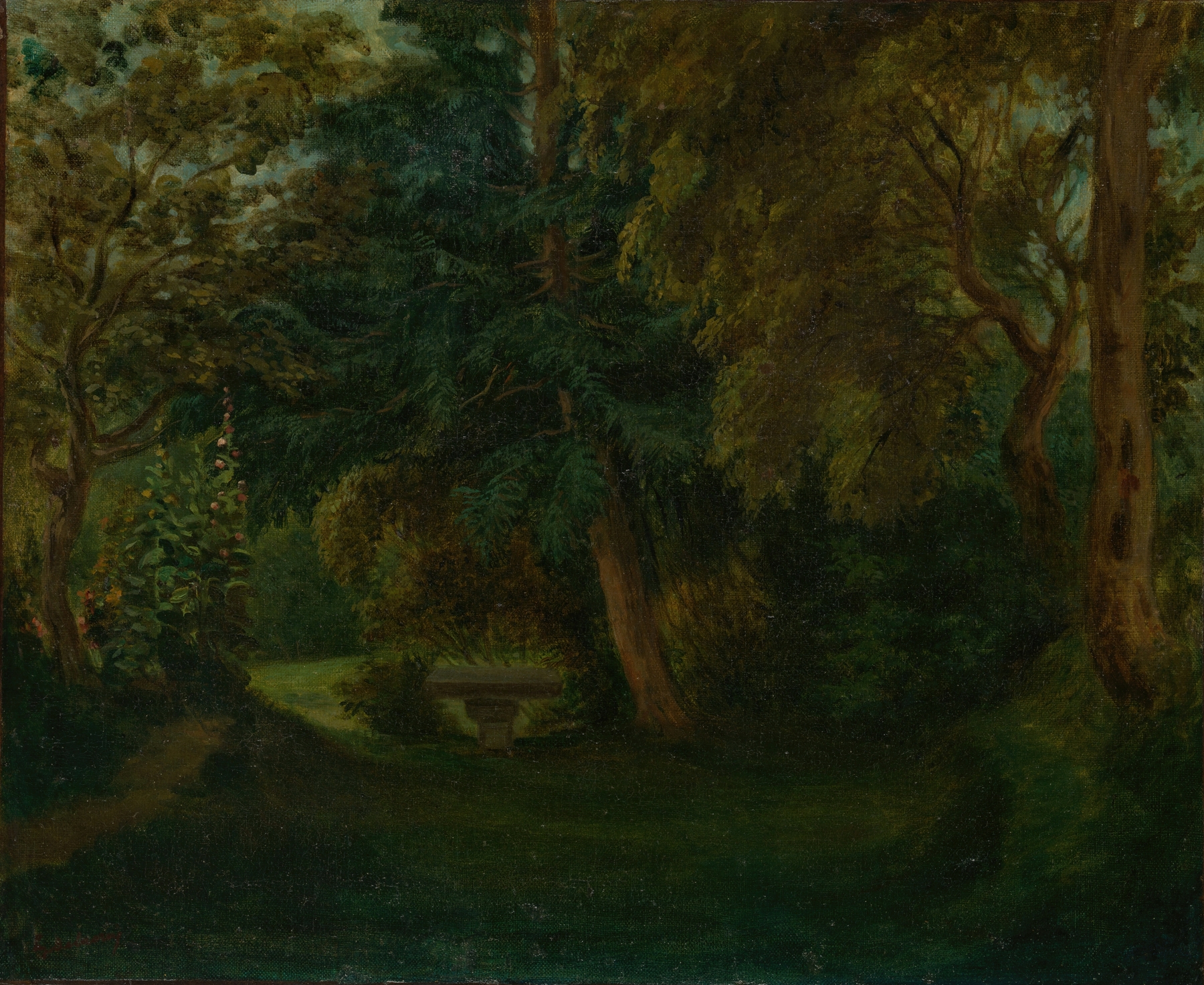
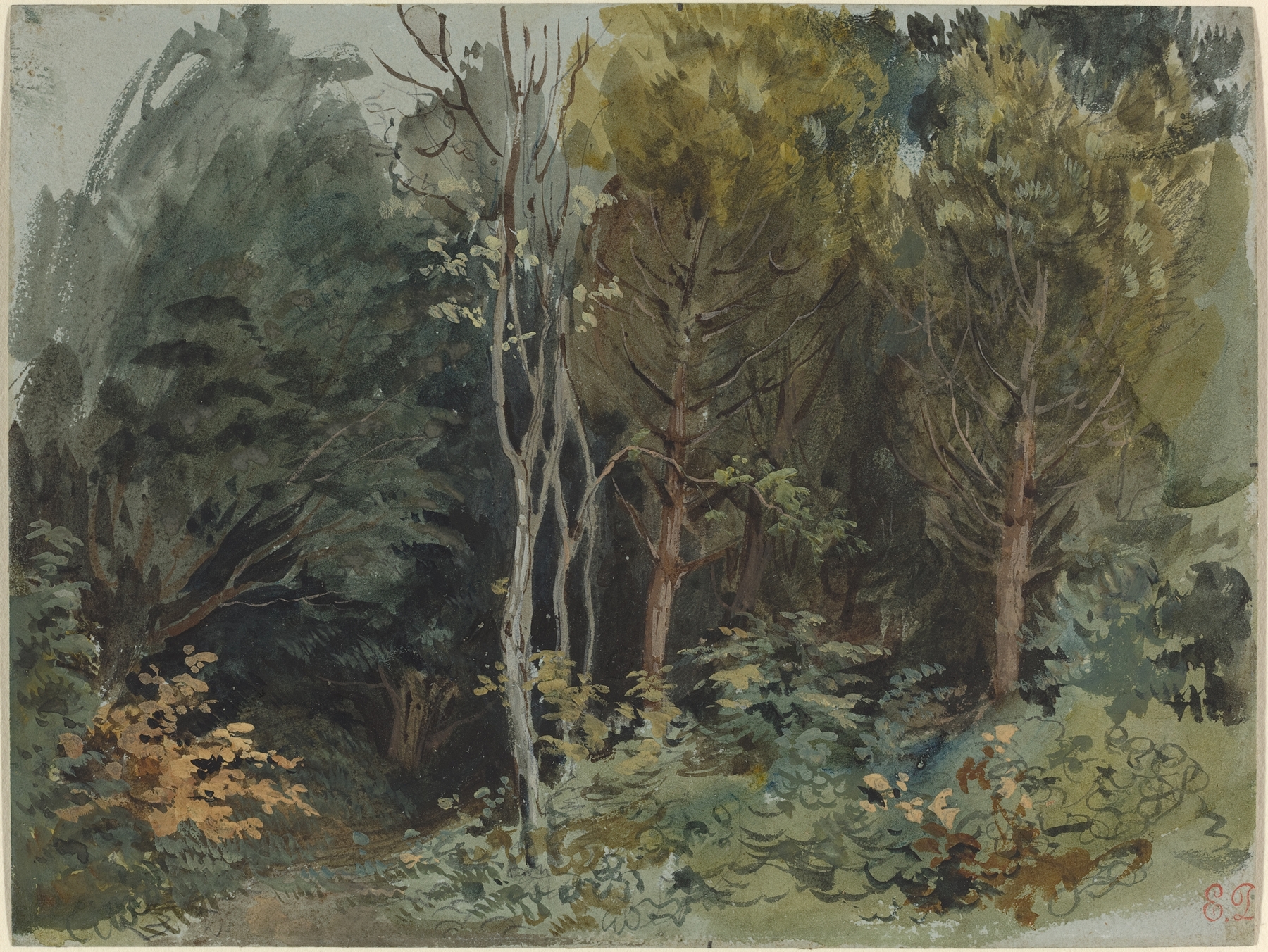
“Sometimes beauty is just pain, disguised in gold.” In the throes of a changing world, the delicate balance between light and shadow reveals deeper truths tucked away beneath the surface. Look closely at the left side of the canvas, where a tangle of trees frames the scene, their gnarled branches stretching upward. The thick greens and browns of the foliage create a rich canopy, contrasting with the soft gold and amber light that spills through the leaves. This delicate interplay of hues invites the viewer's gaze deeper into the heart of the wood, where the ground is a tapestry of muted colors, hinting at the complex symphony of nature that exists beyond our immediate perception.
Delacroix’s brushwork, both loose and purposeful, evokes a sense of movement, as if the very air is alive with whispers. Yet, within the serene beauty of this wooded edge lies an undercurrent of tension—an unsettling reminder of the tumultuous political climate of the era. The vibrant light breaking through the leaves symbolizes hope and renewal, while the dense shadows lurking beneath the branches hint at the chaos and revolution brewing outside of this tranquil refuge. The woods, though seemingly peaceful, serve as a metaphor for the volatile human spirit, layered with both promise and foreboding.
Created between 1842 and 1843, this work emerged during a time when Delacroix was deeply engaged with the Romantic movement, which emphasized emotion and nature. Living in France, he was responding to the aftermath of the July Revolution of 1830, grappling with themes of struggle and transformation in his art. This painting not only captures an idyllic moment but also reflects the artist's inner conflict and broader societal upheavals, revealing how nature can be both a sanctuary and a mirror to human experience.