Gezicht op het Pesthuis (Buitengasthuis) bij Amsterdam — History & Analysis
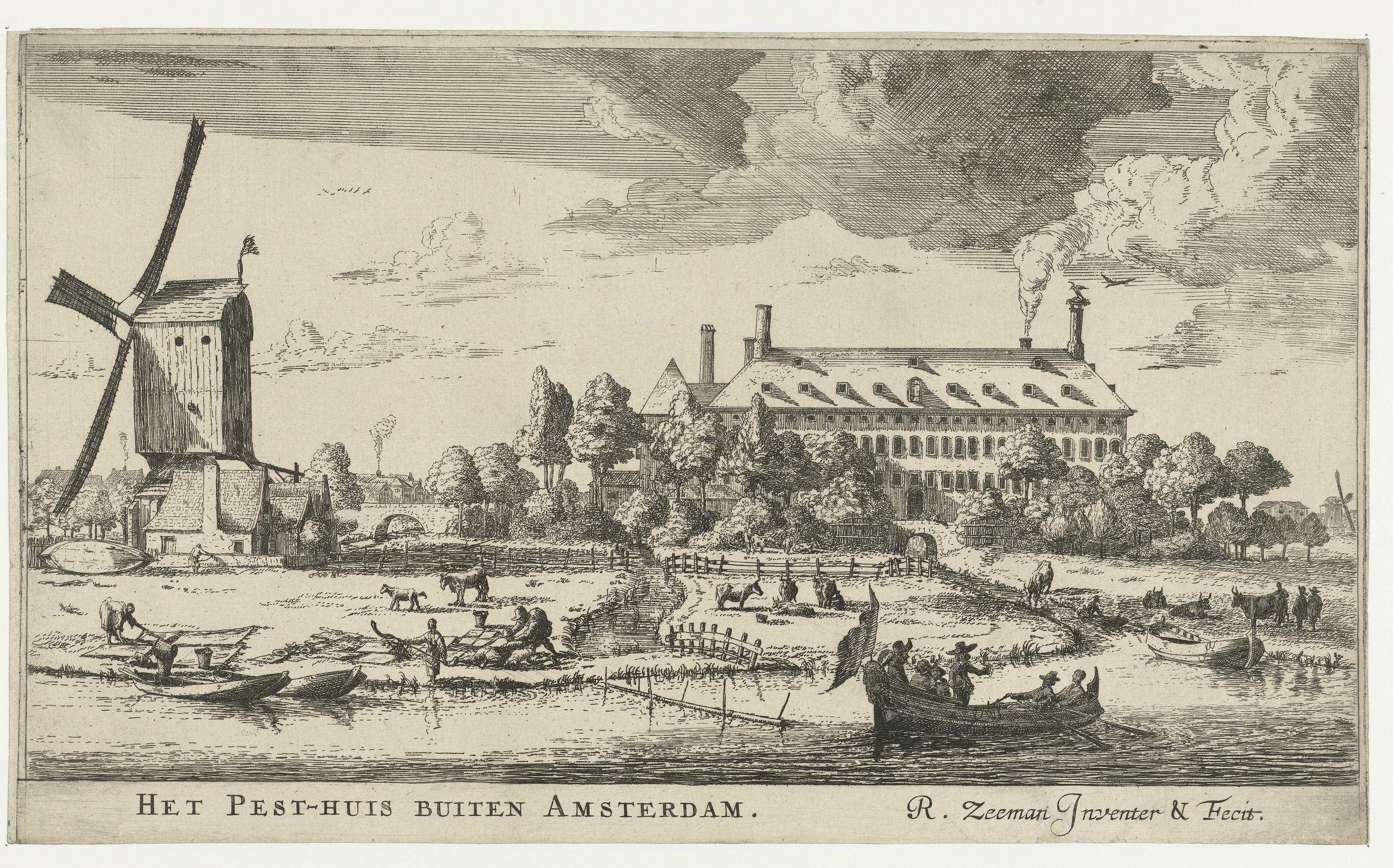
“Between color and silence, truth hides.” Shadows play a silent yet profound role in art, whispering secrets that the eye must strive to unveil. Look closely at the left side of the canvas, where the sun-bleached facade of the Pesthuis stands resolute against the gentle caress of shadows. The stark contrast between light and dark draws your gaze, guiding you inward toward the intricacies of the architecture. Notice how the warm hues of ochre and sandy tones evoke a sense of tranquil decay, while the deep shadows add a layer of somberness that hints at the building's purpose — a place of refuge for the afflicted.
The delicate interplay of light and shadow not only shapes the structure but also breathes life into the surrounding landscape, where a sense of quietude prevails. Delve deeper, and you'll uncover emotional tensions reflected in the serene yet desolate atmosphere. The bustling life one might expect near a hospital is notably absent, replaced instead by a solitary figure who appears to contemplate the scene before him. This stark absence of movement creates an unsettling contrast, prompting reflections on mortality and human connection.
The shadows cast by the trees seem to cradle the figure in a gentle embrace, inviting a dialogue with the past and igniting questions about the experiences held within those walls. Reinier Nooms painted this piece between 1652 and 1653, during a time when Amsterdam was grappling with the aftermath of the bubonic plague. An era marked by both artistic flourishing and deep societal scars, Nooms found inspiration in the profound significance of places like the Pesthuis. His work captures an intersection of personal and collective memory, reflecting both a moment in the city's history and his own artistic journey as he sought to navigate the complexities of life and death through his brush.