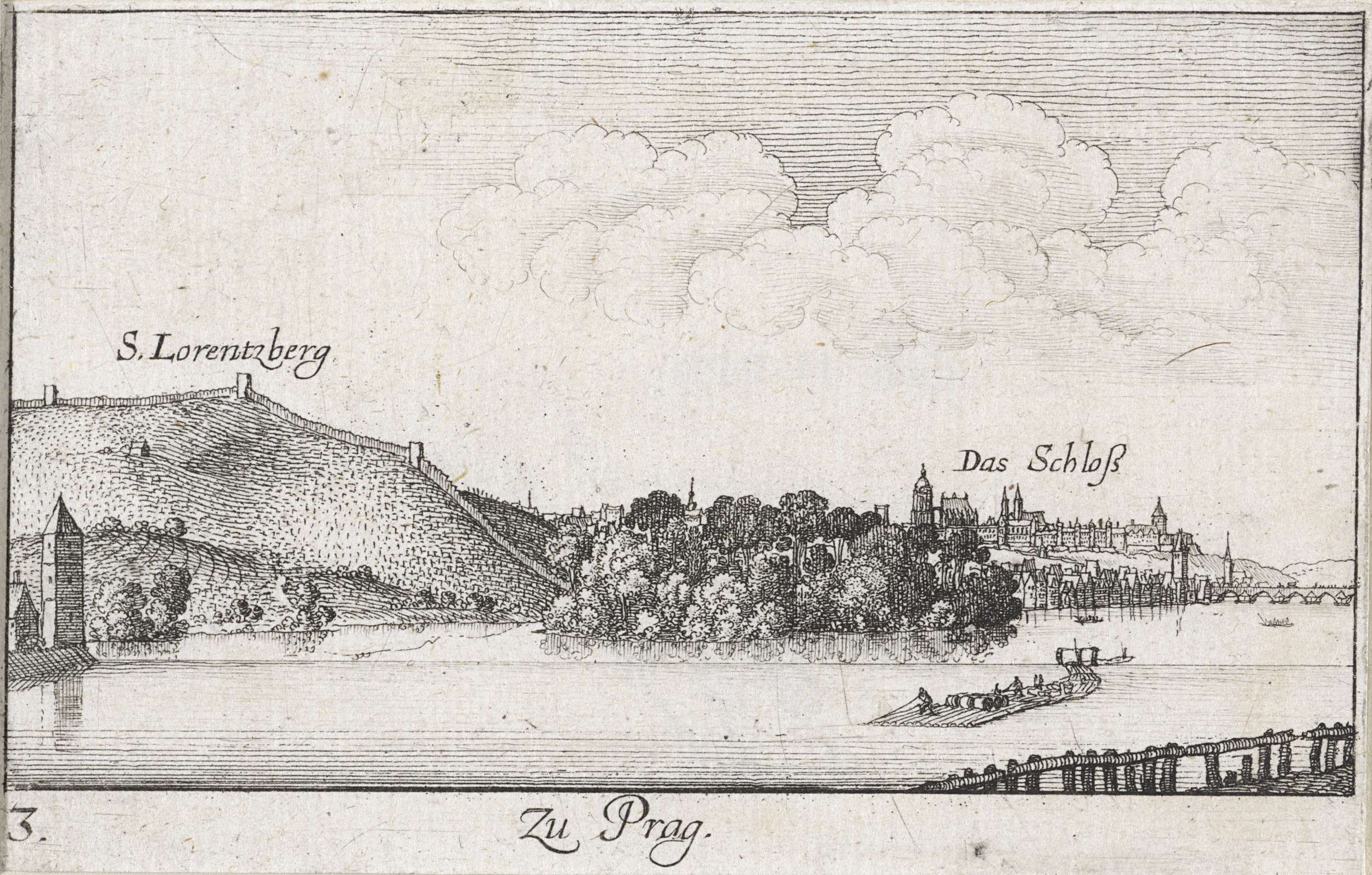
When did color learn to lie? The delicate hues of *Gezicht op Praag vanaf de Moldau* evoke an intricate dance between reality and illusion, highlighting the fragility of perception. Look closely at the foreground, where the river's gentle current reflects a palette of soft blues and greens. This shimmering surface contrasts sharply with the meticulously detailed silhouettes of the city’s architecture rising in the background. The interplay of light and shadow, masterfully rendered, invites your gaze upward towards the towering spires and domes, hinting at the profound history and culture of Prague. Notice how the artist employs fine lines to create texture, lending each structure an ethereal quality that seems to float above the water. Beneath the visual splendor lies a deeper commentary on the passage of time and the transience of beauty. The juxtaposition of the flowing river with the rigid lines of the buildings suggests an ongoing dialogue between nature and human endeavor, between the ephemeral and the eternal. The soft tones and architectural precision speak to a world that is both vivid and hauntingly fragile, urging viewers to consider the impact of their own transient existence against the backdrop of history. Wenceslaus Hollar created this masterpiece in 1635 while in Prague, having fled his native country due to political unrest. At this time, Europe was in the throes of religious conflict and artistic transition, with the Baroque style gaining prominence. Hollar’s work reflects both the beauty of his surroundings and the fragility of the era, capturing a moment that both celebrates and mourns the impermanence of life and culture.