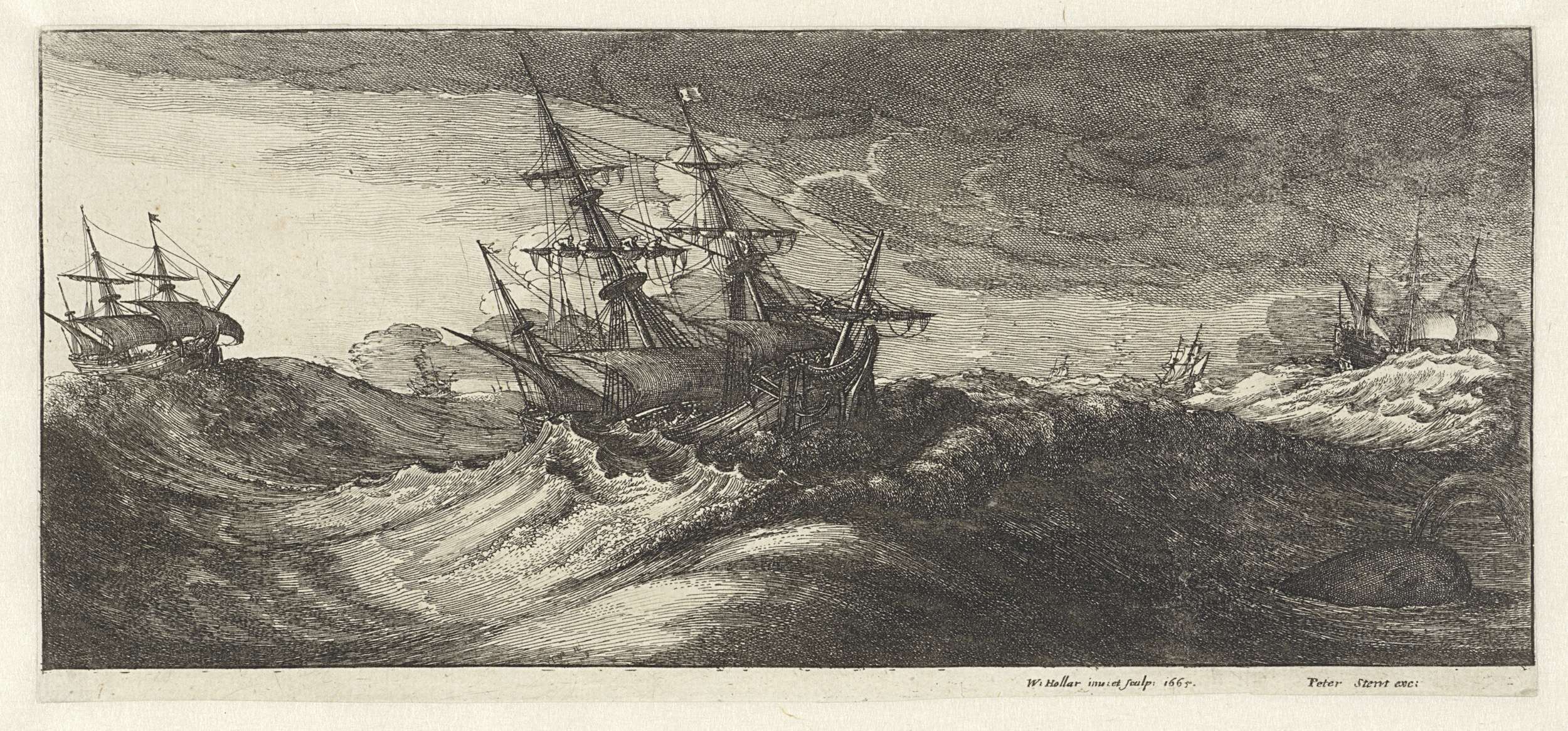
Who listens when art speaks of silence? In the heart of chaos, memory and imagination collide, revealing truths beyond mere observation. Look to the center of the composition where tumultuous waves rise and swell, capturing the raw energy of the sea. Hollar employs dramatic chiaroscuro, with shadows dancing upon the cresting waves, accentuating the violent interplay between light and dark. Notice how the ships, fragile yet determined, are depicted with meticulous detail, their sails strained against the wind, while the fearsome outline of a whale emerges from the depths, a powerful reminder of nature’s might. This artwork embodies conflict not only between man and nature but also within the human psyche. The ships symbolize ambition and human endeavor, battling against the relentless forces of the wild. Meanwhile, the whale, often seen as a creature of predilection and mystery, invites contemplation on the fragility of existence and memory's role in our understanding of past struggles. Here, Hollar captures the tension between survival and surrender, between the vastness of the sea and the intimate battles fought within. In 1665, Wenceslaus Hollar was living in London, a city recovering from the tumult of civil war and grappling with its identity. This period marked a significant shift in artistic expression, with a growing interest in the natural world and its ferocity. Hollar’s work, often characterized by intricate detail and dramatic scenes, reflects both his fascination with the maritime landscape and the broader anxieties of his time, capturing a moment where humanity confronts the sublime forces of nature.