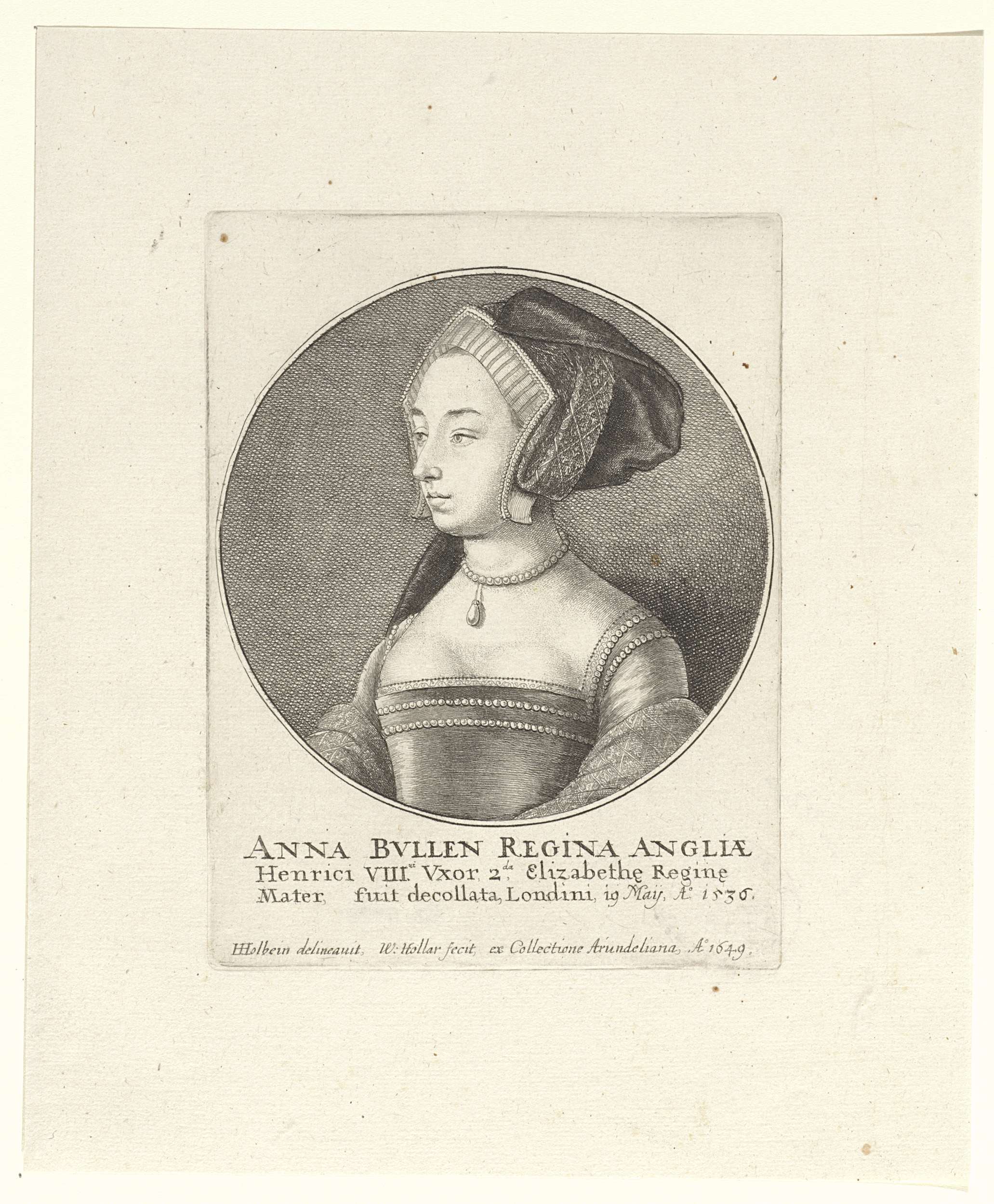
Where does light end, and longing begin? In *Portret van Anna Boleyn, koningin van Engeland*, this question hangs heavy in the air, echoing the grief that lingers in the shadows of history. Look closely at the delicate features of the queen, framed by a veil that dances subtly with the light. Notice how the soft contours of her face are illuminated, revealing a blend of strength and vulnerability. The deep, rich hues of the background contrast with her pale complexion, creating an intimate space that draws you in, yet hints at the isolation she often felt. Each brushstroke reveals a meticulous attention to detail, from the intricate lace of her collar to the serene expression in her eyes, leaving viewers to ponder the weight of her legacy. Beneath the surface, the painting resonates with unspoken narratives of love, betrayal, and loss. The hint of a smile on her lips belies a lifetime of tumult, as if she exists perpetually between hope and despair. The veil, a symbol of both purity and entrapment, heightens the emotional tension, suggesting a yearning for freedom that remains unfulfilled. In this delicate balance, the artist captures not just a likeness, but the very essence of a woman who became a tragic icon of her time. Wenceslaus Hollar created this poignant work in 1649 while residing in England, after a tumultuous period that saw him fleeing from war-torn Europe. The art world was abuzz with Baroque influences, yet Hollar’s ability to intertwine realism with emotional depth set him apart. In the midst of personal and societal upheaval, he immortalized Boleyn’s image, reminding us of the enduring impact of history on the human soul.