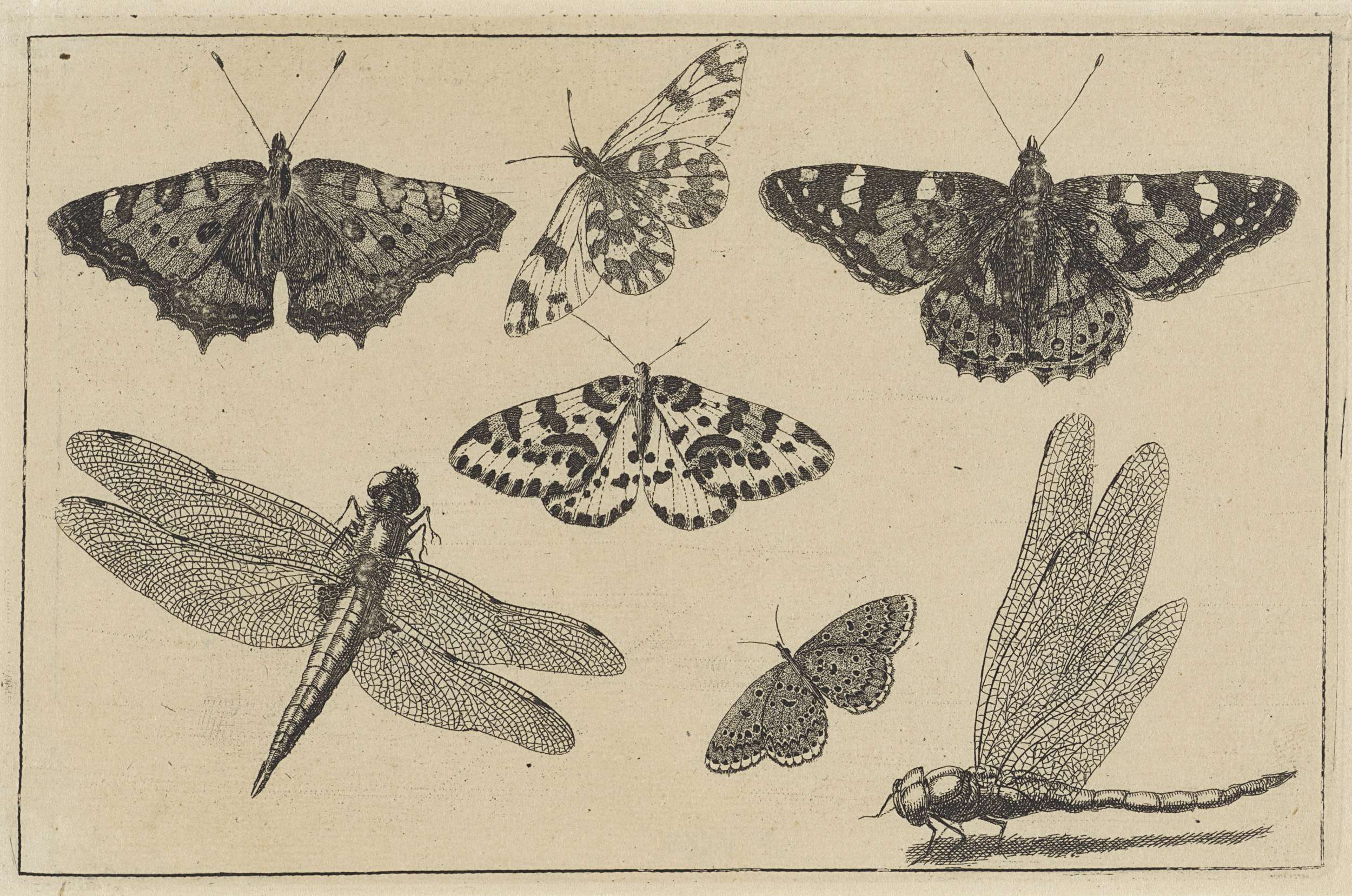
Could a single brushstroke hold eternity? In the delicate work of Wenceslaus Hollar, the ephemeral beauty of nature is captured in a moment that feels both vast and intimate, revealing the illusory dance of life. Look closely at the intricate details of *Twee libellen en vijf vlinders*. Your gaze is immediately drawn to the two dragonflies, their wings a translucent veil, shimmering with hints of azure and emerald. Notice how their slender bodies twist and turn, each delicate vein meticulously etched, reflecting a mastery of line that defies time. The composition is tightly packed yet exquisite, inviting you to explore the quiet spaces where butterflies flutter, their colors a soft palette of yellows and oranges against the gentle background. Beneath the surface, this artwork speaks to the tension between reality and illusion. The meticulous rendering suggests a moment frozen in time, yet the very nature of these creatures reminds us of life's fleetingness. As you linger on the butterflies, consider how their vibrant presence contrasts with the ghostly outlines of the dragonflies, evoking a sense of harmony in impermanence. Each element, while unique, contributes to a unified portrayal of nature’s fragile beauty, leaving you questioning what is real and what is merely a reflection of perception. In the years between 1644 and 1652, Hollar was immersed in the vibrant artistic milieu of the Dutch Golden Age, living in Antwerp and later in England. During this period, he honed his skills in etching while exploring themes of nature and landscapes. As the world underwent significant changes, Hollar's work resonated with a desire to encapsulate and preserve the transient, a wish mirrored in the fleeting forms of the dragonflies and butterflies he so beautifully depicted.