Mulier Nobilis aut Generosa Gallica / a French Lady or Gentlewoman — History & Analysis
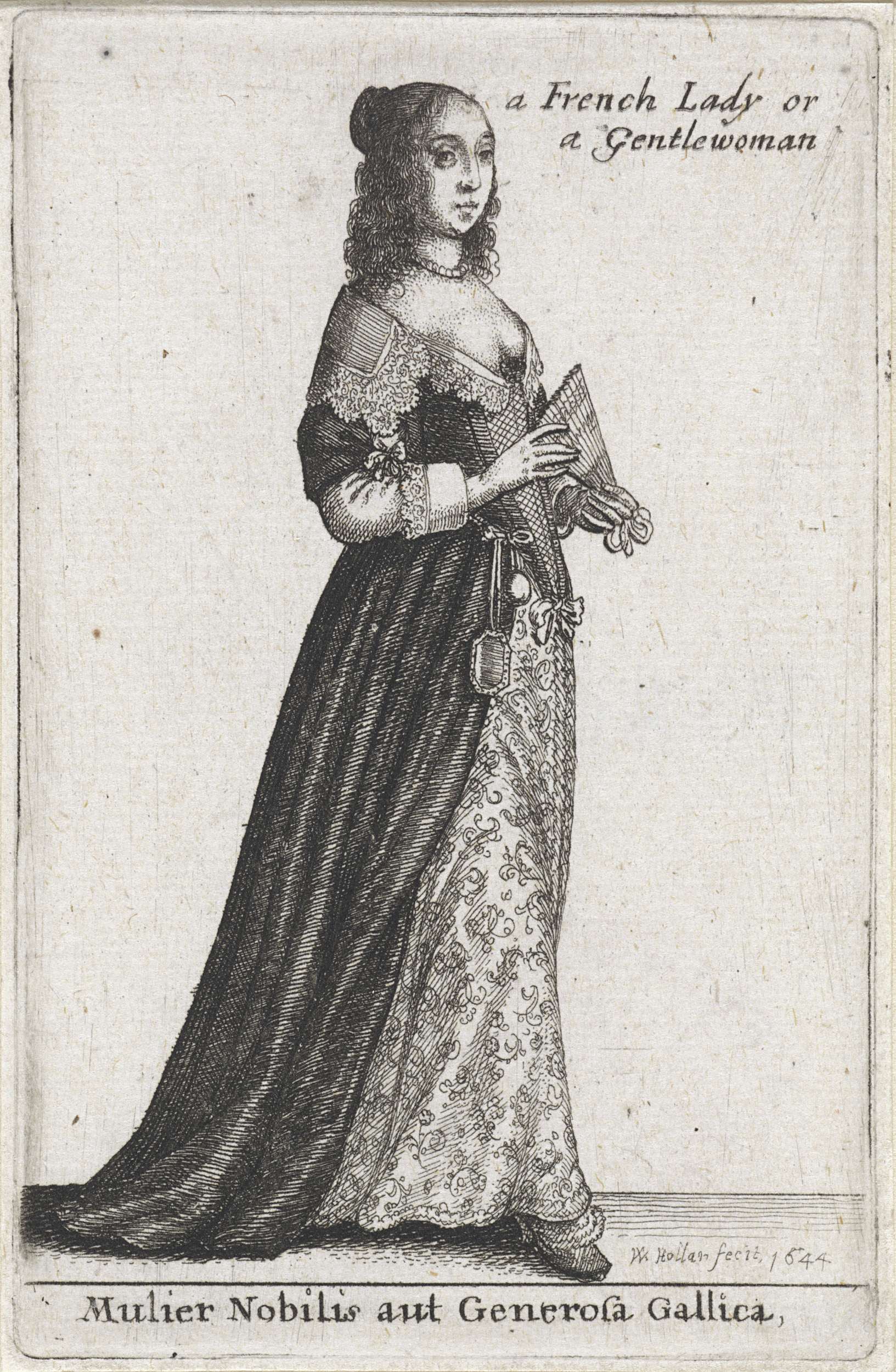
“Between color and silence, truth hides.” In the stillness of Wenceslaus Hollar's *Mulier Nobilis aut Generosa Gallica*, a solitary figure embodies the exquisite tension of loneliness. The delicacy of her form, cloaked in elegant attire, hints at the gracefulness of a life lived within the confines of societal expectation, while her serene expression beckons the viewer to ponder the depths of her unvoiced thoughts. Focus first on the lady’s gaze, which is both distant and piercing, reflecting an inner world of contemplation. Notice how the soft light captures the subtle textures of her garments, the rich fabric draping elegantly around her figure, while muted colors of olive and cream create a gentle contrast against the backdrop. Hollar's mastery of line and shading brings forth not just the physical beauty of the noblewoman but also the emotional gravity of her solitude, inviting us to explore her silent narrative. Amidst the refinement, there are poignant contrasts that hint at her isolation. The intricacies of her attire speak of wealth and status, yet the emptiness of her surroundings emphasizes a profound disconnection. The delicate floral motifs in her attire might symbolize beauty and life, but they paradoxically underscore the fragility of her spirit. This juxtaposition reflects a universal truth: the coexistence of privilege and loneliness, urging us to question the price of societal roles. Created in 1644, during a period when Hollar was entrenched in the artistic culture of London after fleeing the Thirty Years' War, this work encapsulates both the personal and societal turmoil of its time. As a skilled engraver and draftsman, he navigated a world reshaped by conflict, and this portrayal of a French lady reflects the intricate dynamics of gender, status, and the solitude that transcends her material wealth.