Gorge of the Petit Ailly, Varengeville — History & Analysis
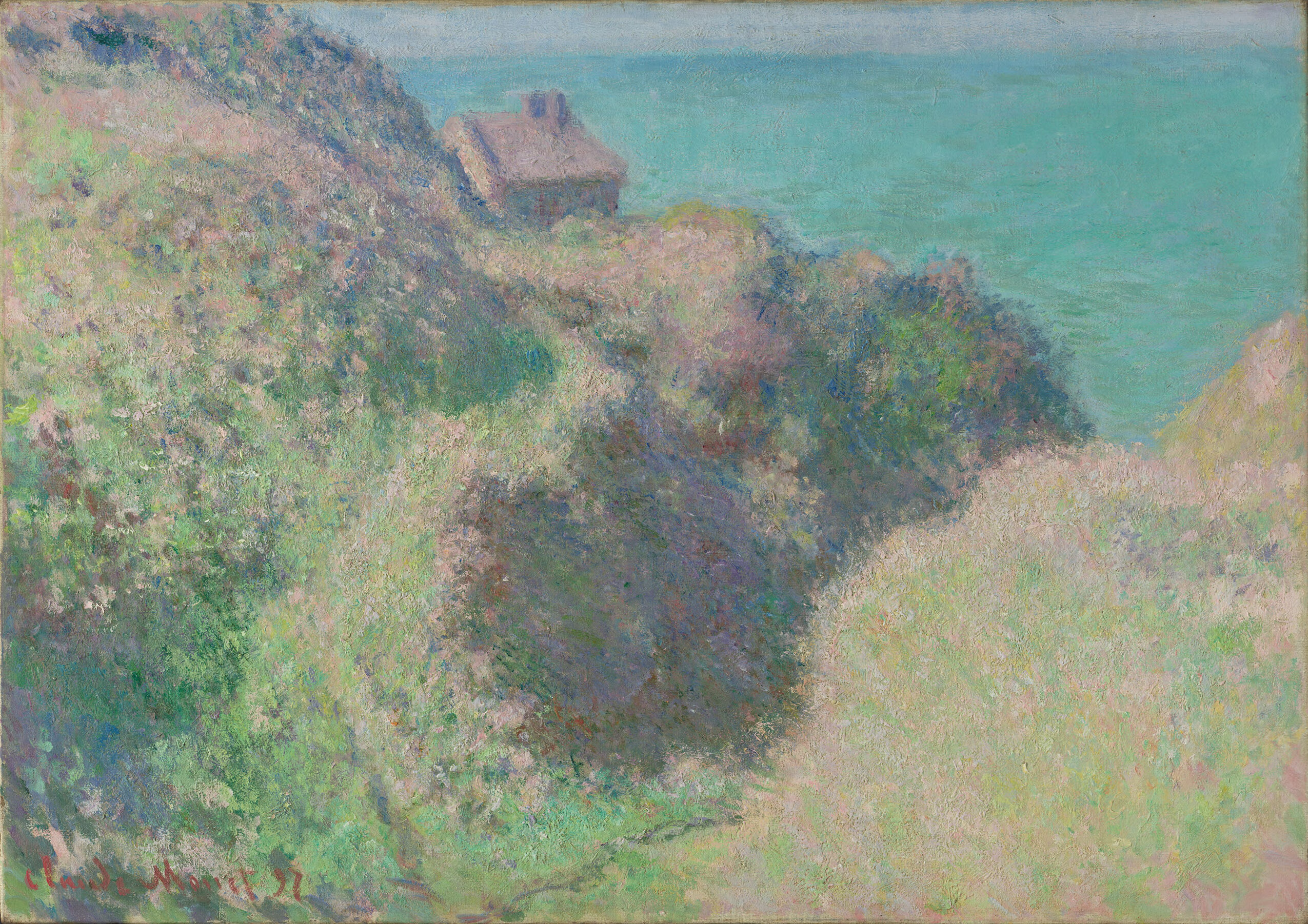
Could beauty survive in a century of chaos? In Gorge of the Petit Ailly, vibrant strokes of color collide with the solemnity of nature, reflecting a world in flux and transition. Look to the left at the lush greens and vibrant yellows that blend seamlessly into the tumultuous cliffs, capturing the raw power of the landscape. Notice how light dances across the surface of the water, the deep blues shimmering with hints of gold and white, guiding your gaze toward the horizon.
Monet’s masterful brushwork invites you to traverse the canvas, as the interplay of color and form creates a sense of movement, as if the scene might shift with the very winds that shaped it. Upon closer inspection, the cliffs stand as resolute sentinels against the cascade of colors below, symbolizing permanence amid change. The contrasting elements of the tranquil water and jagged rock evoke a tension between serenity and chaos, echoing the artist's own struggle against the passage of time. These details weave a narrative of transformation, where nature asserts its beauty despite the encroaching shadows of modernity.
Created in 1897, this piece emerged during a pivotal time for Monet as he grapples with the effects of aging and the evolving art world. Living in Giverny, he sought solace in the landscapes surrounding him, while also pushing boundaries in Impressionism. As the century turned, Monet's exploration of light and color not only redefined painting but also captured a fleeting beauty that resonates deeply with the human experience.