Grauer Strand — History & Analysis
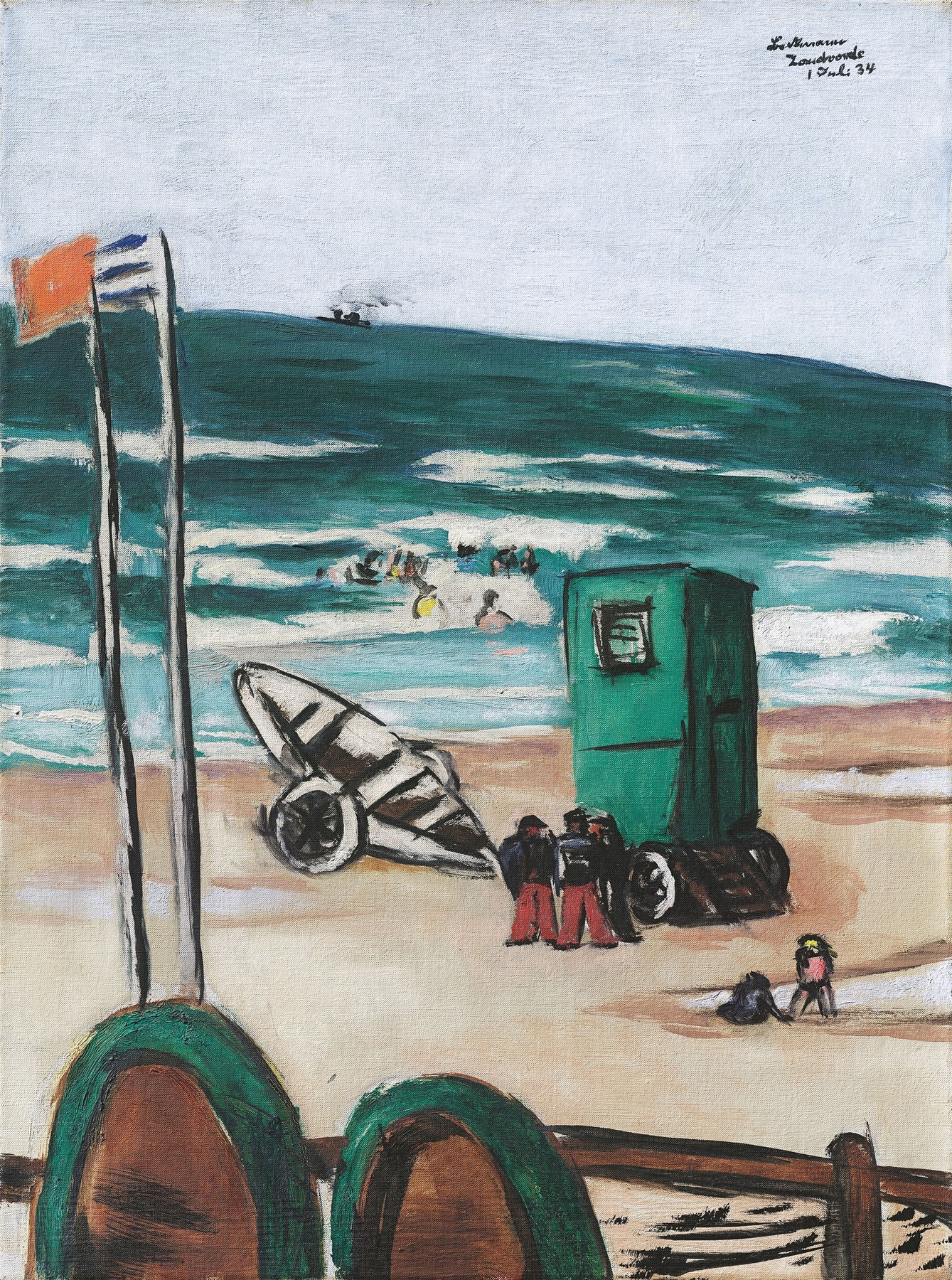
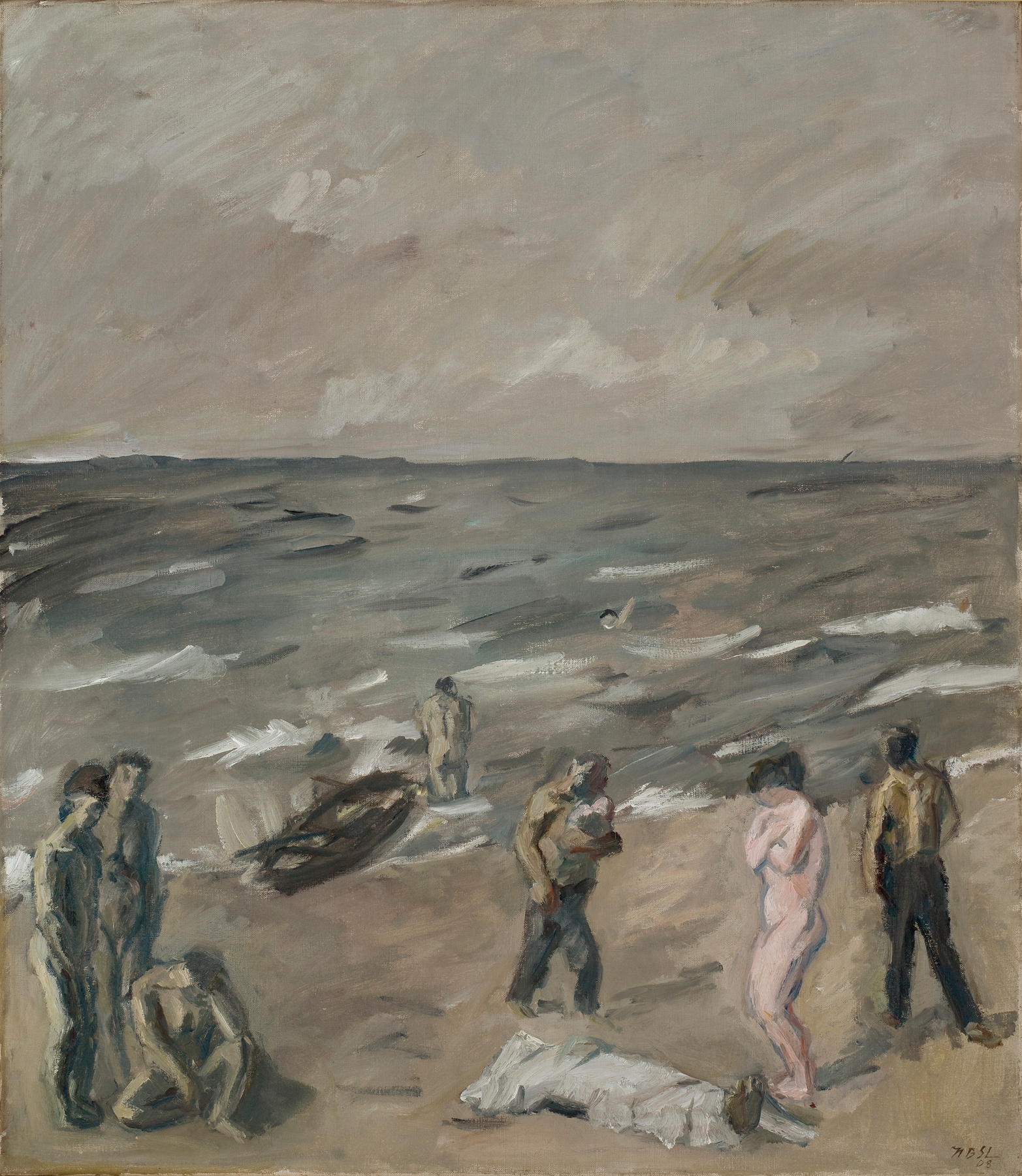
Could a single brushstroke hold eternity? In Grauer Strand, Max Beckmann captures not just a moment, but the raw tension of existence itself. The painting vibrates with a visceral energy, as if each stroke reverberates with the violence of life’s unpredictability. Look to the left at the stark contrast between muted grays and the darker, brooding undertones that suggest turbulence.
Beckmann’s use of broad, swirling brushstrokes channels a tempestuous sky, while the figures huddled together on the shore evoke both despair and camaraderie. Notice how the light struggles to break through, casting an ethereal glow on the figures, highlighting their isolation amid a chaotic landscape. In this work, the artist reveals emotional tensions that lie beneath the surface. The desolate shore becomes a metaphor for human struggle, as the turbulent waves crash incessantly, symbolizing the relentless nature of conflict.
The figures, seemingly frozen, yet yearning, embody a quiet resilience in the face of overwhelming odds, their faces etched with a narrative of survival that resonates deeply with the viewer. Beckmann created Grauer Strand in 1928, a period marked by his own personal turmoil and the socio-political unrest of post-World War I Germany. Living in Berlin, he was grappling with the consequences of war and the emergence of a new artistic style amid the chaos. His work during this time reflects not only his inner struggles but also the collective anxiety of an era on the brink of significant change.