Kleine Landschaft aus Bandol — History & Analysis
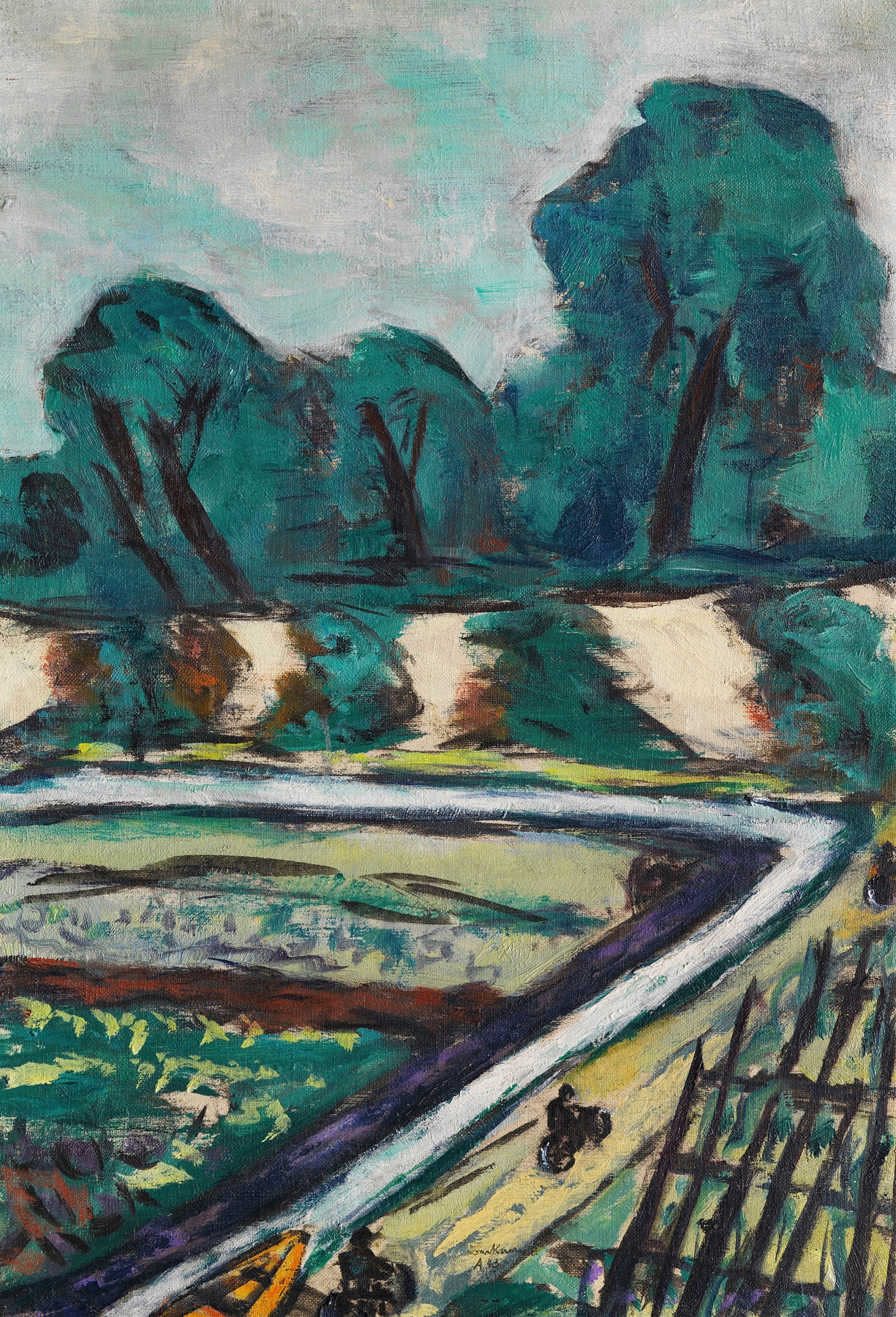
When did color learn to lie? The vivid palette of Kleine Landschaft aus Bandol whispers of beauty, yet it carries a tremor of unease, as if the hues themselves harbor secrets. Look to the lower left, where a blanket of green fields stretches, dappled with strokes of yellow and blue. The colors, both inviting and unsettling, dance across the canvas, leading your gaze toward an almost sinister horizon.
Beyond, the sky looms heavy with muted oranges and grays, creating a tension that permeates the landscape, suggesting a world on the brink of chaos. Beckmann's bold brushwork, brimming with emotion, speaks to the tumultuous energy lying beneath this tranquil facade. Delve deeper into the contrasts: the idyllic scene is punctuated by jagged shapes and sharp lines that disrupt the serenity, hinting at the artist's inner turmoil. The stark juxtaposition of calm nature and underlying dread reflects a broader anxiety of a world threatened by impending conflict.
These nuanced elements invite the viewer to confront their own fears, as the landscape transforms from a mere escape into a canvas of psychological complexity. In 1938, Beckmann created this work while living in exile in Amsterdam, fleeing the rise of Nazi Germany. This period was marked by a profound alienation as he grappled with the shifting tides of art and politics. The emotional weight of exile is palpable in his brushstrokes, revealing not just a landscape, but a deep-seated apprehension about the future, both personally and for humanity at large.