Great Falls of Snake River, Idaho Territory — History & Analysis
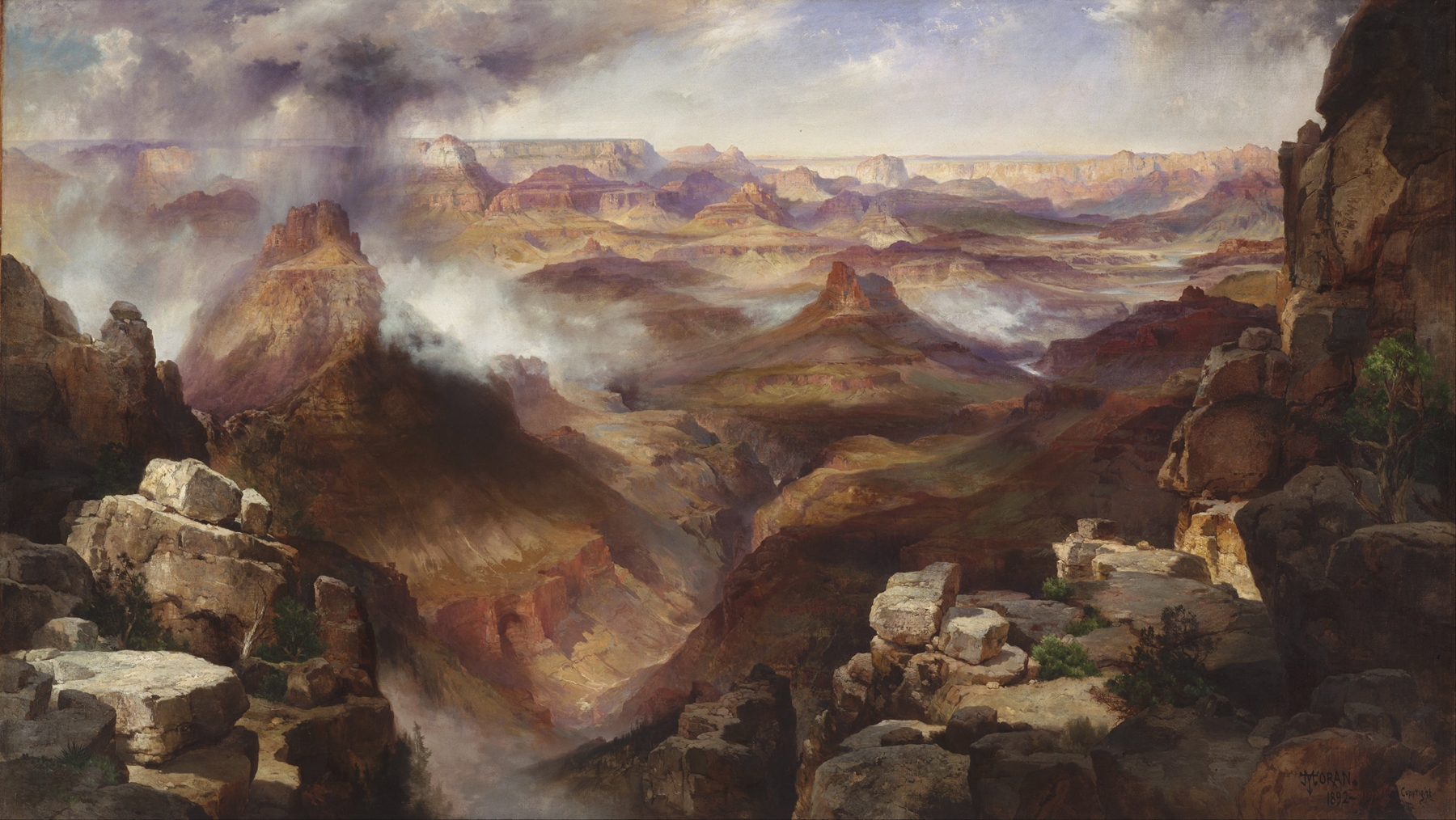
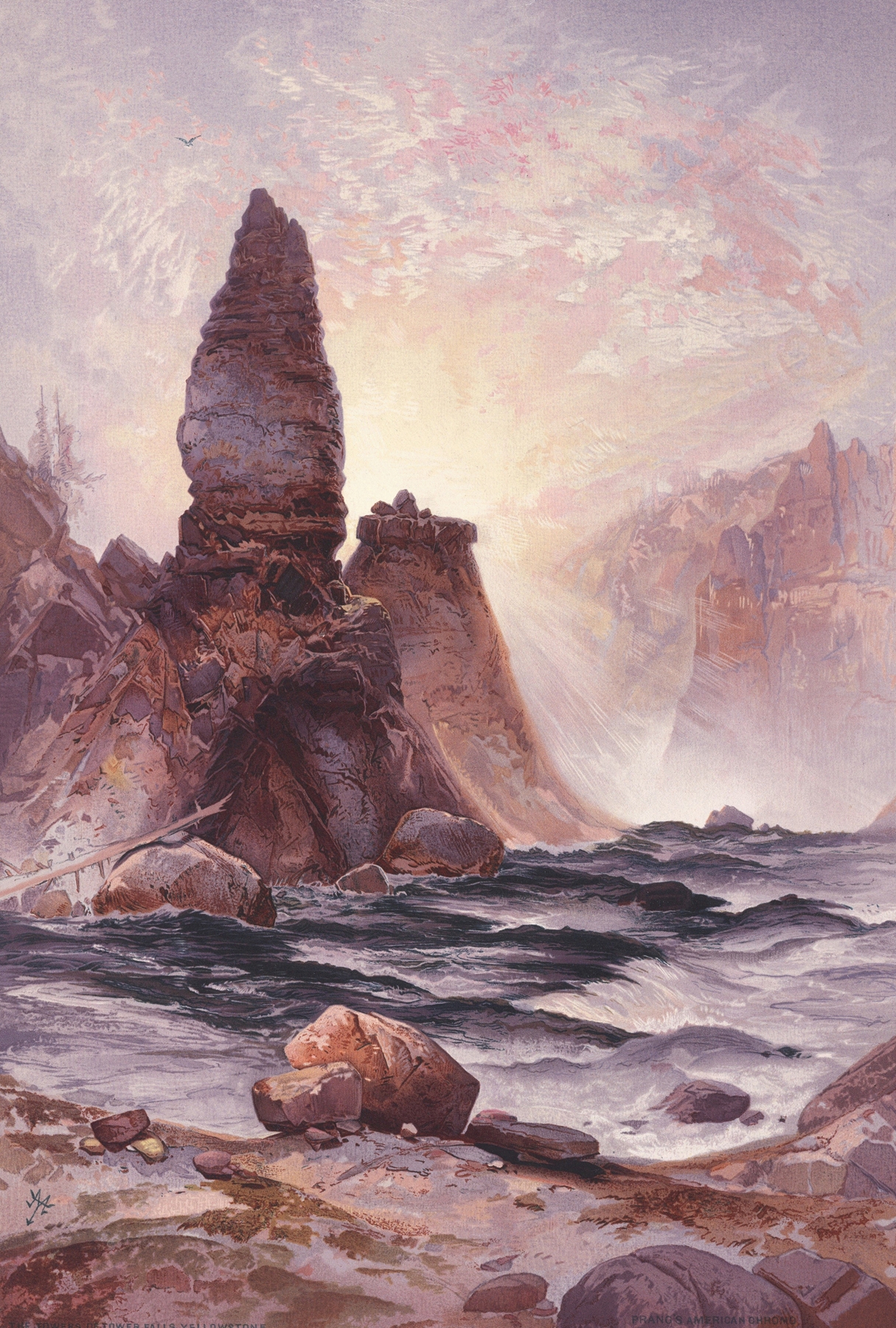
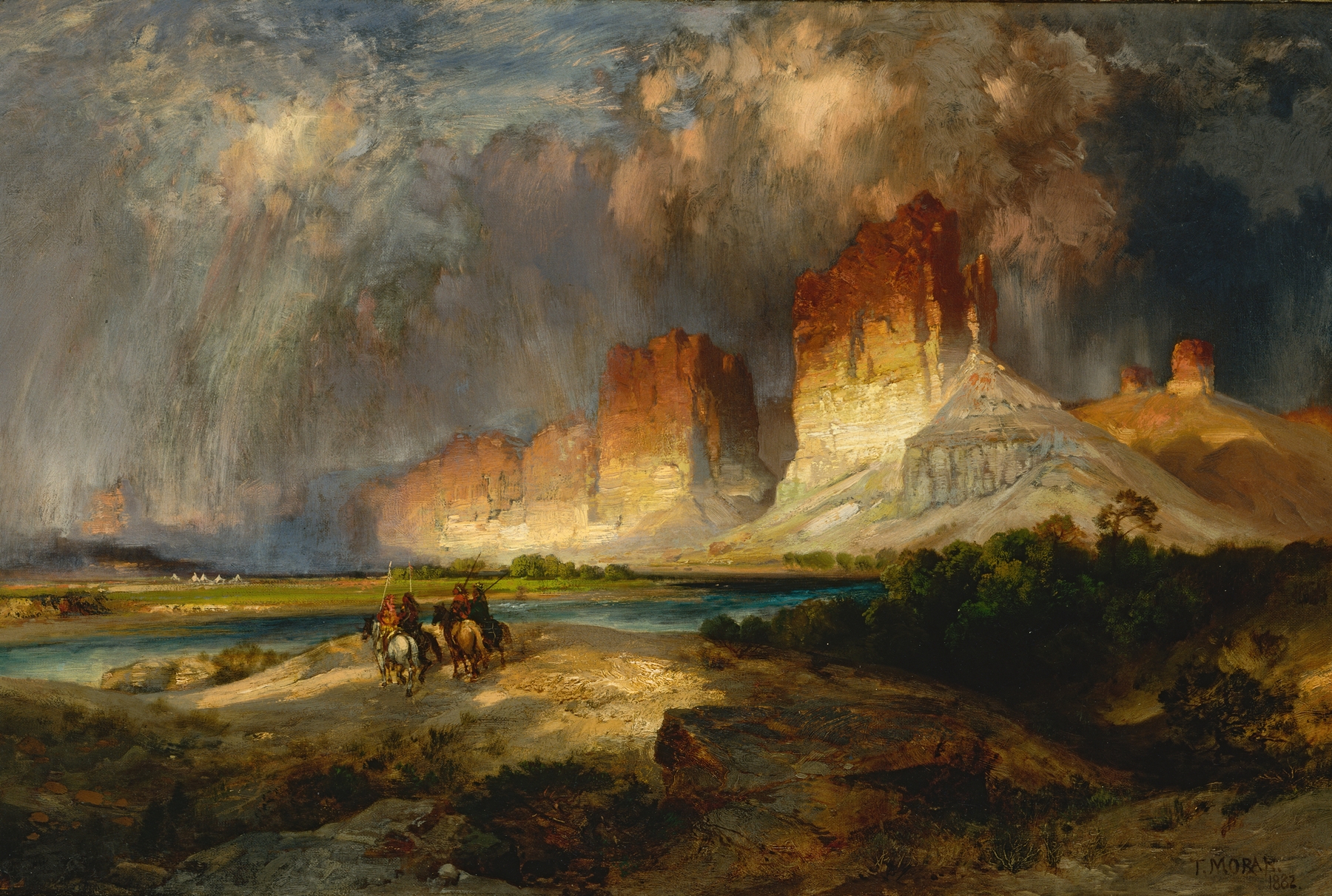
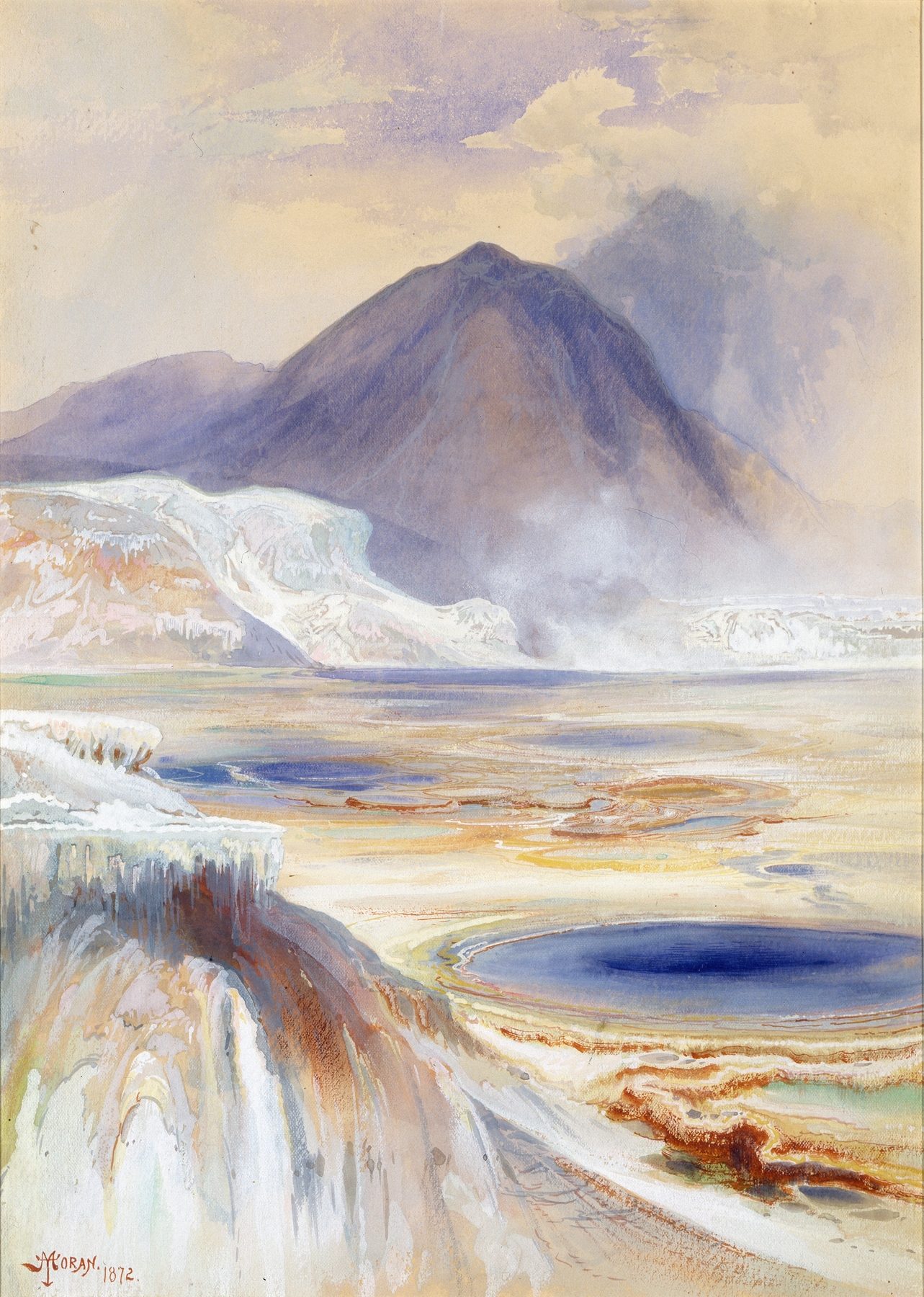
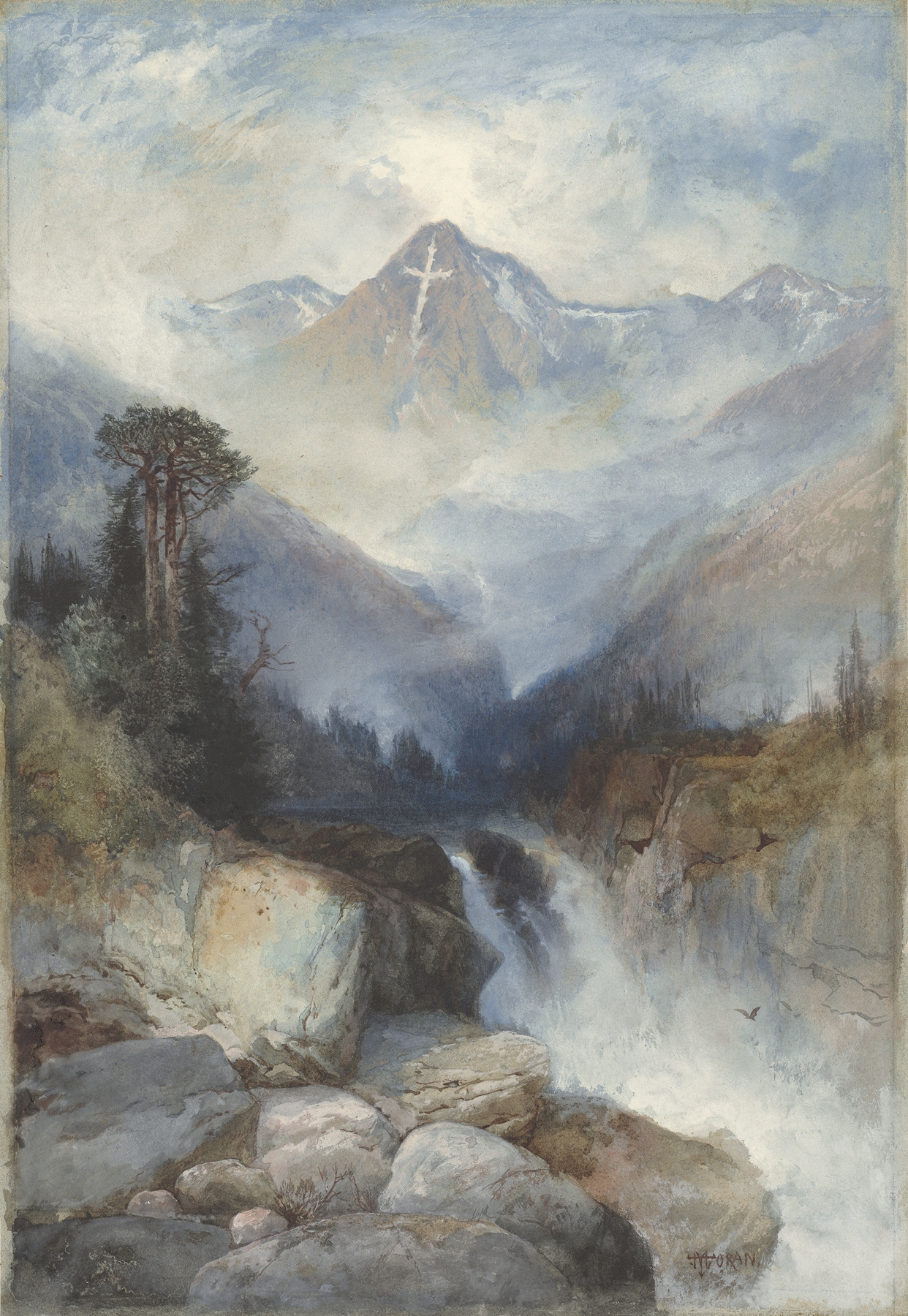
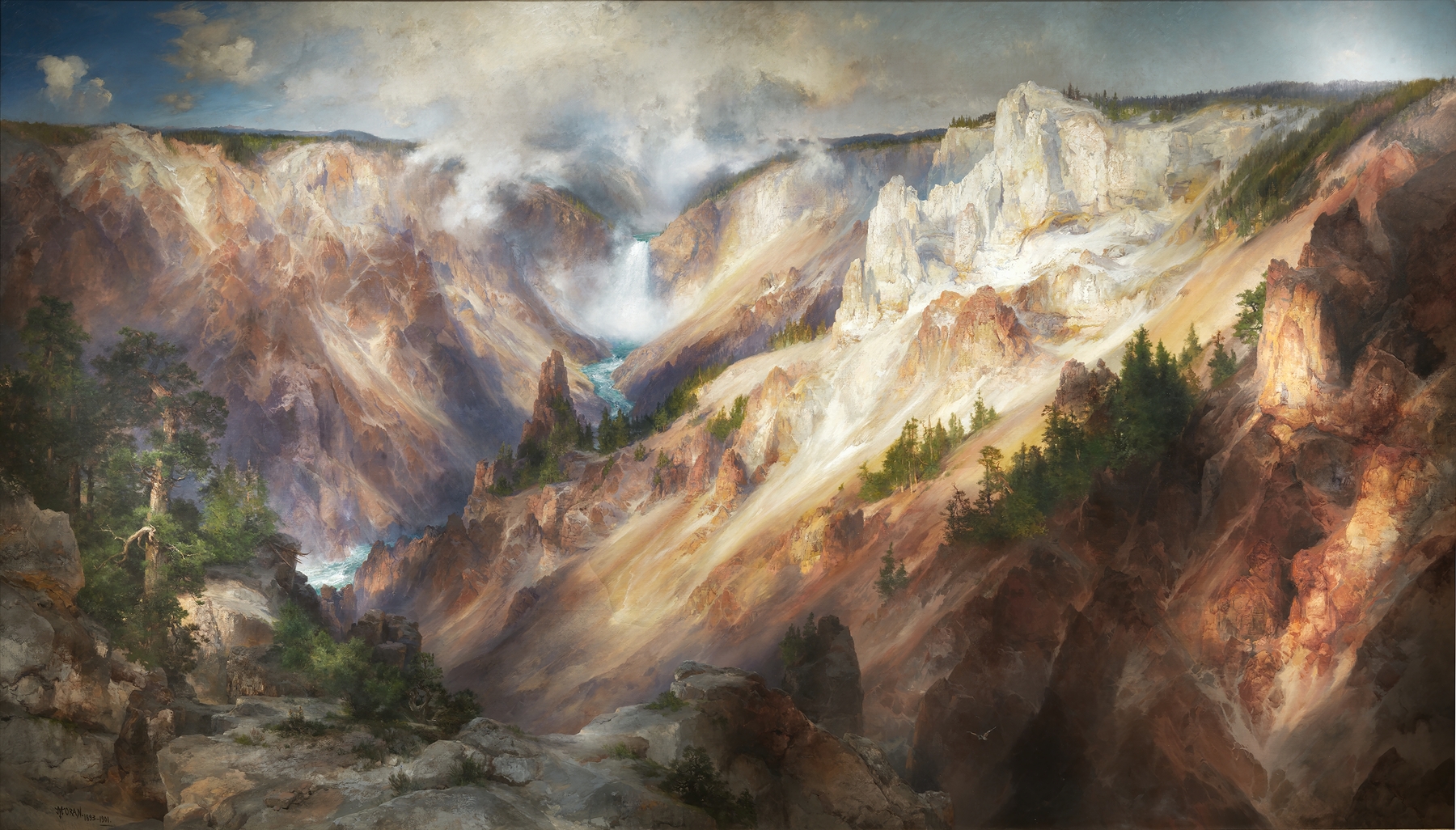
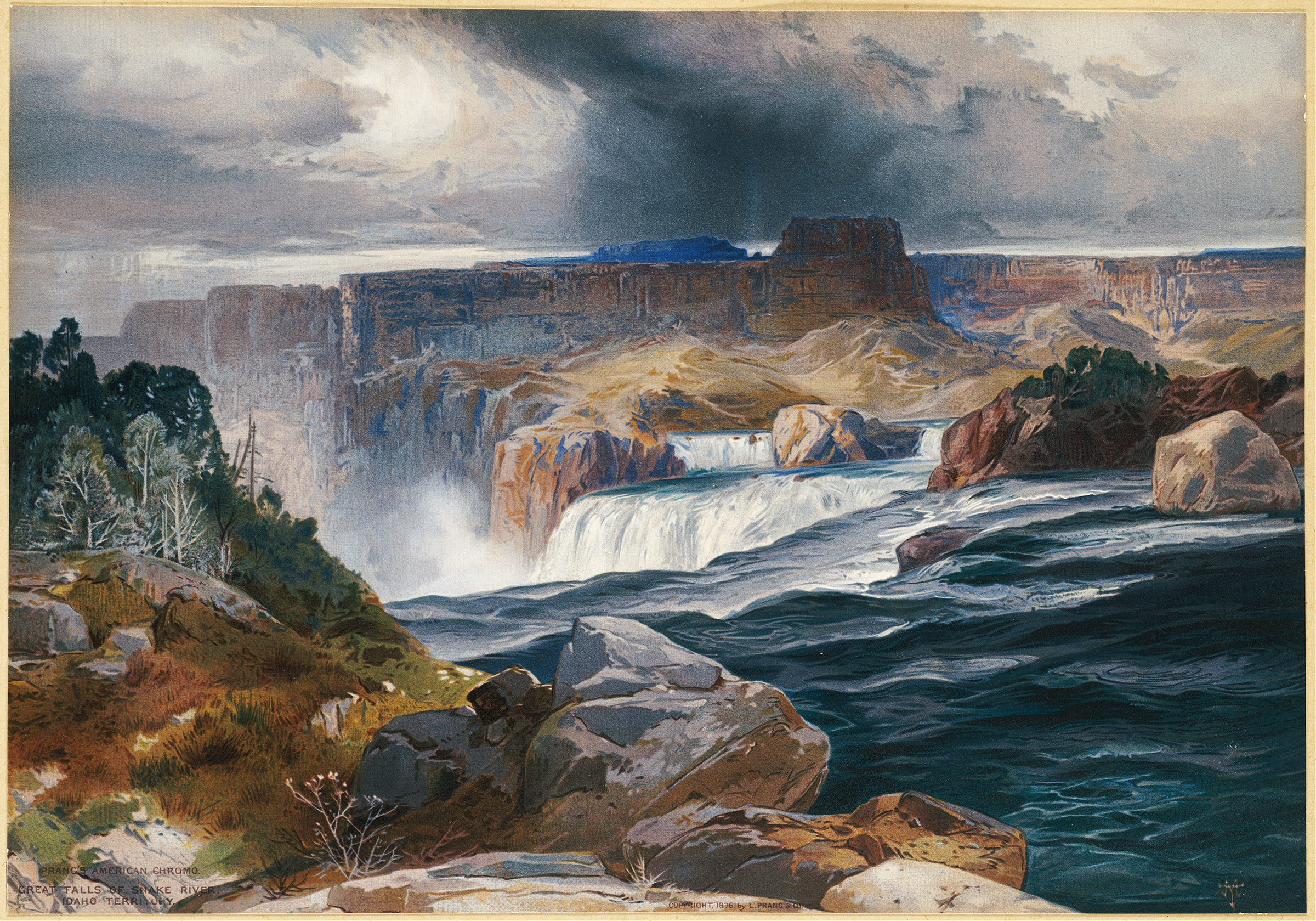
Can beauty exist without sorrow? In Great Falls of Snake River, Idaho Territory, the sweeping movement of the water captivates, suggesting a turbulent dance between nature's allure and the weight of its relentless power. Look to the center of the canvas, where torrents cascade down rugged cliffs, their frothy edges illuminated by sunlight filtering through the clouds. Notice how the vibrant blues and greens contrast with the warm earth tones of the foreground, creating a visual harmony that draws the viewer into the movement of the scene.
The brushwork is both deliberate and fluid, capturing the dynamic essence of the falls while grounding the viewer in the surrounding landscape. Yet, beneath the beauty lies an undercurrent of tension. The jagged rocks, stark against the smooth flow of water, symbolize the struggle inherent in nature; tranquility is interwoven with chaos. The interplay of light and shadow hints at the transient nature of this majestic landscape—an ephemeral moment frozen in time, where serenity clashes with the relentless force of the river.
Each droplet embodies movement, a reminder of the constant change in our surroundings. In 1876, while creating this piece, the artist found himself amidst a burgeoning interest in the American West, a subject that was capturing the imaginations of many. Moran, a key figure in the Hudson River School, was exploring the stunning majesty of the American landscape, driven by the desire to convey both its grandeur and its vulnerability. This painting was a testament to that journey, reflecting not only his artistic evolution but also the transformative era of exploration and discovery in the United States.