The Towers of Tower Falls, Yellowstone — History & Analysis
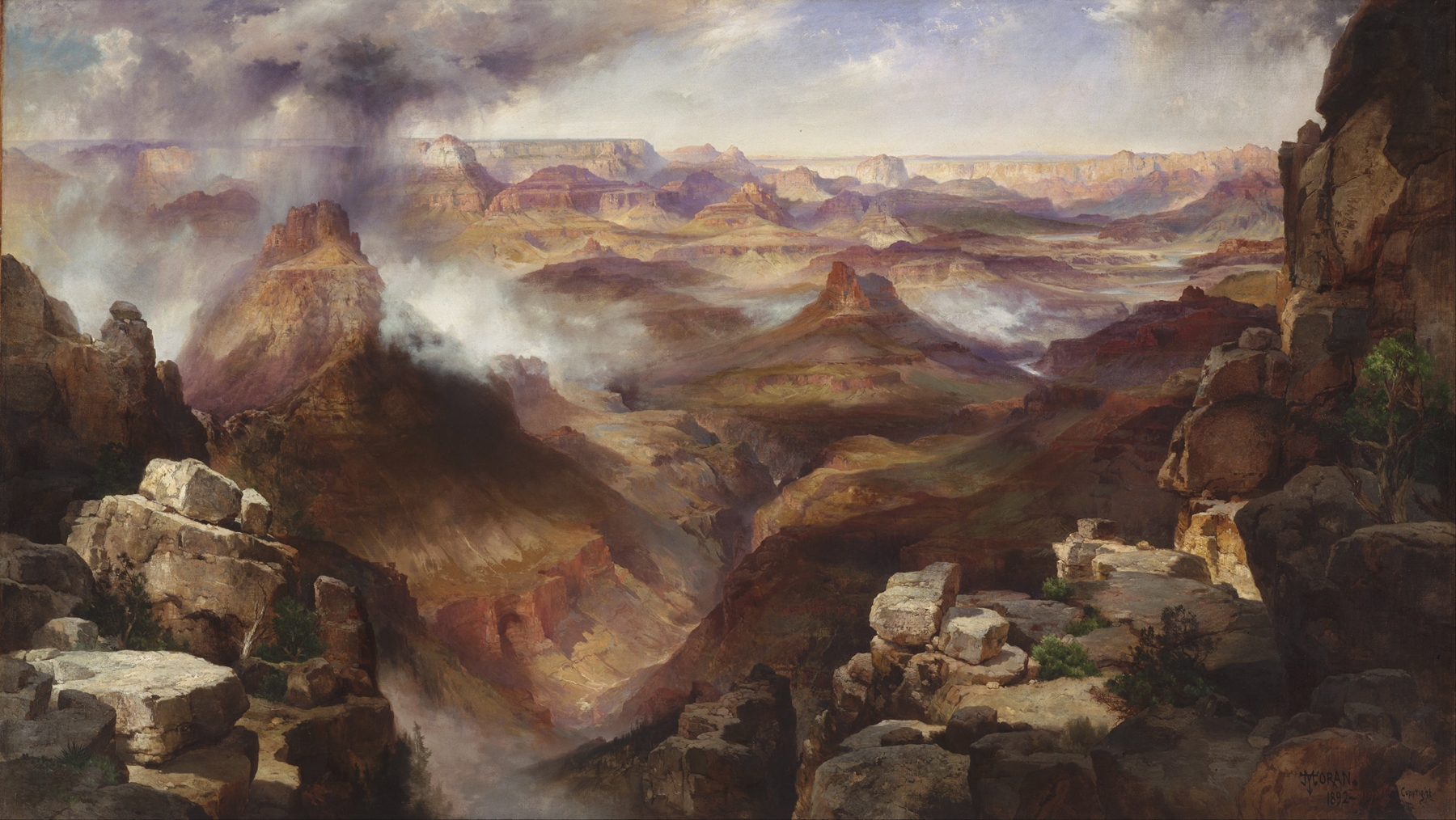
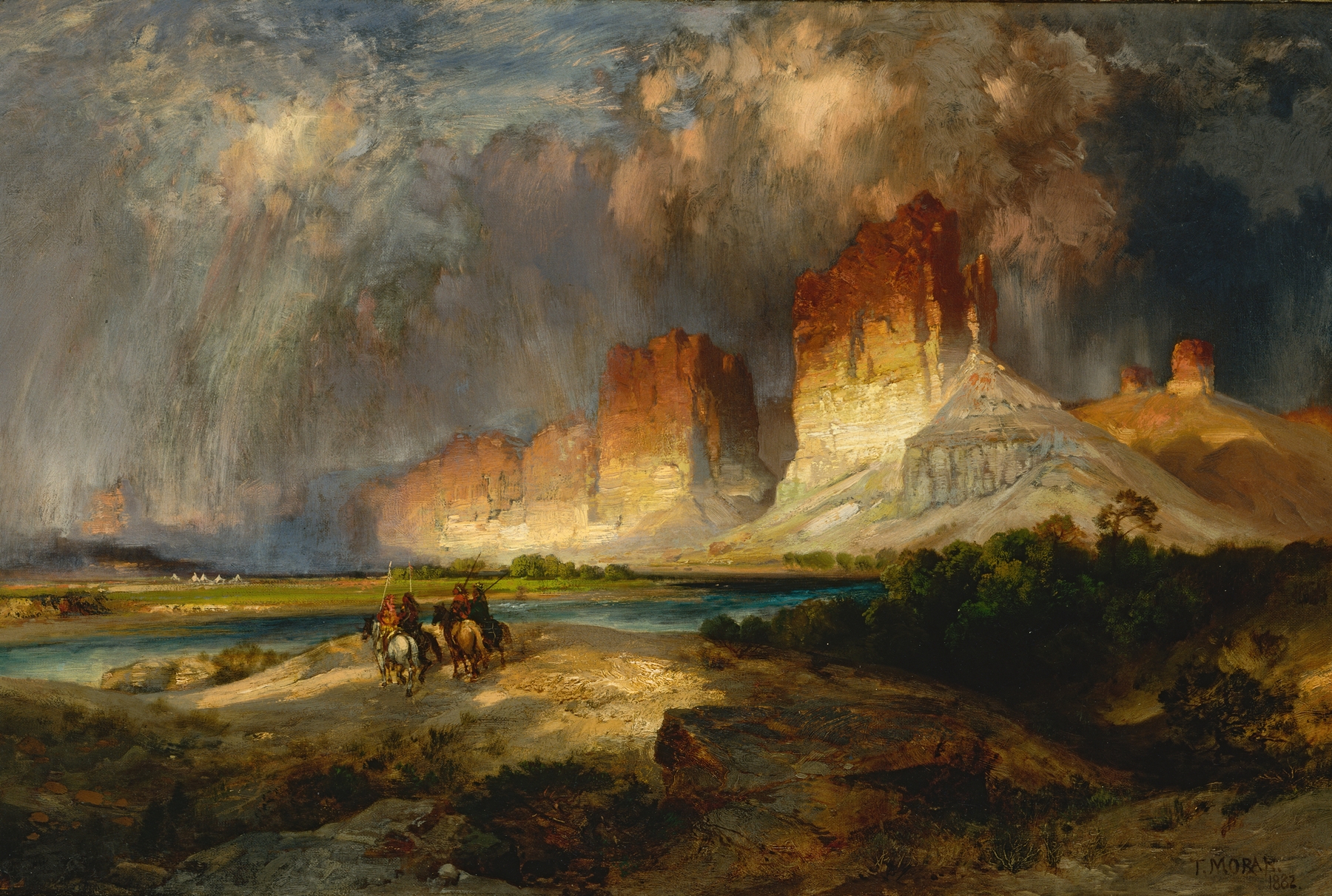
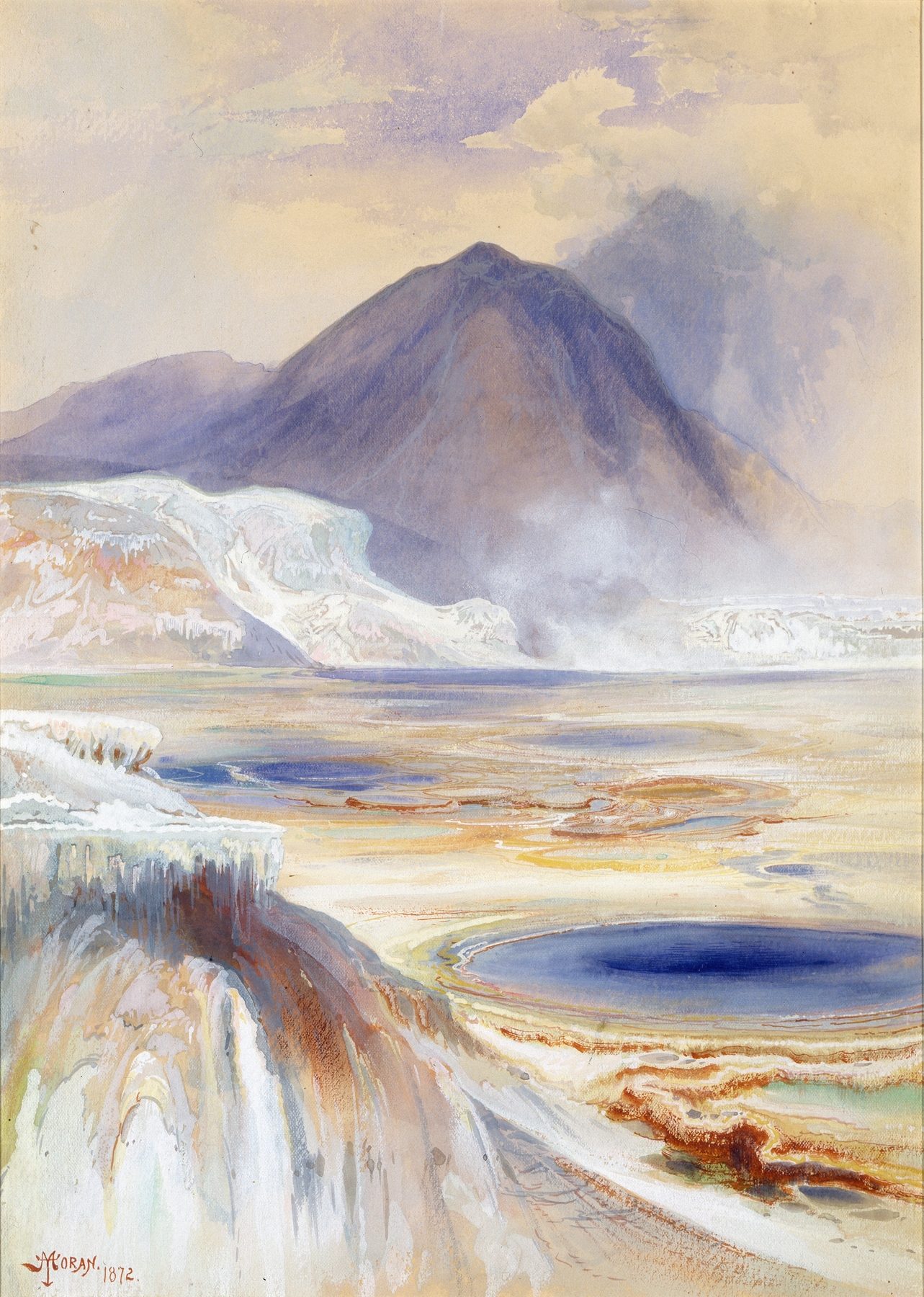
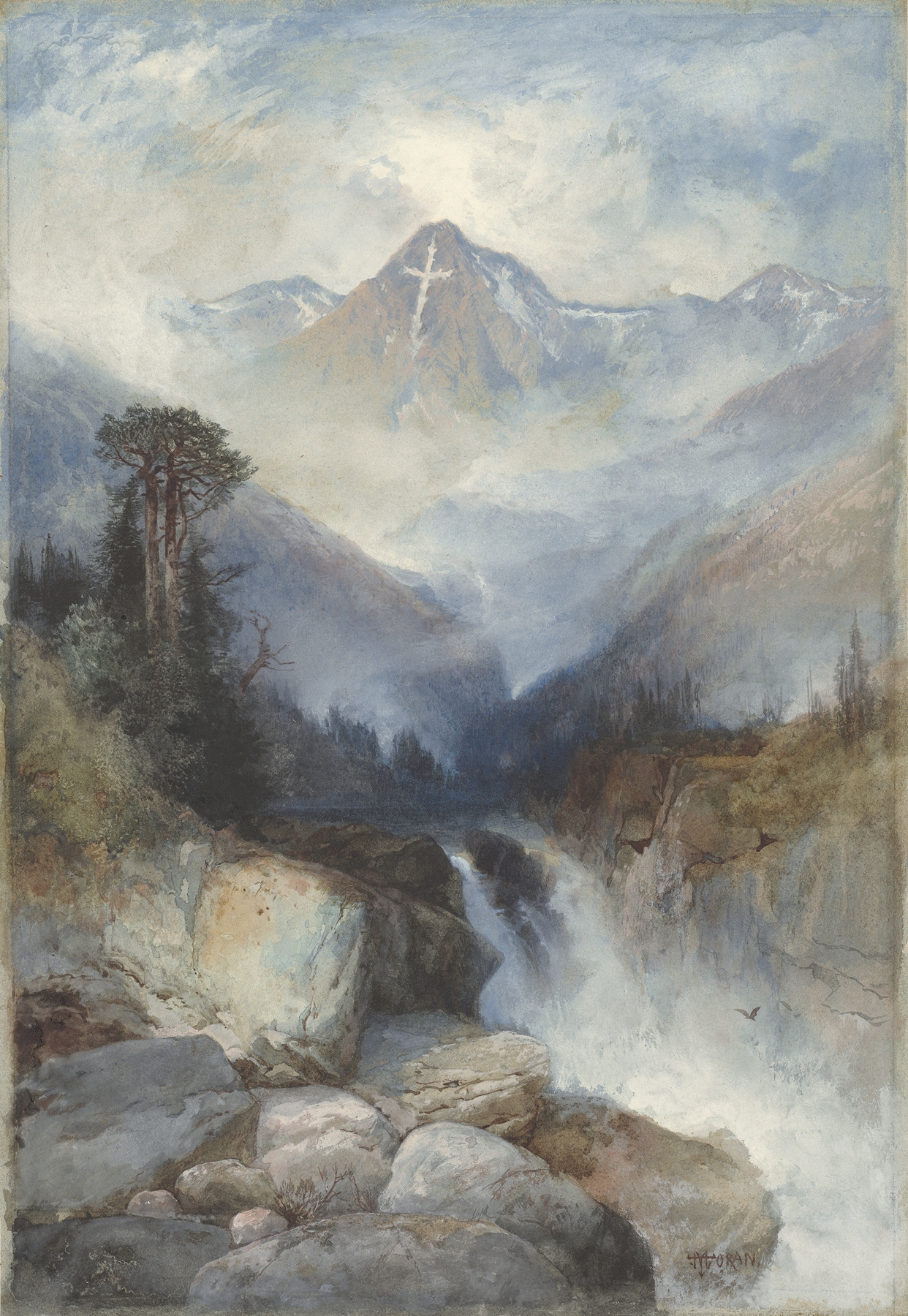
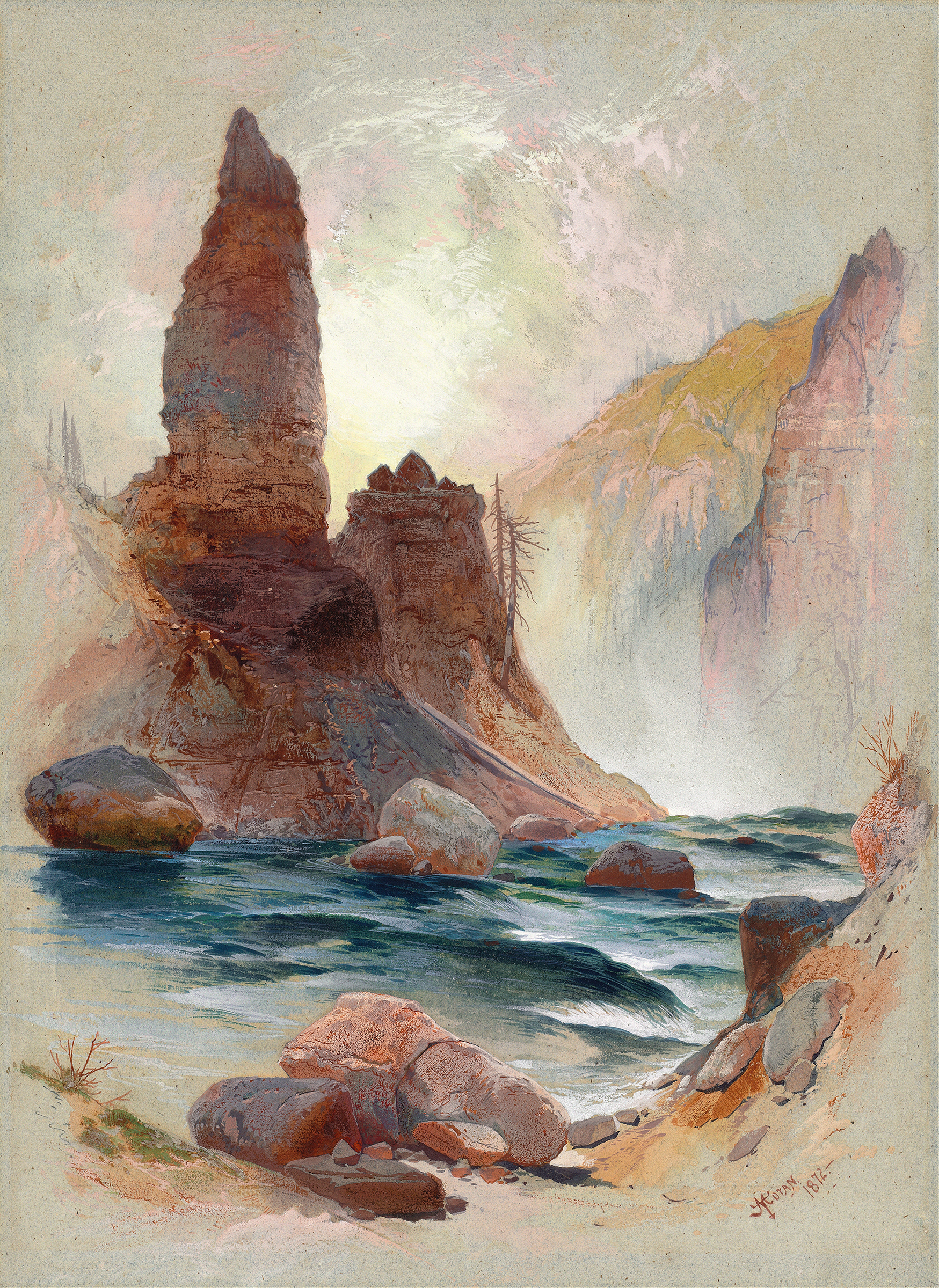
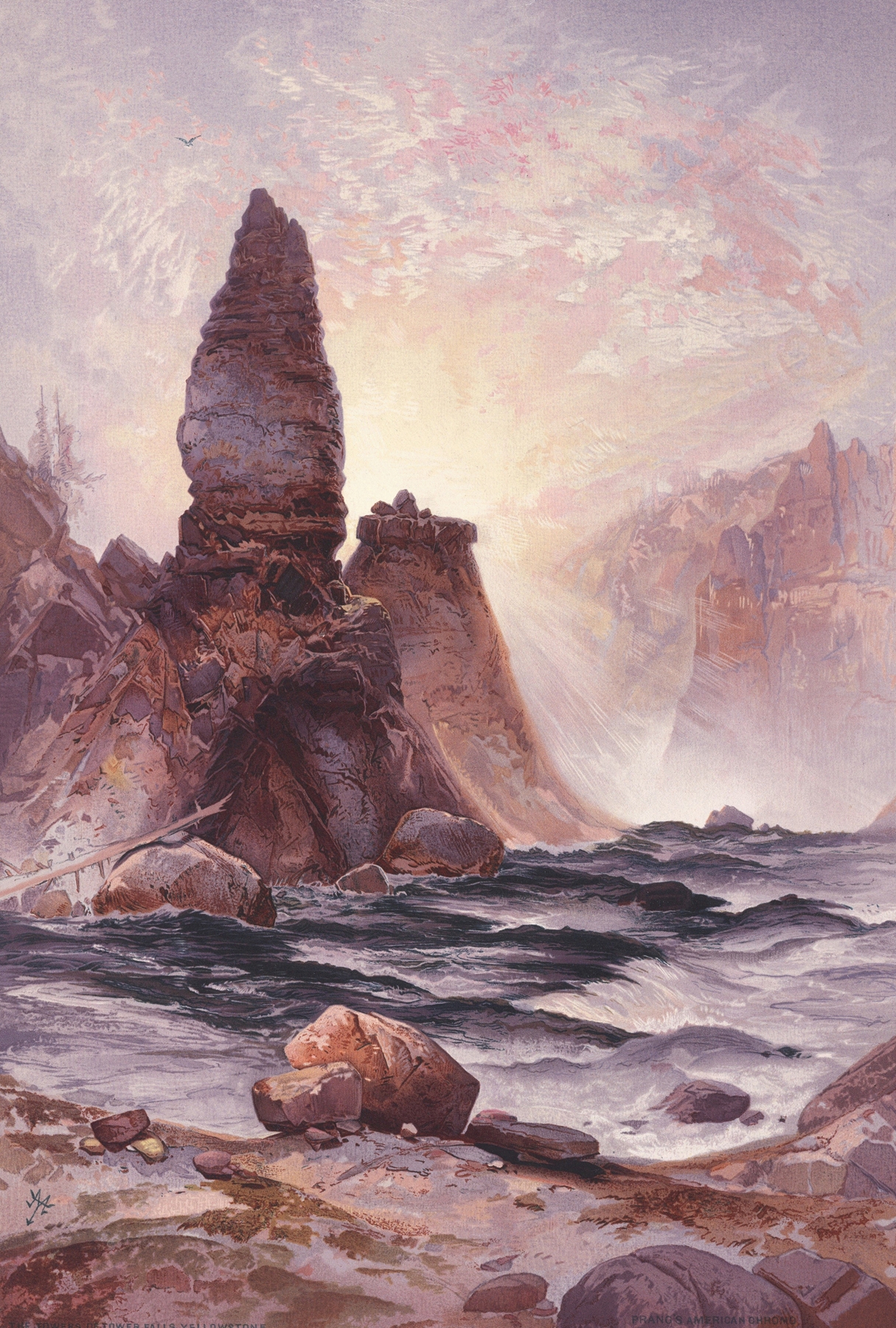
Who listens when art speaks of silence? In the stillness of nature's embrace, a profound revelation unfolds, inviting reflection on the majesty and solitude of our world. Look to the right at the vibrant cascades tumbling from the rock formations, where the artist's mastery of color breathes life into the scene. The pale blues and warm golds coalesce to create a stunning contrast against the rugged edges of the towers, drawing the eye toward the ethereal glow of the falls. Notice how the light dances across the water, highlighting the intricacies of the landscape and lending an almost otherworldly quality to the composition. Moran’s brushwork, both delicate and bold, evokes the textures of stone and the fluidity of water, immersing the viewer in the grandeur of Yellowstone. The emotional tension lies in the juxtaposition of the towering cliffs and the flowing water, suggesting the relentless passage of time amidst the enduring strength of nature. Each stroke captures both the beauty and transience of the scene, whispering secrets of the landscape's history. The tranquility hinted at in the foreground belies the potential chaos of the natural world, inviting contemplation about the interplay between permanence and change, creation and erosion. In 1875, while exploring the depths of Yellowstone, the artist sought to translate his awe into vivid landscapes. This period marked a pivotal moment in the American art scene, as artists began to embrace the untamed beauty of the American West, capturing its grandeur in ways that stirred national pride. It was a time when nature’s splendor was being recognized not just as scenery, but as a source of spiritual renewal and inspiration.