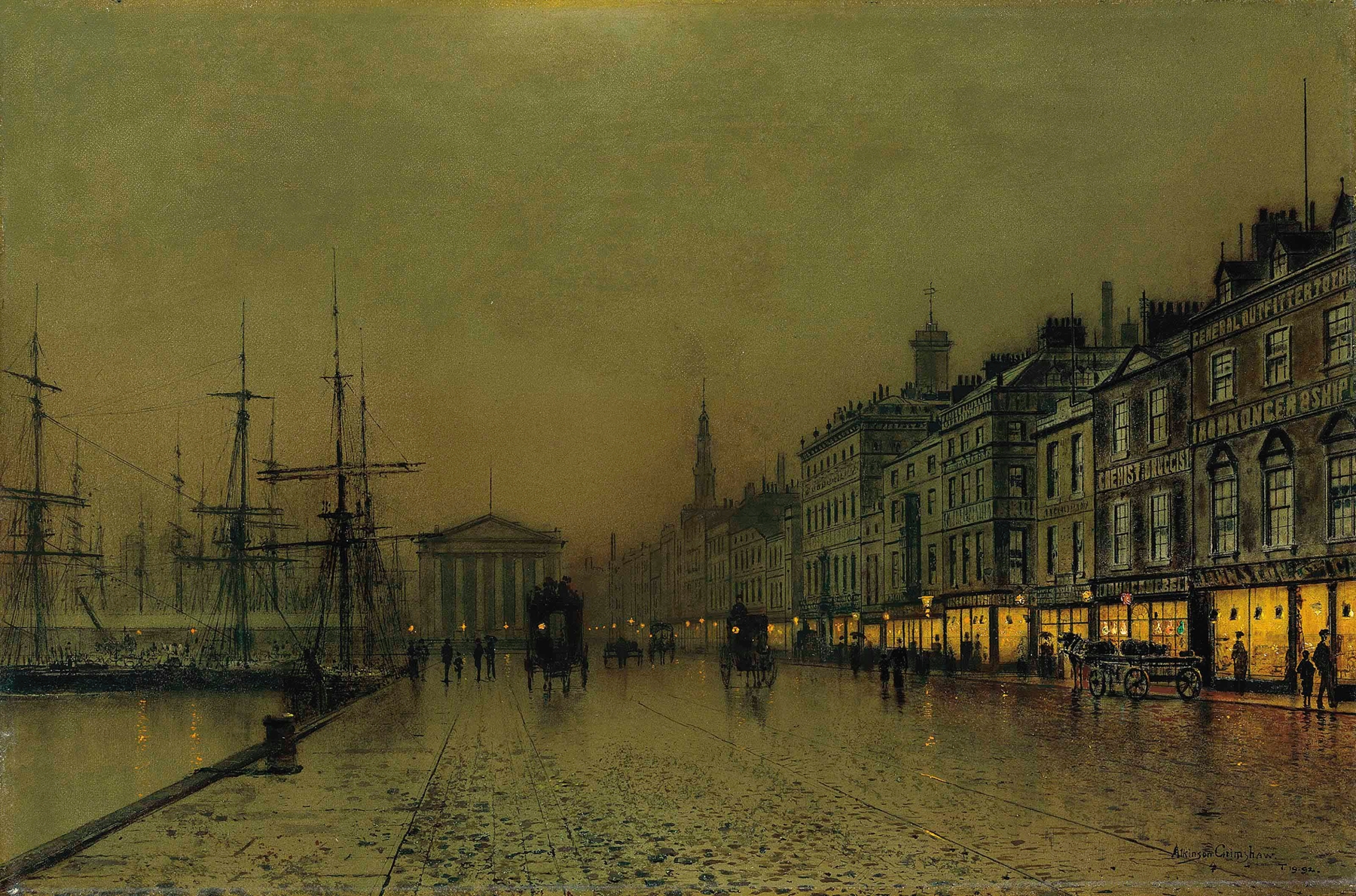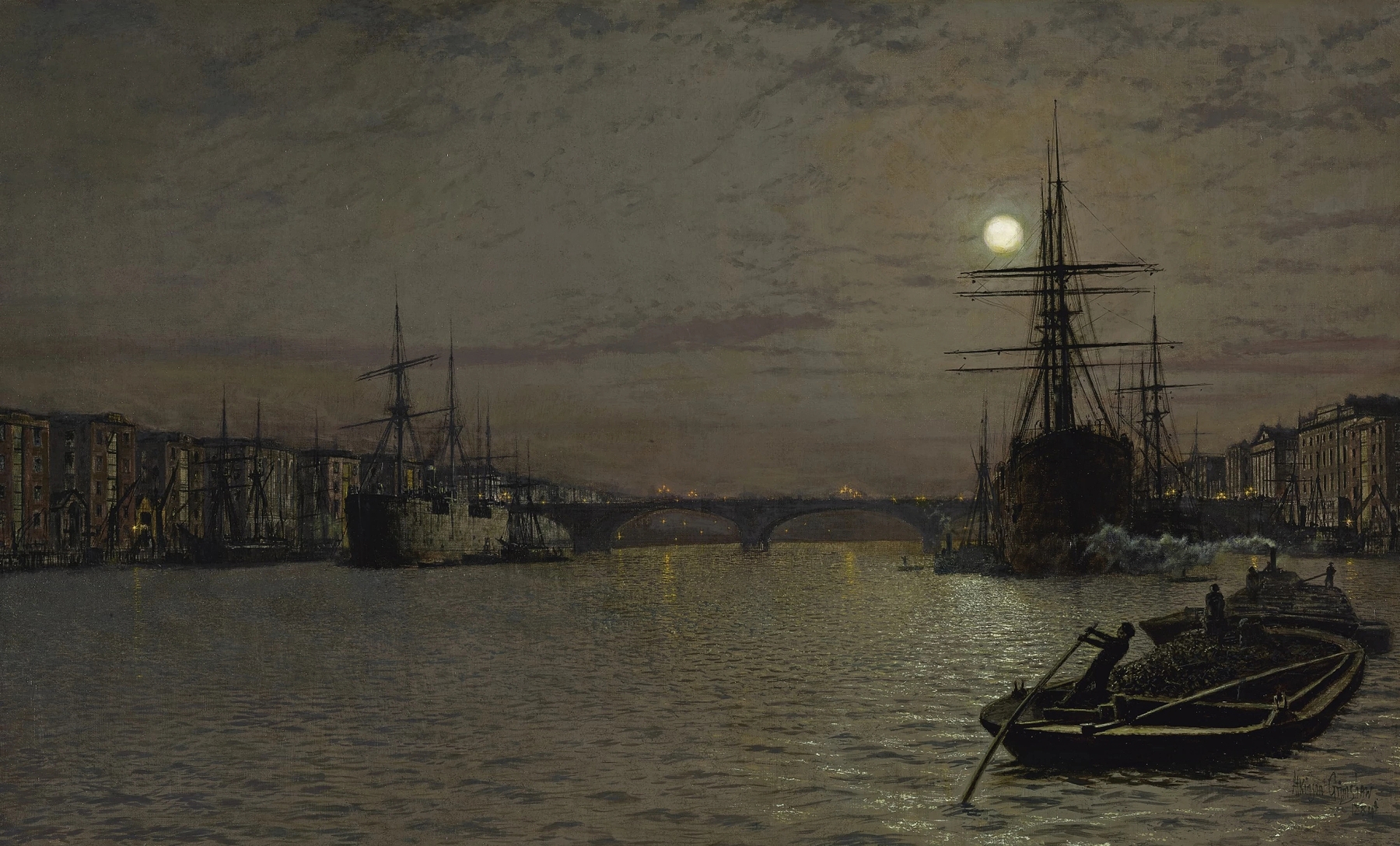
Greenock Harbour at night — History & Analysis
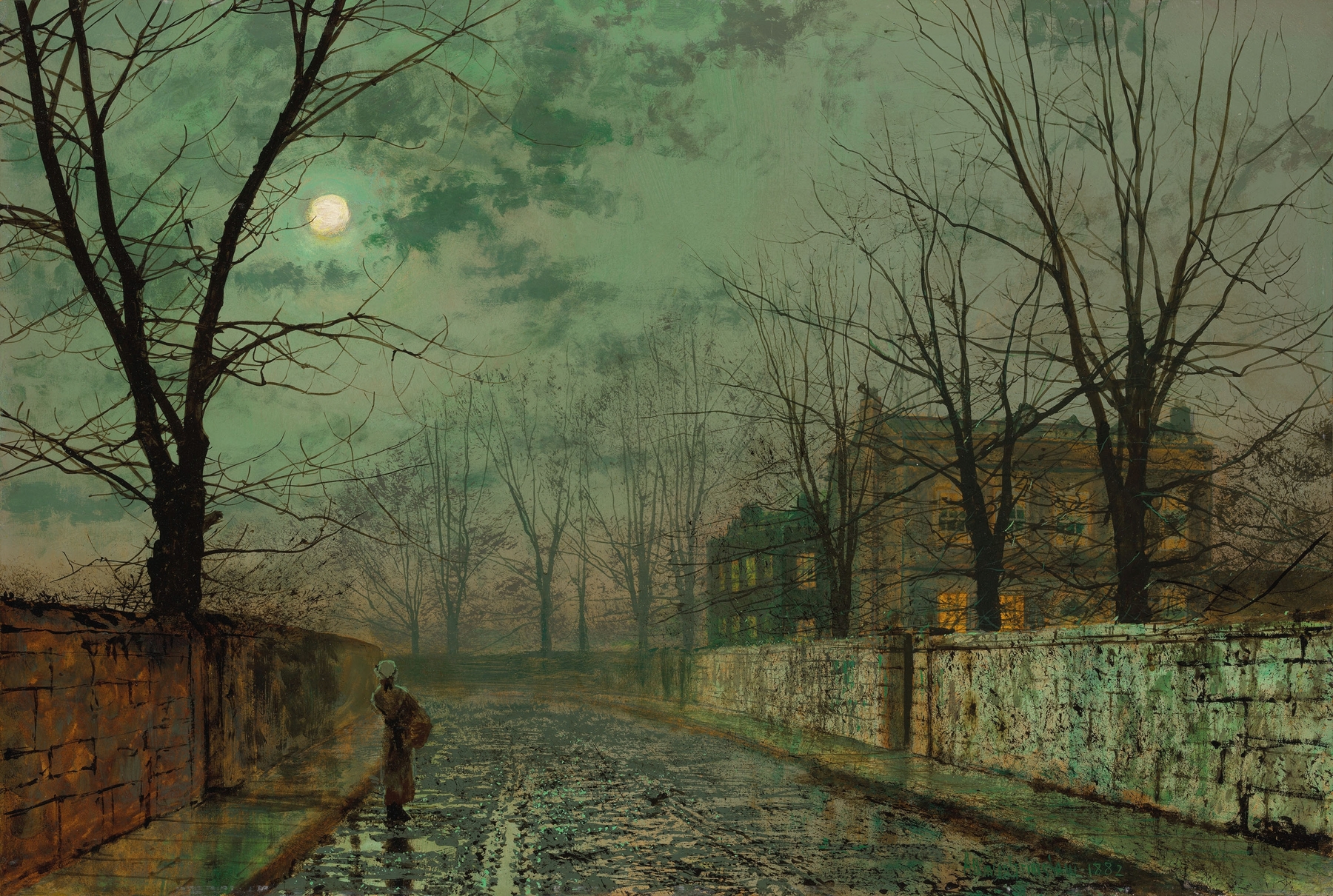
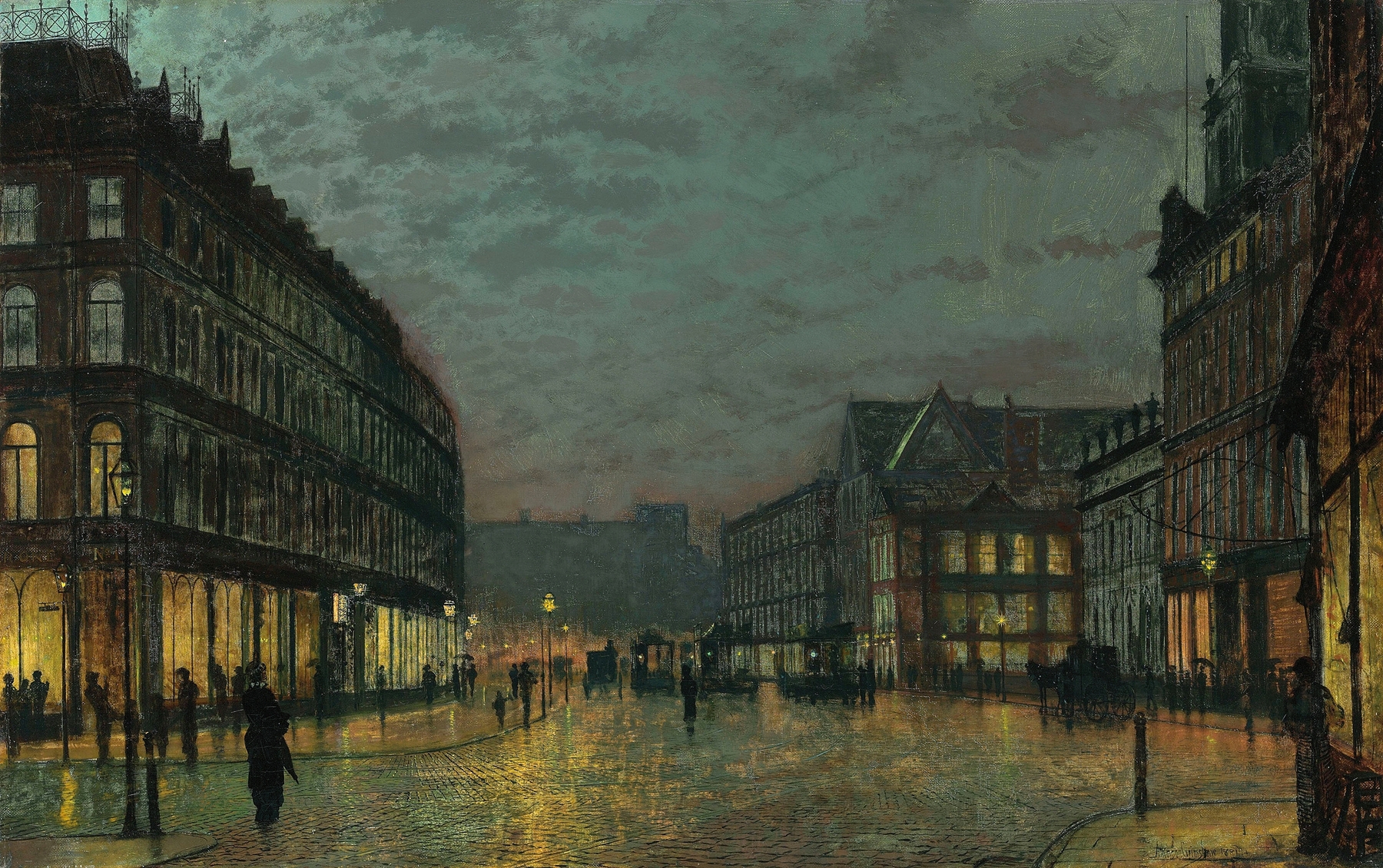
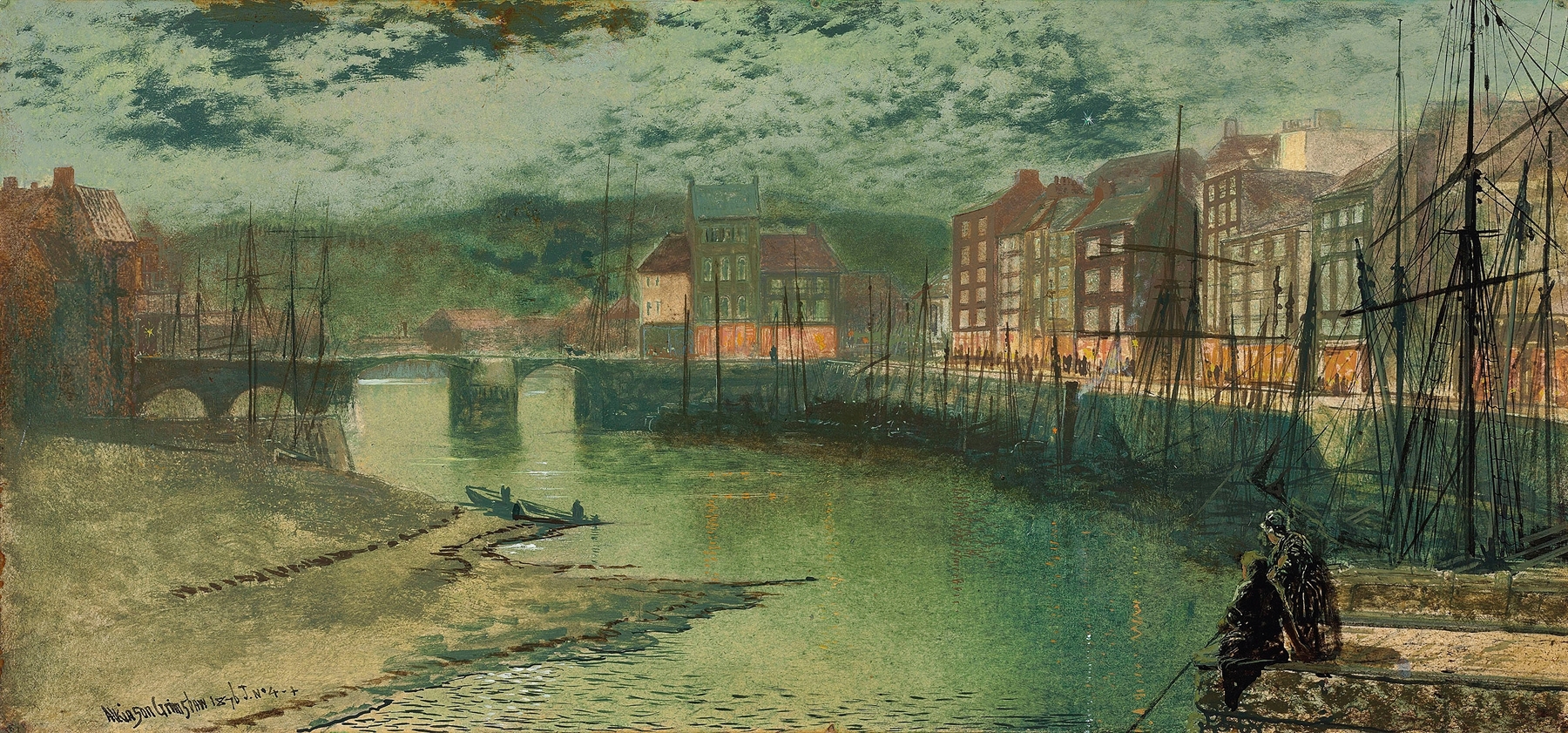
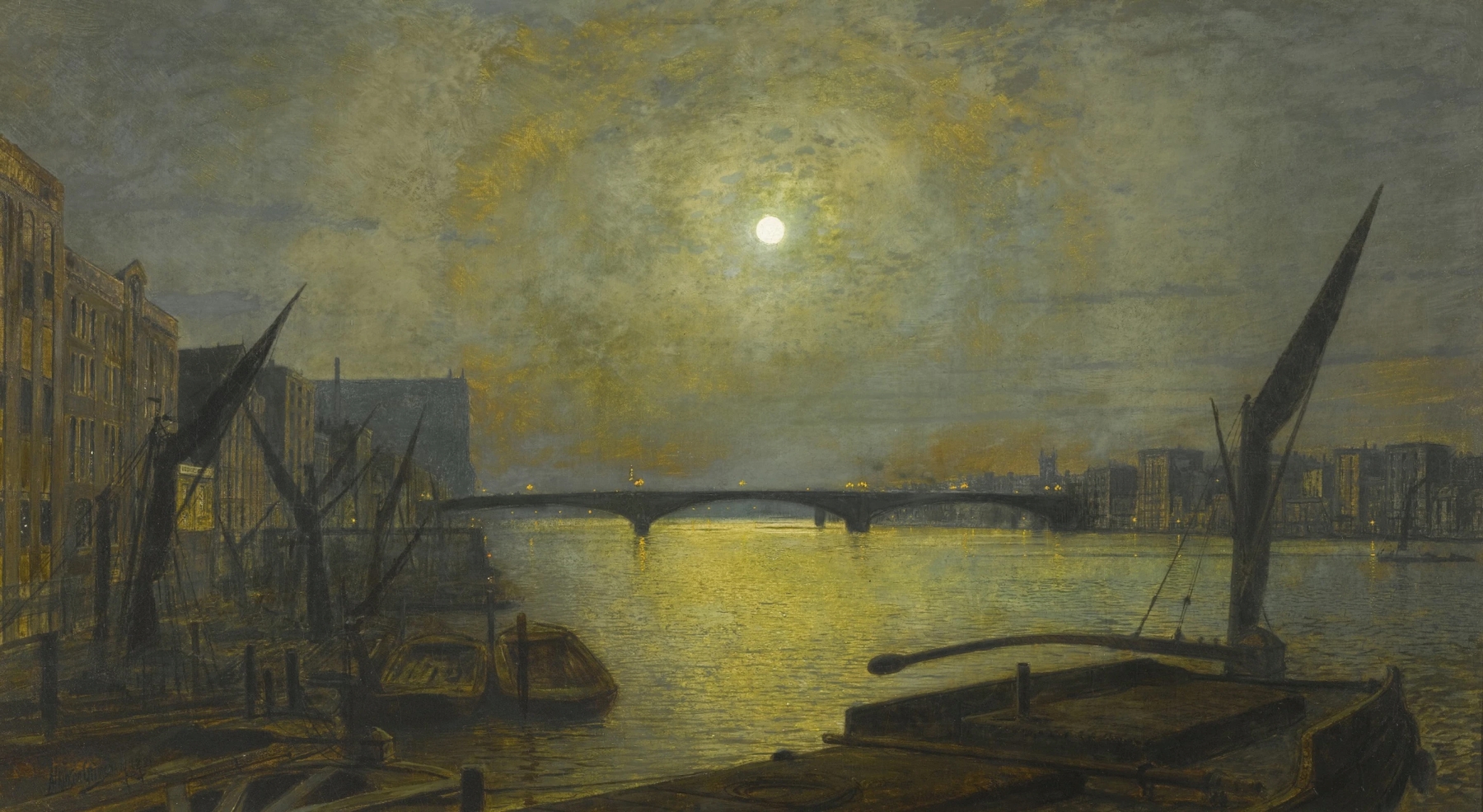
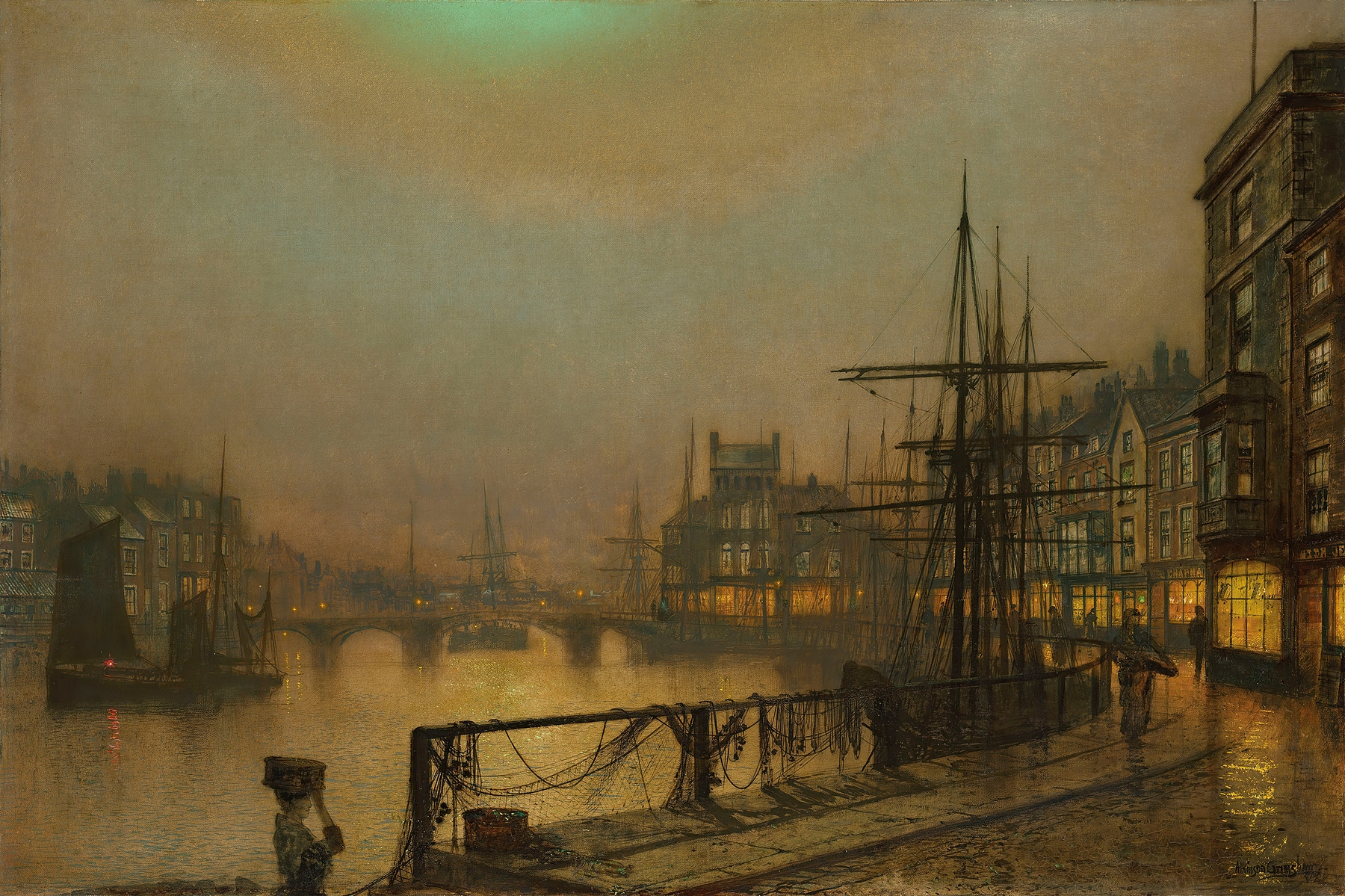
When did color learn to lie? In the shadows of twilight, the world whispers secrets hidden within the luminous glow of a harbor, inviting us to explore its beauty and illusion. Look to the left where the moonlight dances upon the water, casting shimmering reflections that blur the line between reality and dream. The deep blues and soft silvers entwine with hints of amber from distant lights, creating a captivating interplay that draws the eye.
Notice how the figures in the foreground, draped in cloaks, blend into the night—silent witnesses to the unfolding drama of the harbor, their presence almost ethereal against the deepening shadows. Within this scene lies a poignant tension between tranquility and melancholy. The boats, anchored and still, evoke a sense of solitude, suggesting the isolation that often accompanies beauty. The distant structures loom like specters, a reminder of human endeavor and the passage of time, while the shimmering water reflects the transient nature of both light and life.
Each element, from the delicate brushstrokes to the contrasting hues, reveals Grimshaw’s contemplation of the beauty found in both darkness and illumination. In 1893, Greenock Harbour at Night emerged during a period when John Atkinson Grimshaw was deeply engaged in his explorations of nocturnal landscapes. Living in Yorkshire, he was influenced by the burgeoning Pre-Raphaelite movement and the rise of industrialism, which transformed the British landscape. This painting encapsulates his mastery of light and texture, reflecting not only his personal vision but also the broader artistic dialogues of his time.