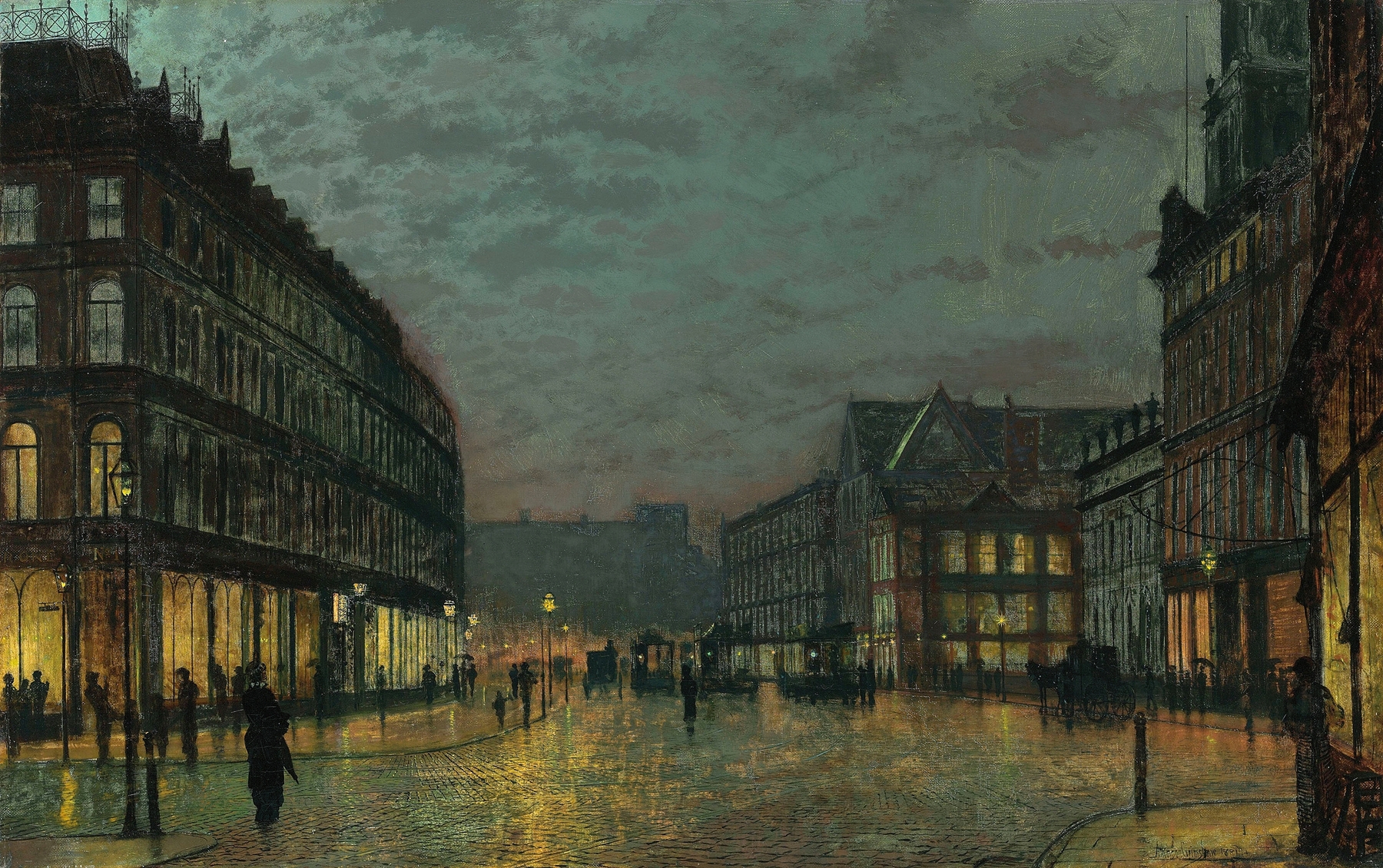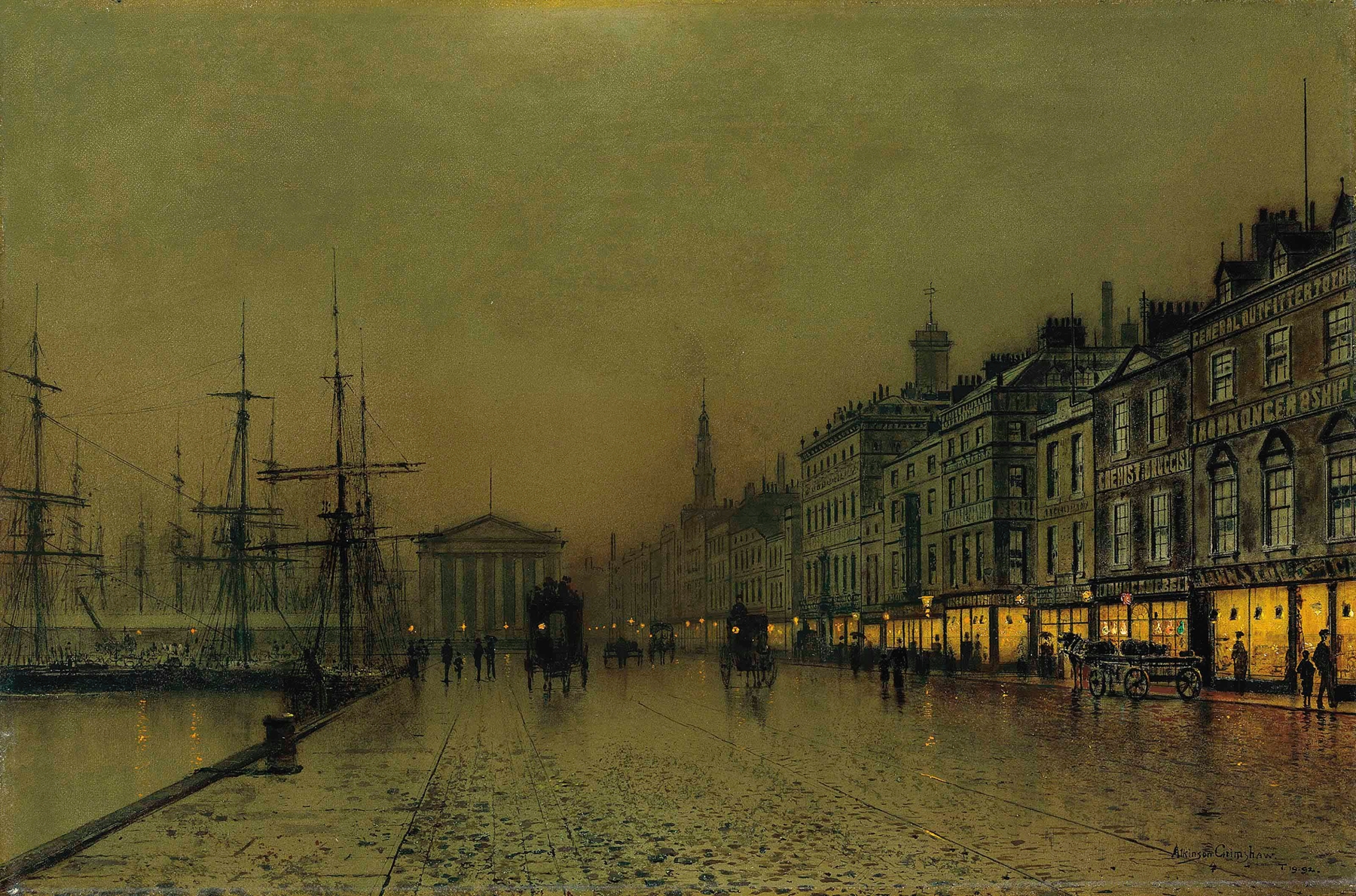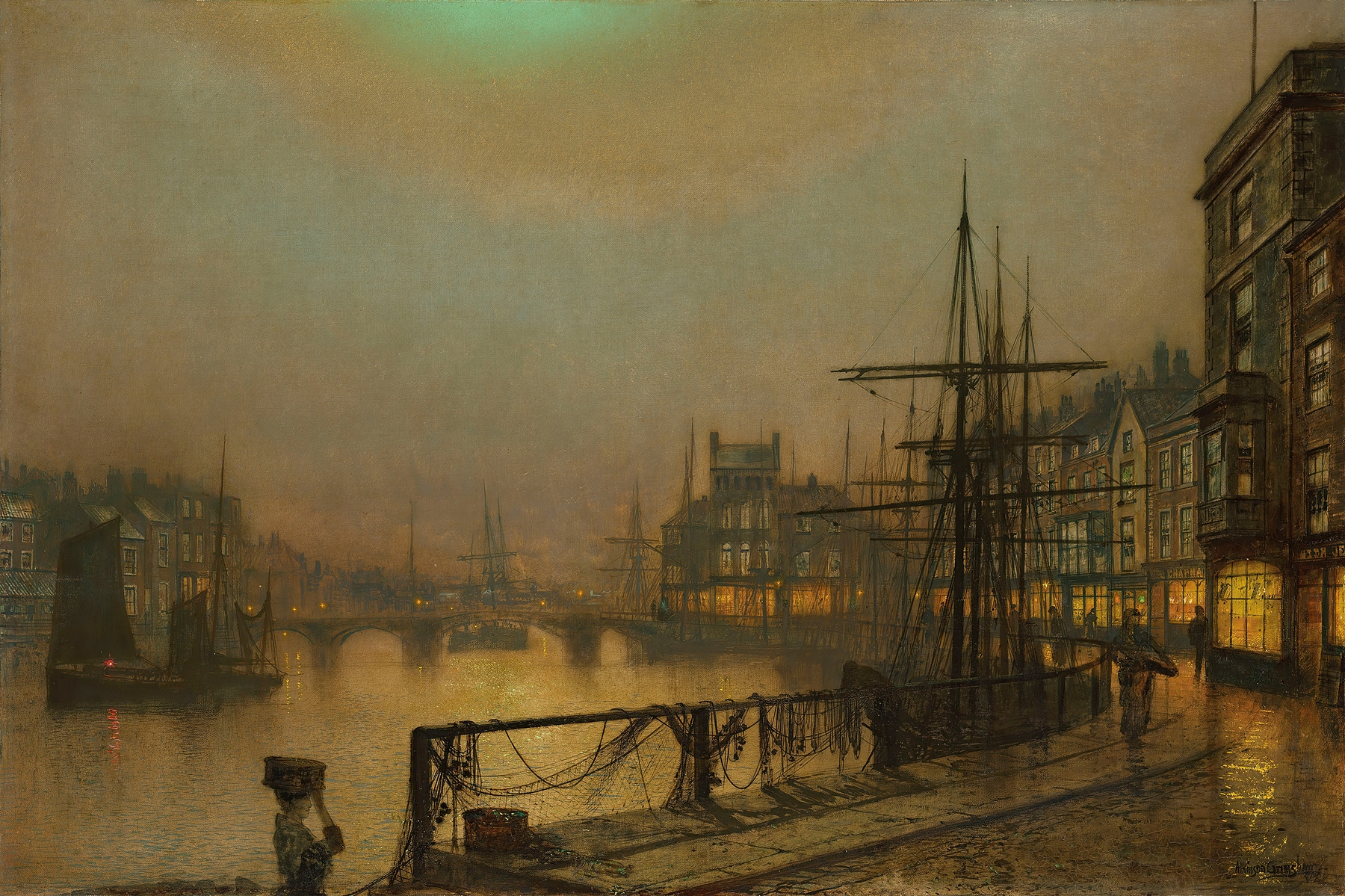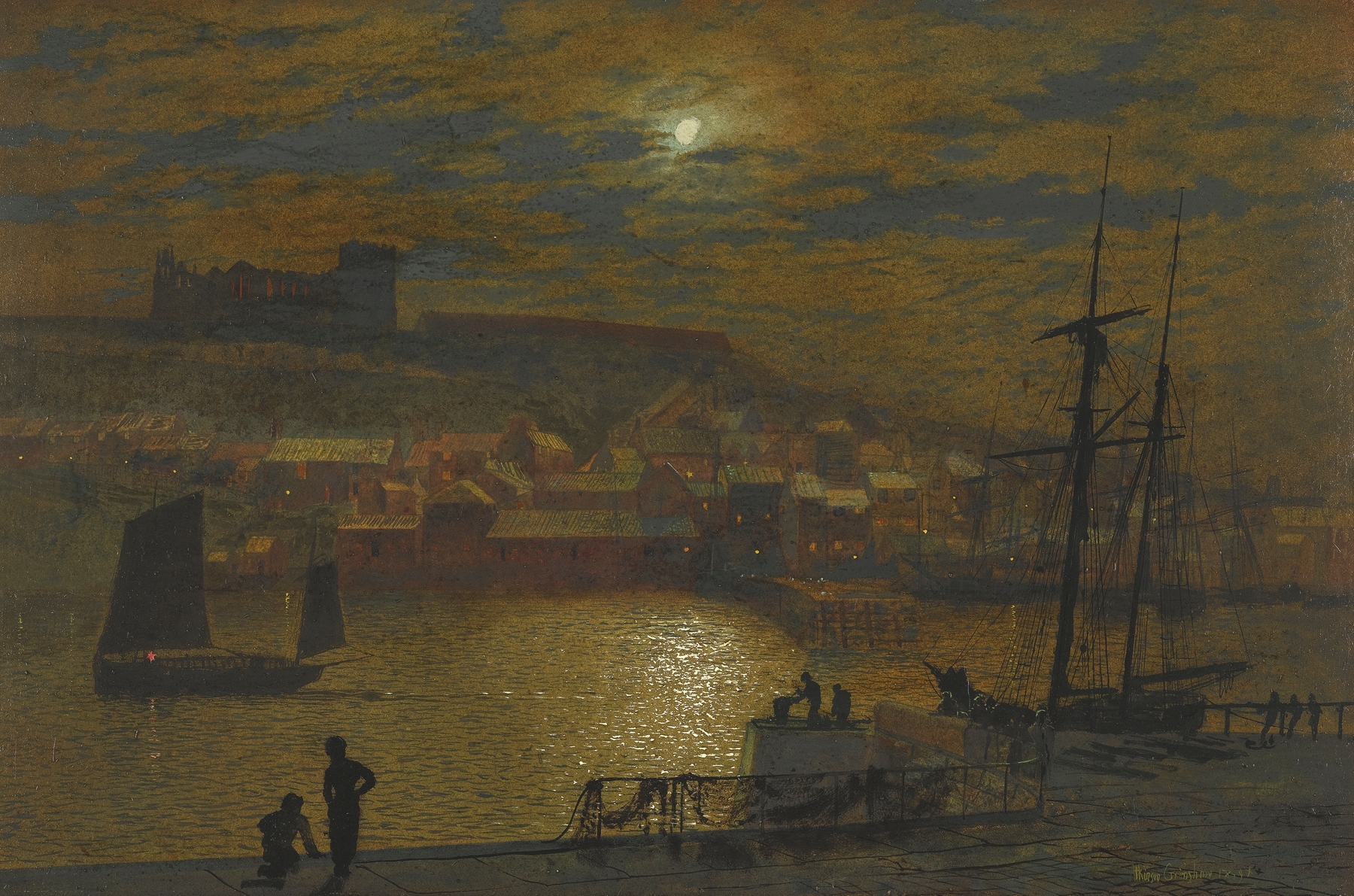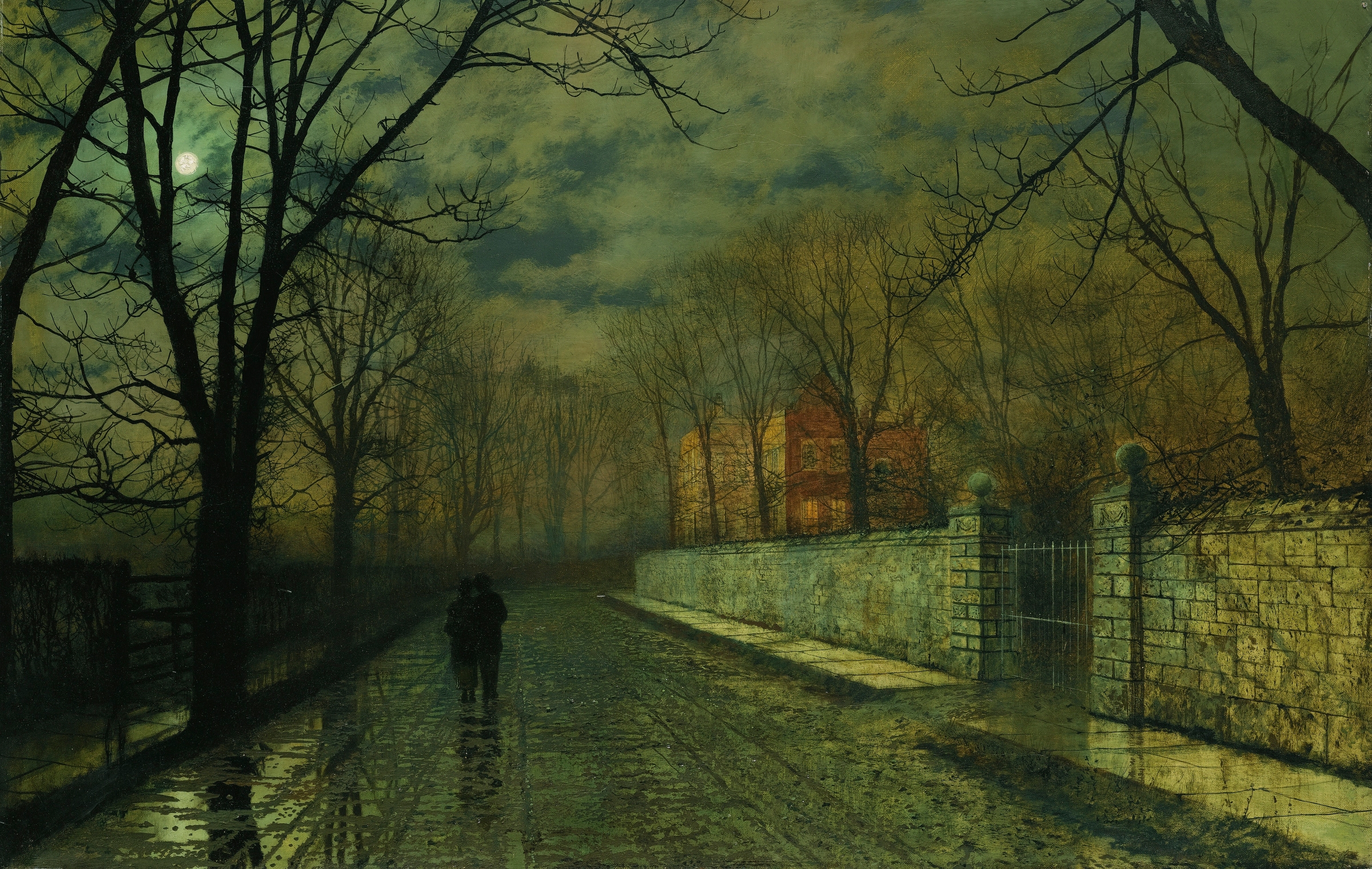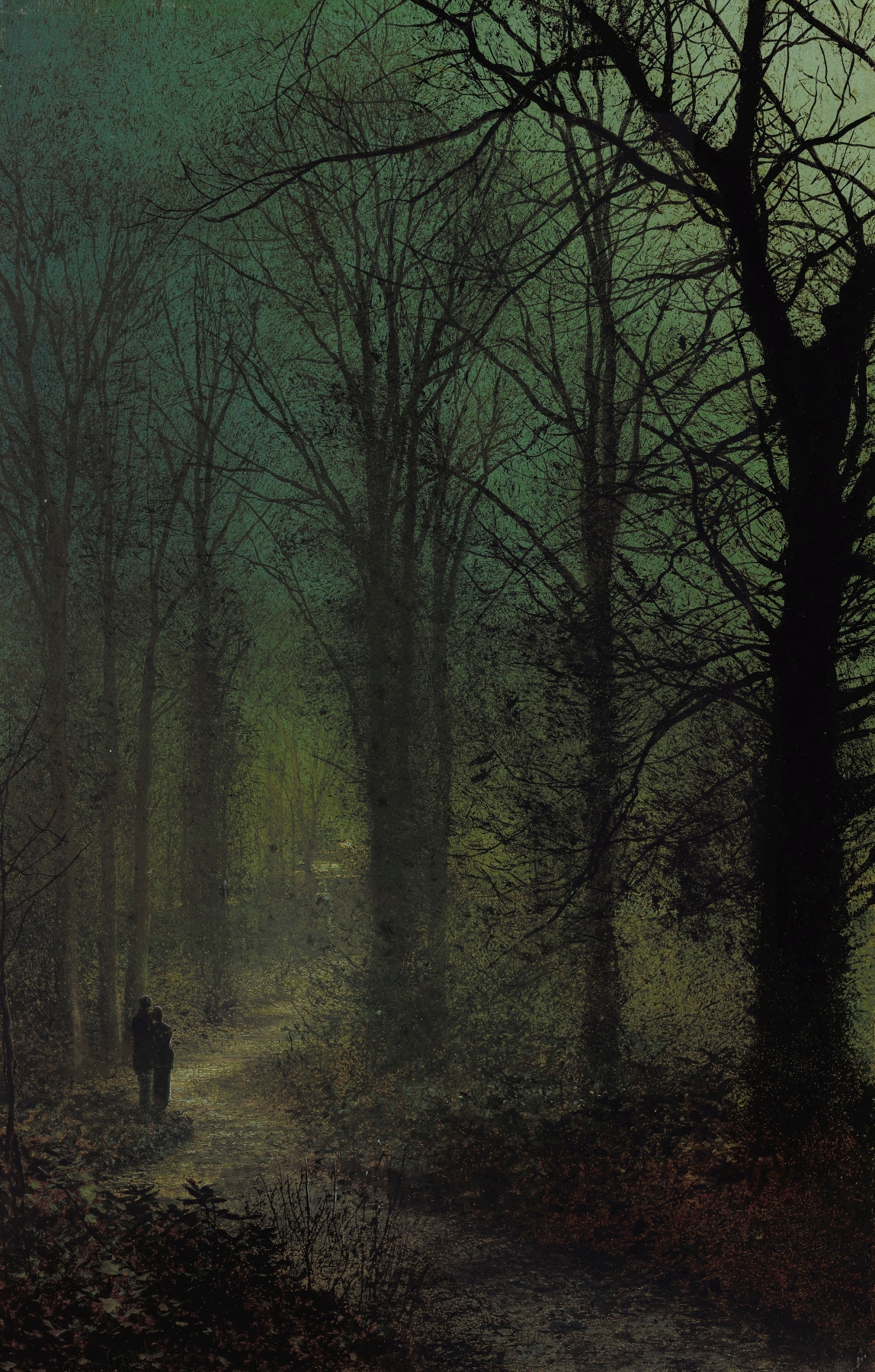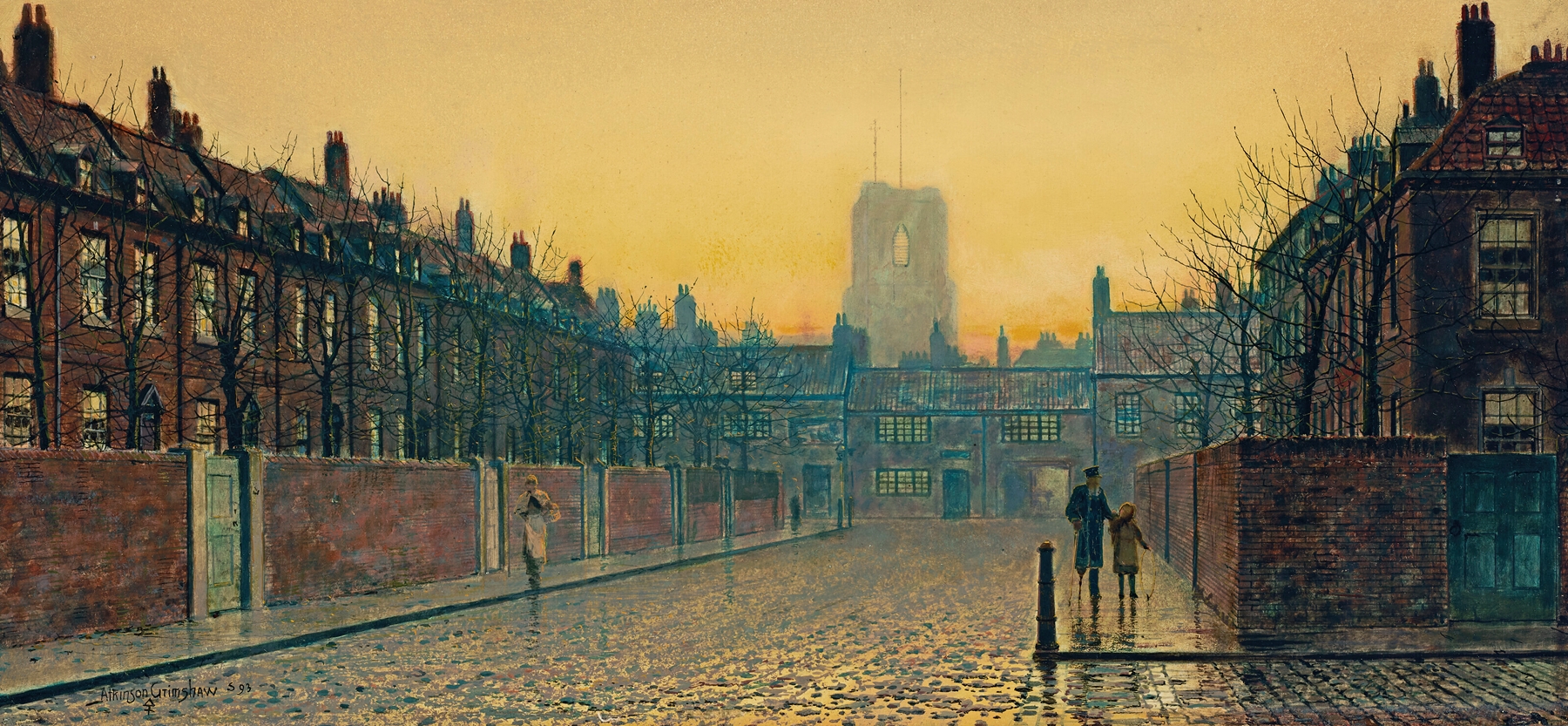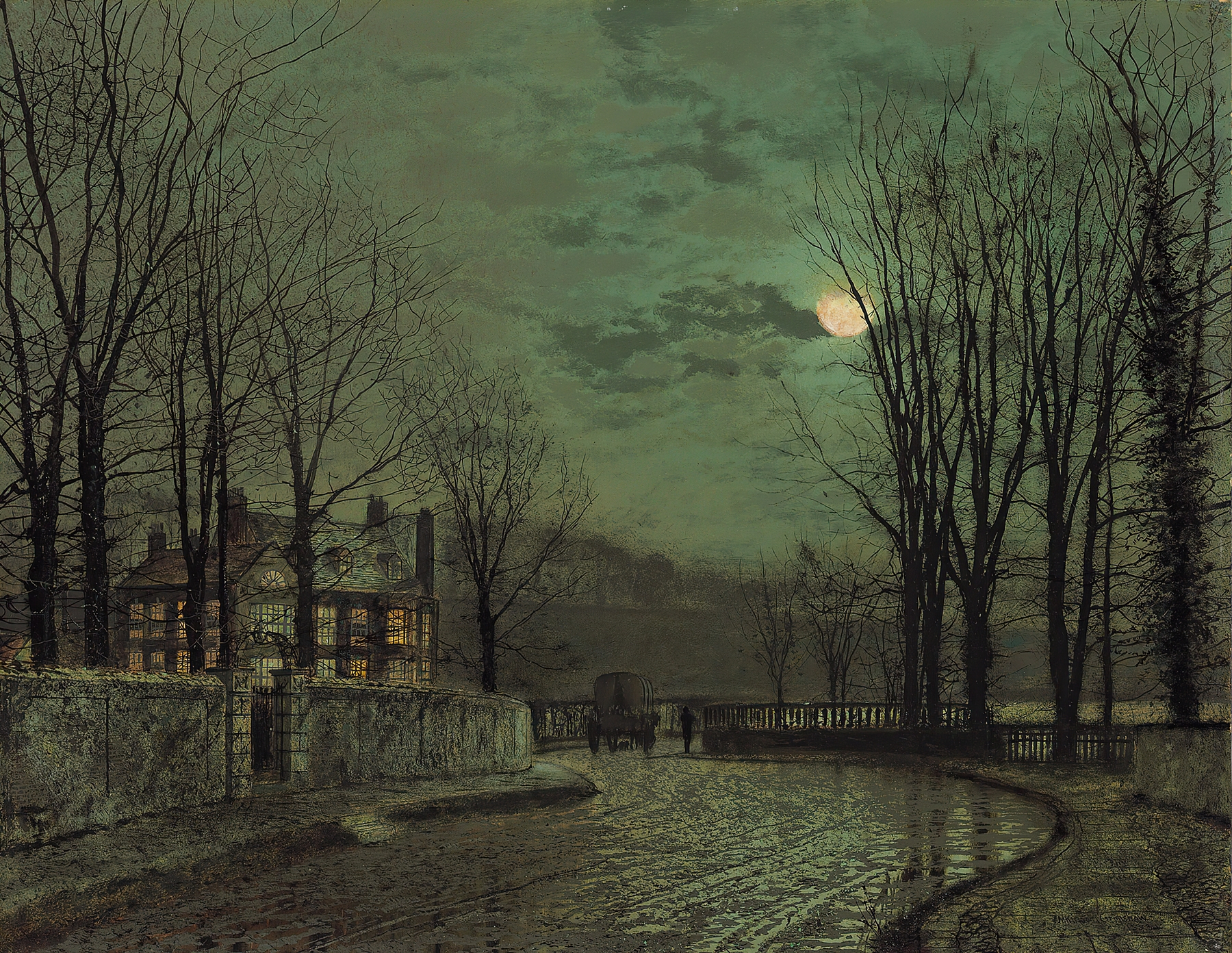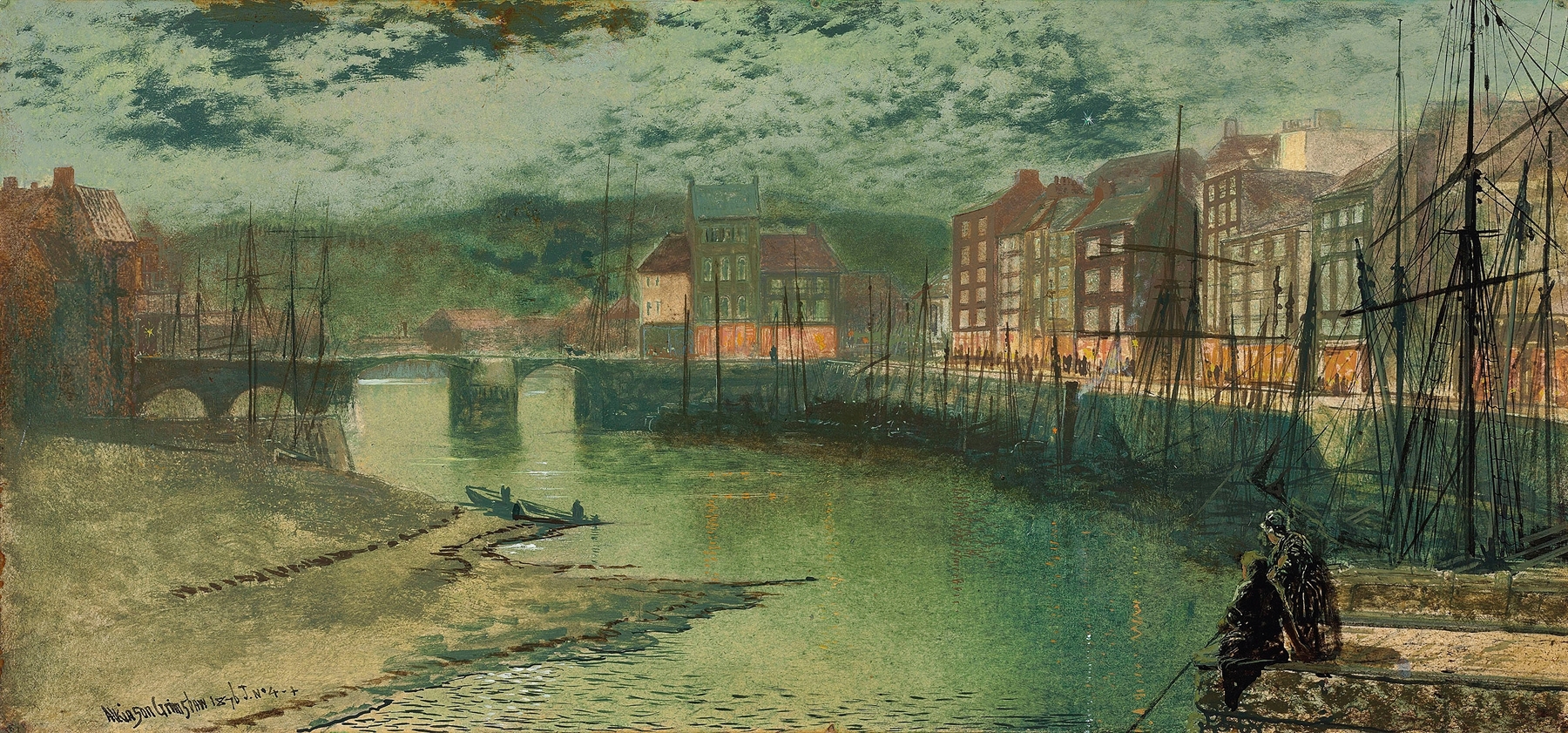
“Sometimes beauty is just pain, disguised in gold.” In the glow of twilight, a world held in gentle tension invites us to reconsider our notions of faith and hope. The docks, drenched in a soft, golden light, beckon with a promise that feels both alluring and unreachable, encapsulating the delicate dance between light and darkness that defines our human experience. Focus on the far shore, where the silhouettes of boats rest quietly against the fading horizon. Notice how the lamplight spills over the still water, creating a shimmering path that draws the eye deeper into the scene. The colors are rich and muted, dominated by deep blues and warm ambers, masterfully blending to evoke both calm and contemplation. Grimshaw’s precise brushwork captures the intricate details of the docks, from the weathered textures of wood to the delicate ripple of water, inviting a closer inspection of the life and stories contained within this serene moment. Dive into the hidden meanings that resonate beneath the surface. Each vessel, anchored yet restless, symbolizes the weight of unfulfilled dreams and aspirations, while the ethereal glow hints at an underlying faith that persists in the face of uncertainty. The juxtaposition of night and light reflects a profound tension—between hope and despair, longing and resolution—reminding us that beauty often emerges from the shadows of our struggles. In 1876, while painting this piece, the artist found himself at the zenith of his career, living in Leeds amid the burgeoning movement of the British realist school. This was a time of rapid industrial changes and urban expansion, where the haunting beauty of the natural world began to fade in the wake of progress. Grimshaw's work was a response to this shifting landscape, capturing not only a place but also a fleeting moment of emotional truth amidst the chaos.