Under the Silvery Moonbeams — History & Analysis
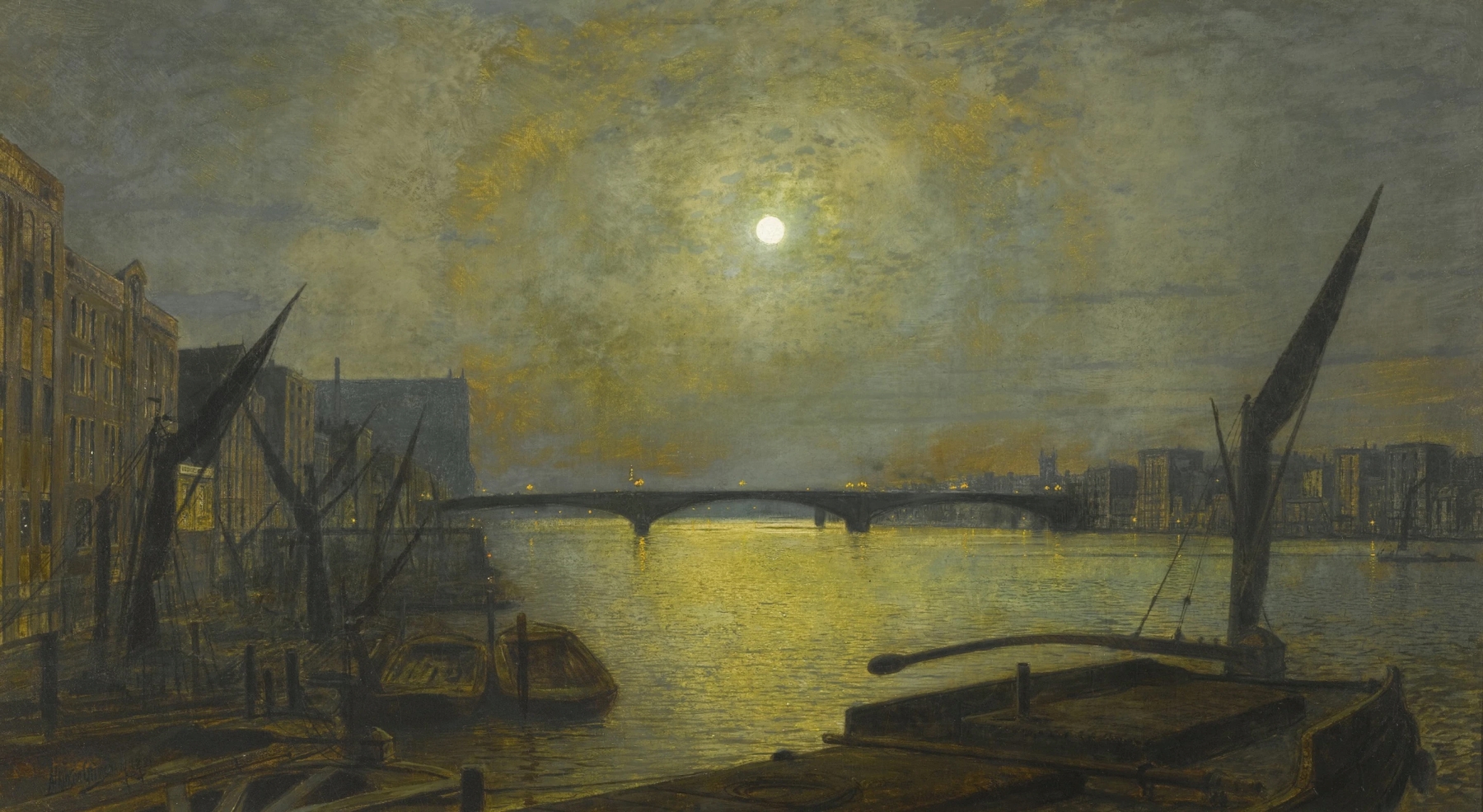
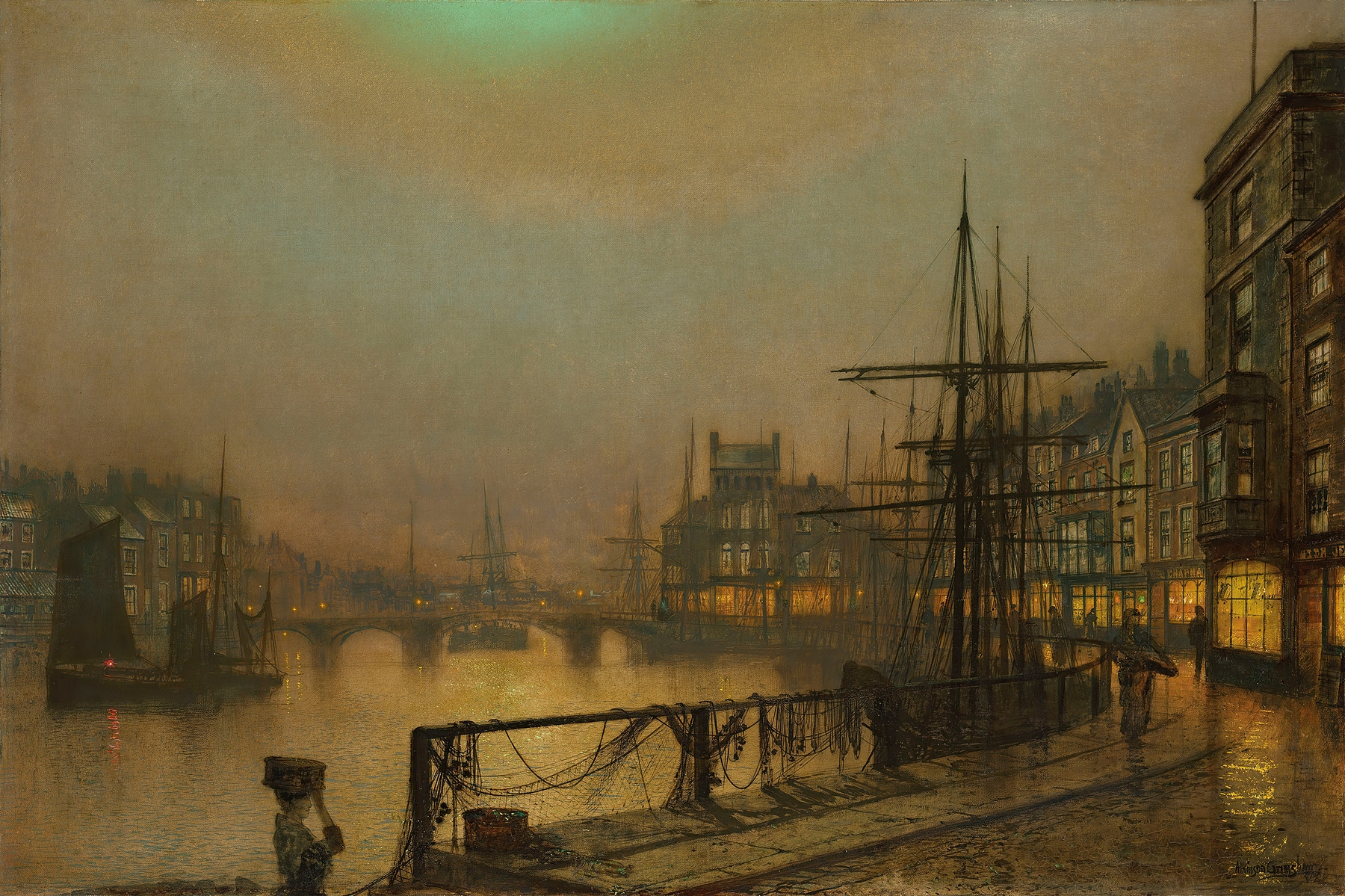
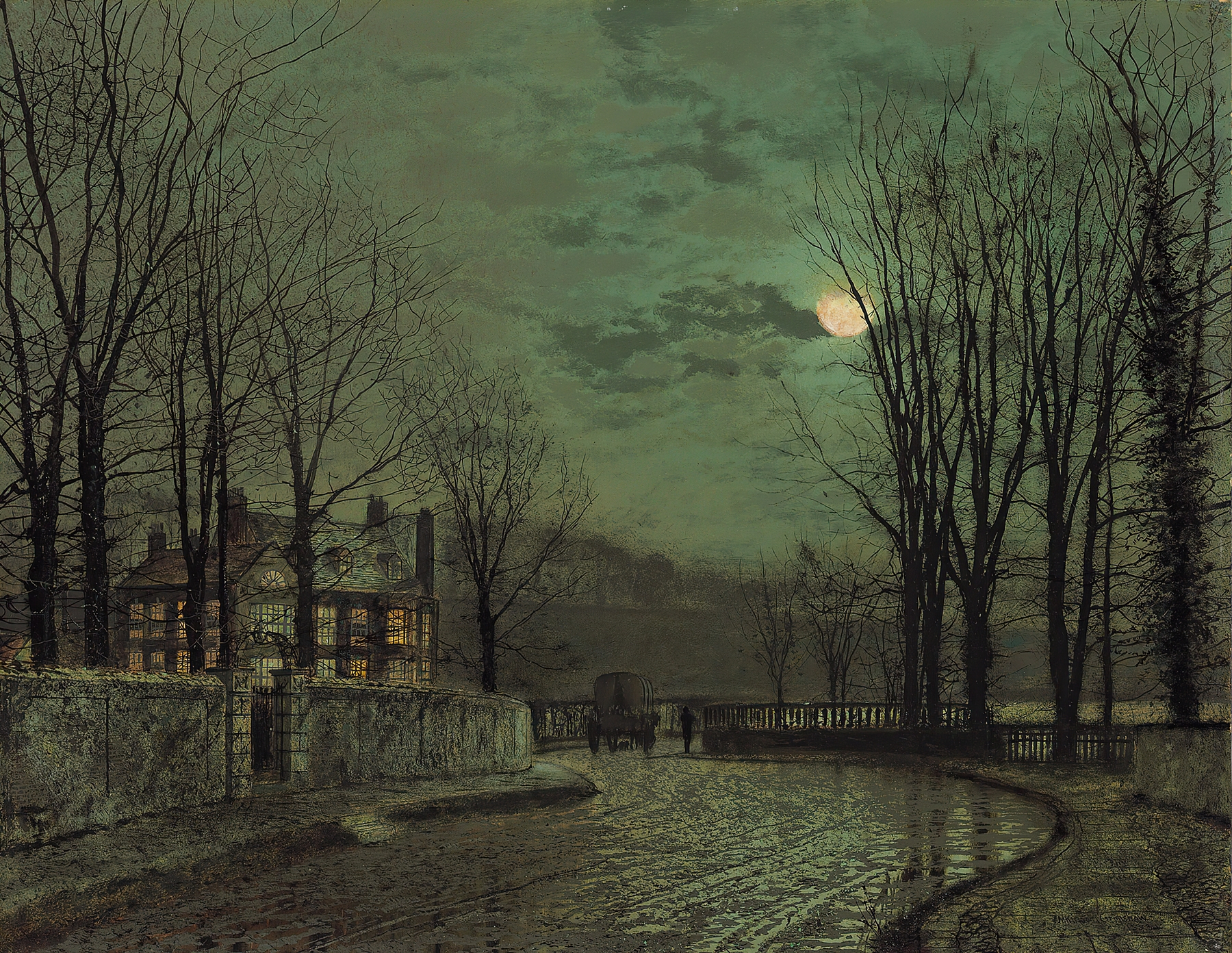
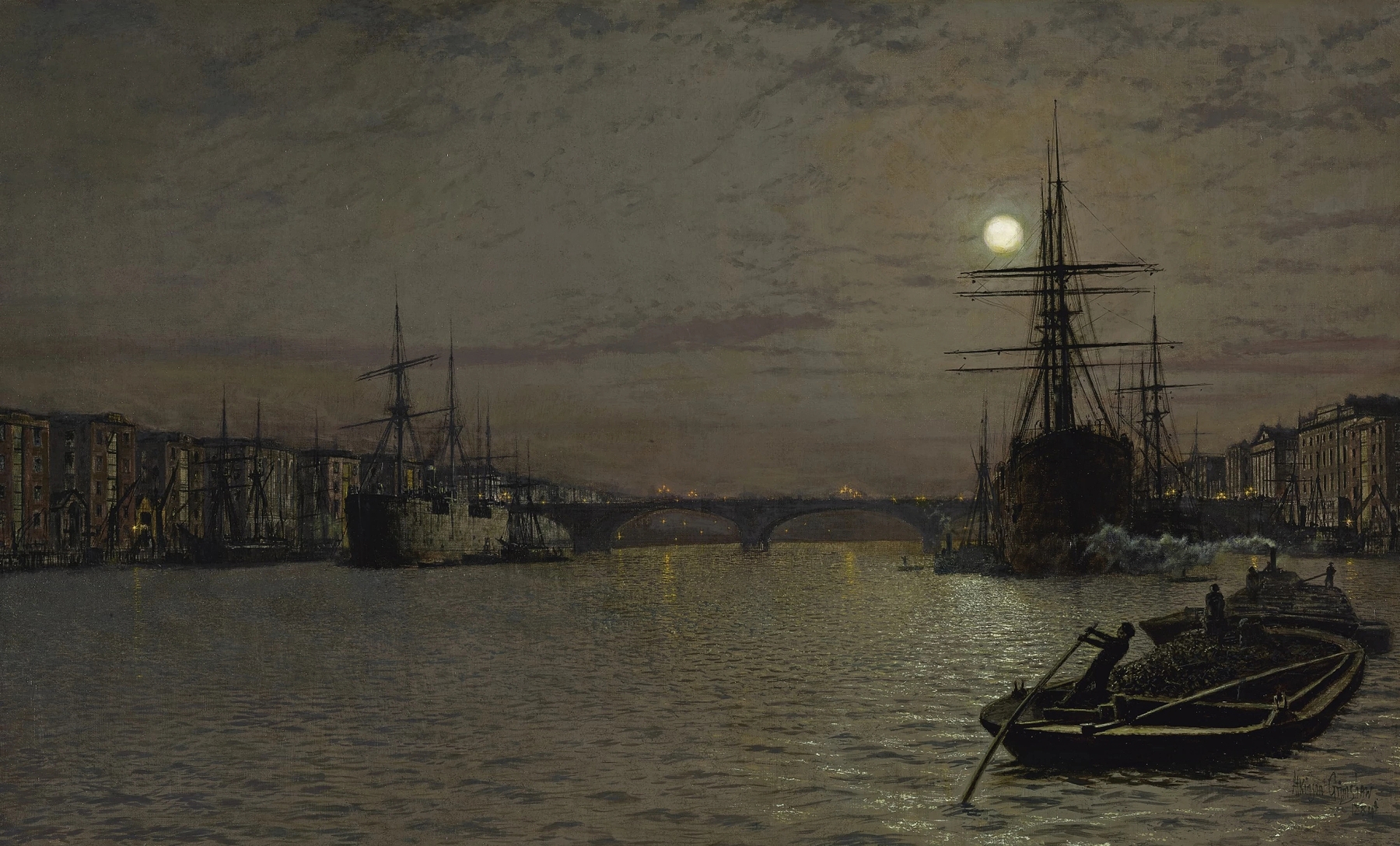
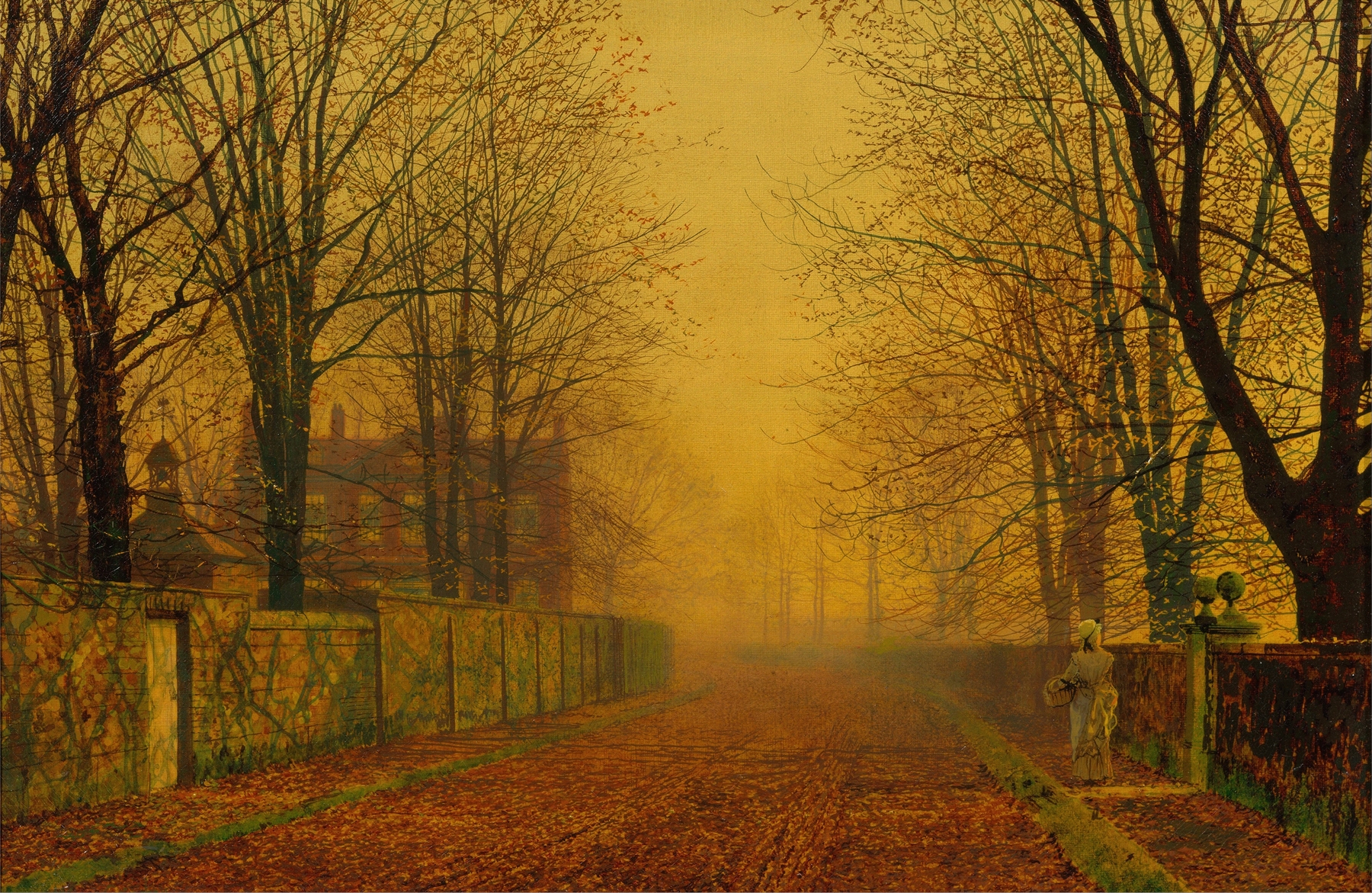
Where does light end, and longing begin? In the quiet embrace of night, the boundary between reality and dreams dissolves, inviting us to explore the depths of desire and solitude. Look to the left at the shimmering silver reflections on the water's surface, where the moonlight dances with an ethereal grace. The painting envelops us in a nocturnal palette—blues and silvers merging seamlessly, drawing our gaze deeper into the tranquil landscape.
Notice how the trees arch gracefully, their dark forms contrasting with the glowing water, creating a sense of both enclosure and openness that evokes an unspoken yearning. As you delve further into the details, the distant figure emerges, almost ghostlike beneath the luminous sky. This solitary presence stirs a profound sense of isolation, yet also a yearning for connection. The interplay of light and shadow suggests a narrative between hope and the melancholy of longing, hinting at unfulfilled dreams hovering just beyond reach.
In 1882, Grimshaw painted this piece during a time when he was well-established within the British art world, known for his evocative landscapes and urban scenes. He created this work in the midst of the Victorian era, an age marked by both industrial progress and deep emotional introspection. Under the Silvery Moonbeams reflects his fascination with the interplay of light and the intimate emotions it can evoke, capturing a moment that resonates with the human experience of solitude in a rapidly changing world.