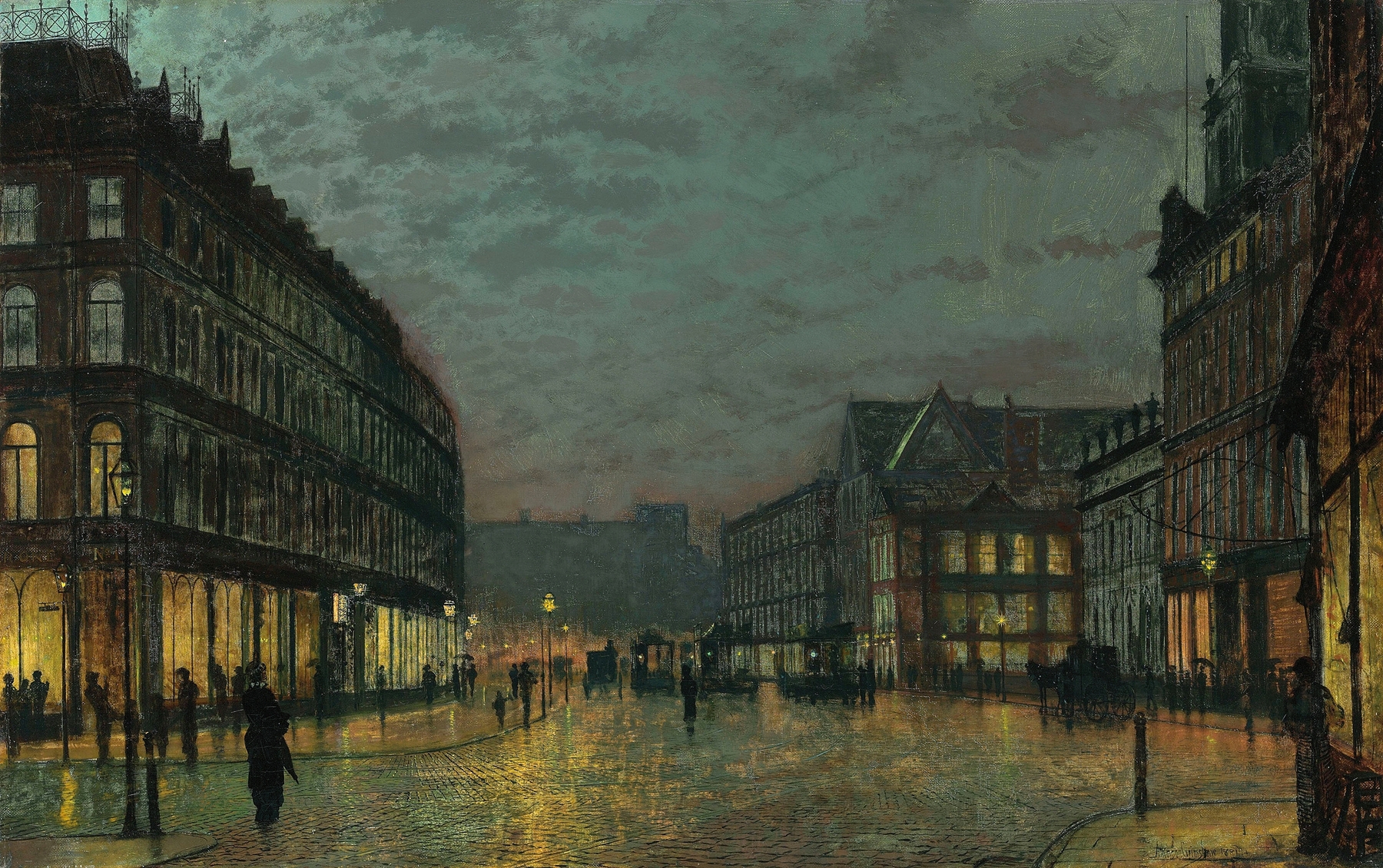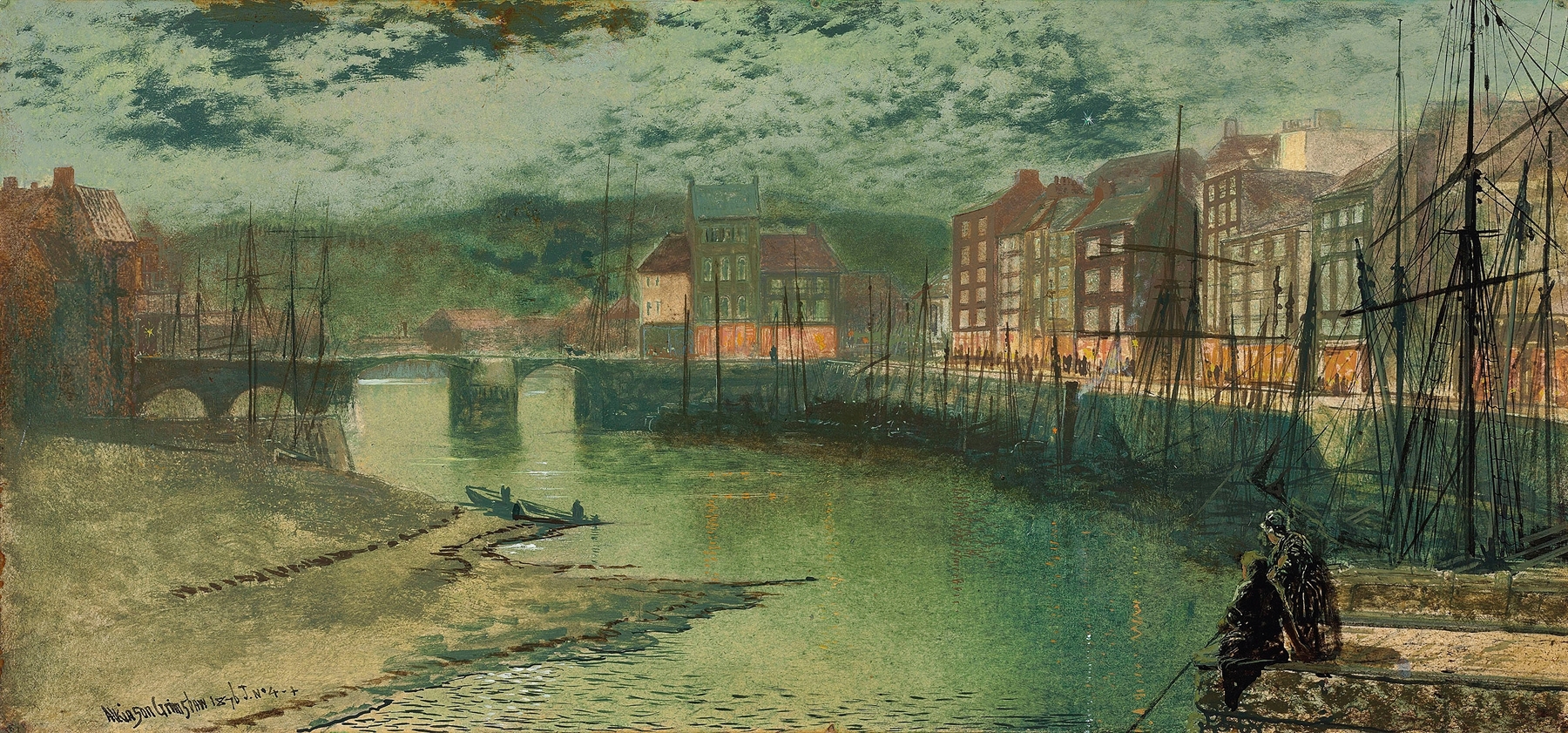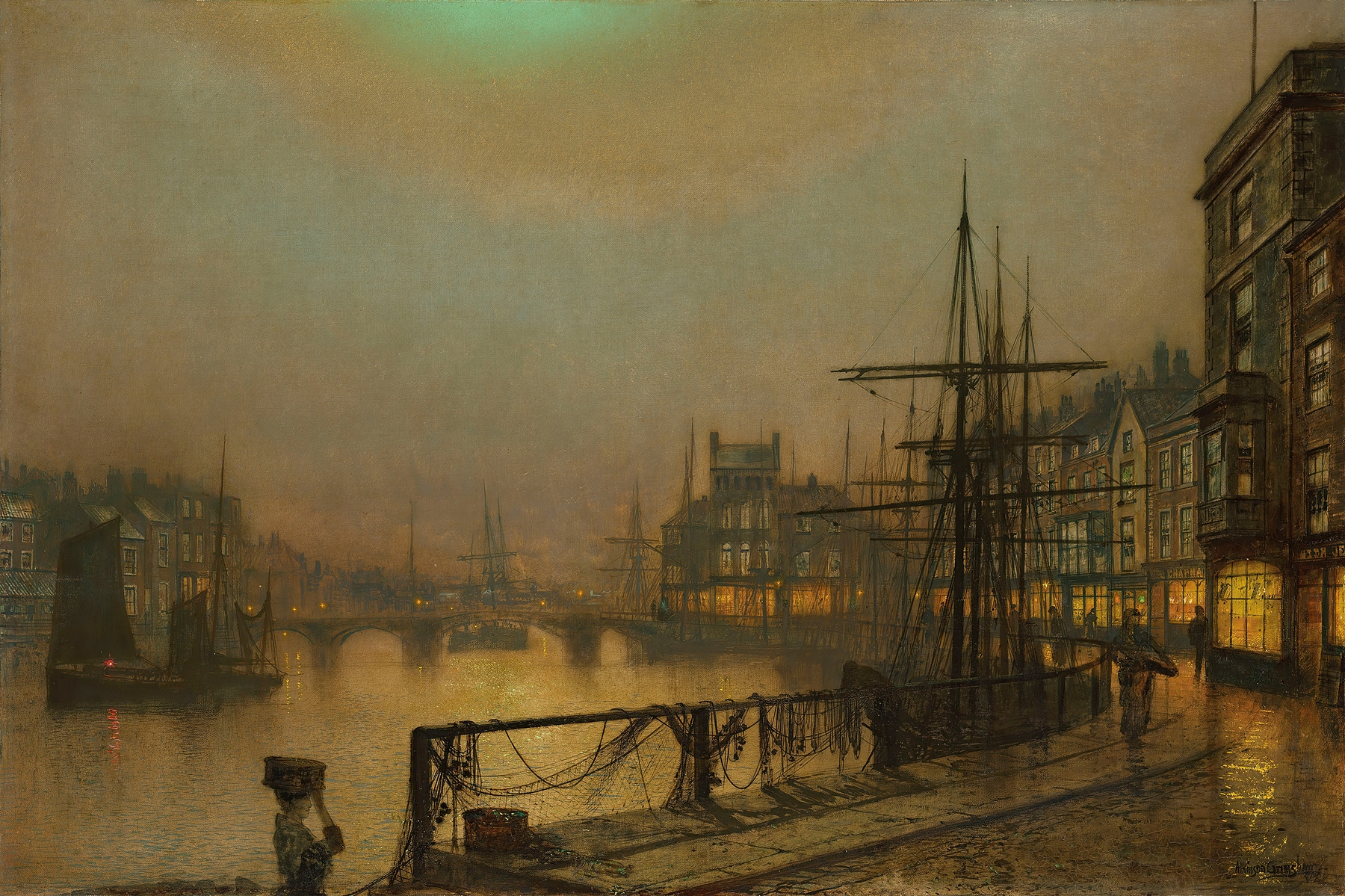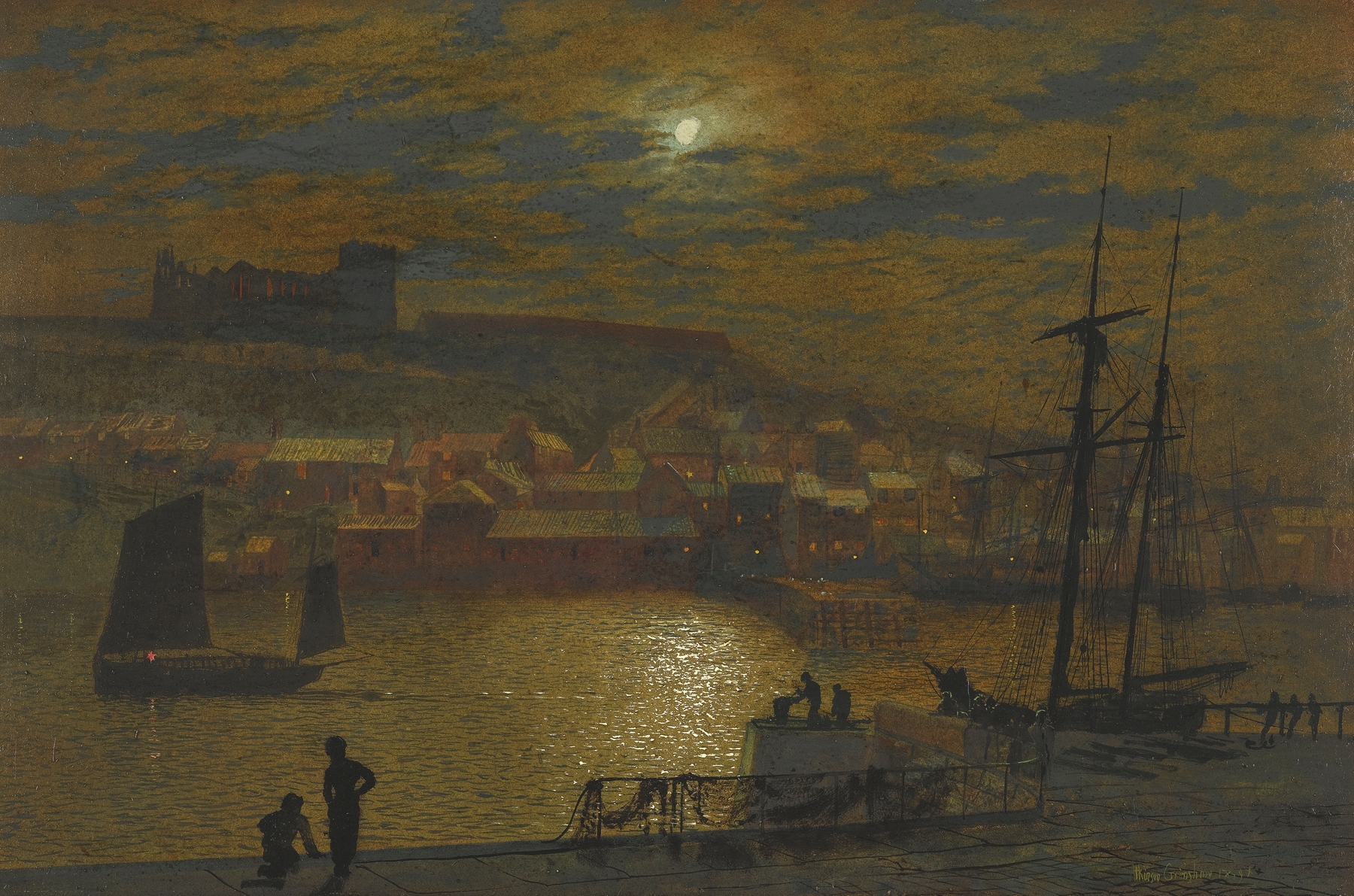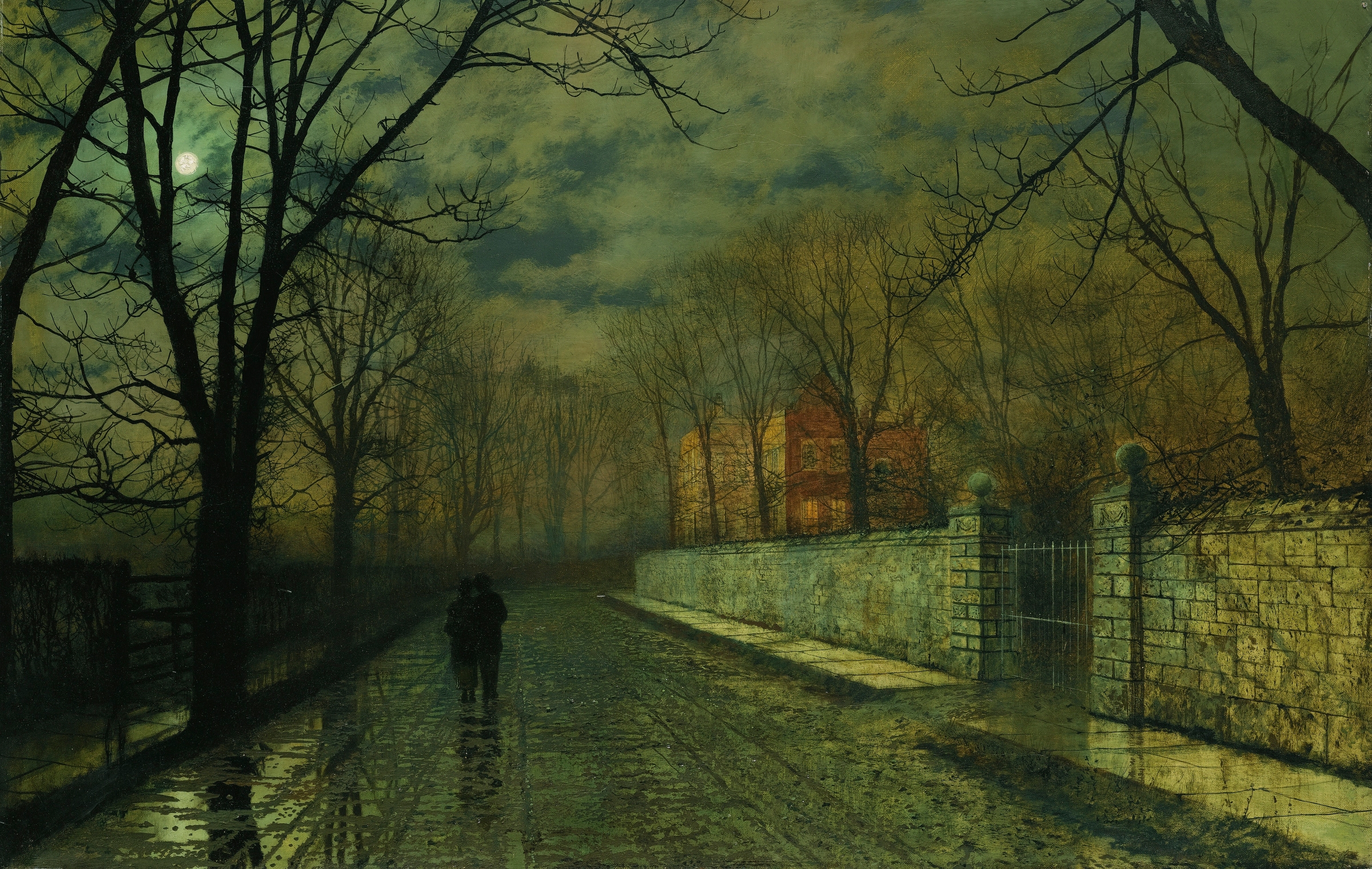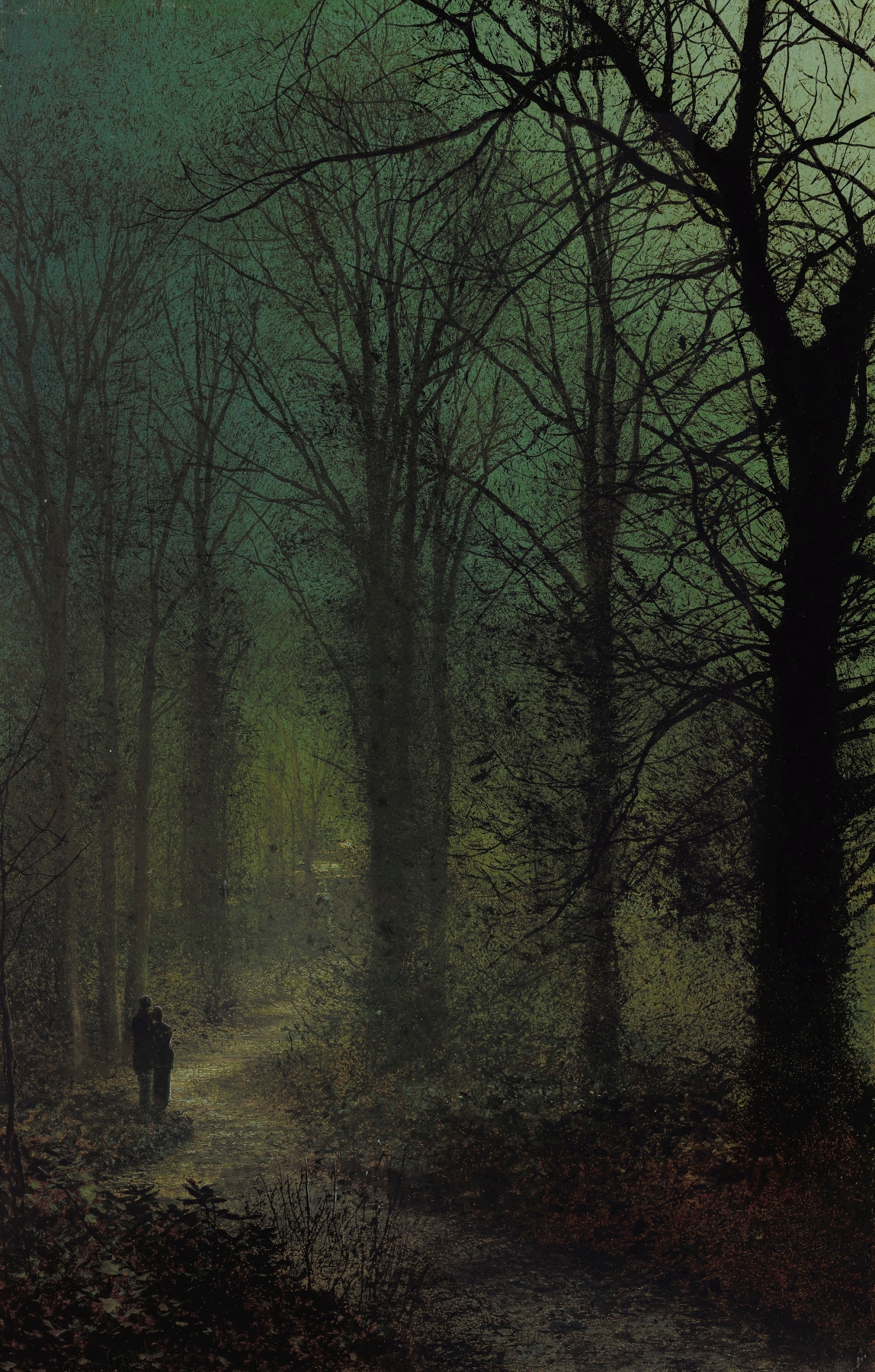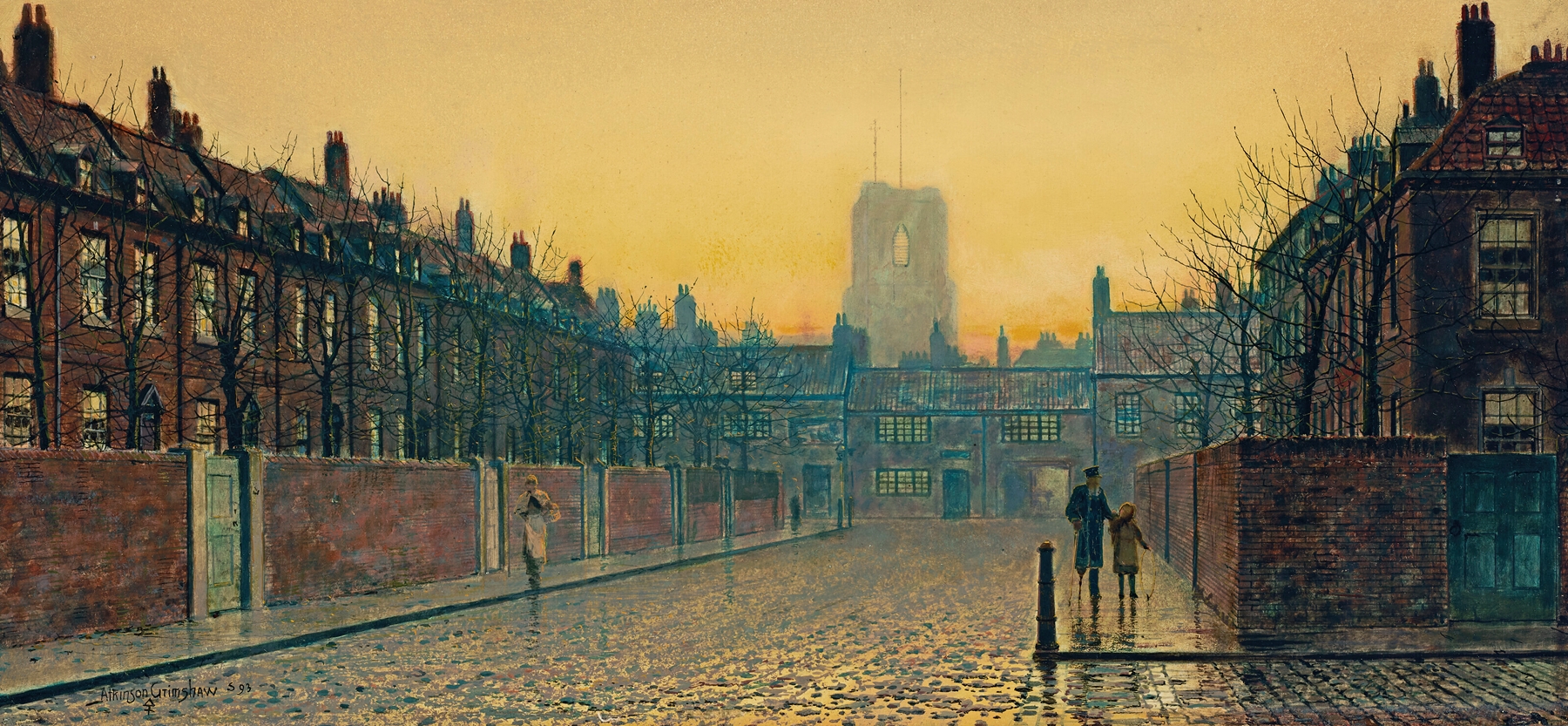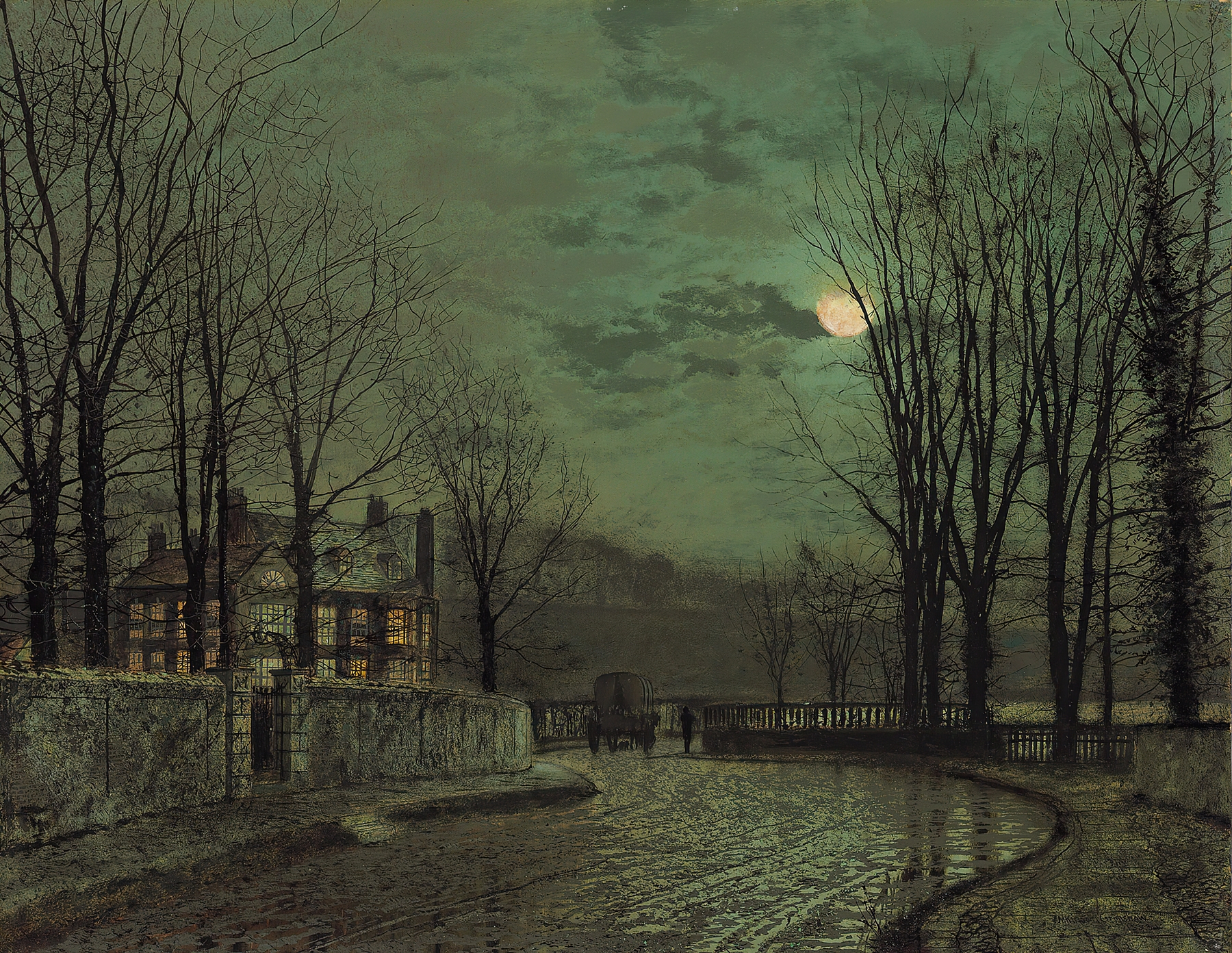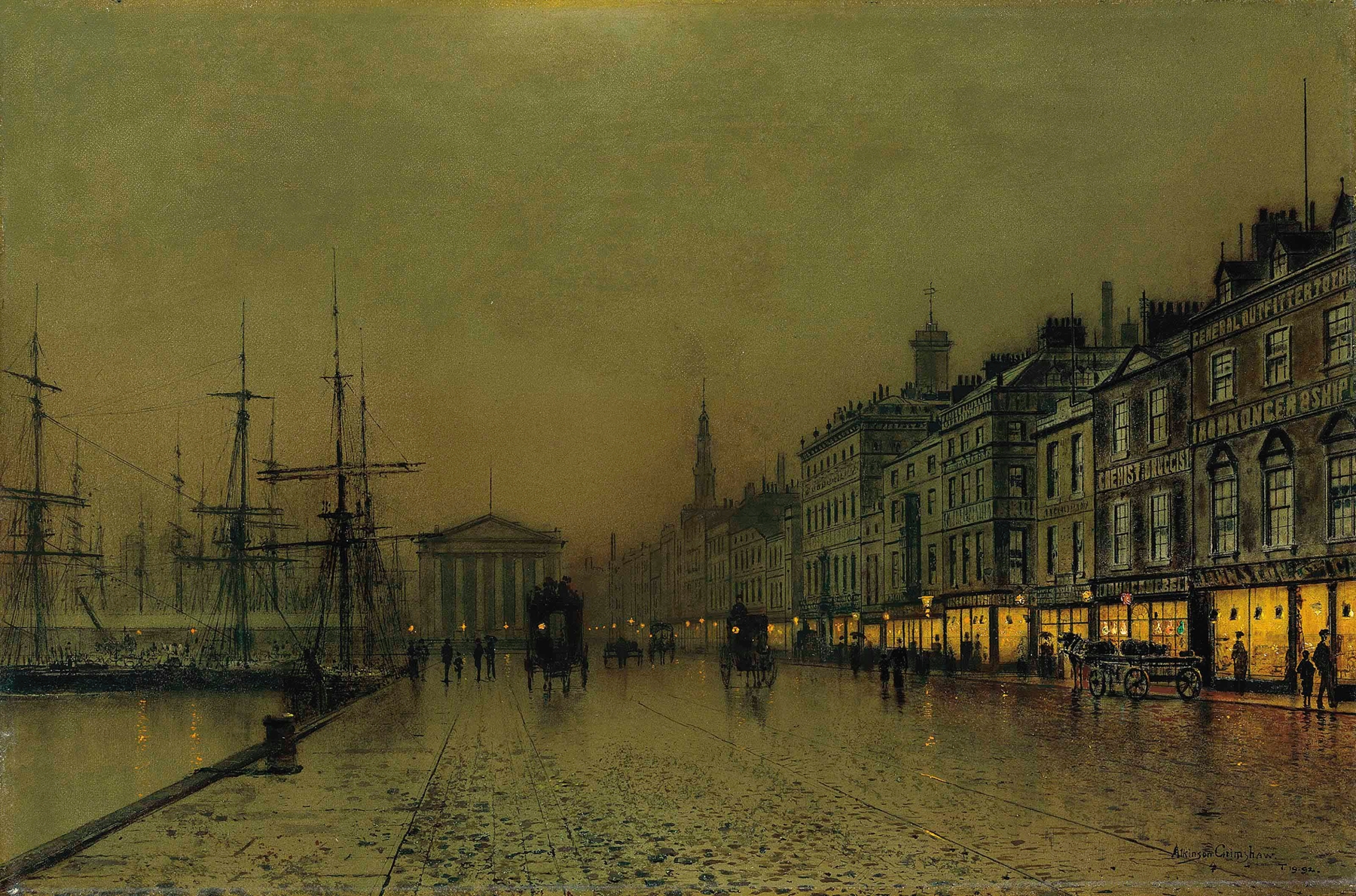
Did the painter know this moment would outlive them? In the tranquil darkness of *Greenock dockside by night*, a world holds its breath, suspended between the decay of industry and the promise of tomorrow. As shadows stretch and mingle with the soft glow of gaslight, the scene reflects the passage of time—a haunting yet serene visage of a bygone era. Look to the left, where the soft luminescence bathes the cobbled path in golden hues, drawing your gaze toward the silhouettes of ships moored like forgotten whispers amidst the pier. The cool blues and greens of the water contrast sharply with the warmth of the lights, creating a visual dialogue between the living and the lifeless. The meticulous brushwork adds texture to the decaying structures, allowing the viewer to feel the weight of history—every crack and crevice tells a story of labor, loss, and resilience. Within the stillness, a poignant tension arises—between progress and decay, warmth and coldness, presence and absence. The quietude of the night envelops the scene, inviting contemplation of the fleeting nature of industry and the inevitability of time's relentless march. An unseen history resonates, echoing the lives of those who once thrived in the dockside’s vibrant shadows, now replaced by an eerie silence and fading memories. In 1892, Grimshaw painted this evocative piece during a period when industrialization was reshaping the landscape of Britain. Living in Leeds, he was known for his atmospheric urban night scenes, capturing the interplay between light and shadow. At this time, he was refining his unique style, influenced by the Pre-Raphaelite ideals, and responding to the changing world around him—an artist seeking to immortalize fleeting moments before they too succumbed to decay.