Group Of Chestnut Trees — History & Analysis
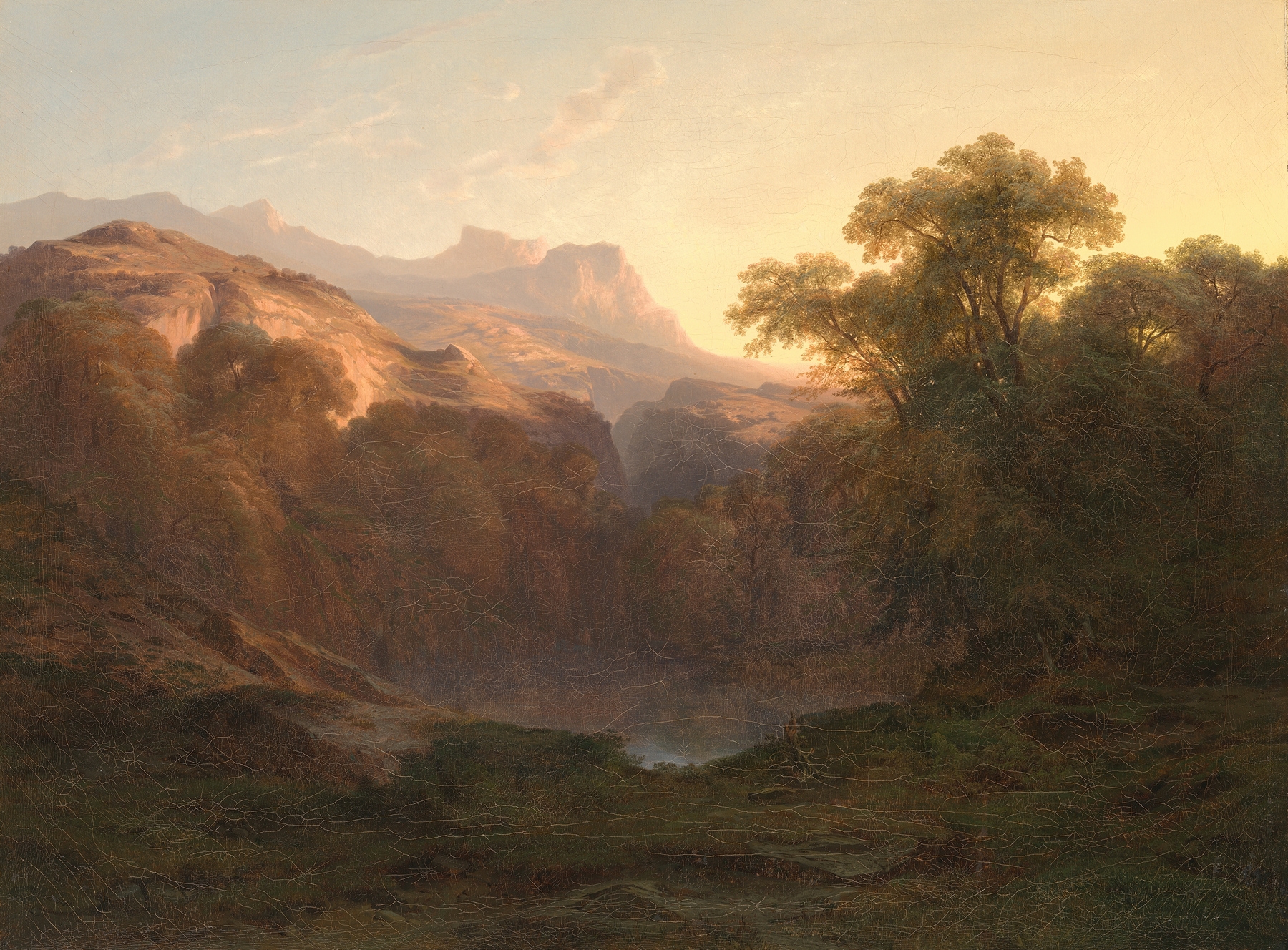
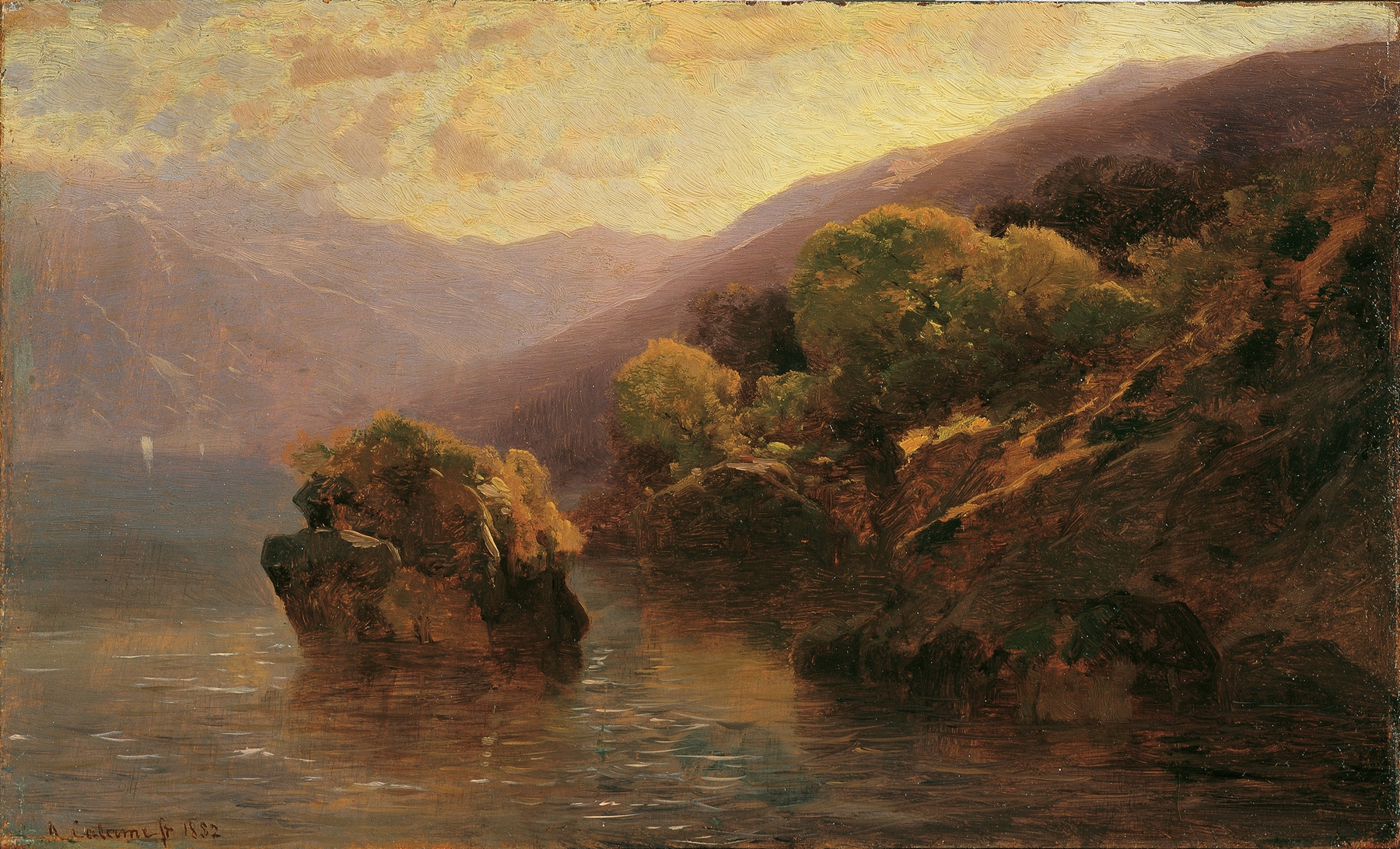
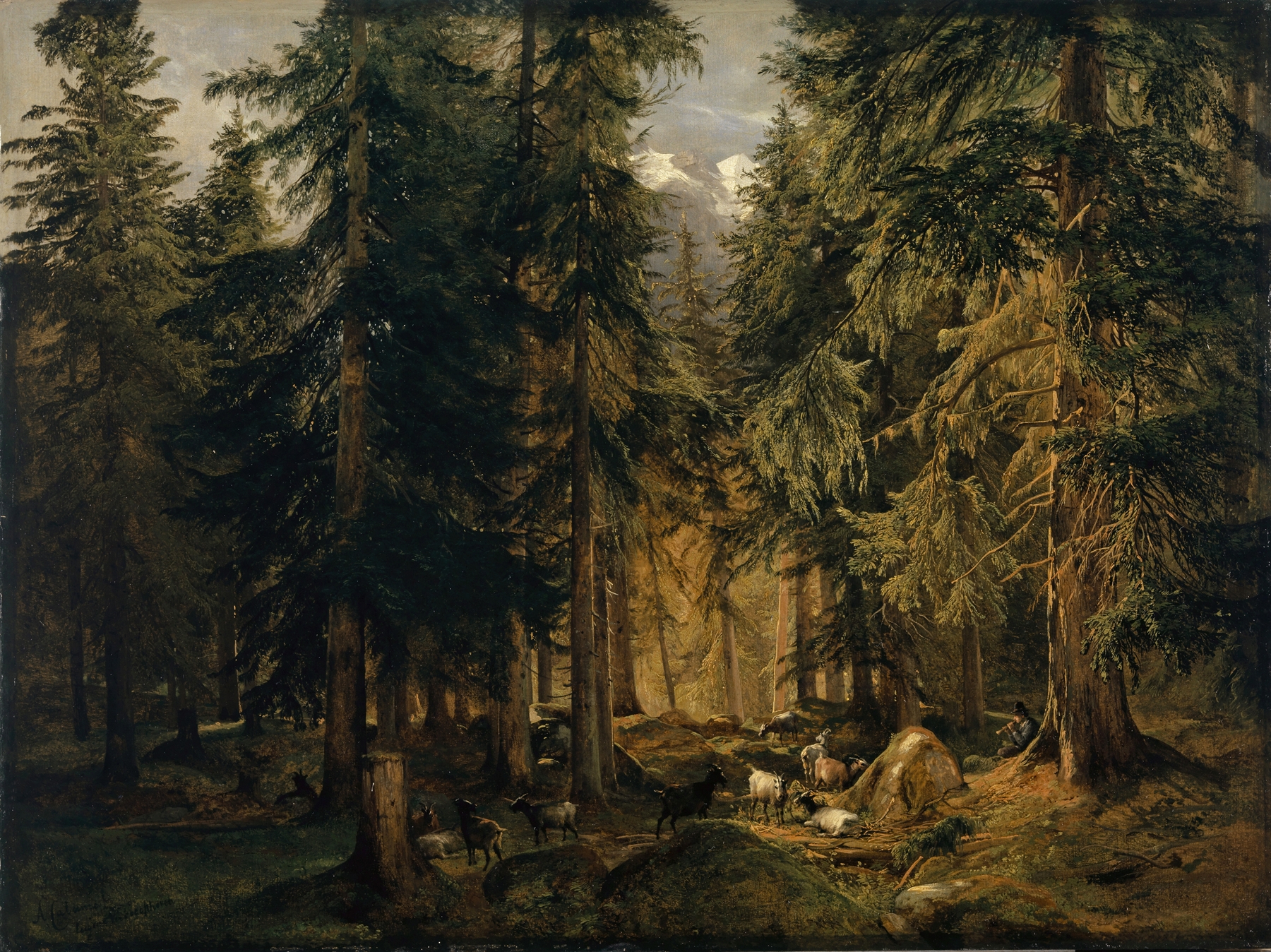
Could a single brushstroke hold eternity? In Group of Chestnut Trees, Alexandre Calame captures not just a landscape, but the deep longing embedded in nature's embrace. Focus on the central cluster of chestnut trees, their gnarled trunks stretching skyward, adorned with rich green foliage. Notice how the light filters through the leaves, casting a dappled pattern on the ground below.
The artist employs a careful blend of earthy browns and lush greens, evoking a sense of vitality and grounding, while the delicate strokes impart an almost transient quality to the leaves, highlighting their rustling whispers in the gentle breeze. The emotional tension in this work lies in the juxtaposition of the sturdy, enduring trees and the ephemeral play of light that dances among their branches. Each tree stands resolute against the backdrop of ever-changing skies, yet their leaves seem to flutter with a yearning for something beyond their rooted existence. Calame invites us to contemplate the passage of time—how the trees endure, while moments of sunlight flicker and fade in an eternal cycle.
Created during the mid-19th century, when Romanticism was beginning to give way to Realism, Calame found himself in a world caught between nostalgia for nature and the encroachment of industrialization. Living in Switzerland, he painted landscapes that reflected both the beauty and fragility of the natural world, seeking to evoke a sense of connection and reverence. In this quiet moment, he captured the timeless dialogue between man and nature, revealing a profound yearning that resonates through the ages.