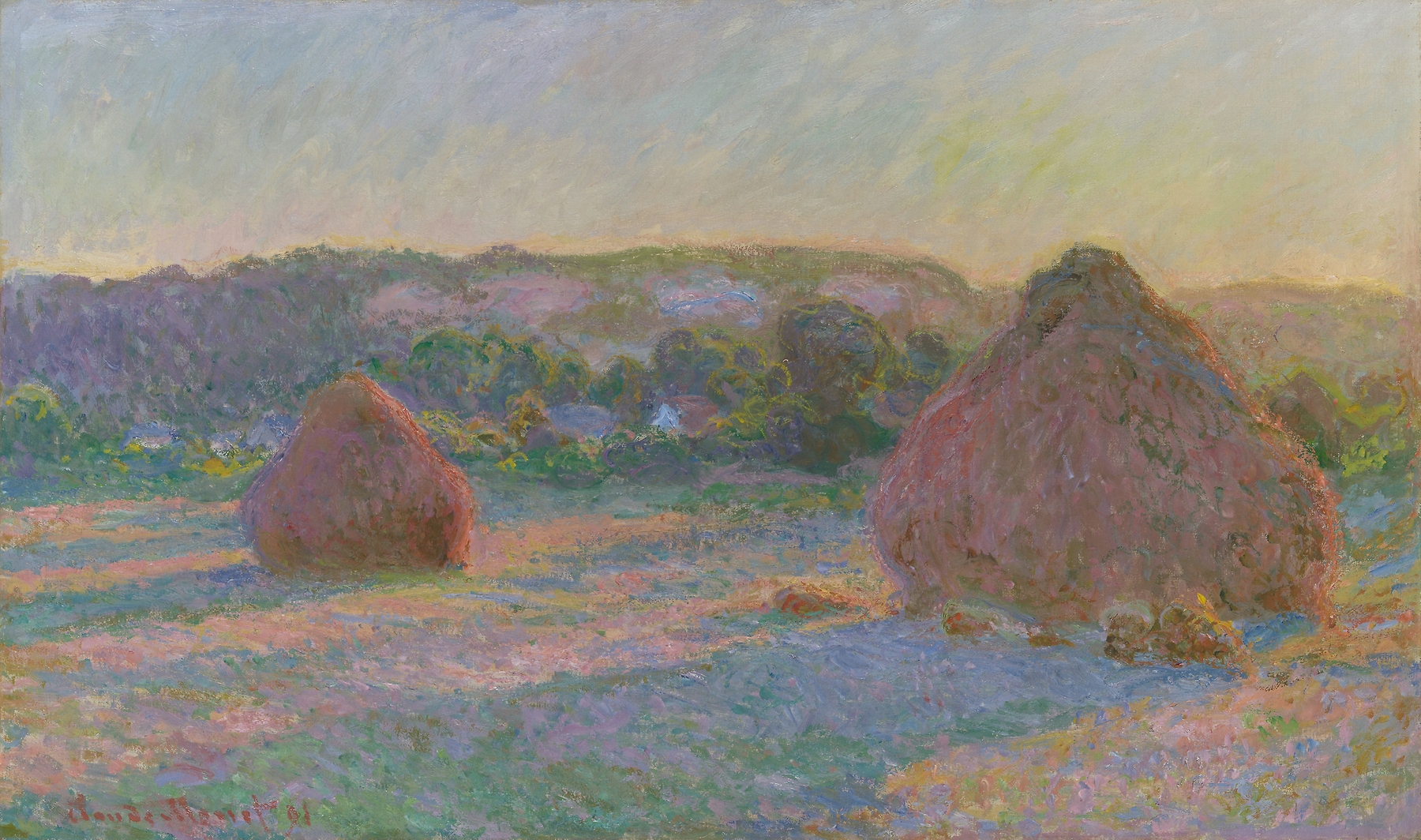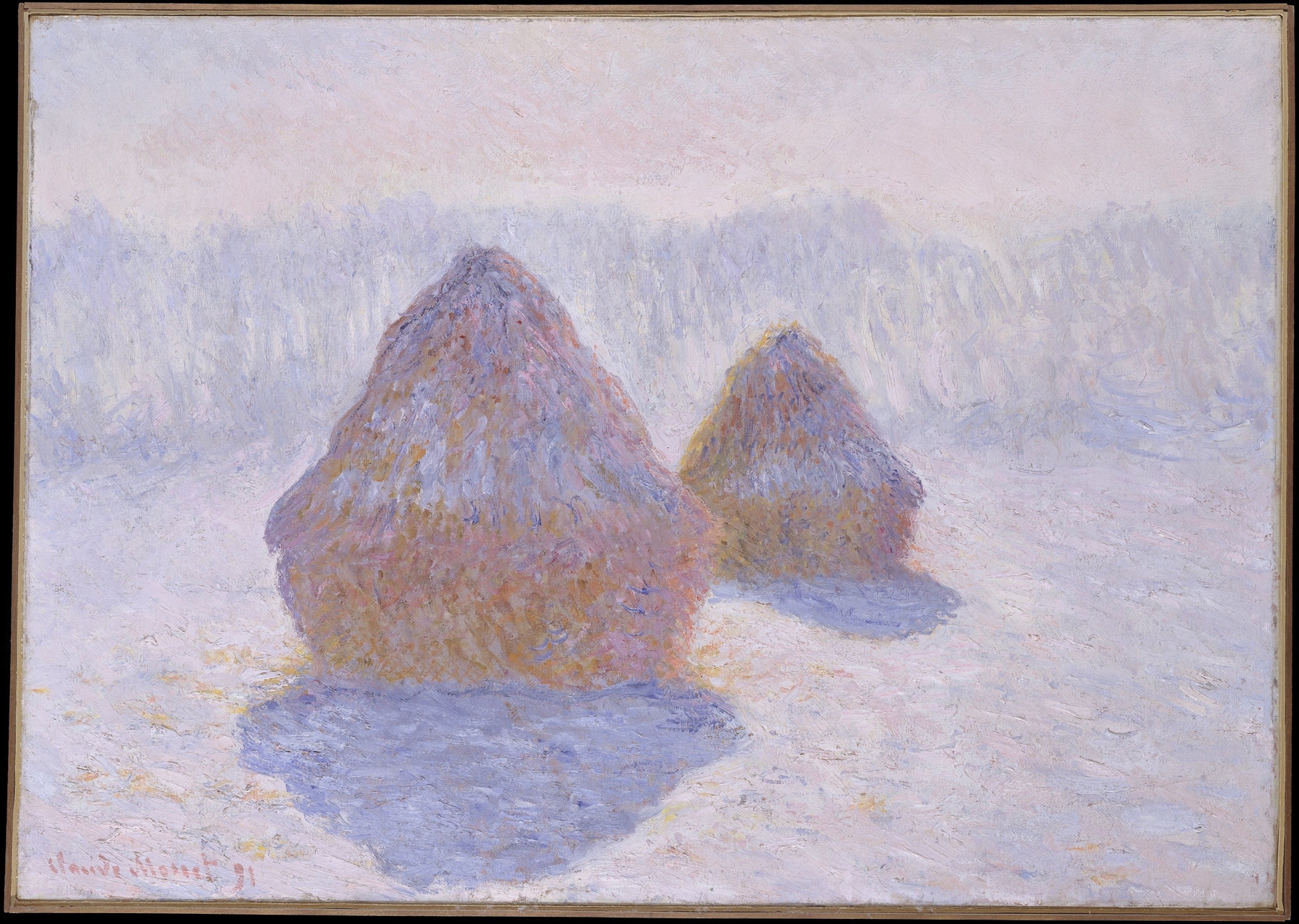
Can beauty exist without sorrow? In *Haystacks (Effect of Snow and Sun)*, Claude Monet invites us to contemplate the transient nature of life and the legacy left behind. Look closely at the foreground, where the haystacks sit like silent sentinels beneath a soft blanket of snow. The light plays whimsically across their surface, capturing the way the sun's rays dance, illuminating the scene with a shimmering brilliance. Notice the palette of blues and whites, punctuated by hints of warm gold and muted orange that blend into a gentle haze, creating a dreamlike quality that beckons the viewer to stay a moment longer. The contrast between light and shadow reveals deeper emotional layers. Each haystack, though robust, seems fragile against the elements, reminding us of the passage of time. The ethereal quality of light suggests a fleeting moment, evoking both warmth and coldness—an echo of joy intertwined with the melancholy of impermanence. These objects, once vibrant with summer's life, are now draped in winter’s silence, a testament to the cycles of nature. In 1891, Monet painted this piece while living in Giverny, a period marked by significant exploration of light and color. The Impressionist movement was gaining momentum, allowing him to experiment with new techniques. As he captured these haystacks under varying conditions, he was simultaneously crafting a legacy that would influence generations of artists, a profound exploration of nature’s beauty intertwined with its inevitable decay.