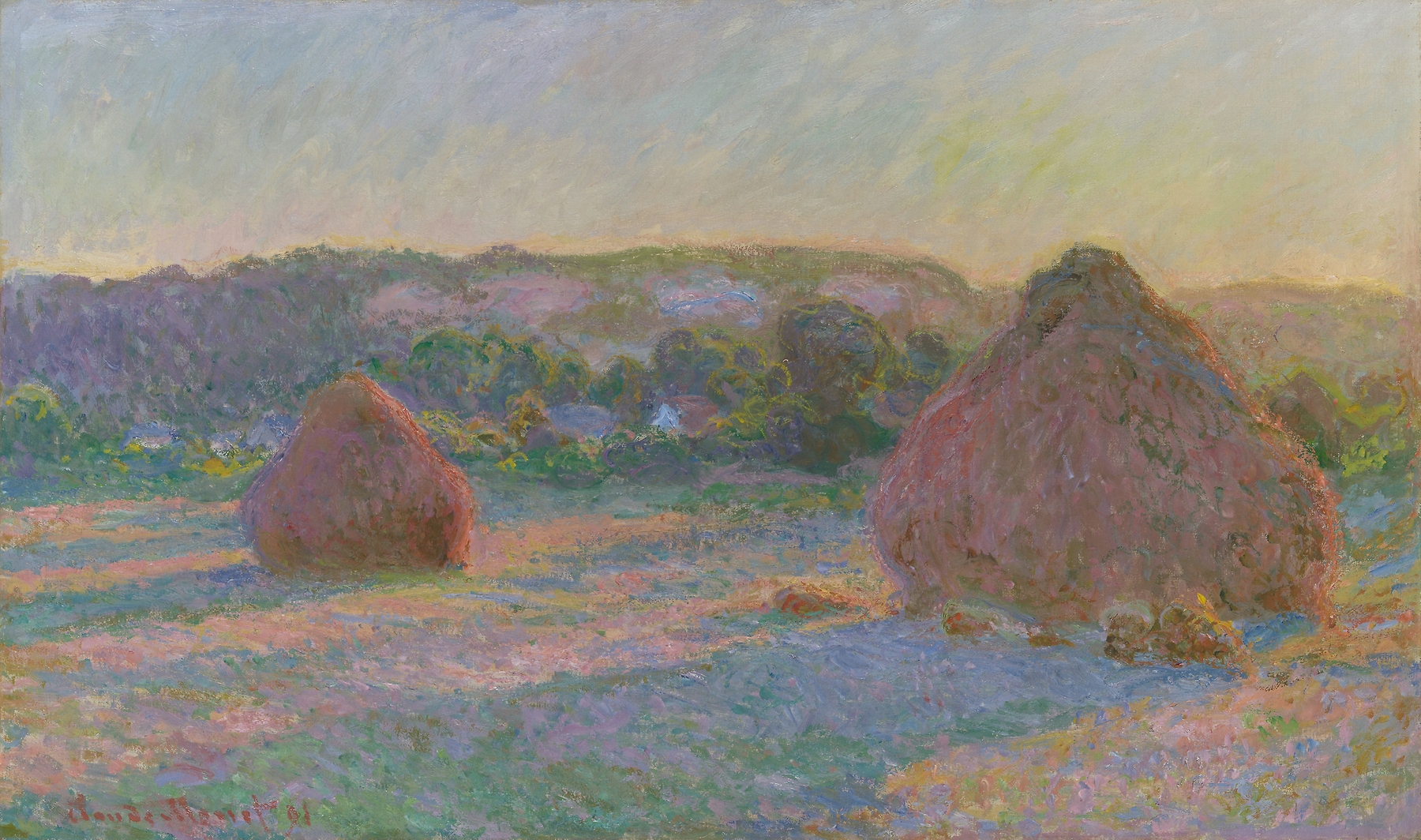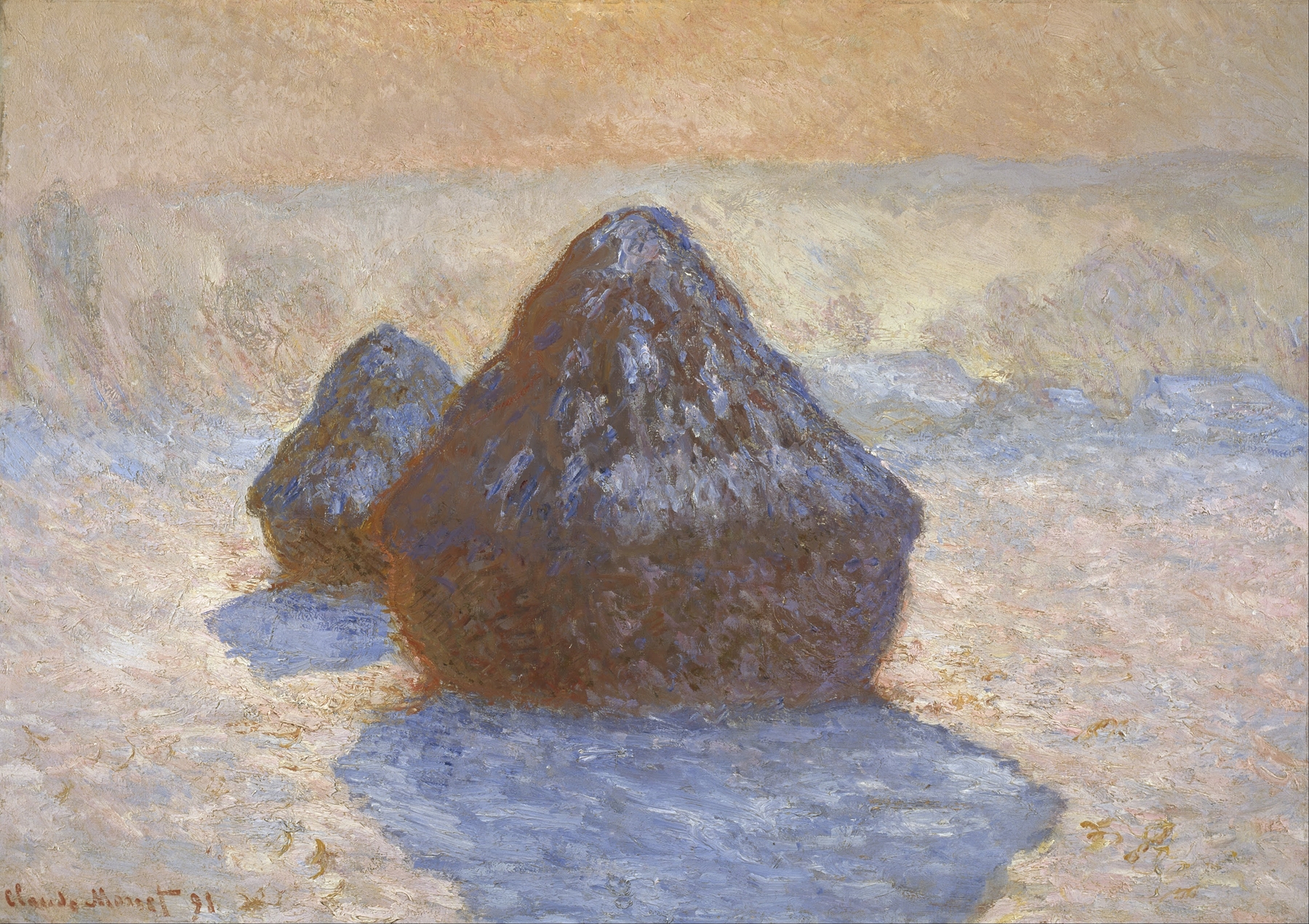
“Sometimes beauty is just pain, disguised in gold.” Within the quiet stillness of winter, the world can appear shrouded in soft whispers of snow, yet beneath this serene facade lies a profound silence that speaks volumes. Focus on the frosted haystack, your eyes immediately drawn to the interplay of light and shadow across its textured surface. The soft blues and muted whites blend together, creating a dreamlike haze that envelops the scene, inviting contemplation. The gentle brushstrokes evoke a sense of movement, as if the snowflakes are still falling, while the warm hues—tinged with gold—offer a glimmer of hope amidst the cold. As you observe, notice the contrast between the sharp outline of the haystack and the velvety softness of the surrounding snow. This juxtaposition speaks to the duality of existence, where beauty and desolation coexist. The scene captures a moment frozen in time, suggesting the stillness of winter is both a peaceful reprieve and a reminder of the harsh realities that lie beneath its surface. In 1891, Monet was residing in Giverny, France, deeply immersed in his exploration of light and color. This period marked a significant evolution in his work, as he turned to the themes of nature and seasonal change, yearning to capture fleeting moments. The art world was shifting towards Impressionism, and he sought to express the ephemeral beauty of landscapes, an endeavor that would leave a lasting impact on future generations.