Heilige Joris (Georgius) doodt de draak — History & Analysis
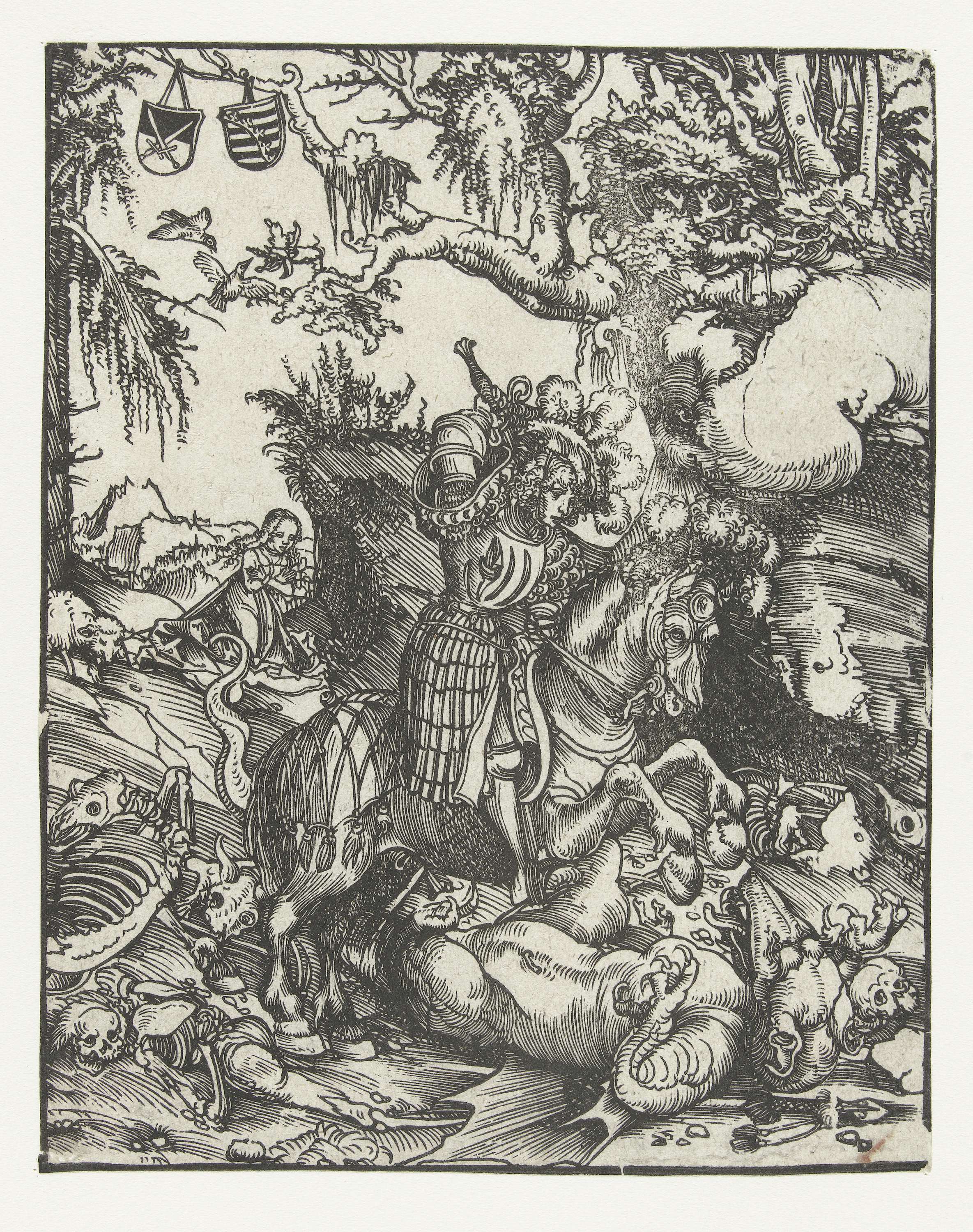
“Under the brush, chaos becomes grace.” In Lucas Cranach’s work, the act of creation transforms turmoil into a vivid spectacle. The tension between the ethereal and the earthly, the dream and the real, reveals a profound narrative that invites introspection. Look to the center of the canvas, where St. George, clad in glimmering armor, is poised in a moment of both triumph and struggle. The dragon, fierce and sinister, writhed beneath his steed, its scales a harrowing blend of blacks and greens.
Notice how the sunlight breaks through the stormy clouds to illuminate the knight, casting a divine light upon his figure and accentuating the stark contrasts of the composition. This interplay of light and shadow conveys a wrestling of forces, the sacred against the profane, drawing the viewer’s gaze with magnetic intensity. As the viewer delves deeper, the intricate details of the dragon’s form reveal layers of meaning. Its scaly skin, glistening with menace, contrasts sharply with the purity of St. George’s armor—a representation of virtue facing corruption.
Furthermore, the lush landscape that cradles this clash serves as a reminder of the world beyond the battle, a serene backdrop to this chaotic moment. The tension between these elements speaks to the duality of human experience—the perpetual struggle of good against evil, dream against nightmare. Cranach painted this work during a dynamic period in the Renaissance, a time when religious themes were intertwined with humanist ideals. Working in Wittenberg between 1482 and 1553, he was closely associated with the Reformation and the evolving symbolisms in art. His paintings often reflected the shifting landscape of faith and morality, capturing a society in flux, where every brushstroke influenced the dialogue between the sacred and the secular.