Herder en herderin met vee — History & Analysis
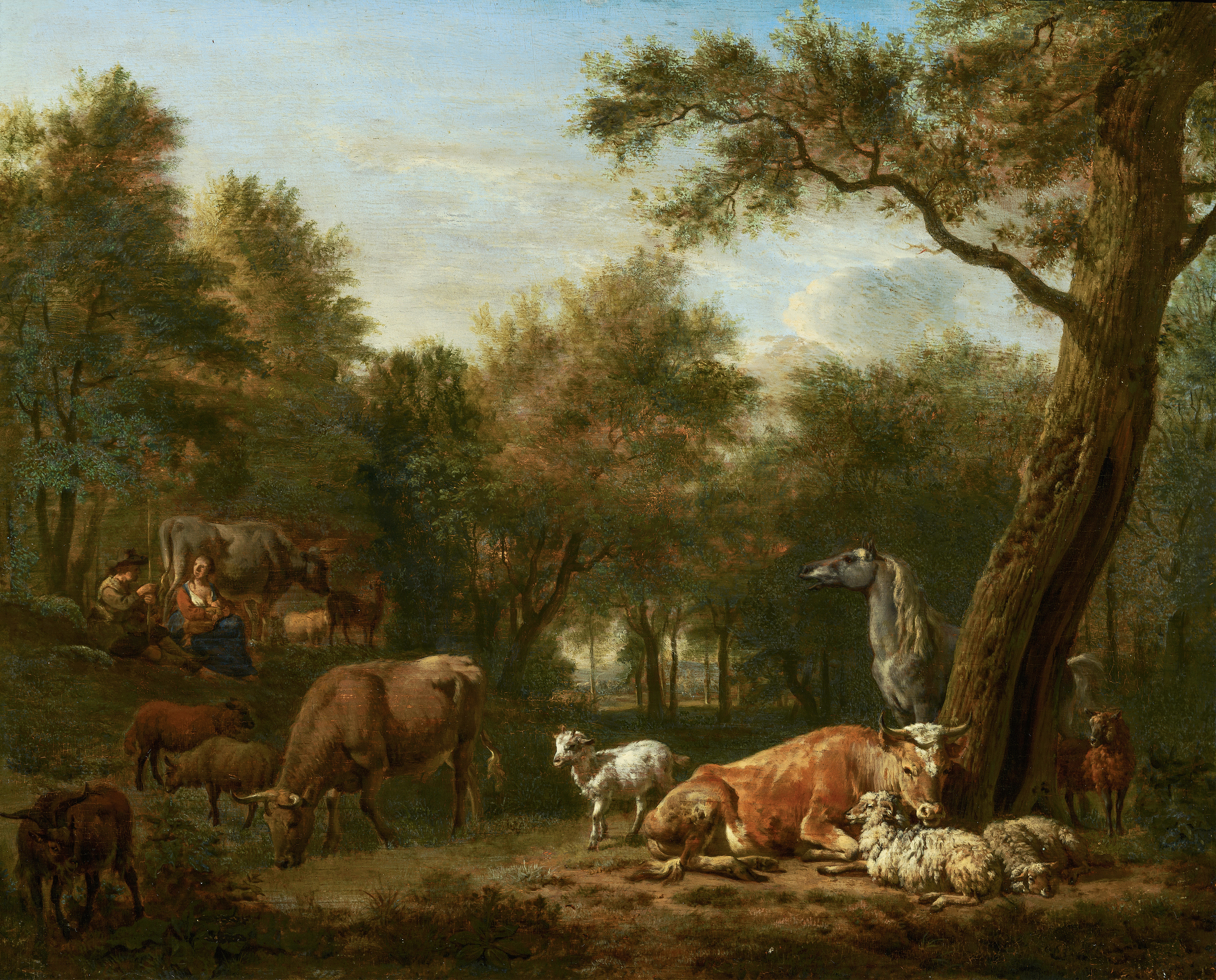
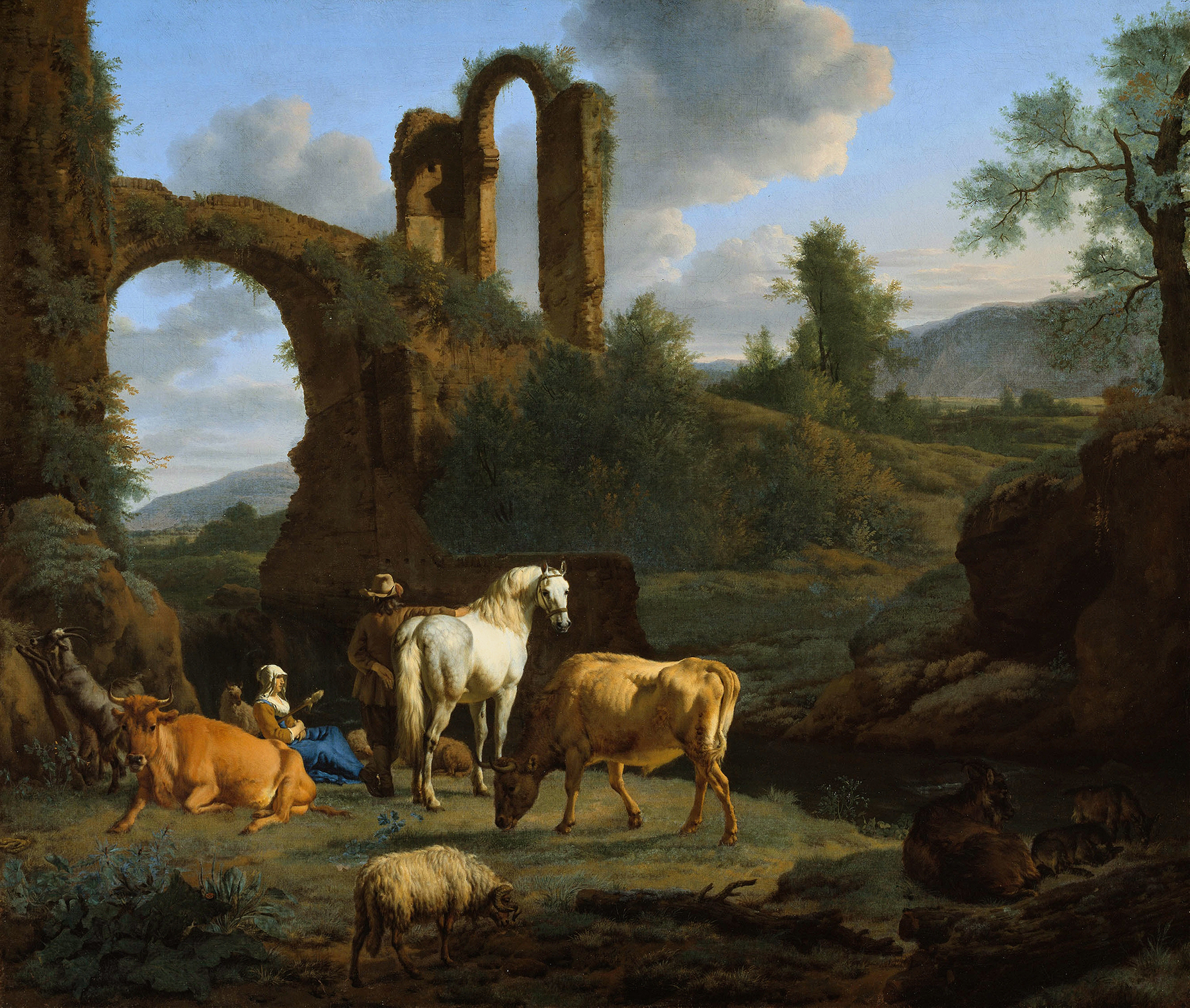
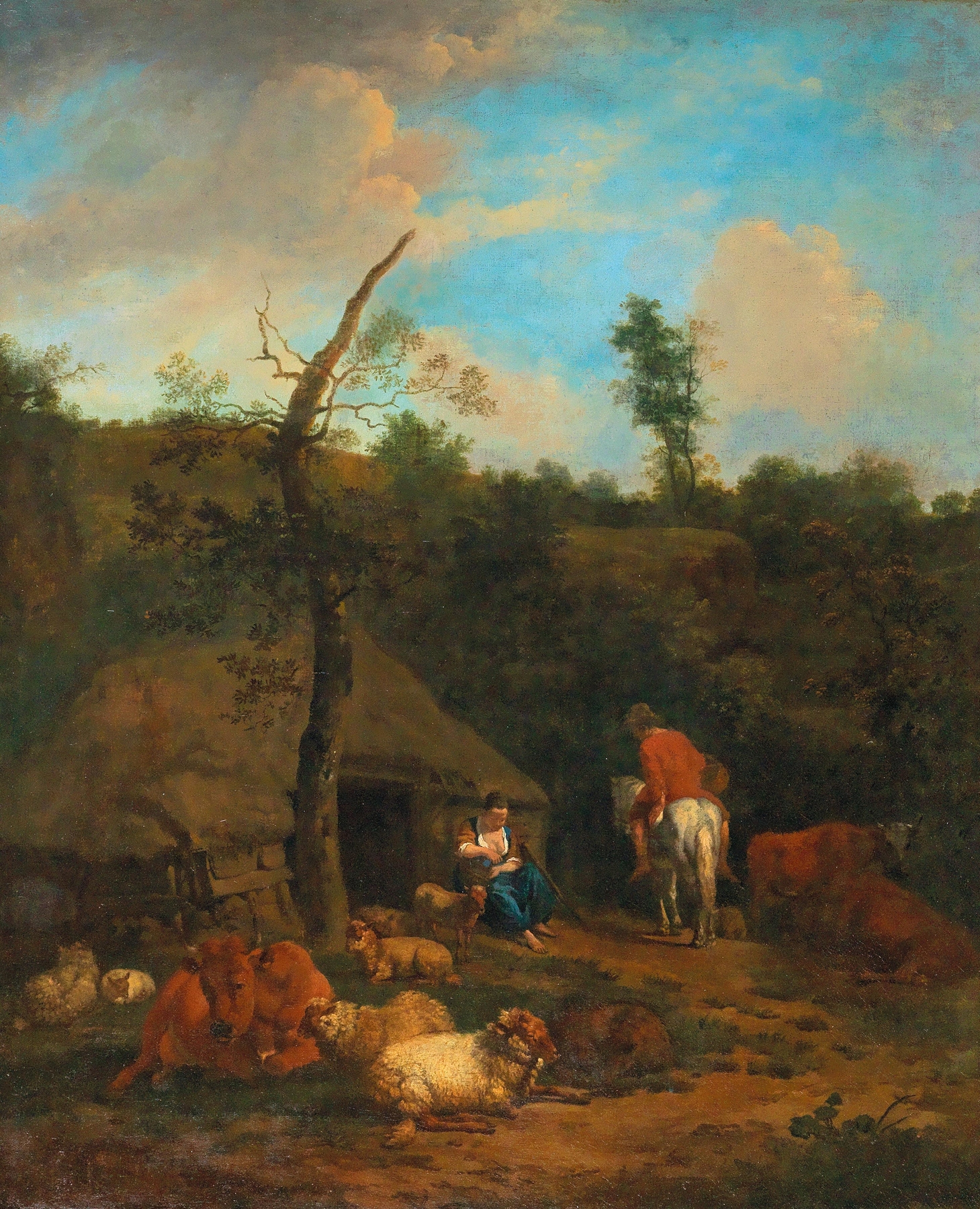
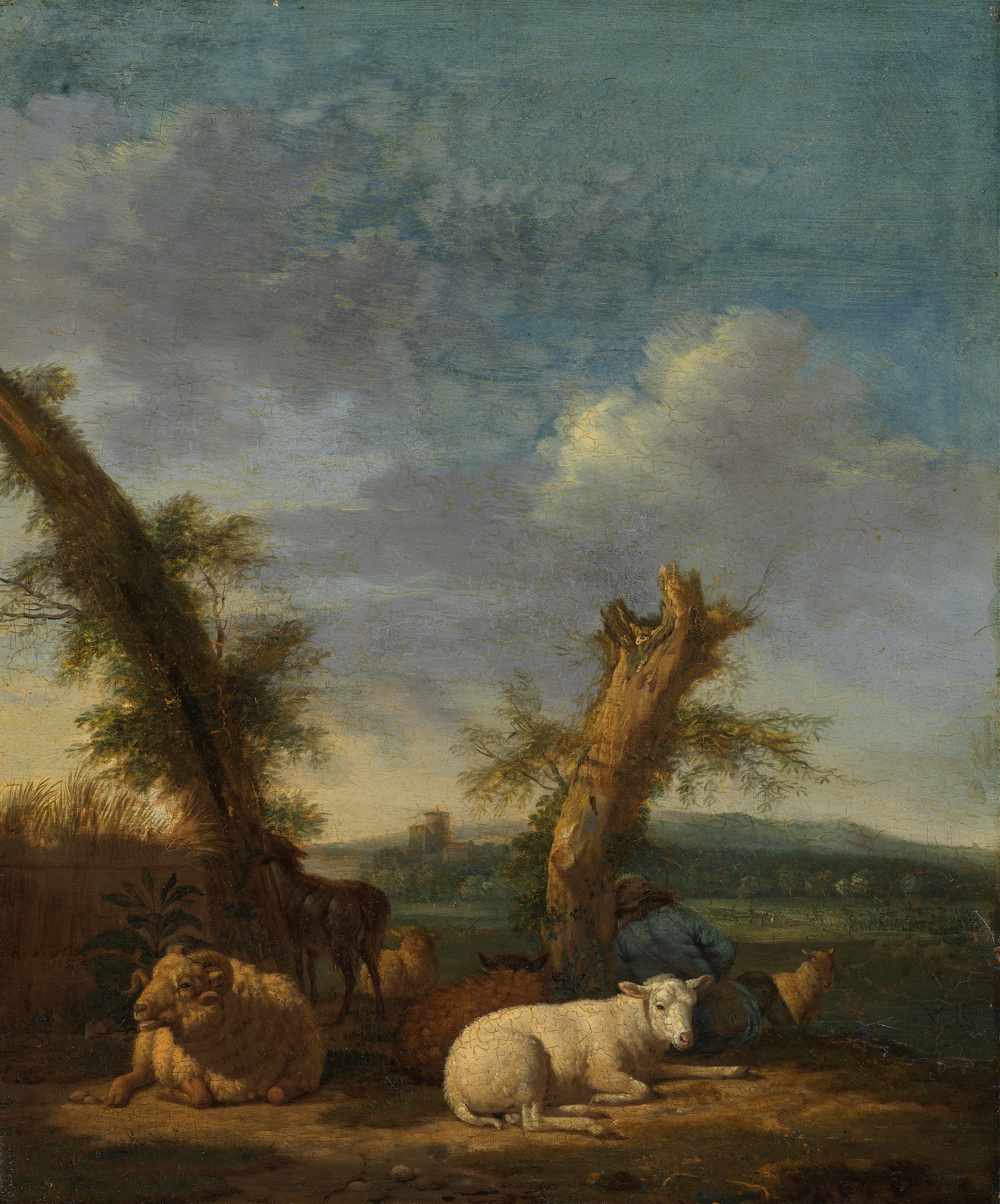
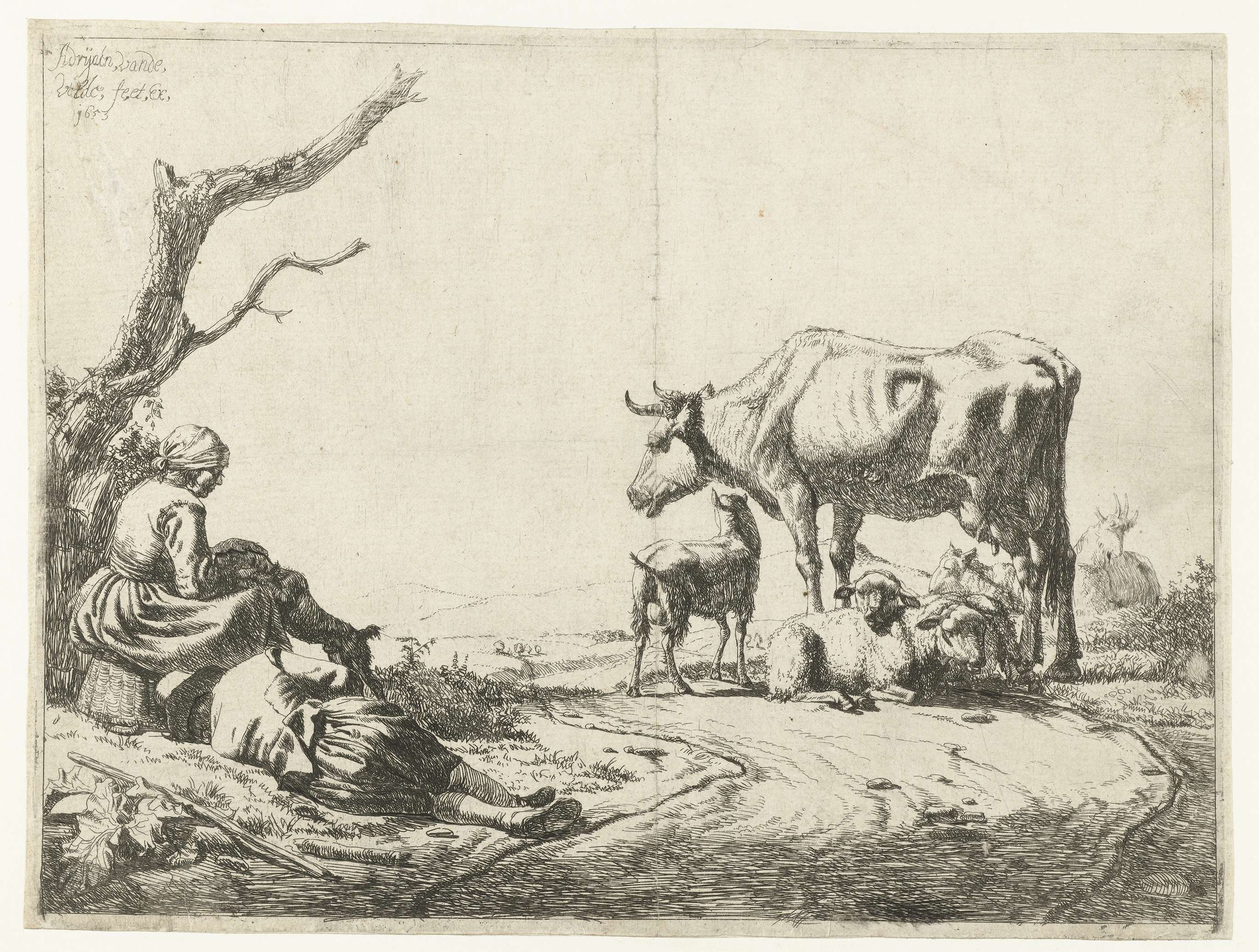
Could a single brushstroke hold eternity? In Adriaen van de Velde's Herder en herderin met vee, ecstasy finds its voice through the gentle caress of the paint, capturing a moment that transcends time. The pastoral scene, alive with the presence of shepherds and their flock, invites contemplation on the spiritual connection between nature and humanity. Look to the left at the shepherd, his posture relaxed yet alert, as he leans casually against the trunk of an ancient tree. The soft, golden light spills over the landscape, illuminating the delicate curls of wool on the sheep, which seem to shimmer like stardust in the sun.
The artist employs a muted palette, layered with subtle greens and browns, evoking a sense of harmony and tranquility. Notice how the figures, although grounded, are positioned in a way that suggests movement—a dance of pastoral life that flows seamlessly from the foreground to the distant horizon. The emotional tension in this idyllic scene lies in the contrast between the serenity of the pasture and the hidden struggles of daily life. The shepherdess, with a contemplative gaze, appears to ponder the weight of her responsibilities, suggesting an inner conflict that contradicts the apparent peace.
The shepherd’s relaxed demeanor contrasts with her unspoken worries, reflecting the duality of existence—joy intermingled with duty in this intimate slice of rural life. In 1653, while living in Amsterdam, Van de Velde immersed himself in the burgeoning genre of pastoral painting. The Dutch Golden Age was marked by a growing appreciation for landscape and genre works that celebrated the beauty of everyday life. As he navigated his artistic career, this painting exemplifies his keen observation of the natural world and the human experience, capturing a fleeting moment of bliss in a time of profound artistic exploration.