Herder en herderin met vee — History & Analysis
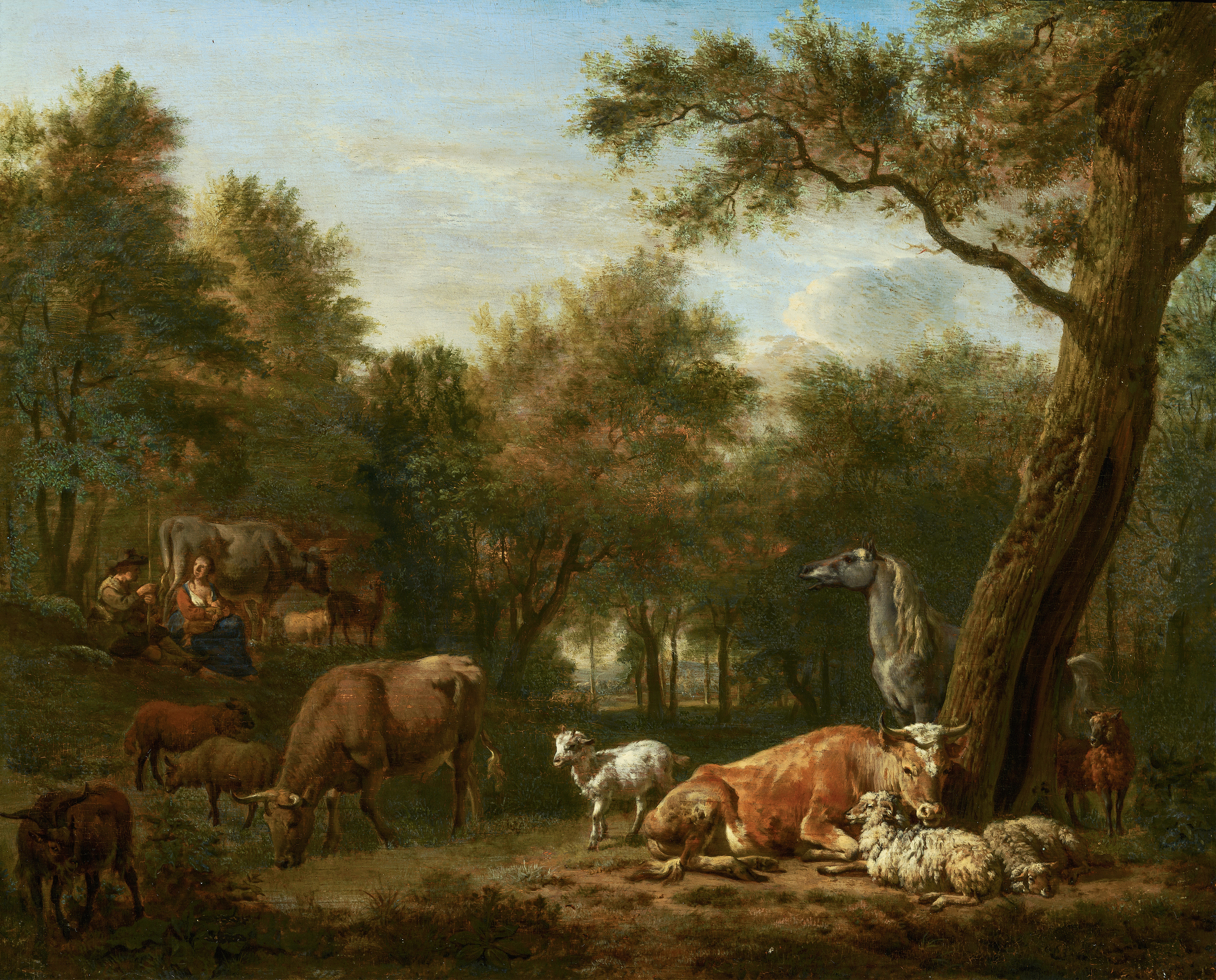
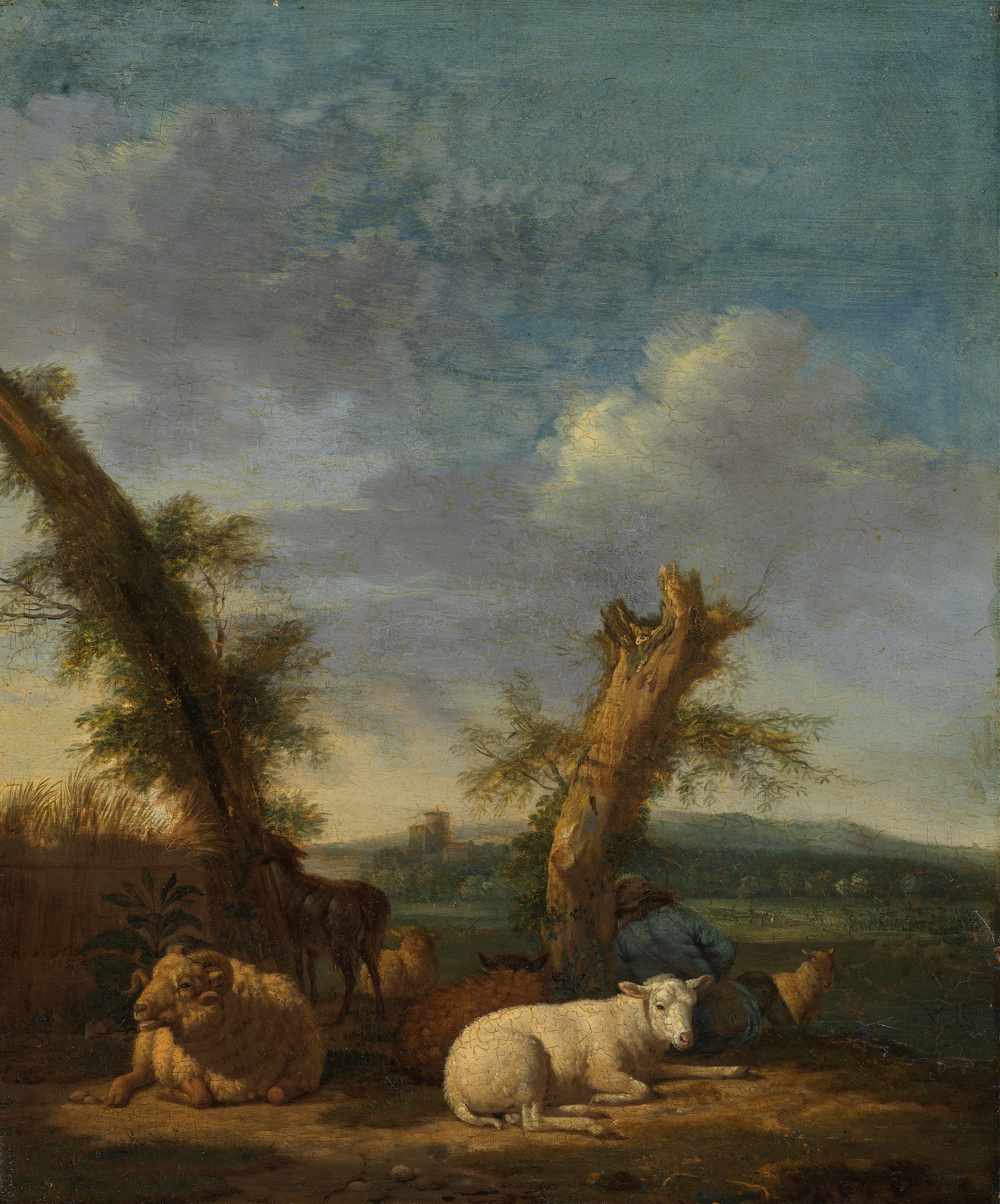
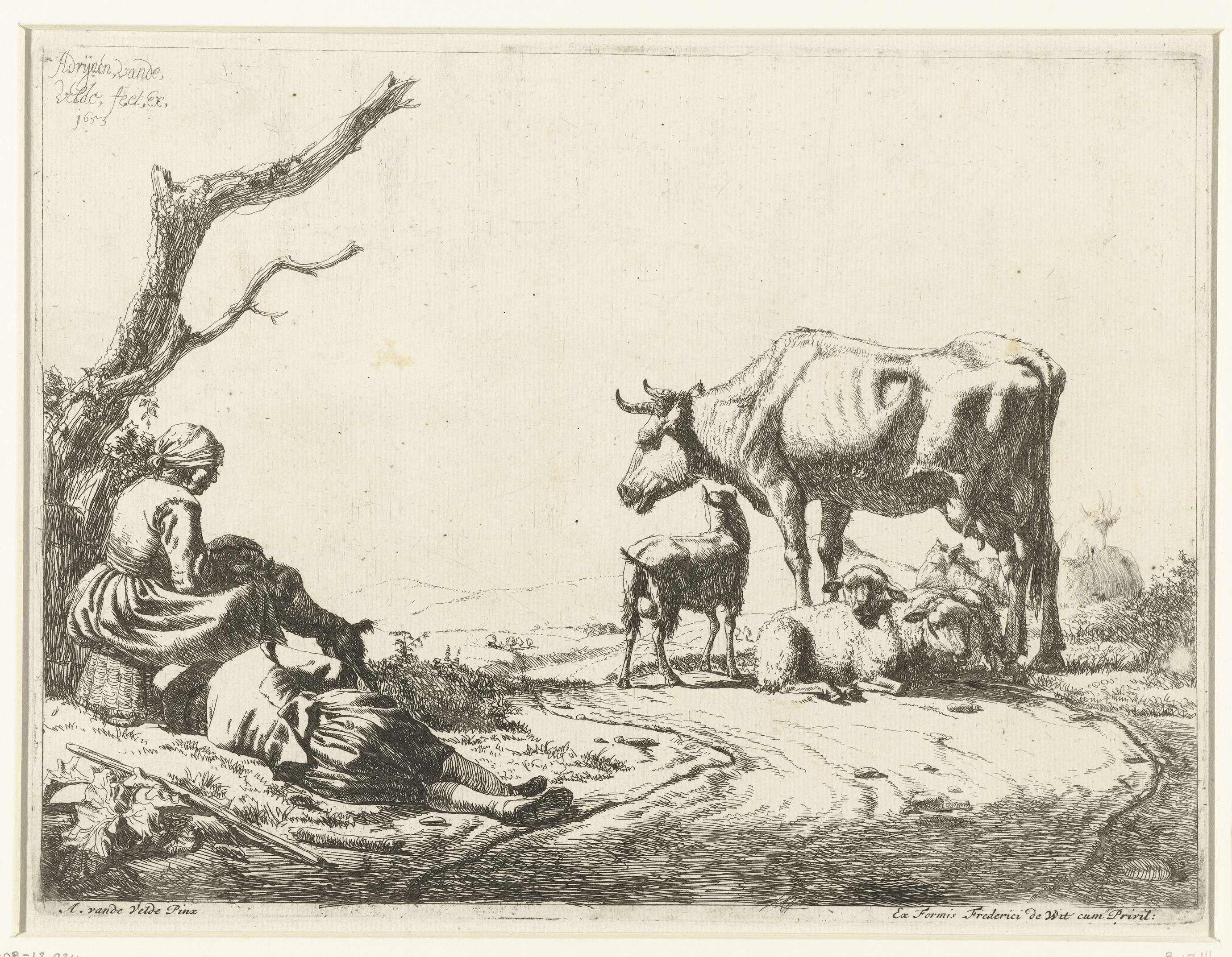
“To paint is to remember what time wants us to forget.” In Herder en herderin met vee, a world of pastoral longing unfolds, where the gentle sway of sheep mirrors the heart’s quiet yearning for connection. Look to the left at the shepherd, his relaxed posture conveying a profound sense of peace amid nature’s embrace. The earthy palette of greens and browns breathes life into the scene, while the soft, diffused light glimmers on the animals' woolly coats. Notice how the subtle interplay of shadow and sunlight creates a rhythm that guides your eye across the canvas, inviting you to linger in this serene moment.
Within the tranquil composition lies a deeper narrative of companionship and solitude. The shepherd and shepherdess, though physically close, seem enveloped in their thoughts, creating an emotional distance that speaks of unvoiced desires. The sheep, symbols of innocence, serve as a reminder of the simplicity often sought but rarely attained in human relationships. Each detail—the delicate positioning of the figures, the gentle curve of the hills—whispers of a longing for belonging in a vast, sometimes isolating world.
Adriaen van de Velde painted this work in 1653 while living in Amsterdam, amid a flourishing Dutch Golden Age where landscape art was gaining prominence. At that time, he was navigating the challenges of life as a painter, finding his unique voice in a vibrant, competitive art scene. Surrounded by masters, van de Velde’s sensitivity to the human condition and the beauty of rural life resulted in a piece that resonates across centuries.