Het Belgische stoomschip met hulpzeilvermogen ‘Ludwig’ op zee — History & Analysis
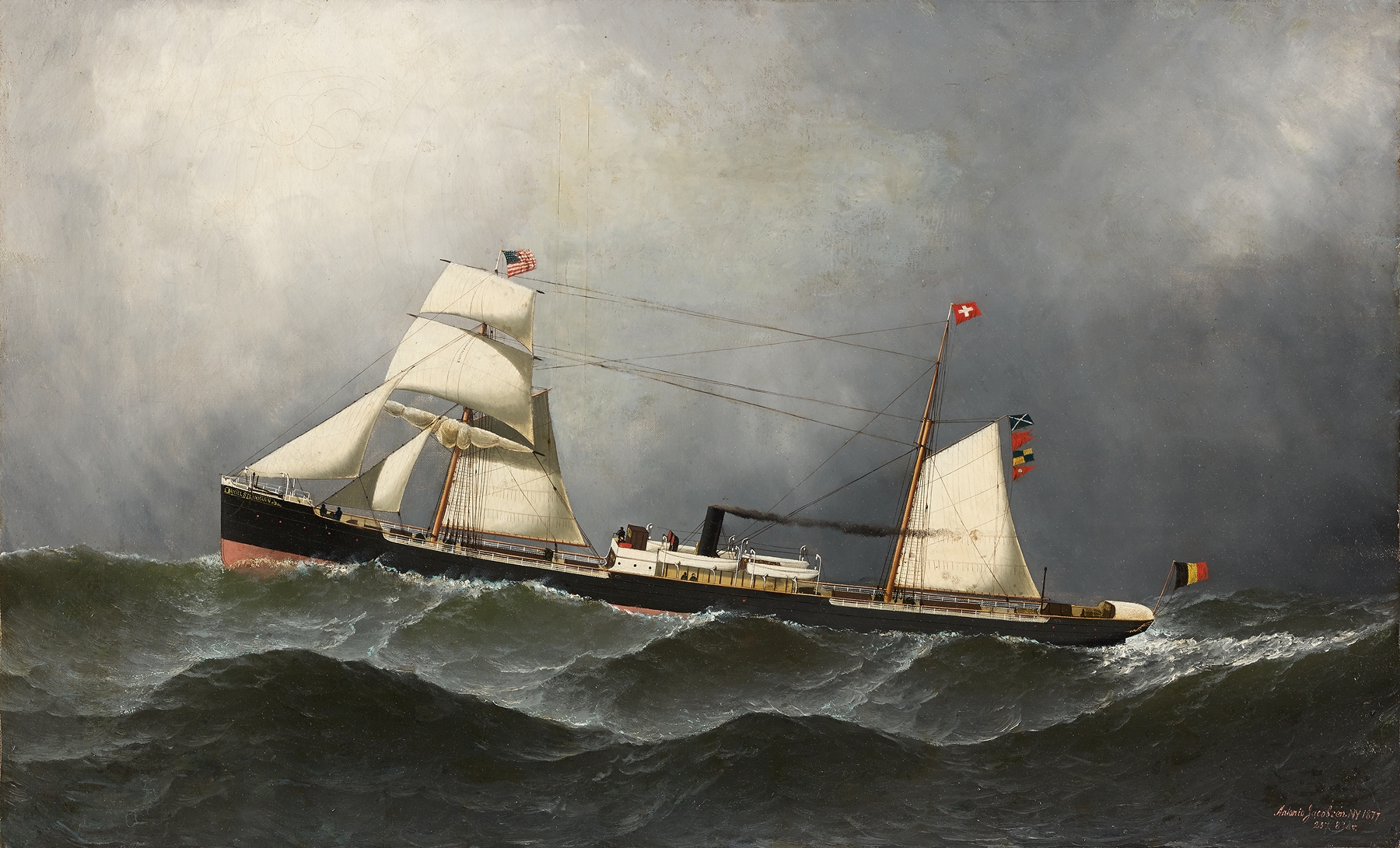
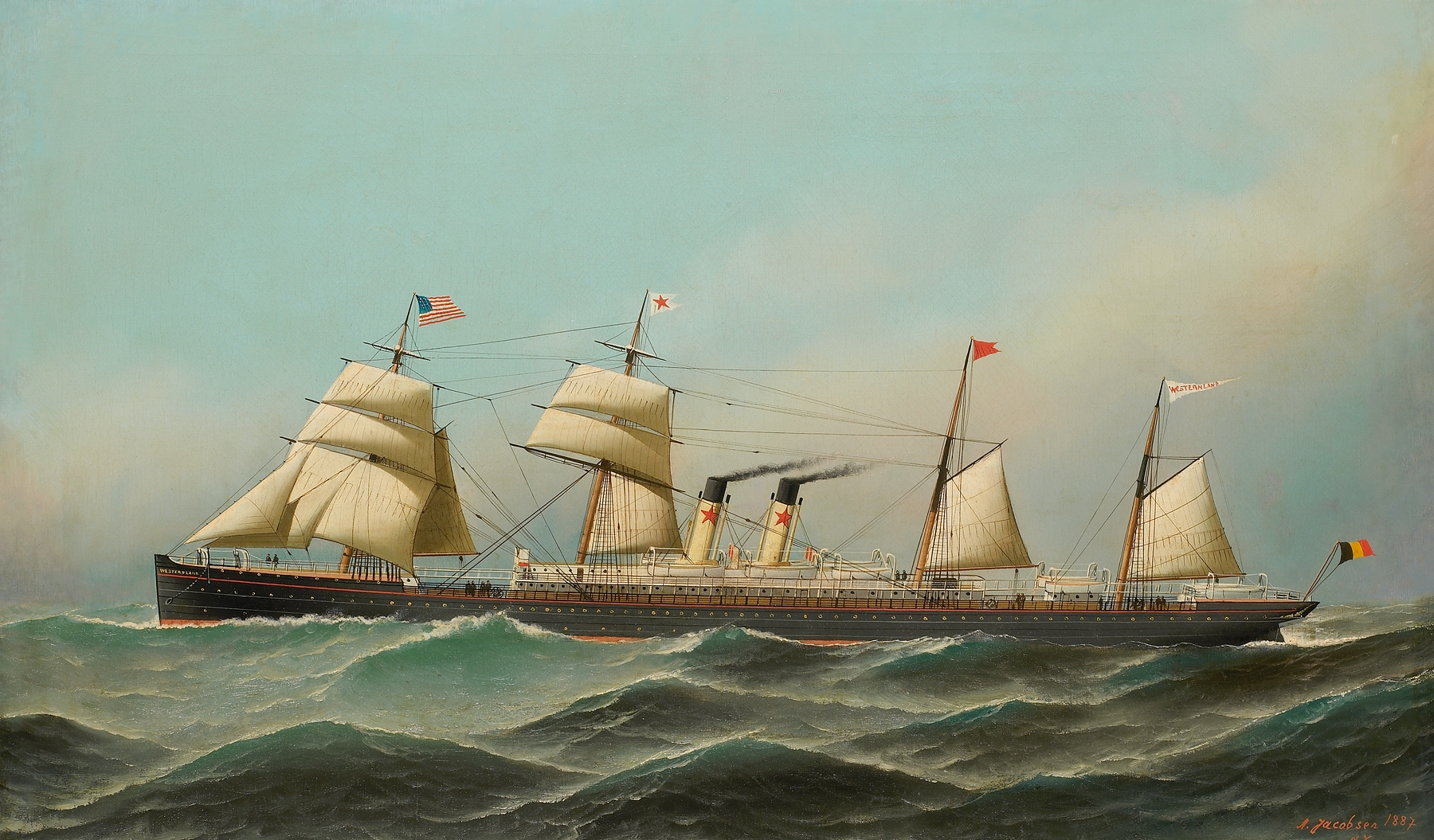
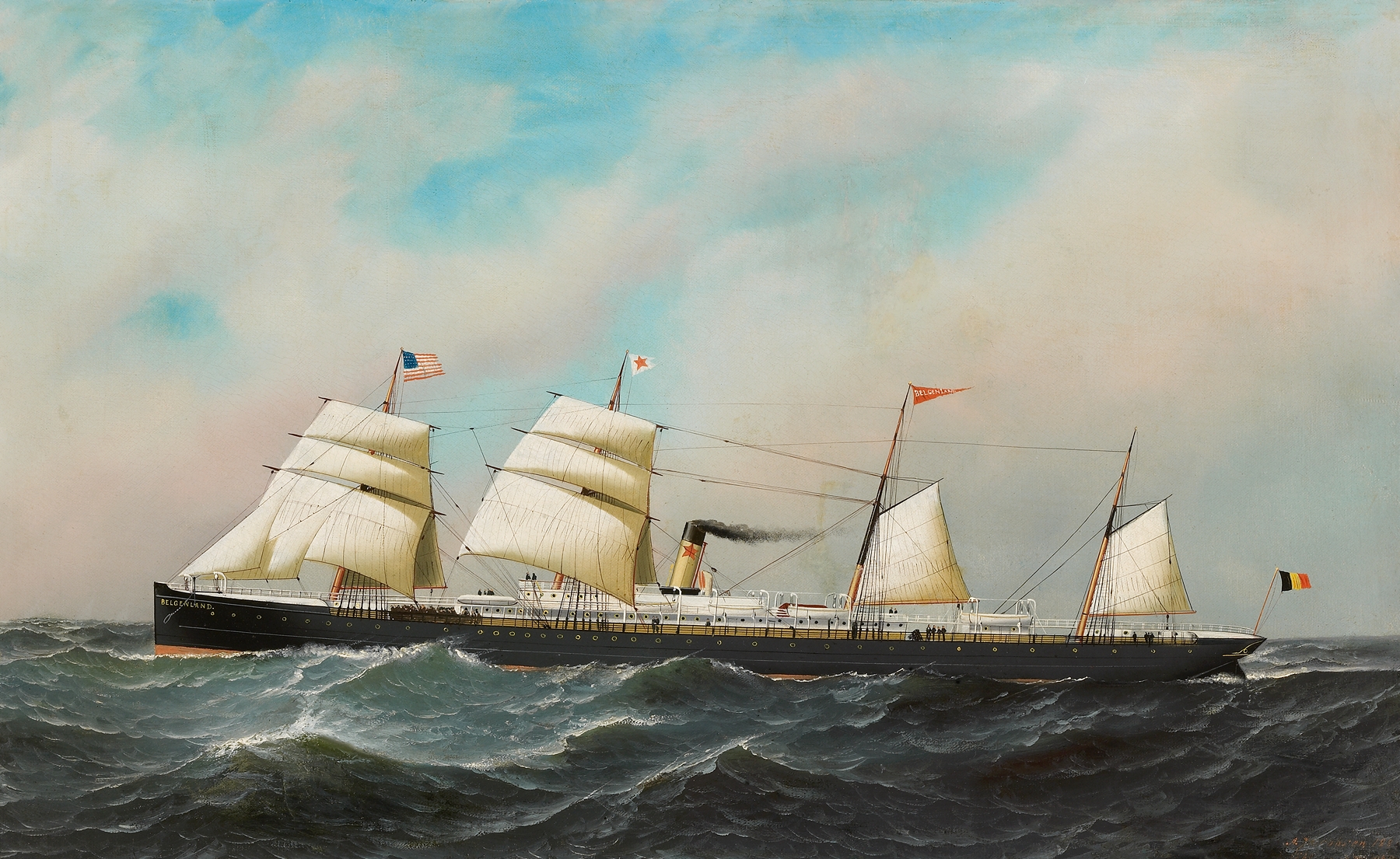
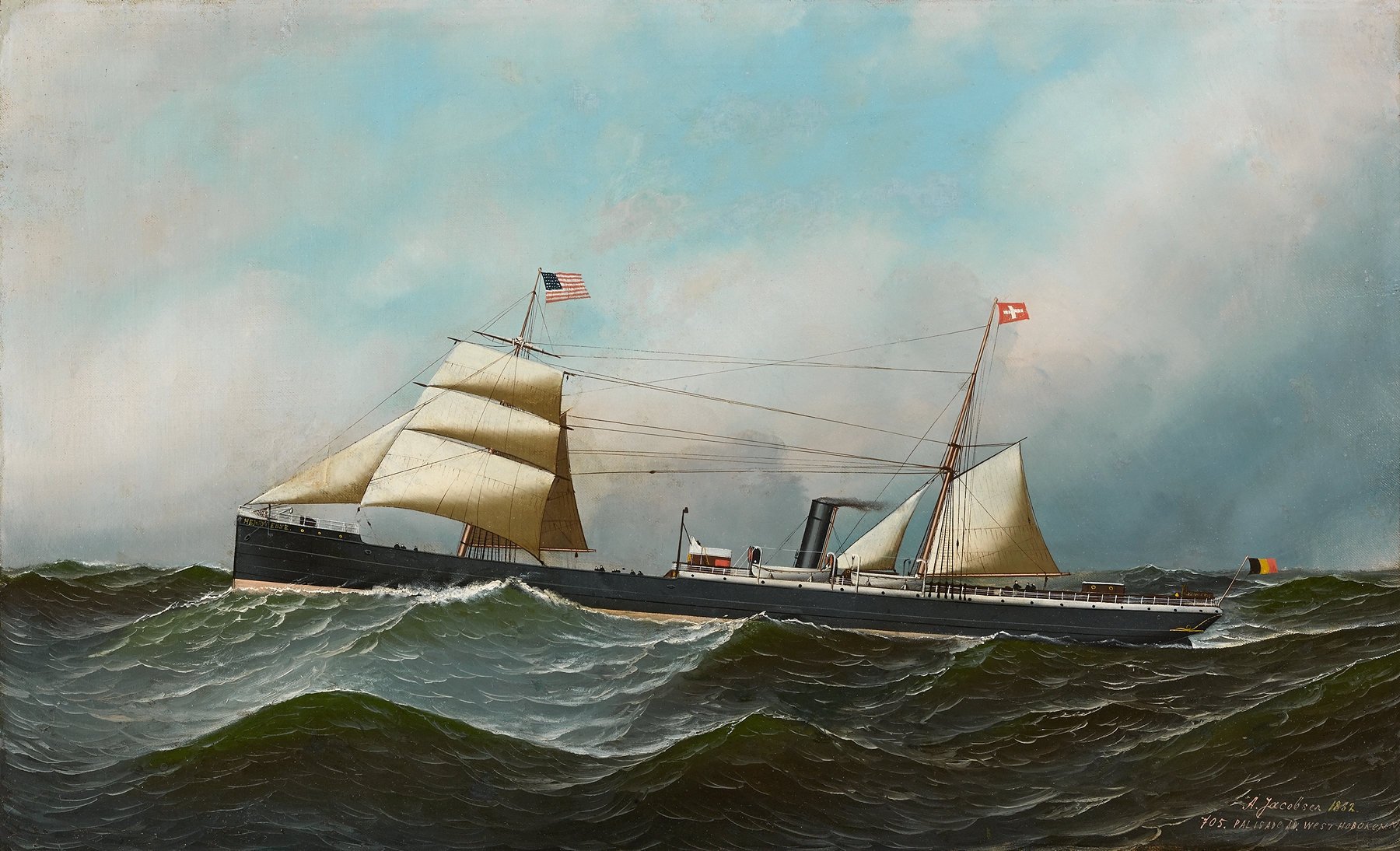
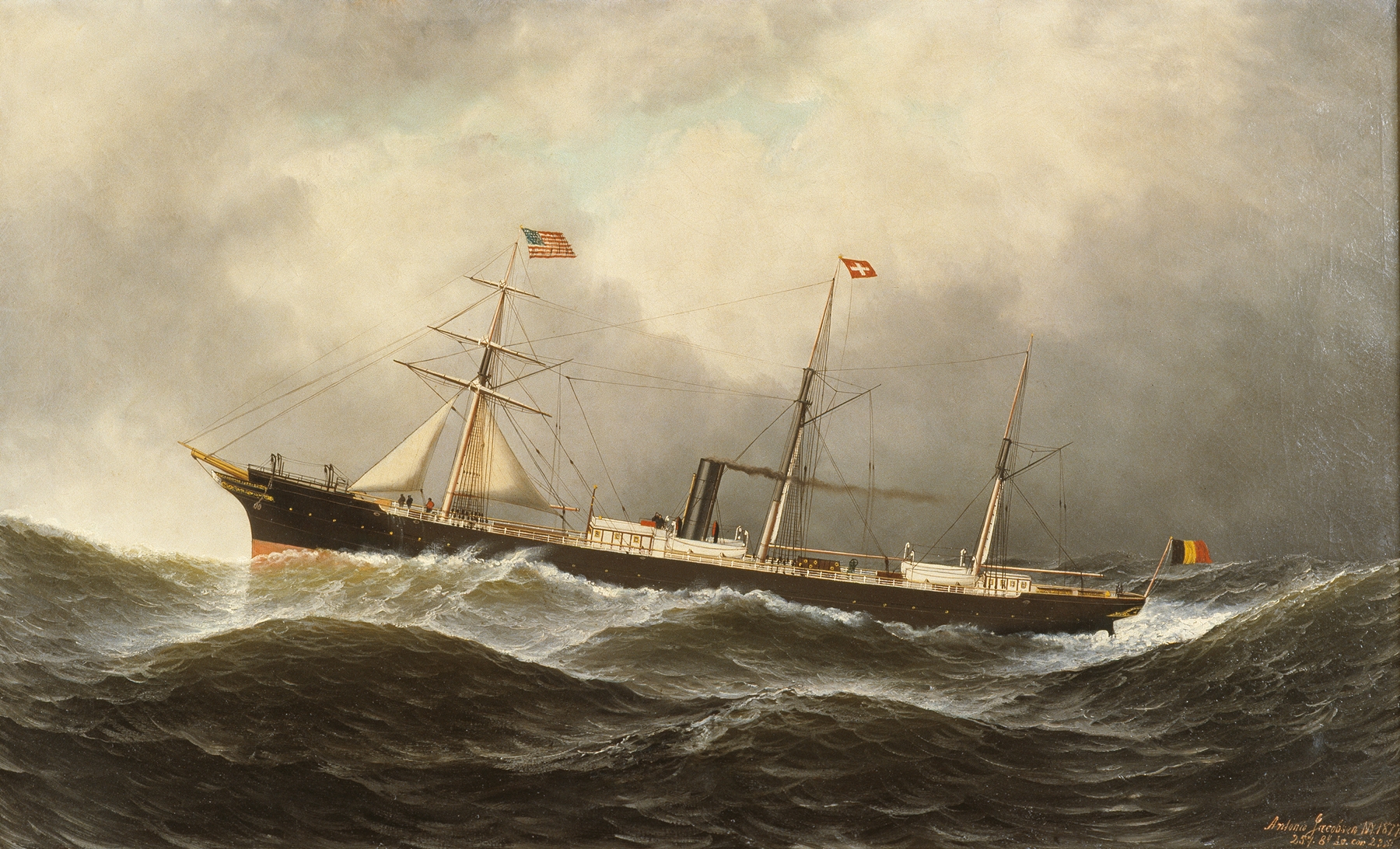
“Art reveals the soul when the world turns away.” In the quiet embrace of grief, we often find ourselves drawn to moments frozen in time, where the echoes of loss resonate in the stillness of color and form. Look to the left at the Belgian steamer, Ludwig, cutting through the pale, cerulean waves. The ship’s sails billow gently, caressed by an unseen breeze, casting soft shadows against its gleaming hull. The meticulous brushwork captures the gloss of the water, while vibrant blues and whites reflect both the serenity of the sea and an undercurrent of tumultuous emotion.
The artist's choice of light creates a striking contrast between the vessel and the encompassing vastness, suggesting both isolation and strength amid nature's expanse. Beneath the surface, the painting speaks to the dualities of presence and absence, triumph and grief. The vessel, robust yet solitary, mirrors human resilience in the face of sorrow. Look closely at the turbulent waves; their froth hints at the struggle that lies beneath the calm façade, turning the idyllic scene into a poignant reminder of life's tempests.
The harmonious colors juxtaposed with the ship’s stark silhouette evoke a palpable tension, inviting contemplation of journeys taken and those forever lost. Antonio Jacobsen painted Het Belgische stoomschip met hulpzeilvermogen ‘Ludwig’ op zee in 1877 during a period of expanding maritime industry and increasing global trade. At this time, Jacobsen was establishing himself as a prominent marine artist in New York, capturing the essence of the vessels that defined American commerce. His attention to detail and emotional depth stemmed from his own experiences in a rapidly changing world, where the sea represented both opportunity and inevitable loss.