Het stoomschip met hulpzeilvermogen ‘Kroonland’ — History & Analysis
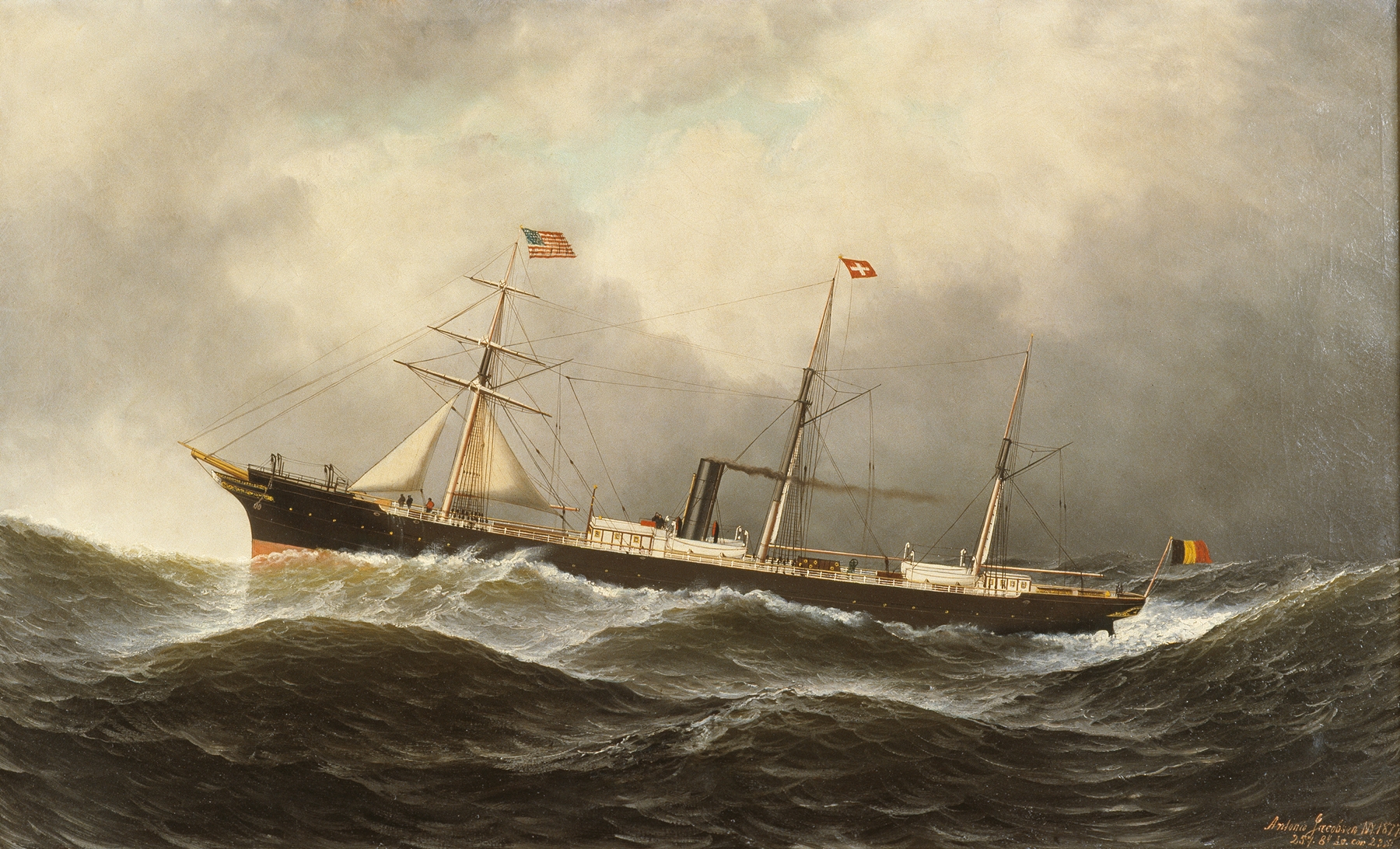
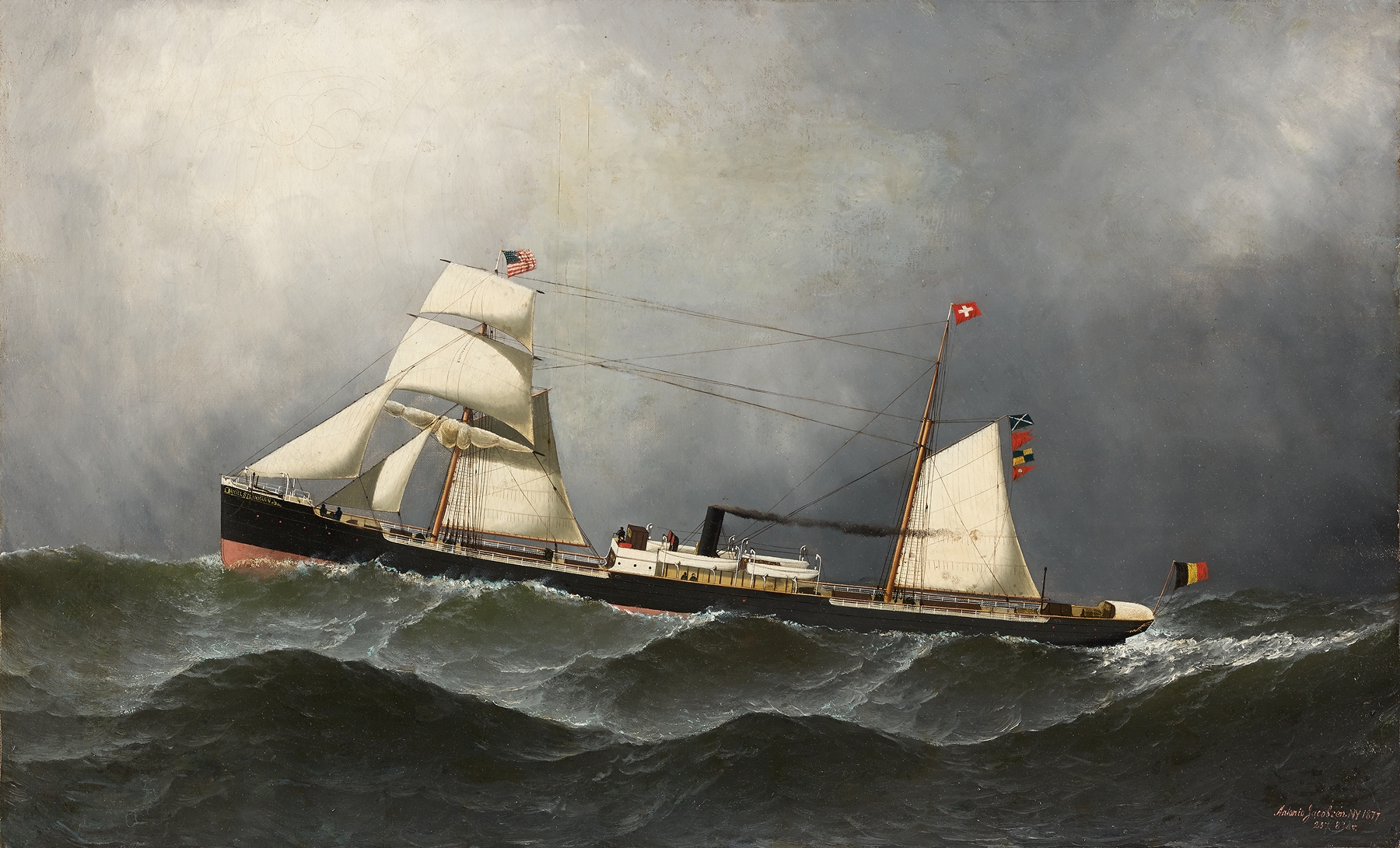
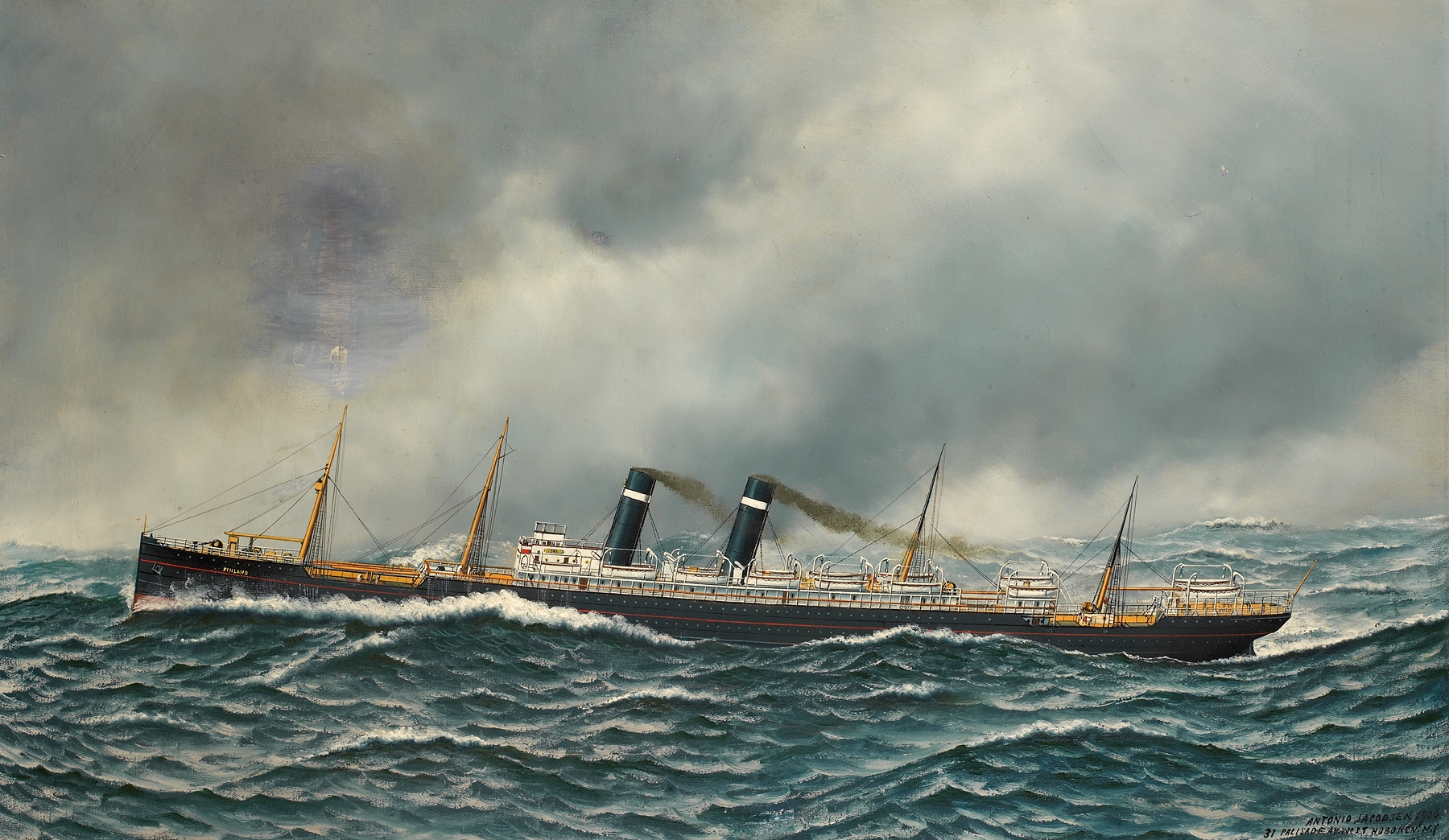
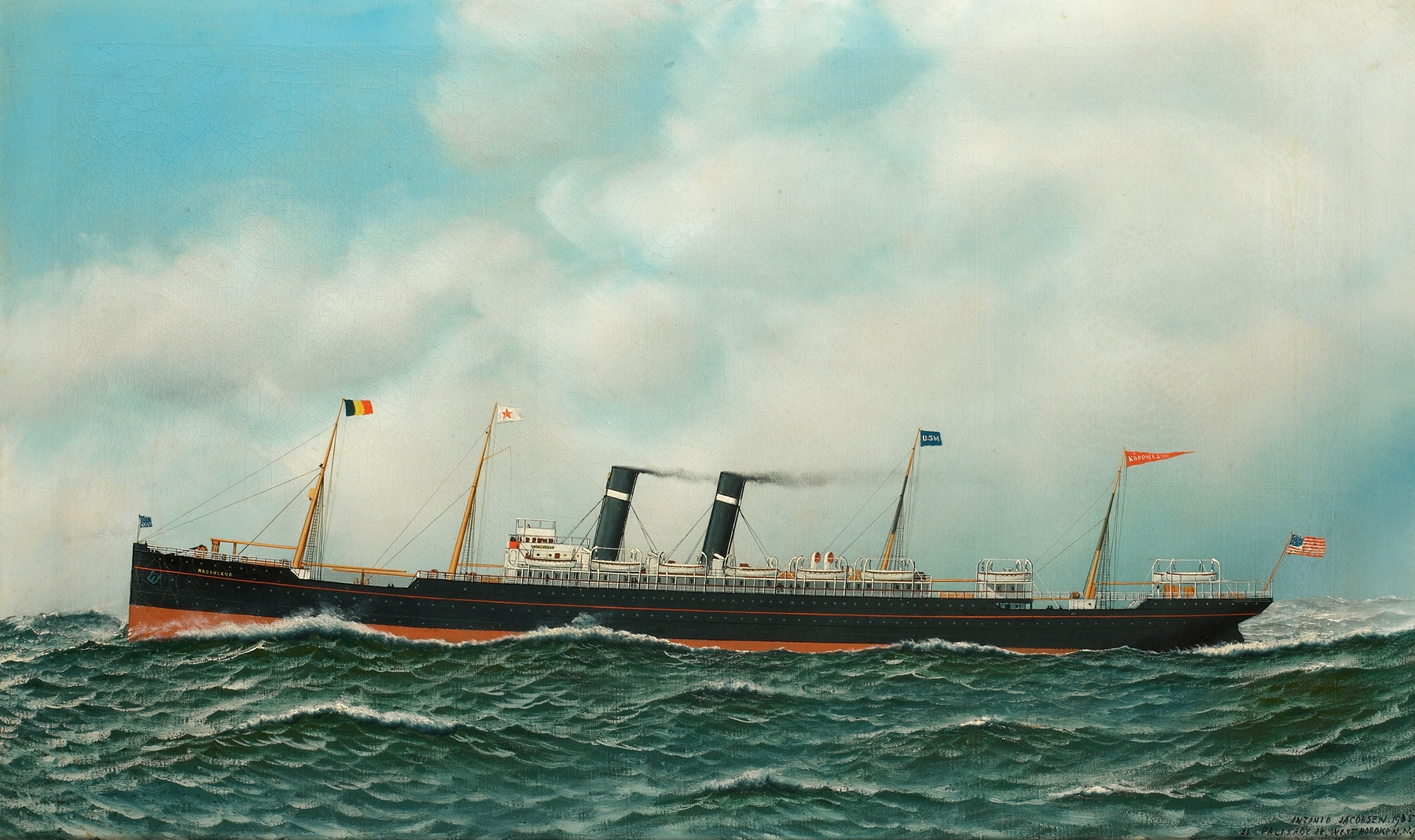
“Under the brush, chaos becomes grace.” The anxiety of the unknown thrums beneath the surface of every wave, echoing the human heart's instinctual fear of the depths. Look to the center of the canvas, where the steamship, Kroonland, stands proud against a tumultuous sea. The artist's technique brings the vessel to life, its hull bold with rich, dark tones, juxtaposed against the lighter, frothy waves that seem to churn with restless energy. Notice how the swirling clouds overhead mirror the ship's struggle, their grey and white blending into a tempestuous sky that threatens to engulf its fragile form.
Delve deeper into the painting, and you'll see the emotional interplay between power and vulnerability. The ship's sheer size suggests strength, yet it is dwarfed by the vastness of the ocean, evoking a stark reminder of humanity's fragility amidst nature's might. The interplay of light and shadow captures an unspoken tension, as if the viewer can almost sense the vessel's battle against fear, a metaphor for life's uncertain journeys.
In 1905, Jacobsen painted Kroonland during a period of innovation in maritime technology, reflecting the era's fascination with steamships and their role in global trade. Working in New York, he was well-acquainted with the maritime industry, capturing the spirit of adventure and anxiety that accompanied the age of exploration. His detailed representations spoke to a world on the brink of modernization, where the power of man and nature existed in constant negotiation.