Het stoomschip met hulpzeilvermogen ‘Westernland’ — History & Analysis
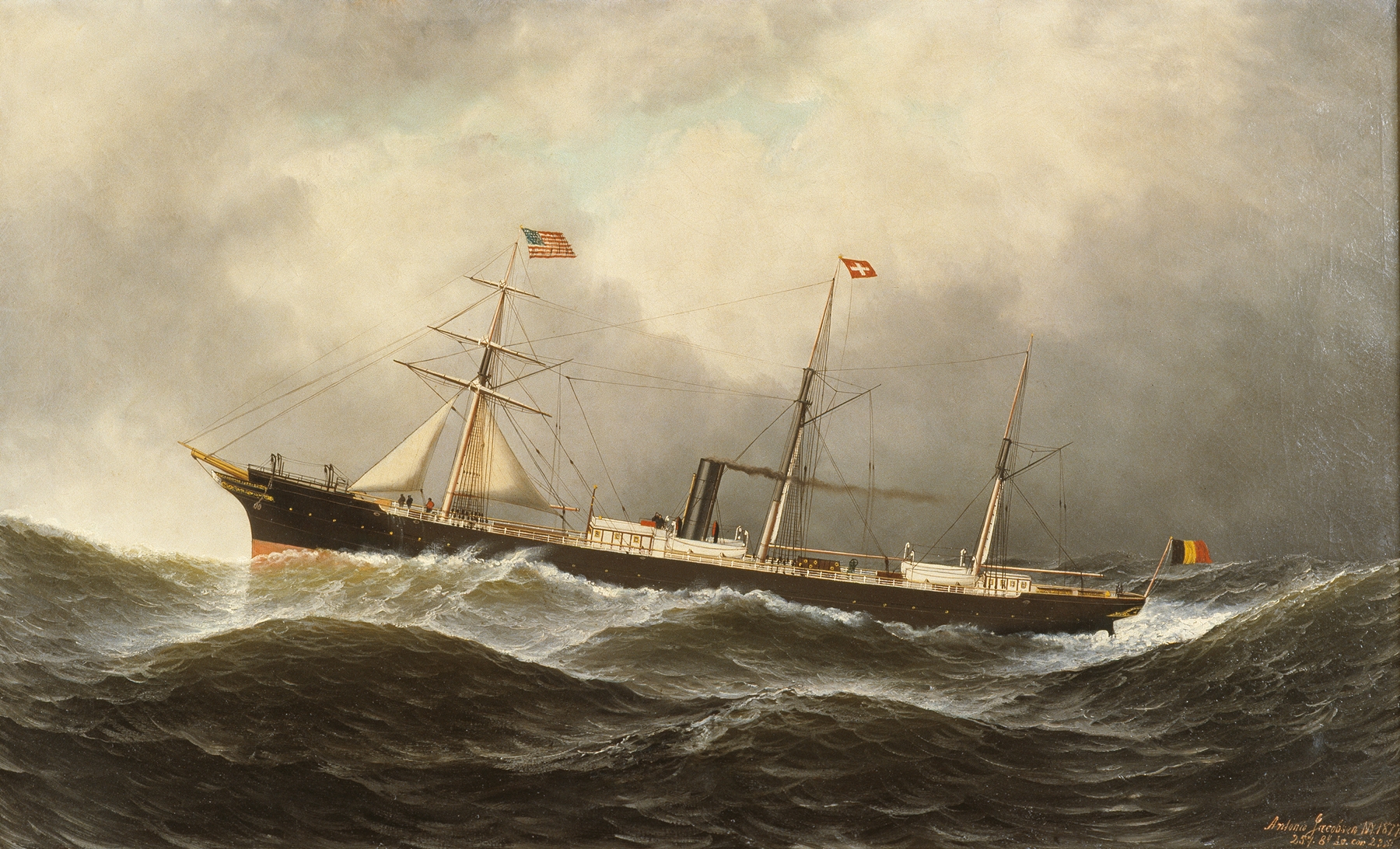
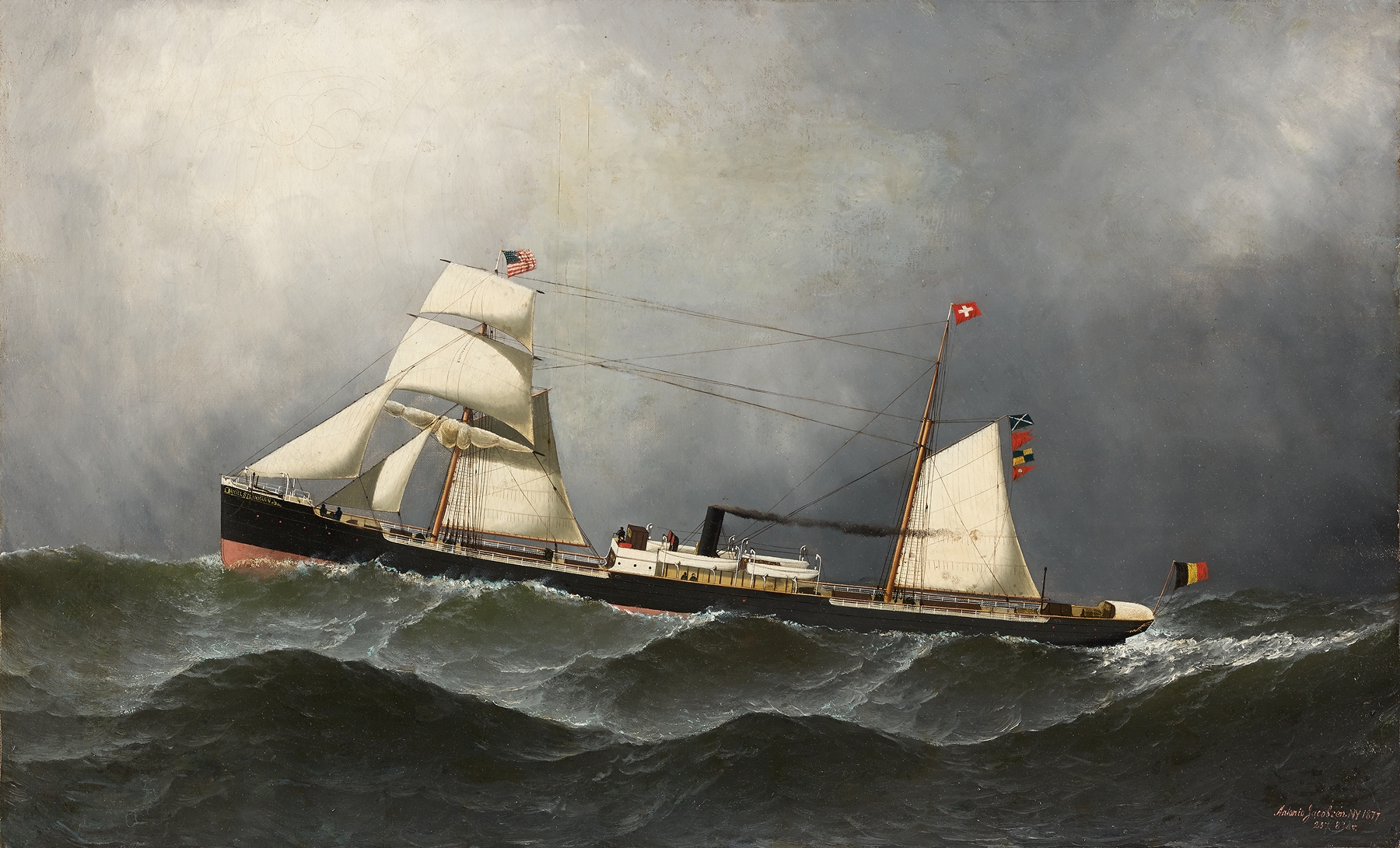
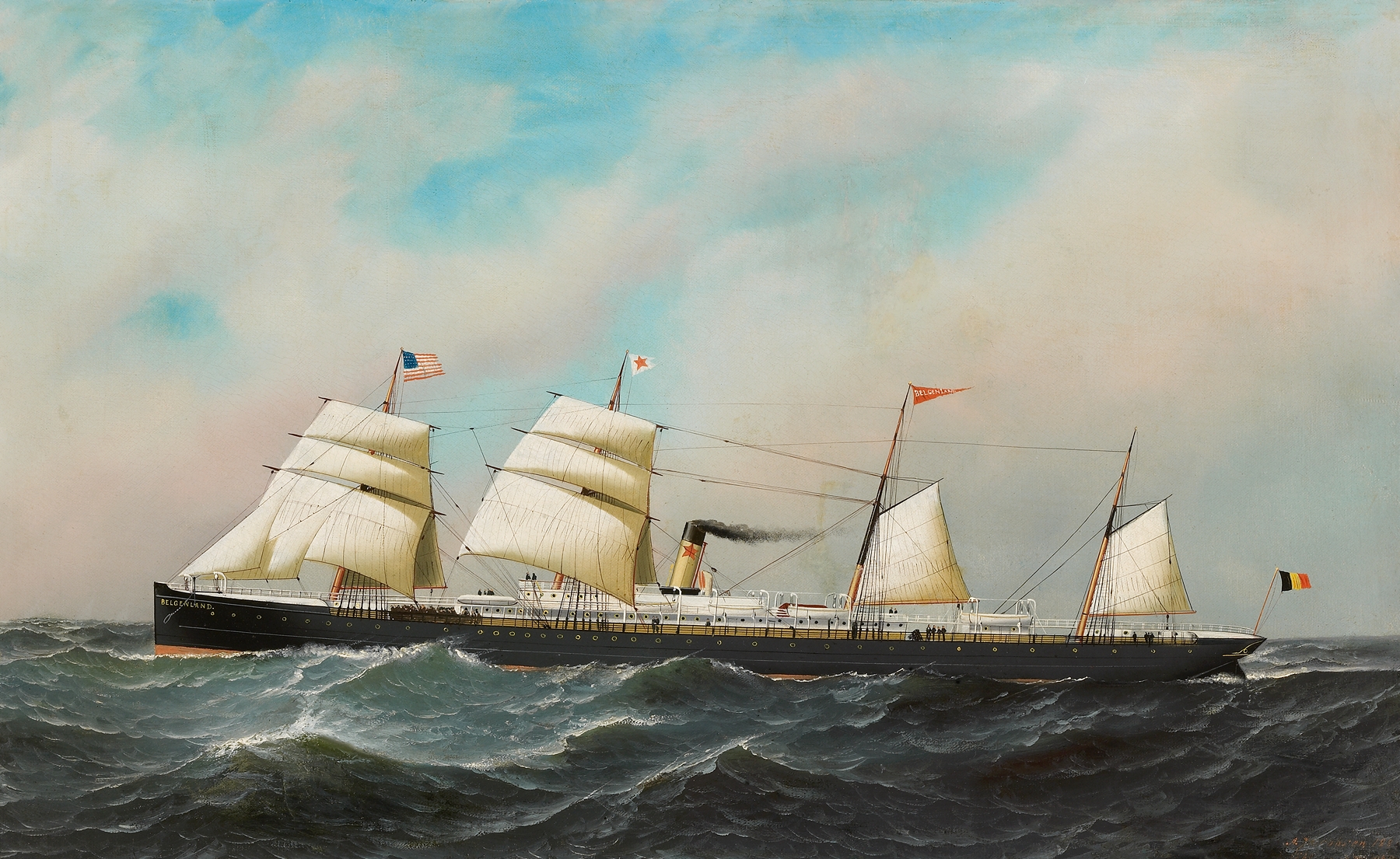
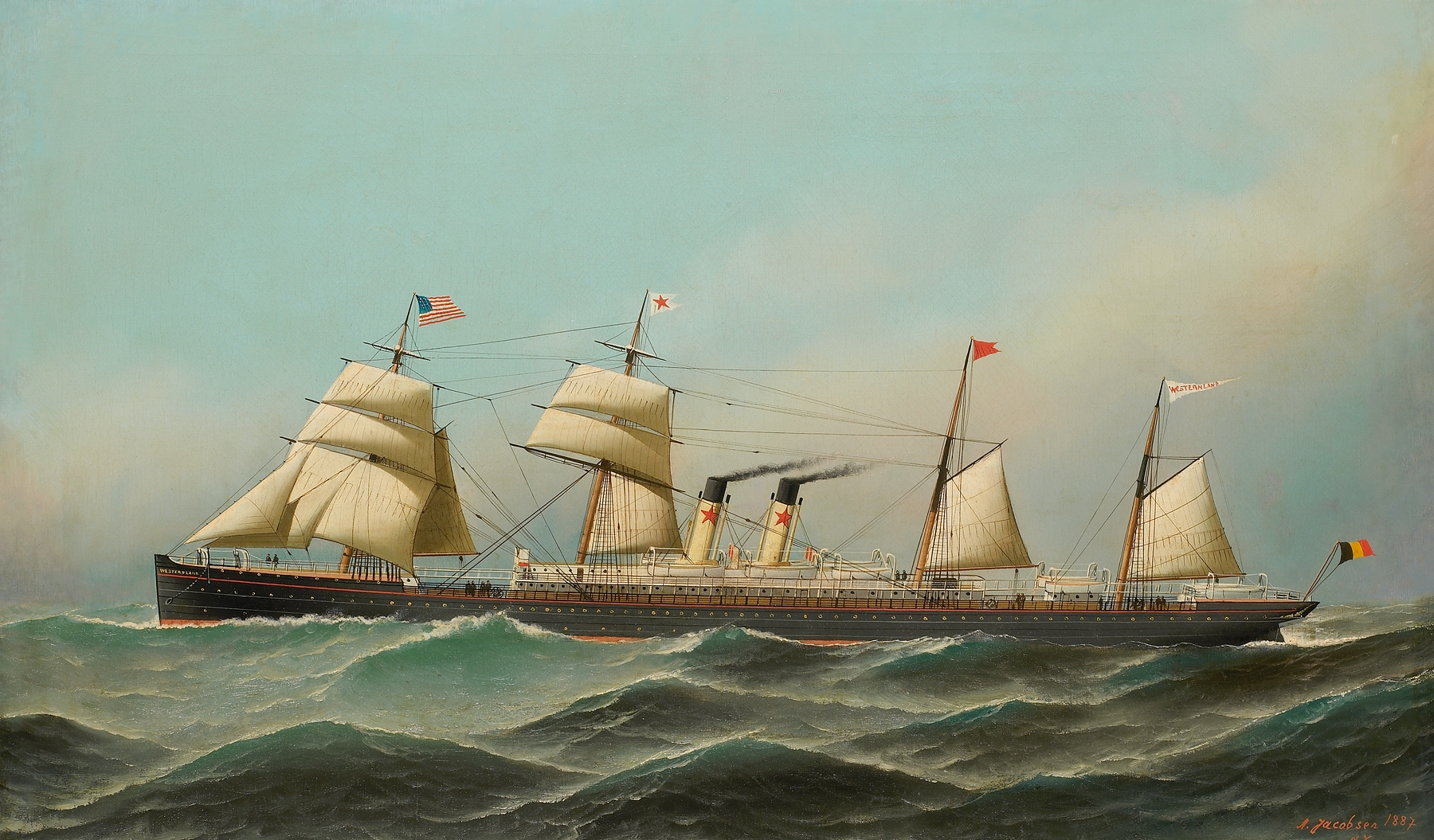
Could a single brushstroke hold eternity? In Het stoomschip met hulpzeilvermogen ‘Westernland’, Antonio Jacobsen captures not just a vessel, but the spirit of transformation that defined an era. The painting invites us to ponder the delicate balance between nature and human ingenuity, as sails unfurl and engines roar to life. Look closely at the ship, centered majestically against a backdrop of luminous sky and rolling waves. The clear, crisp lines of the hull draw your gaze, while the billowing sails sway gently, as though in dialogue with the gusts of wind.
Notice how Jacobsen employs a palette of blues and whites to create a sense of movement and depth, the dynamic brushstrokes suggesting both the power of the ocean and the fragile beauty of the ship. The careful detailing of the ship’s structure reveals the artist’s meticulous attention to nautical anatomy. Beneath the surface, the painting reveals a juxtaposition of tradition and innovation. The steam engine, a harbinger of modernity, stands in contrast to the sails that hark back to simpler times. This duality speaks to the tension between progress and preservation, a theme that resonates deeply in an age of rapid transformation.
The ship becomes a metaphor, not only for maritime exploration but also for the journey of humanity navigating change amidst the tides of destiny. In 1887, Jacobsen was deeply immersed in maritime art, finding inspiration in the bustling shipyards of the East Coast. The United States was undergoing industrialization, and the seafaring tradition was evolving. As steamboats began to dominate, Jacobsen recorded these remarkable vessels with precision and passion, capturing moments that would soon be swept away by the relentless march of progress. This painting stands as a testament to both his skill and the era’s transformative spirit.