Het mannenbad — History & Analysis
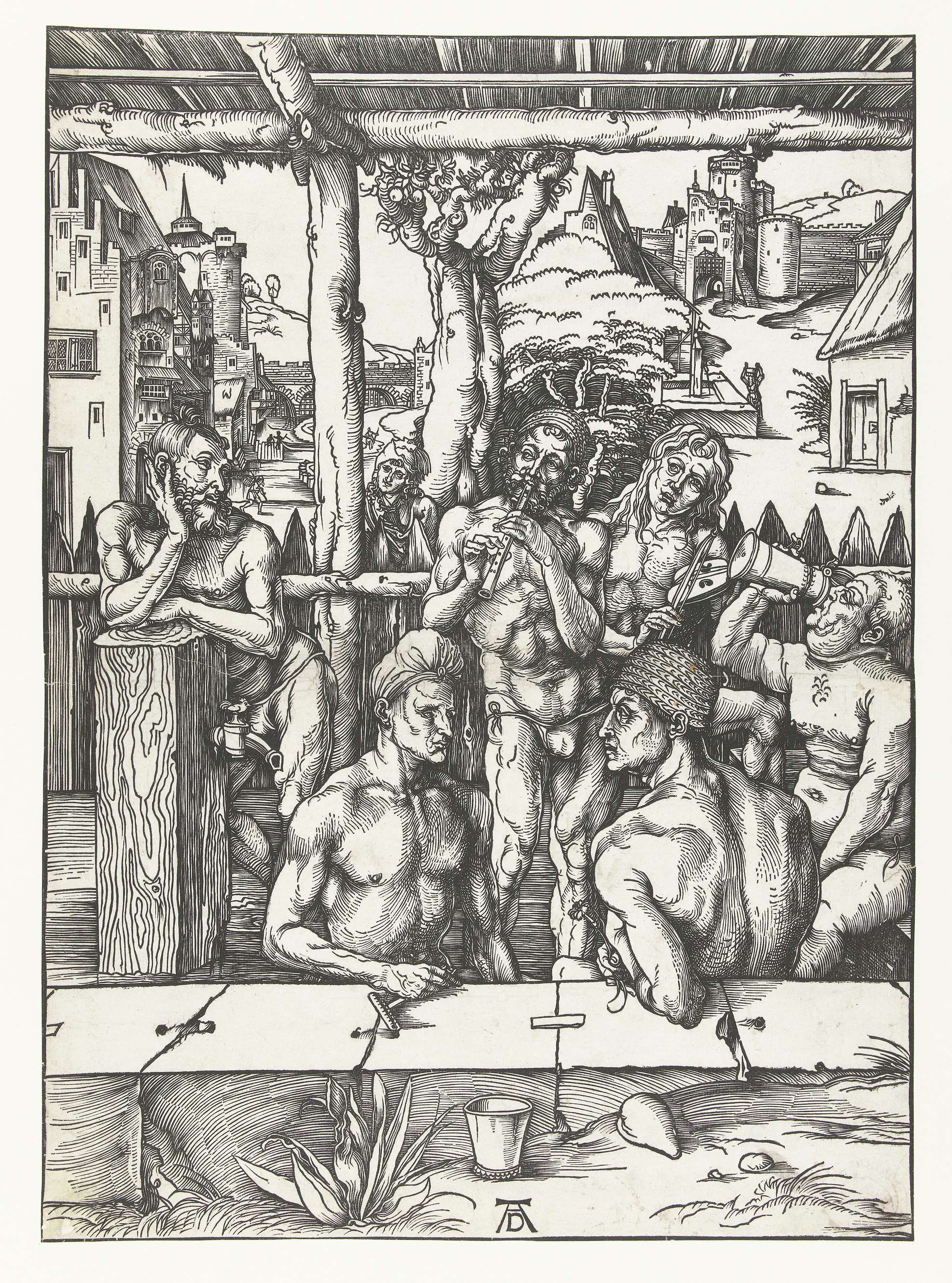
Can beauty exist without sorrow? The delicate balance between joy and despair is perhaps most poignantly captured in the intricacies of Dürer’s work. First, look to the left of Het mannenbad, where the light cascades softly over the figures, illuminating their forms with a warm glow. The precise lines and detailed textures guide your gaze along the bodies, each one unique yet harmoniously unified in purpose. Notice the careful positioning of limbs and the balance of the composition, drawing your eye into a serene moment of contemplation amidst a bathhouse setting.
The muted palette enhances the atmosphere, blending naturalistic tones that evoke a sense of tranquility. Dürer masterfully contrasts the simplicity of the scene with the complexity of human experience. The bathers, engaged in mundane tasks, embody vulnerability and camaraderie, yet their expressions hint at underlying emotions—perhaps longing or introspection. Each figure tells a story, and their intimate interactions suggest a deeper commentary on the human condition, where beauty is intertwined with an unspoken melancholy.
The water, clear and reflective, symbolizes both purity and the inevitability of change. Created between 1496 and 1497, this work emerged during a transformative period for Dürer. Living in Nuremberg, he was deeply influenced by the burgeoning Renaissance, a time marked by increased interest in classical ideas and humanism. While he was establishing himself as a leading figure in Northern Renaissance art, the intricate study of human anatomy and natural forms in this piece reflects the cultural shifts of the era, as artists sought to marry technical skill with emotional depth.