Het rad van fortuin; de vijf standen — History & Analysis
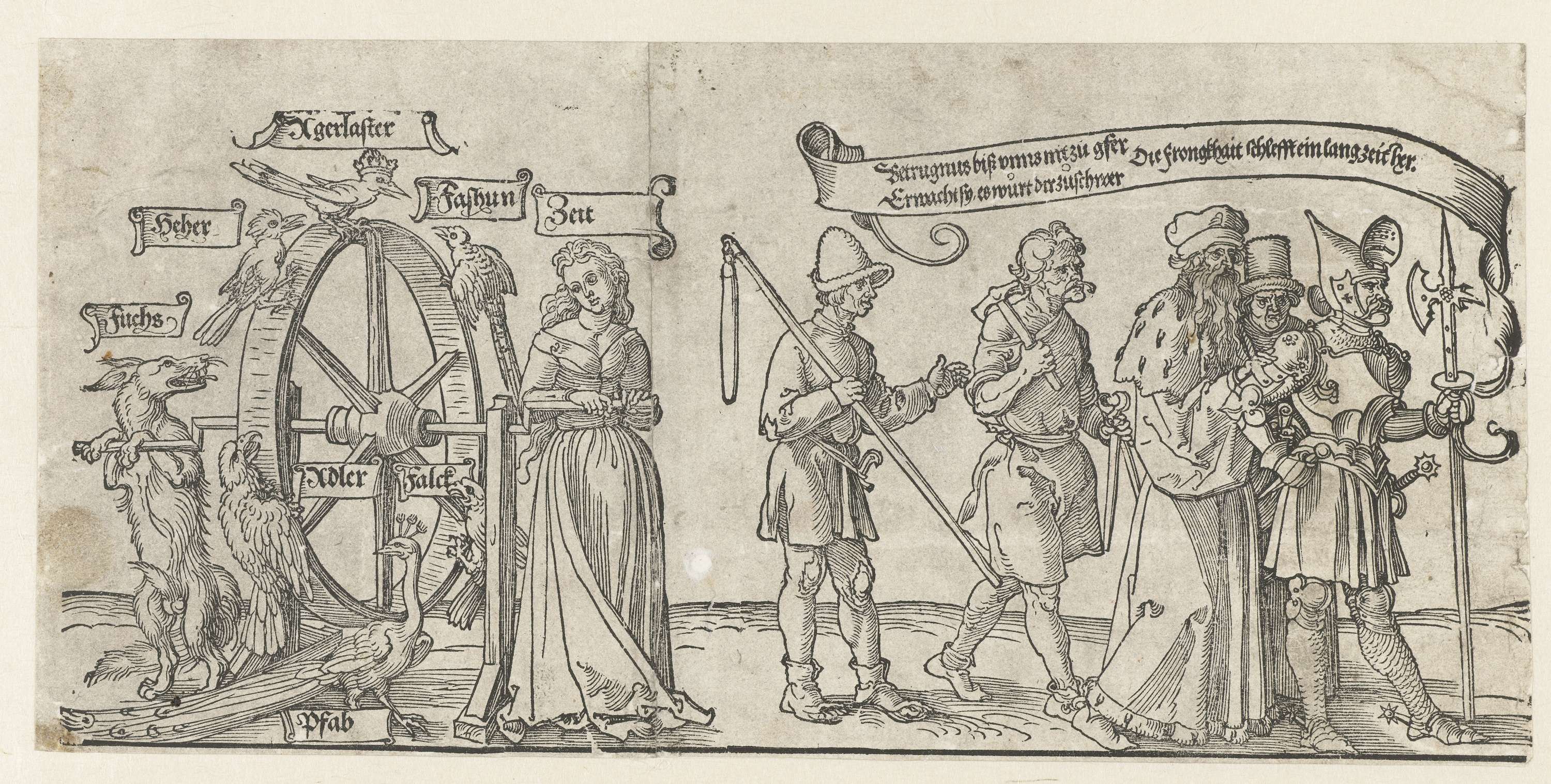
“To paint is to remember what time wants us to forget.” In a world where light and shadow dance together, art captures moments that elude our grasp, reflecting the transient nature of existence. Focus first on the radiant light illuminating the central wheel of fortune, a symbol of life’s unpredictable cycles. The intricate details of each figure aligned around the wheel draw the eye in, revealing a hierarchy of human experiences. Notice how the vibrant contrasts between warm ochres and cool blues enhance the tension, framing the inevitability of fate with a sense of urgency and drama.
Within this composition lies the profound exploration of social status and the human condition. The figures represent various states of life, from nobility to the laborer, a stark reminder of the fragility of fortune. The juxtaposition of despair, hope, and acceptance invites the viewer to ponder their own place in this cycle, encouraging an emotional engagement that transcends time. Each figure’s expression adds layers to the narrative, highlighting the delicate balance between power and vulnerability.
Created between 1521 and 1528, this work emerged during a period of significant artistic and philosophical upheaval in Europe. Dürer was deeply influenced by the Renaissance ideals of humanism and the growing interest in individual experience. Living in Nuremberg, he navigated the complexities of a changing society, where art served as both a reflection of and commentary on the human experience.