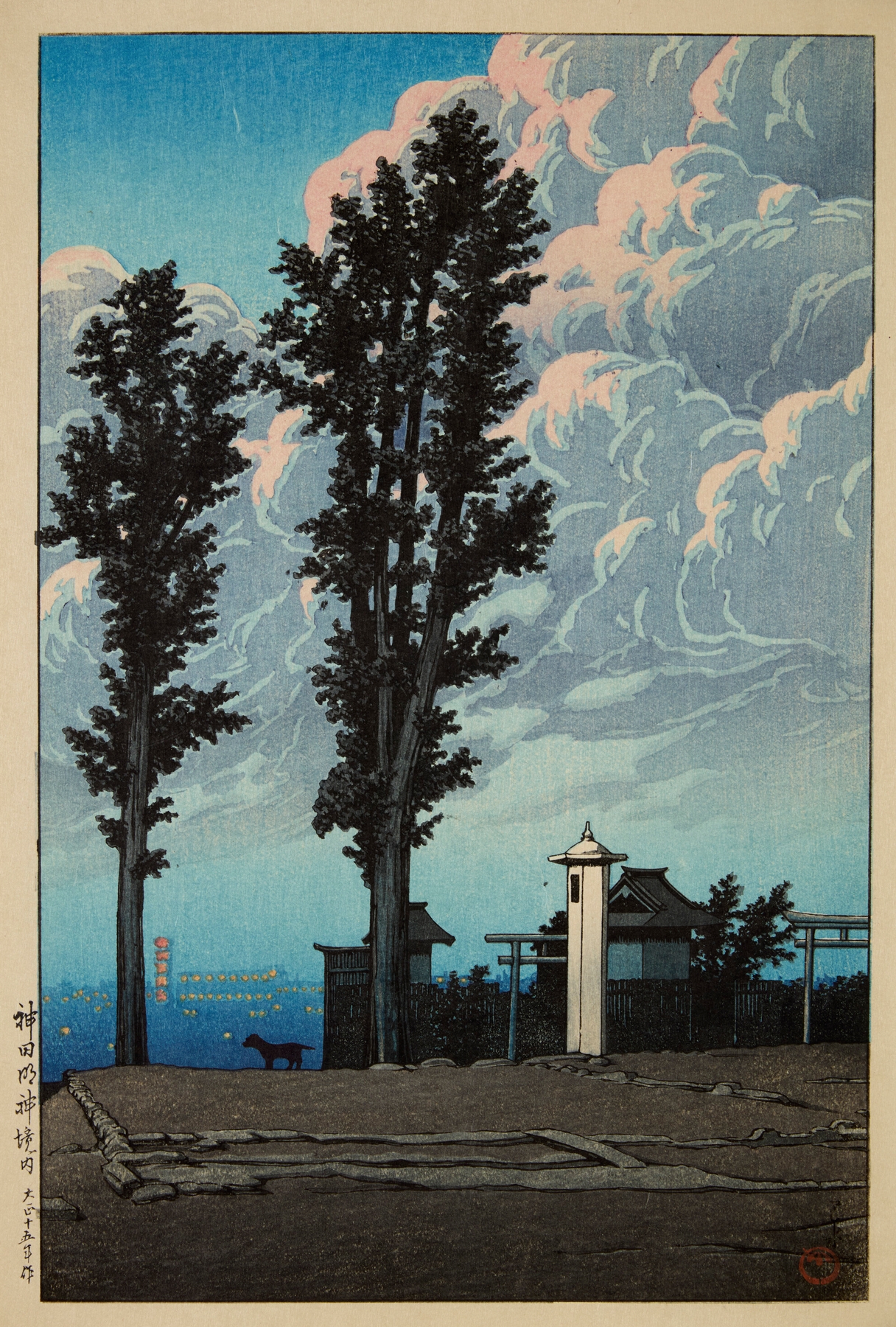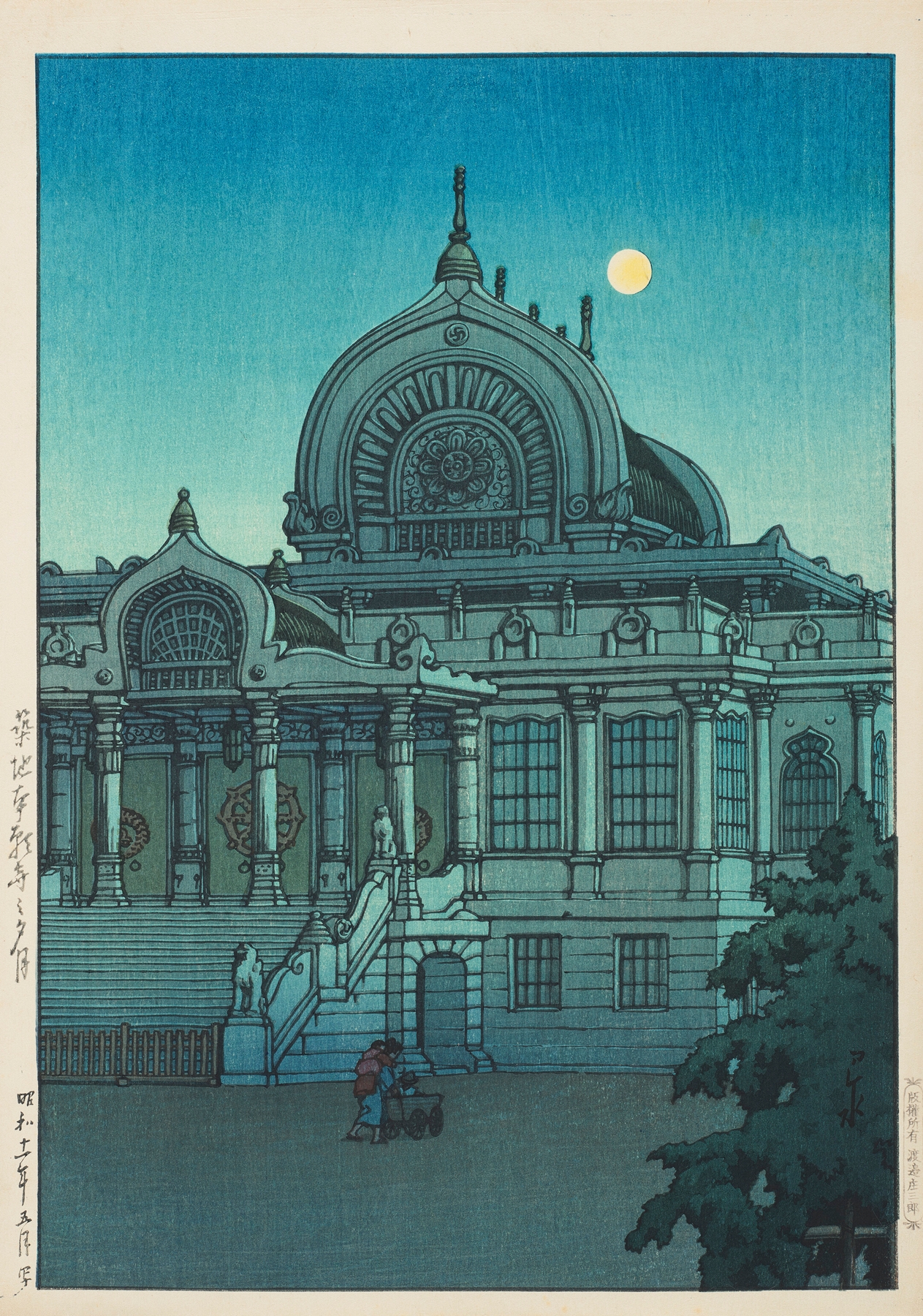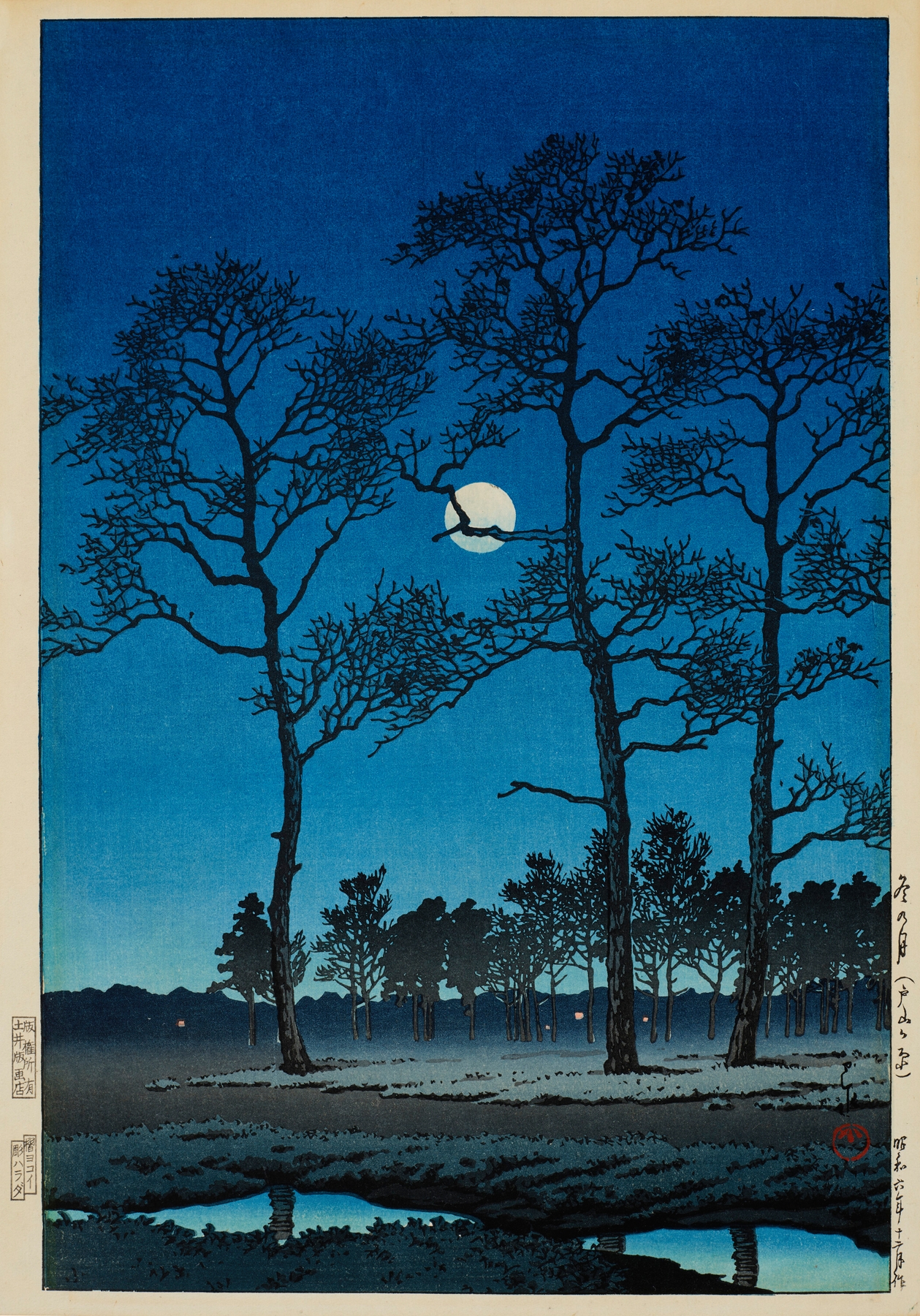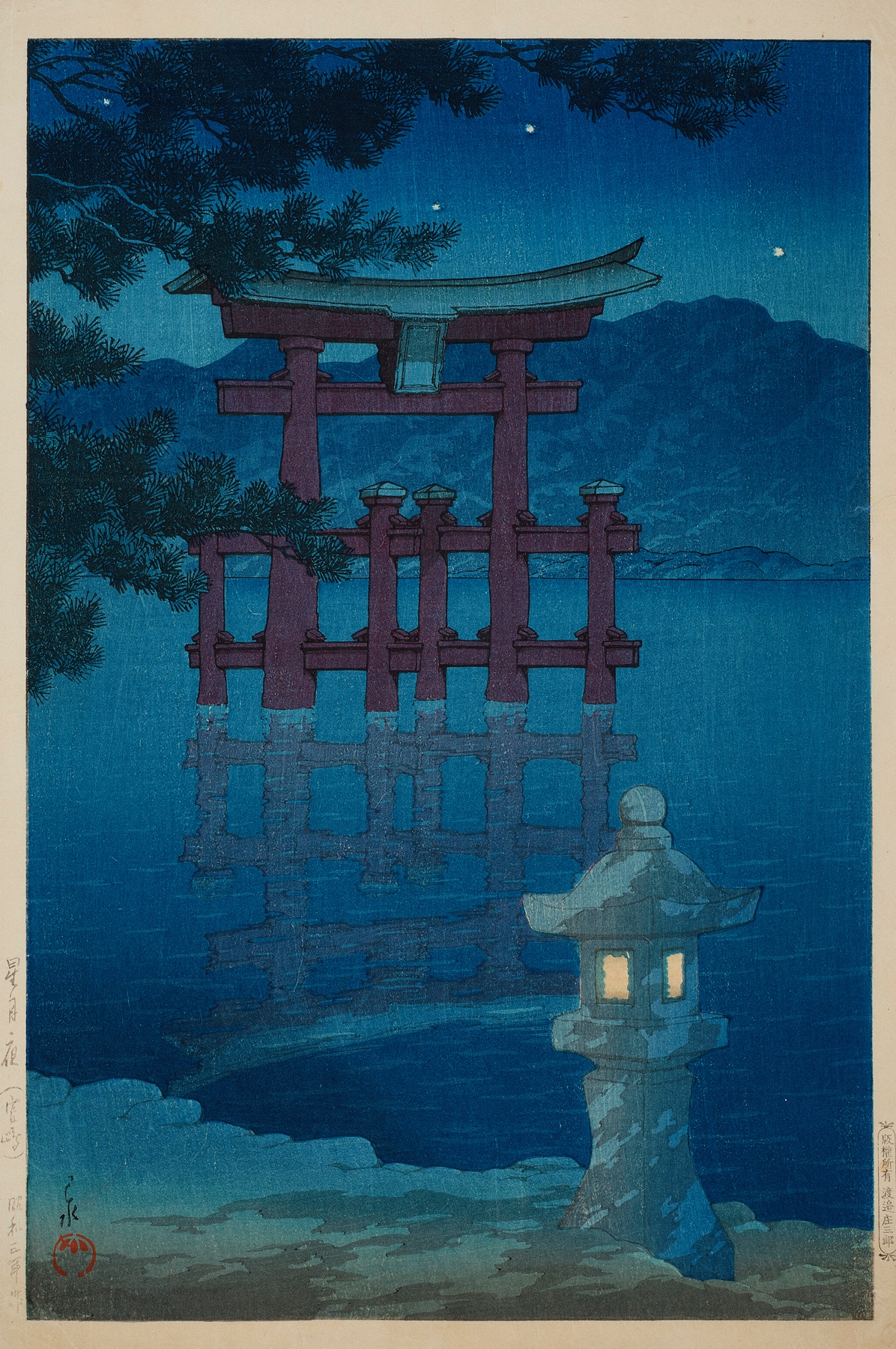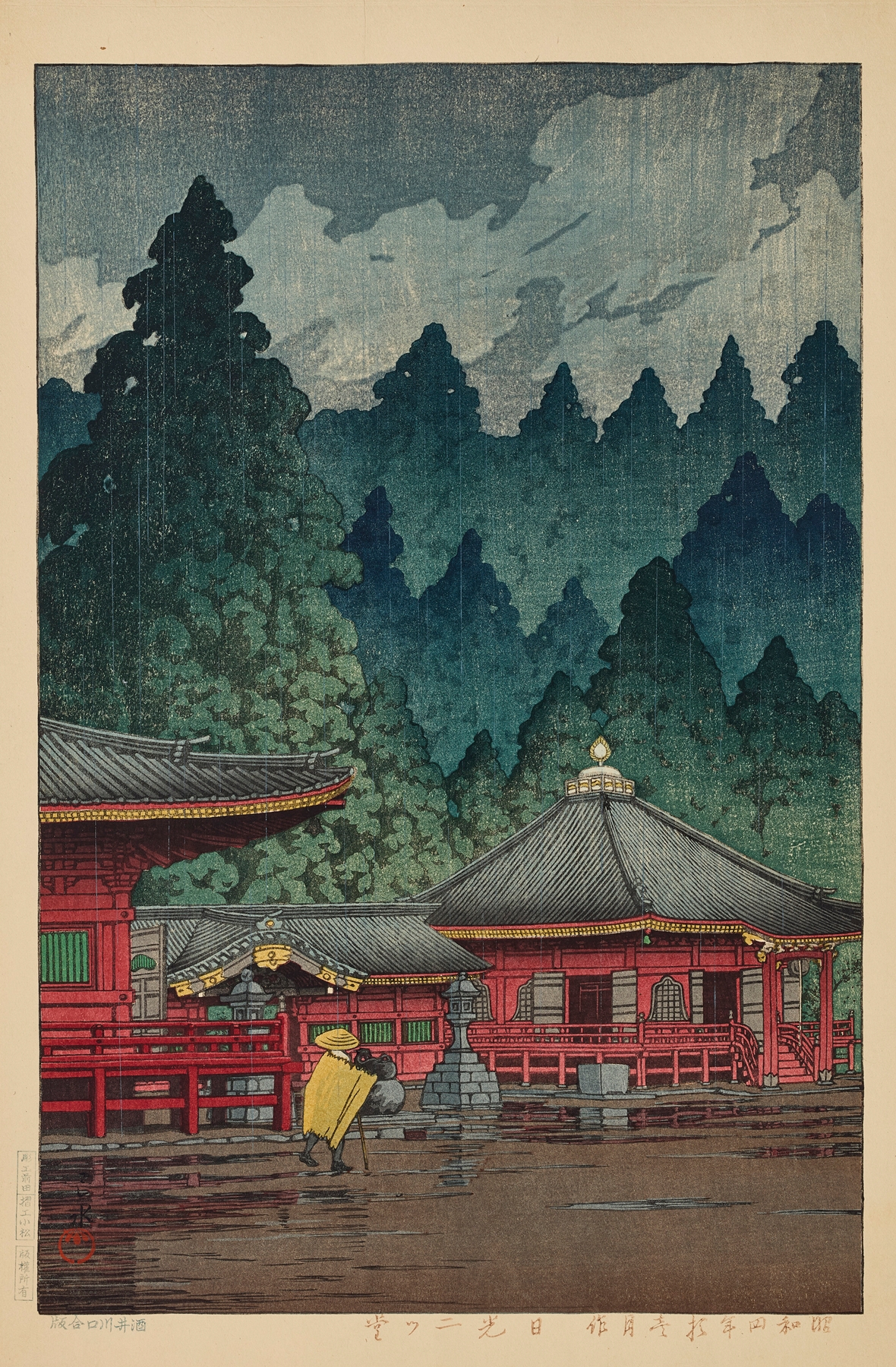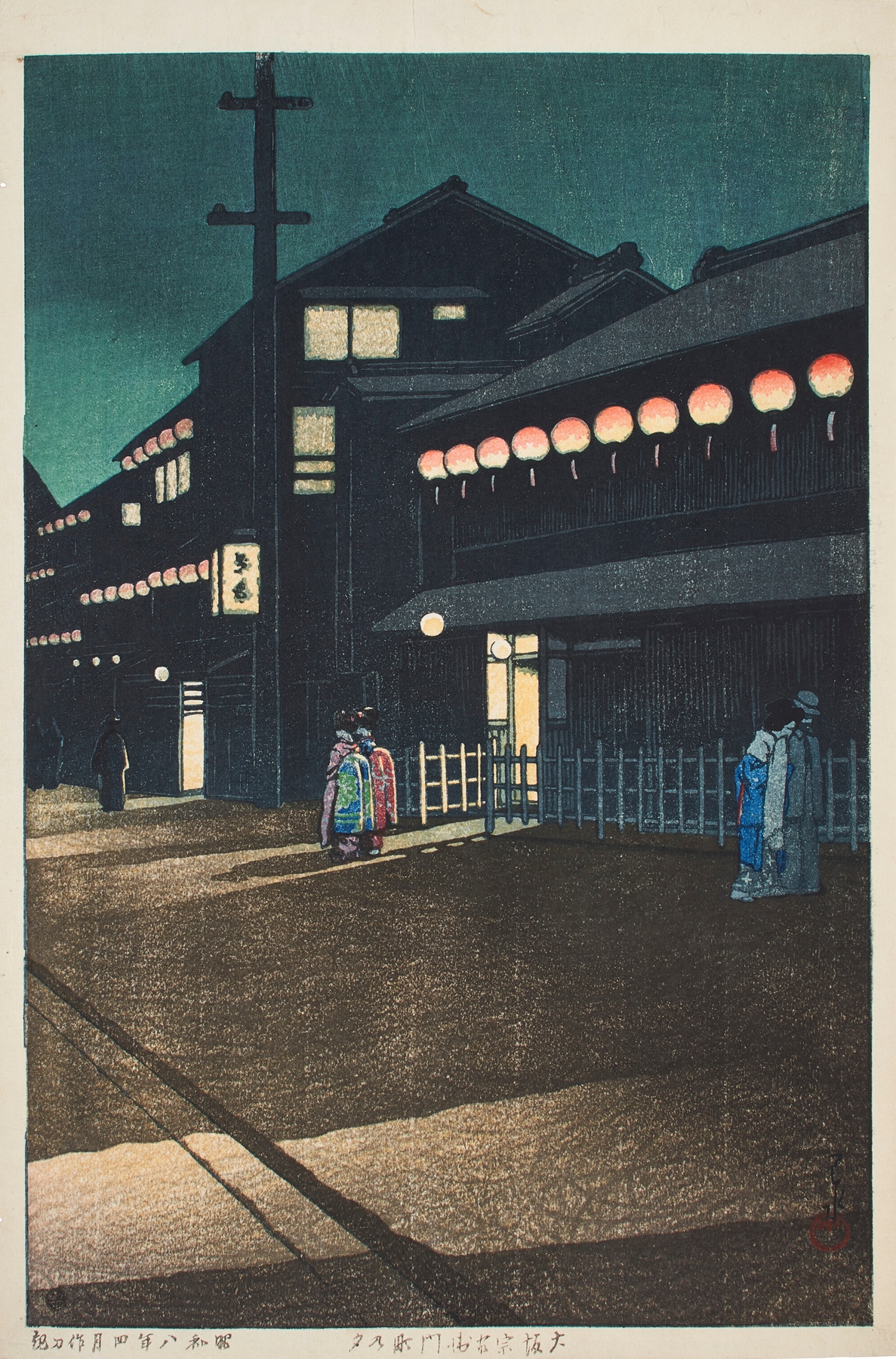
Could beauty survive in a century of chaos? As twilight descends upon Soemon-cho, this remarkable portrayal invites us to reflect on fleeting moments, where mortality dances subtly with serenity. Look to the left at the gentle glow emanating from the lanterns, delicately illuminating the wet pavement. Notice how the artist balances the lush, deep blues of the evening sky with the warm, inviting hues of the streetlights. The figures, almost ghostly in their presence, move through the scene like memories—soft and ephemeral, yet integral to the atmosphere. Hasui’s meticulous woodblock technique allows each line and shadow to breathe, crafting a vivid interplay of light and form that draws you deeper into this moment. As you delve further into the piece, consider the contrast between the vibrant life depicted and the encroaching stillness of night. The juxtaposition of the lively street scene against an expansive, almost overwhelming sky suggests a transient beauty, tantalizingly close yet forever out of reach. Each passerby is a reminder of the human experience—full of vitality yet inevitably bound by time, echoing the tension between existence and the inexorable march toward mortality. In 1933, while living in Japan, the artist was navigating a country emerging from the shadows of a tumultuous past. This period saw a growing modernization that clashed with traditional values, leading to a collective yearning for beauty and tranquility in the face of uncertainty. Hasui's work reflects this desire, capturing not just a moment in time but also the resilience of beauty amid the chaos surrounding him.