Holländische Kanallandschaft im Winter — History & Analysis
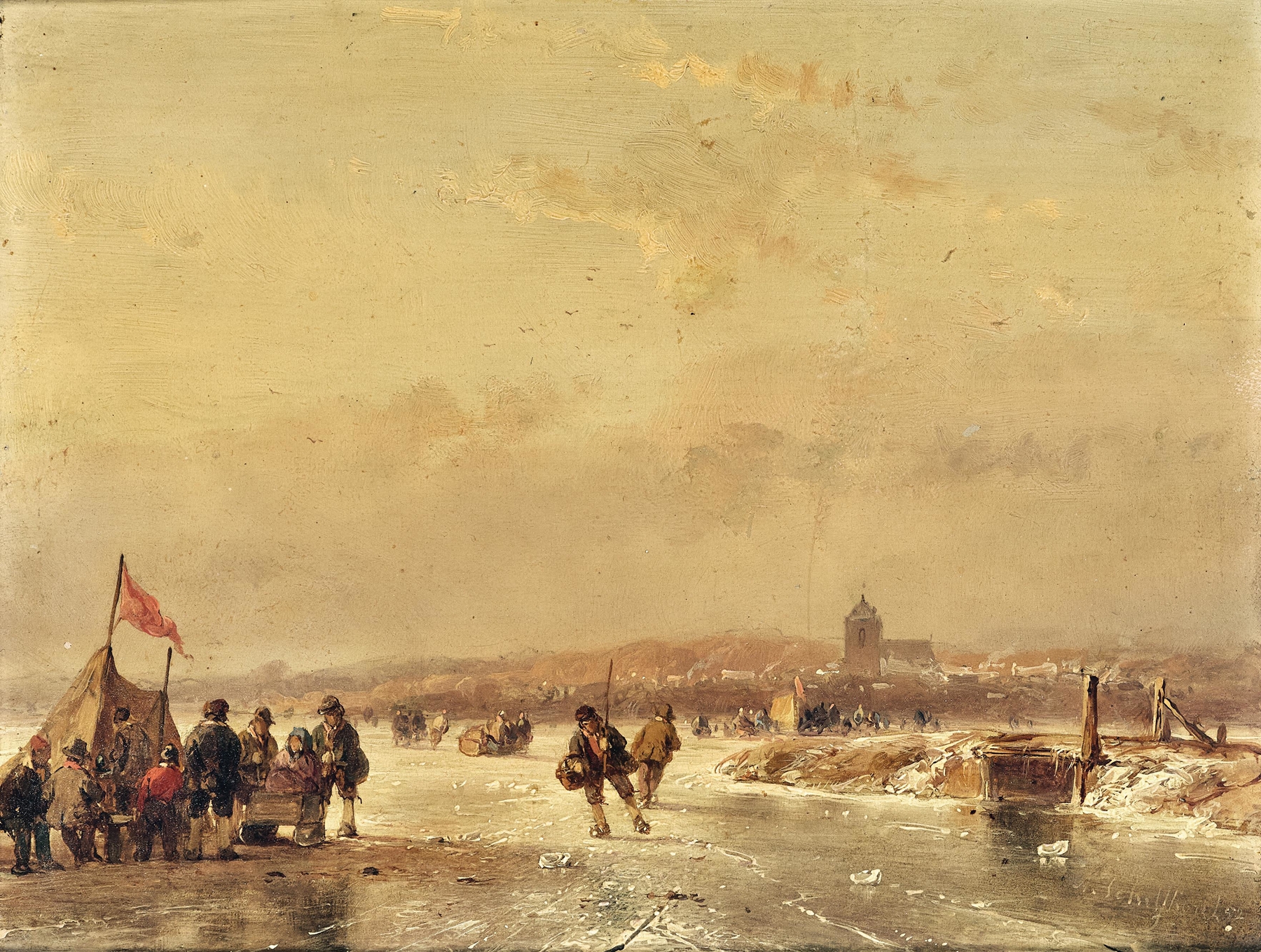
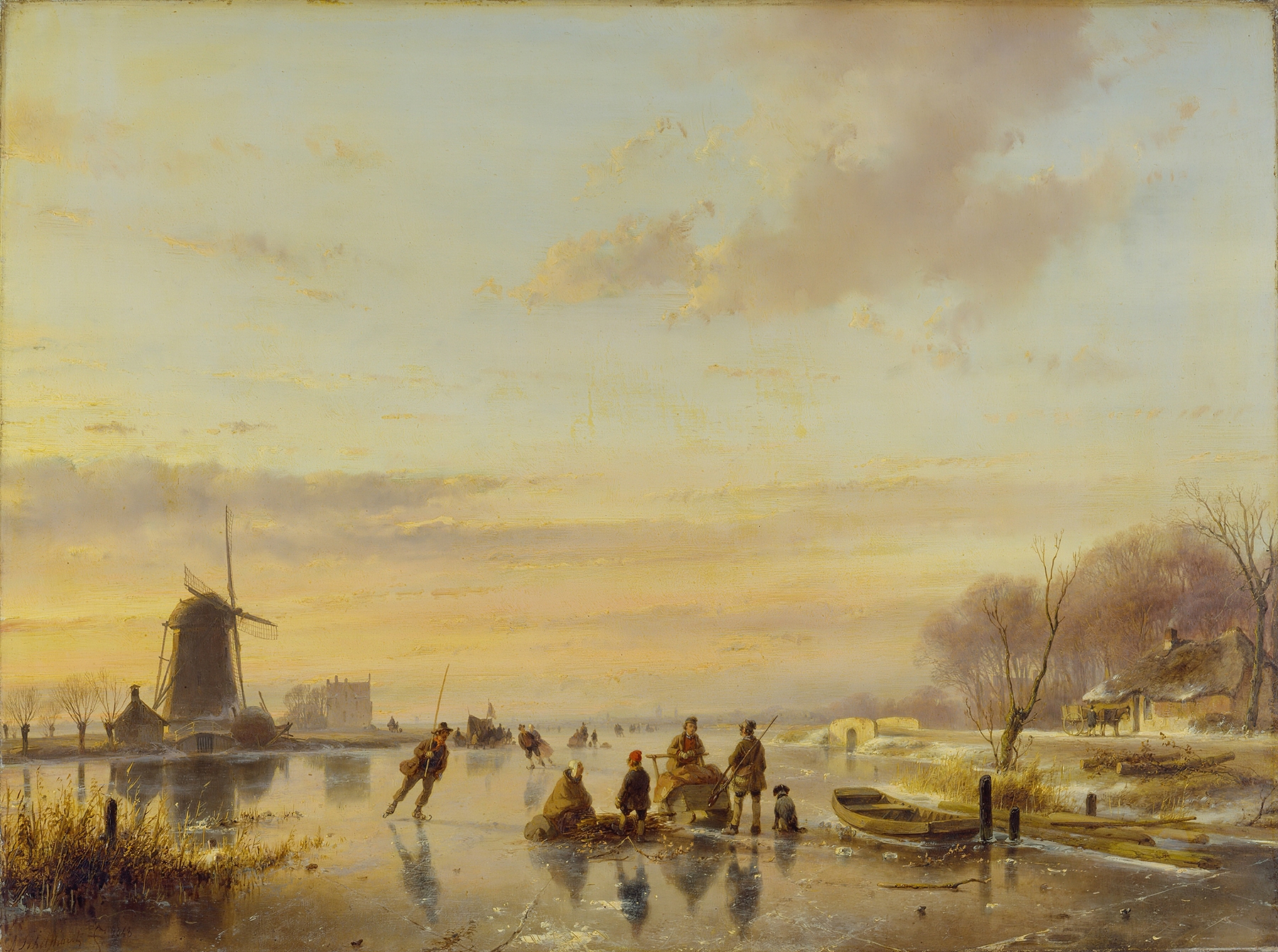
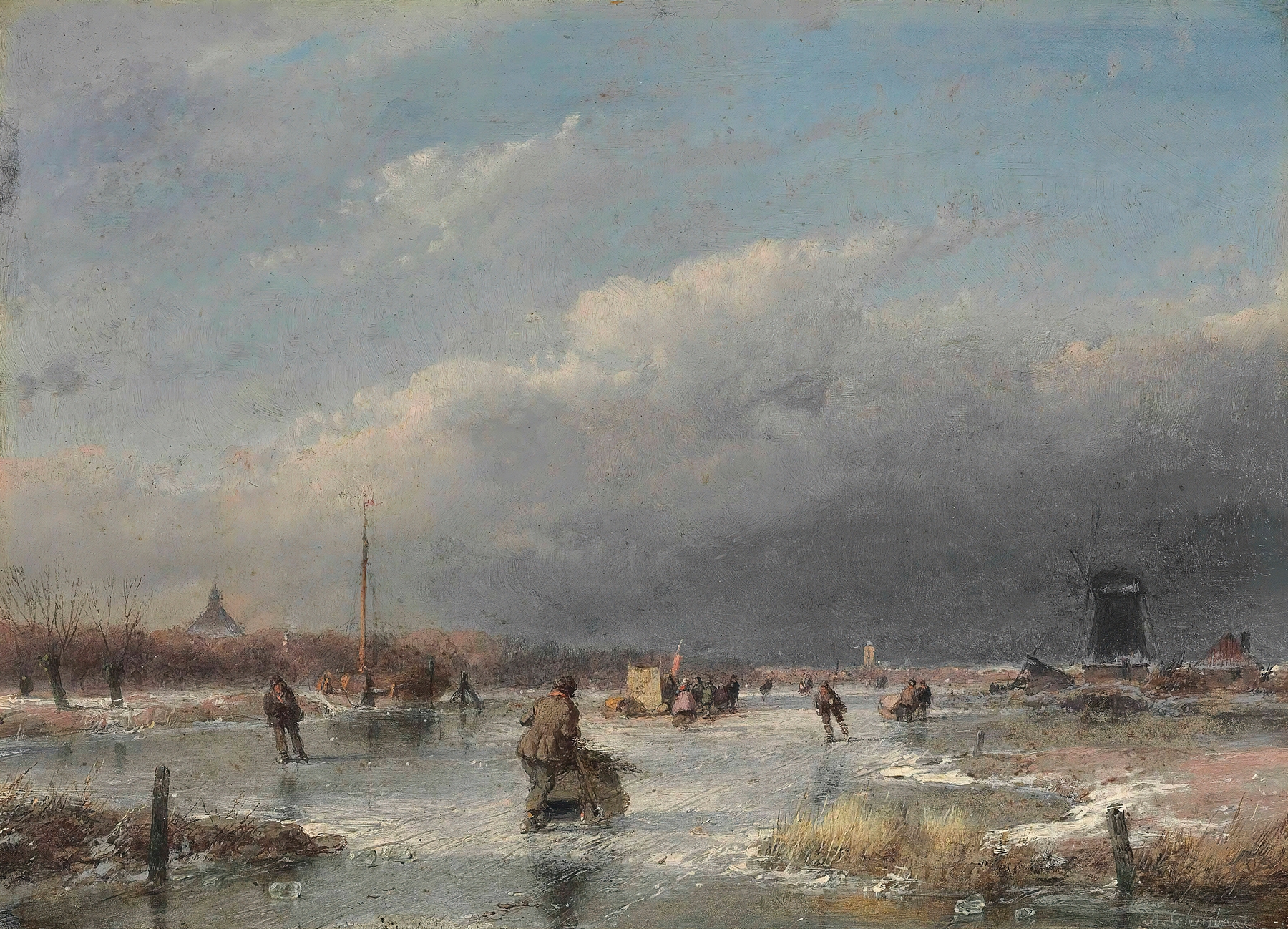
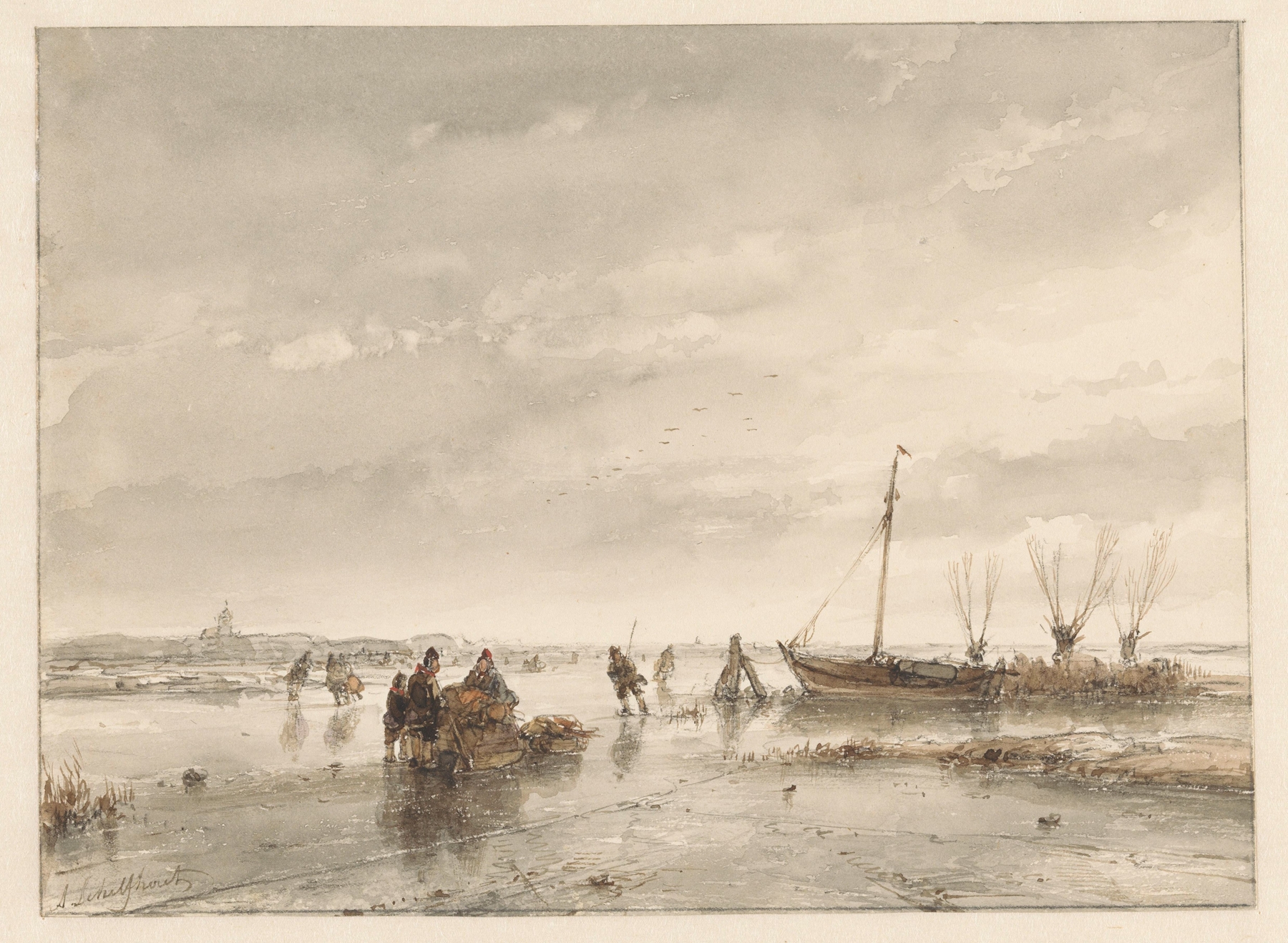
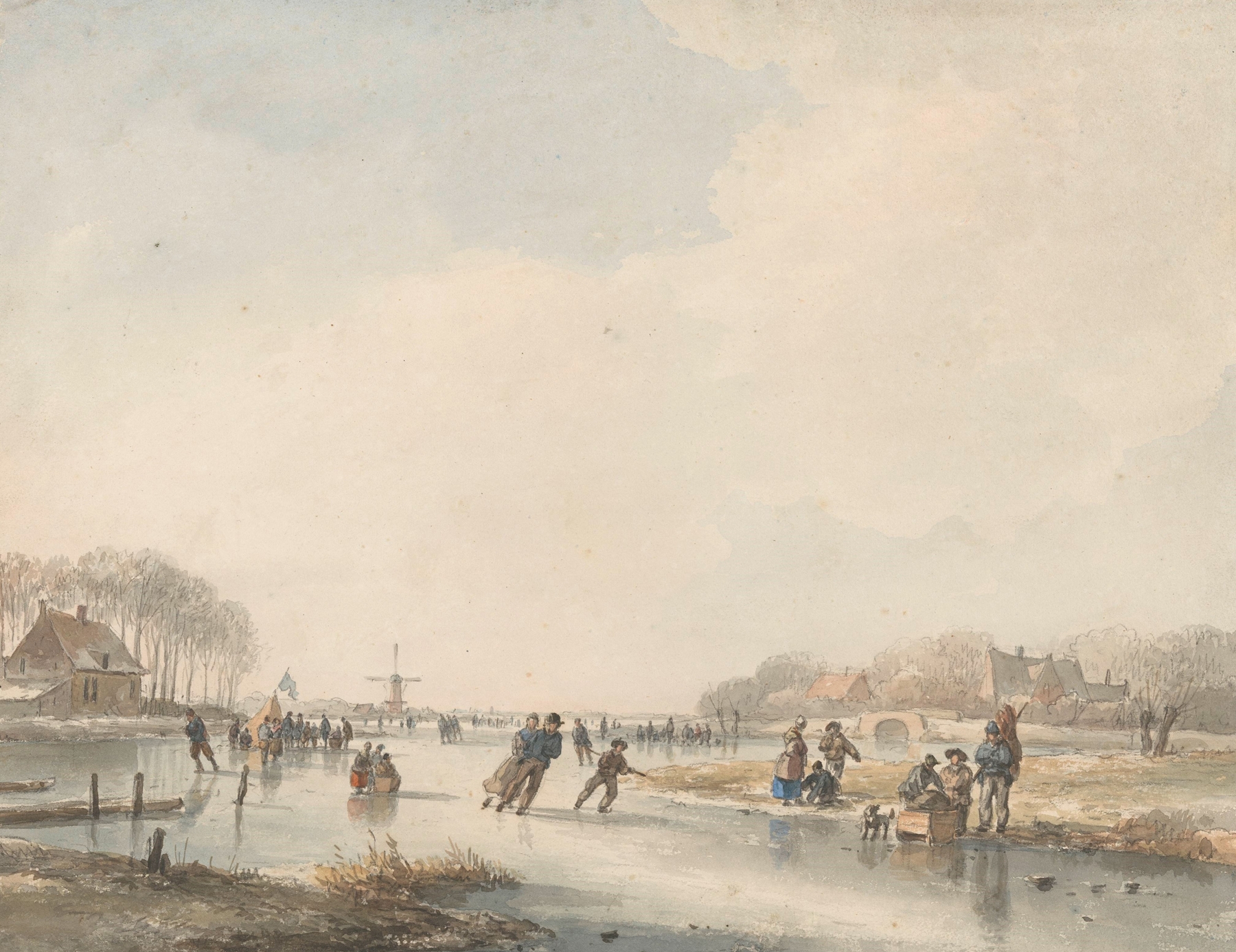
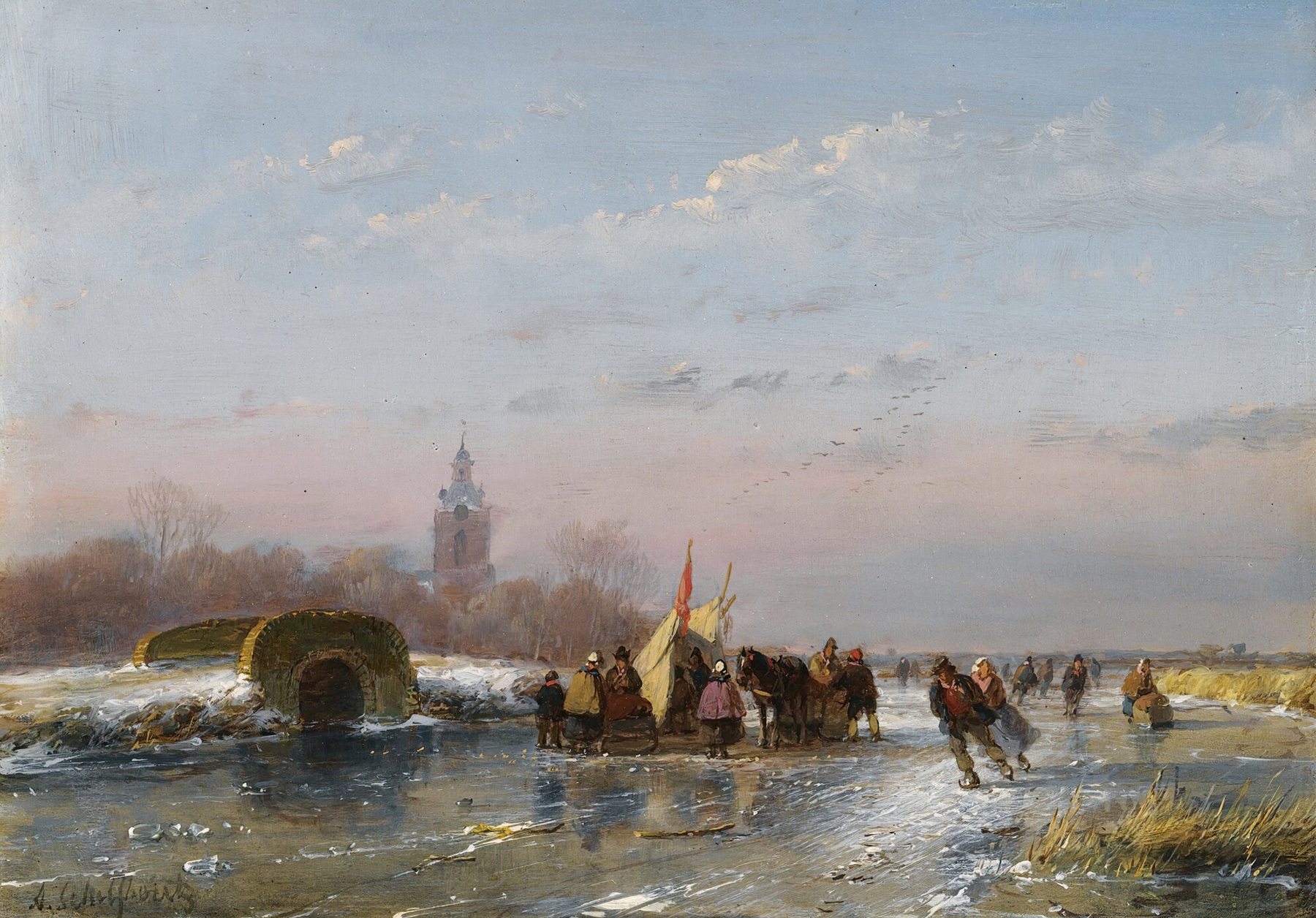
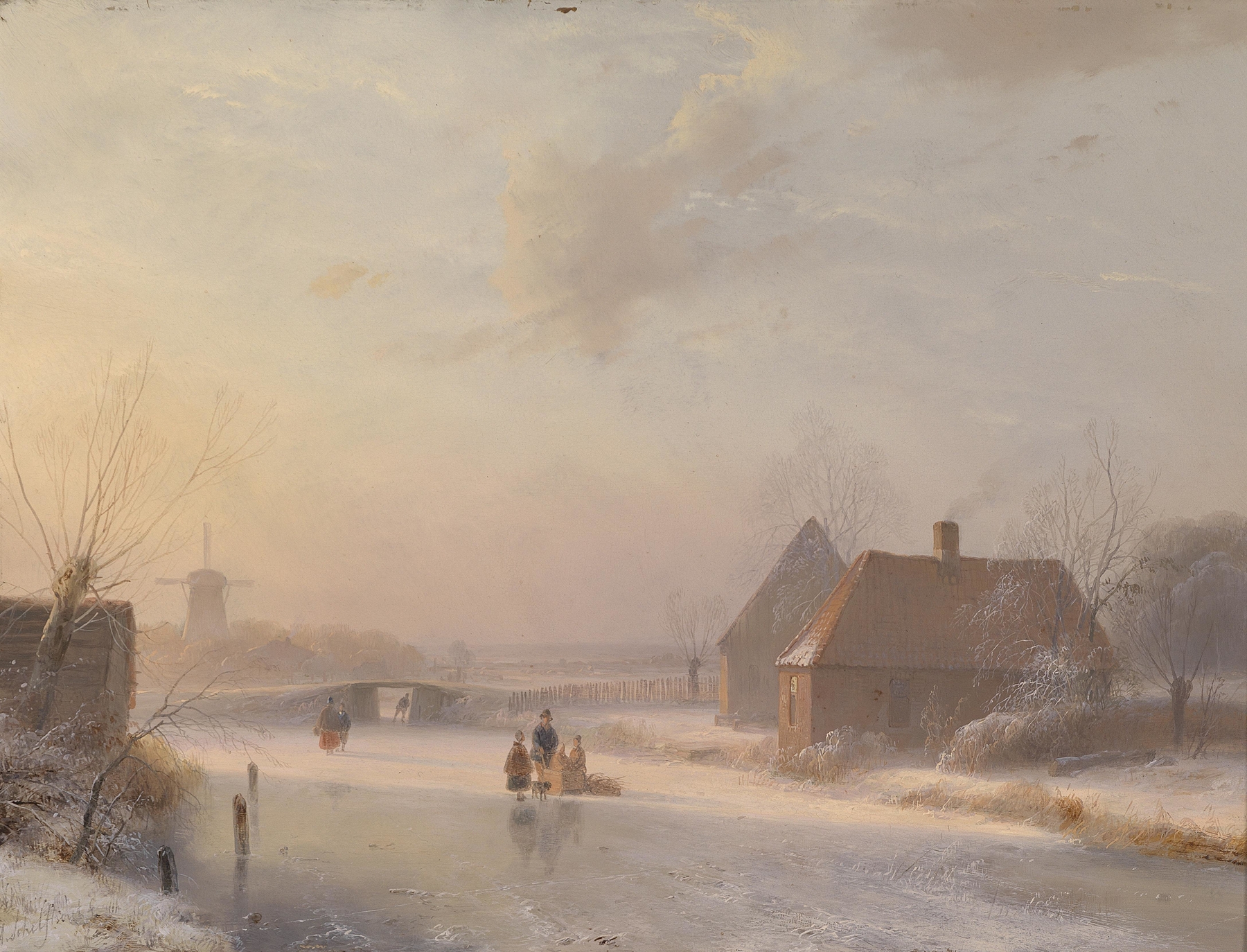
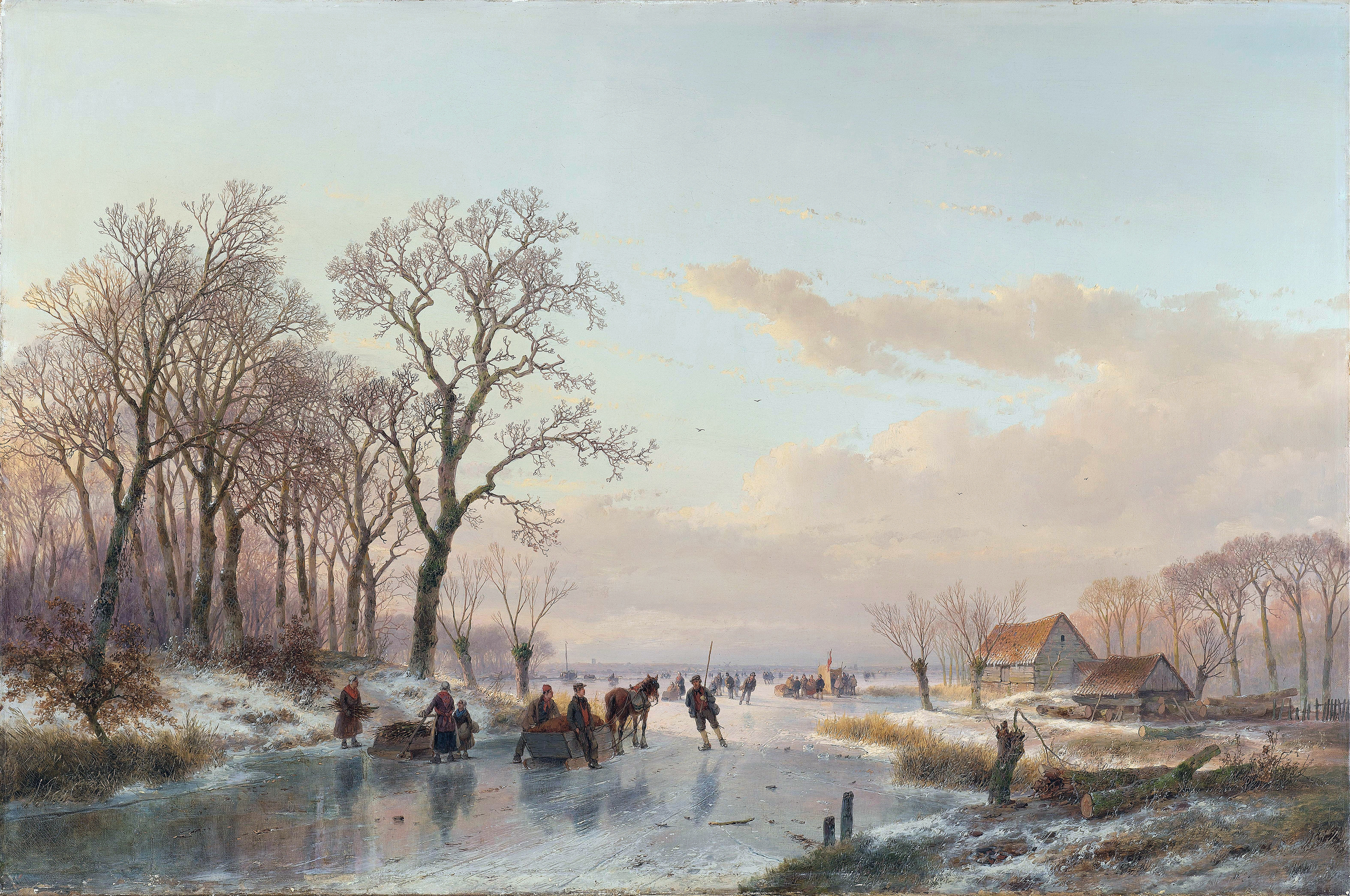
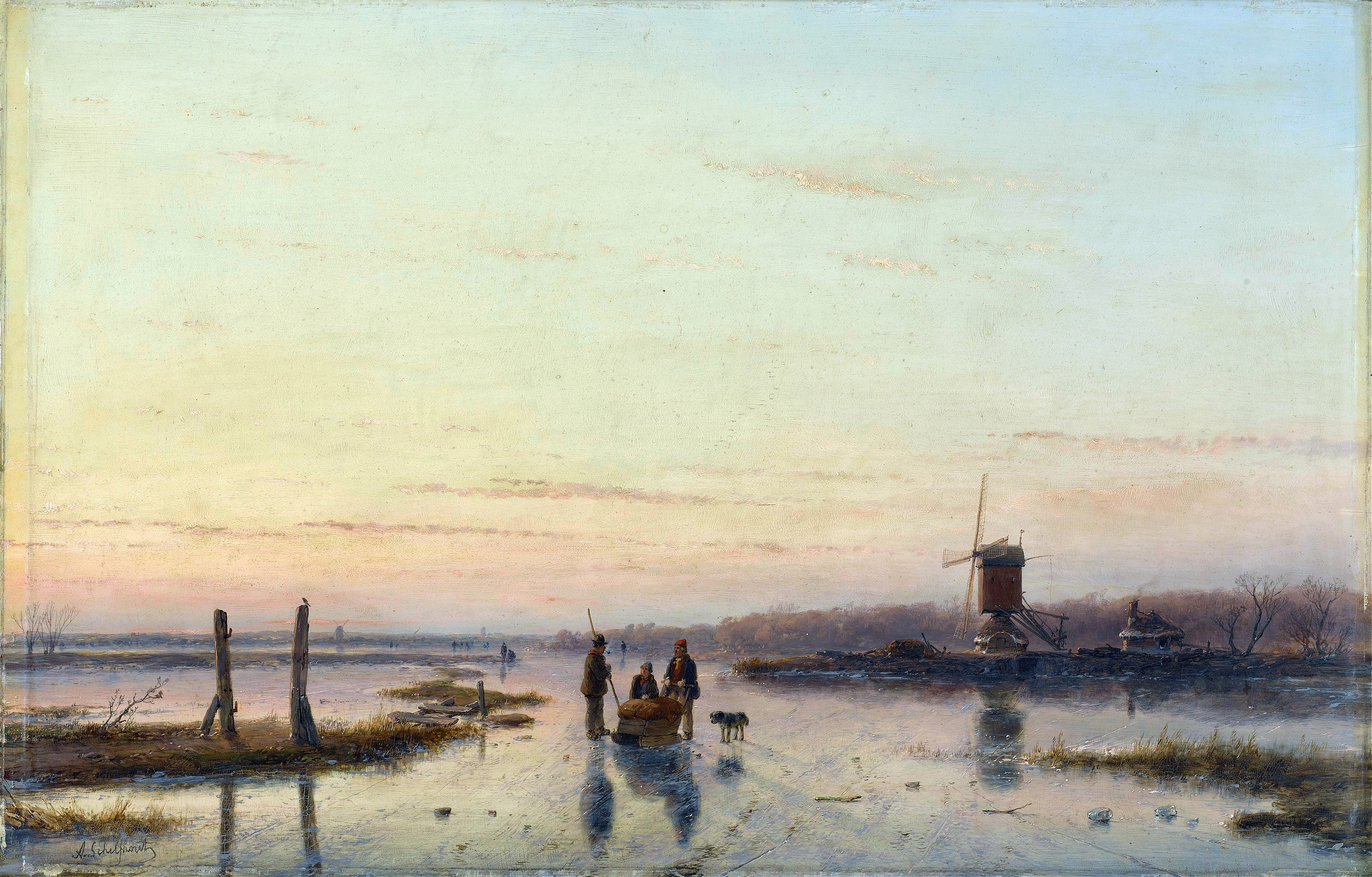
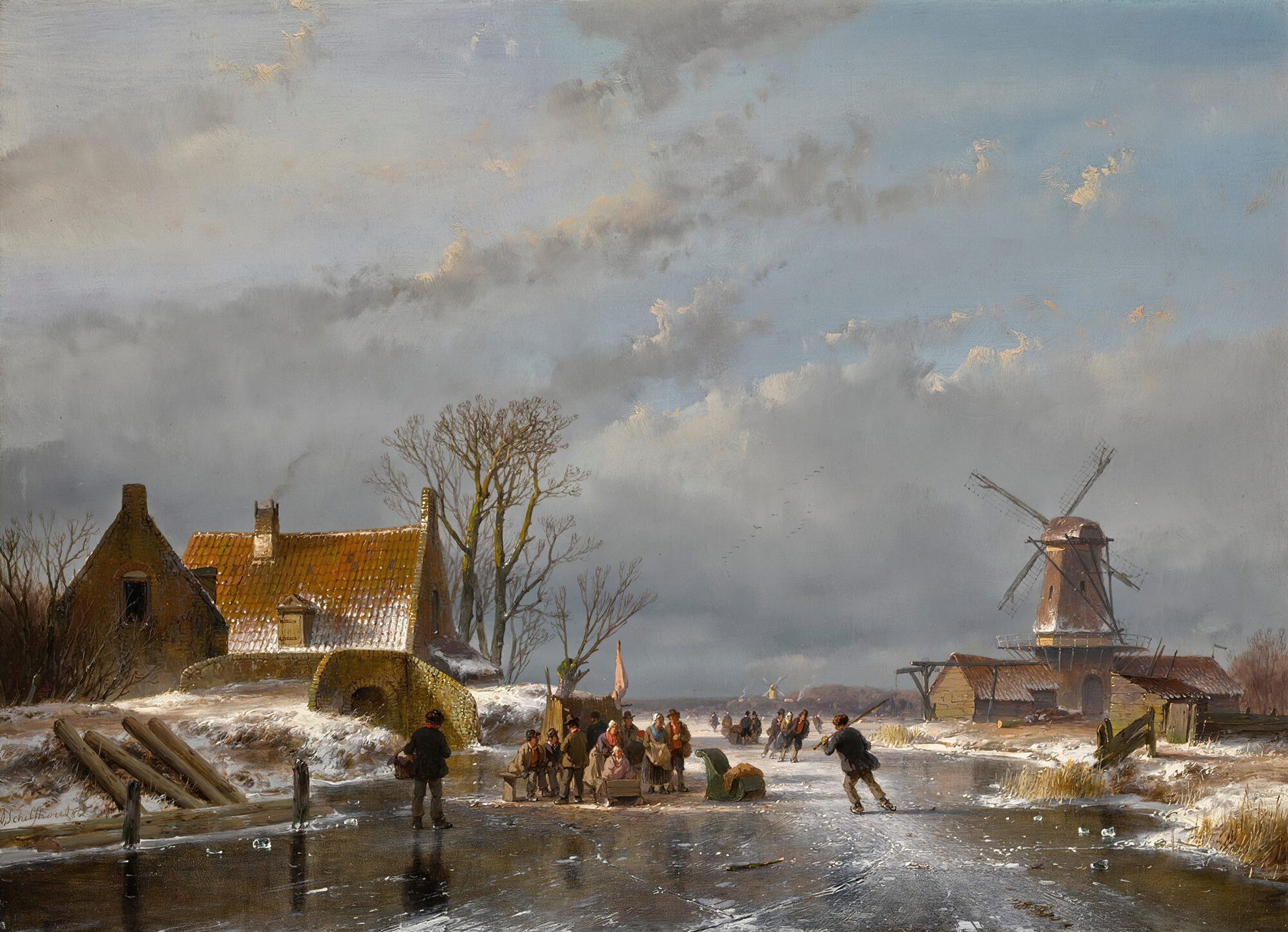
“Art reveals the soul when the world turns away.” In this quiet embrace of winter, the subtle interplay of light invites reflection and introspection. It reminds us that within the stillness, life stirs beneath the surface, waiting to be discovered. Focus on the foreground, where a frozen canal stretches invitingly across the canvas. Notice how the delicate strokes capture the glimmer of ice, reflecting a pale, wintry sun that casts shadows on the snow-draped banks.
The muted palette of whites and grays is punctuated by the earthy browns of the distant trees, skillfully contrasting the coolness of the scene. The composition directs the eye inward, leading us along the canal, drawing us deeper into this serene winter landscape. Within this tranquil setting lies an emotional tension — the contrast between the cold stillness of the season and the warm invitation of the light. The slight movement of figures skimming the ice hints at life and resilience in the face of the harsh winter, suggesting stories untold.
Every detail, from the frosted branches to the distant houses cloaked in snow, whispers of a world paused in time, yet full of potential. Andreas Schelfhout created this work during a period when winter landscapes were gaining popularity in Dutch art. Working in the mid-19th century, he was influenced by Romanticism’s fascination with nature and the emotional responses it evoked. This was a time of burgeoning artistic exploration, as artists sought to capture both the beauty and the emotional depth found in the natural world, solidifying Schelfhout’s place as a master of winter scenes.