Holländische Kanallandschaft mit Windmühle — History & Analysis
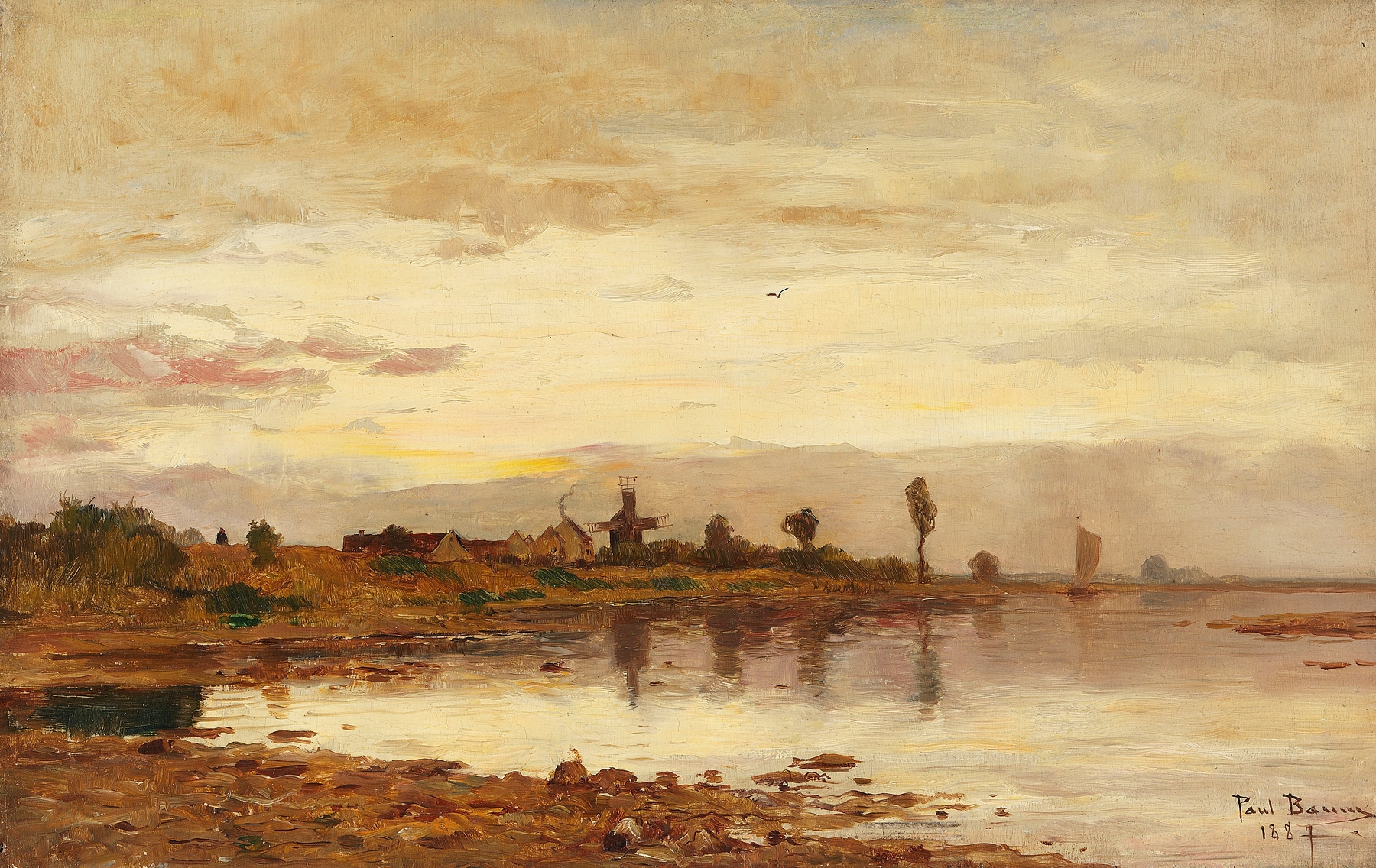
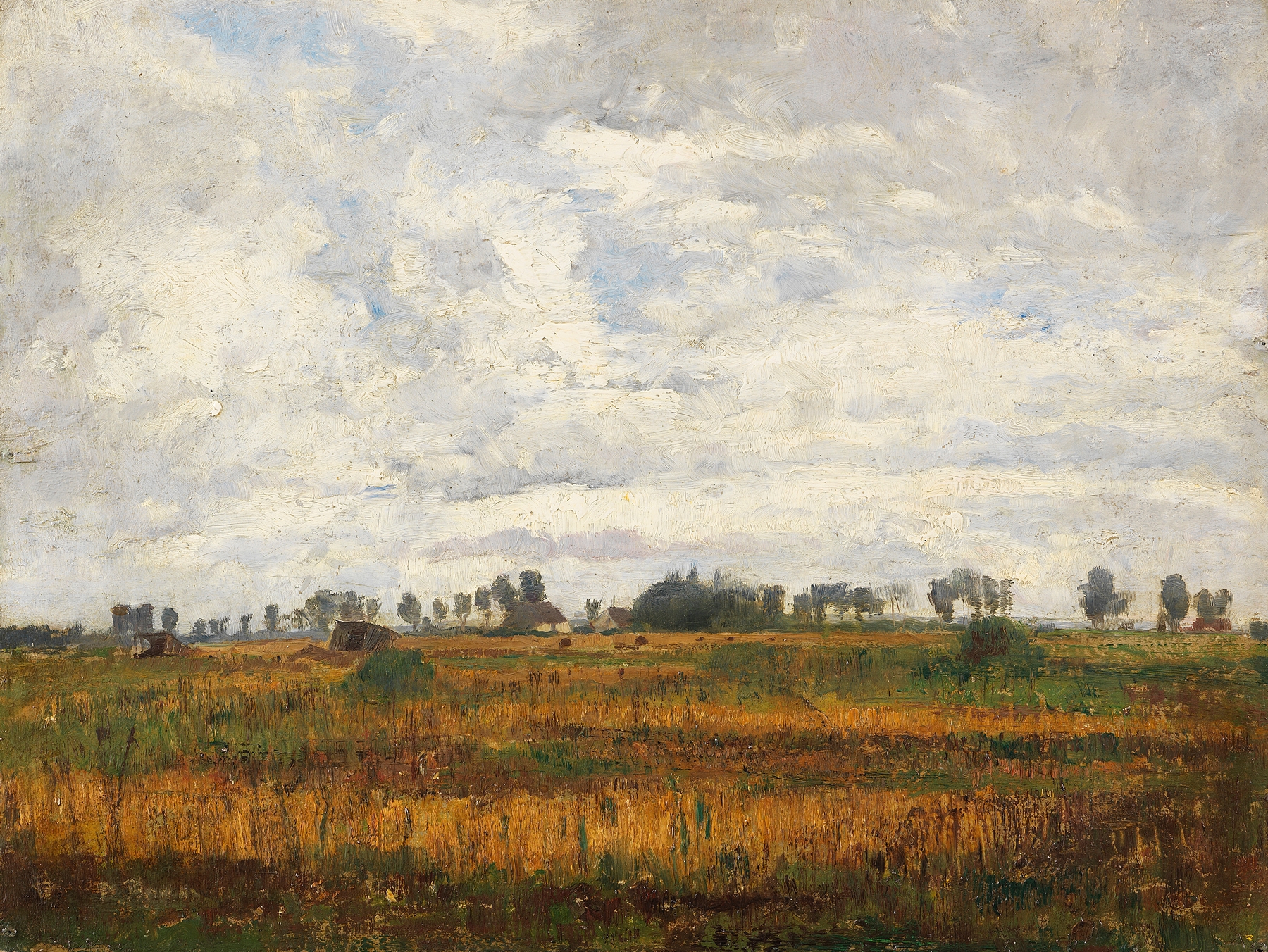
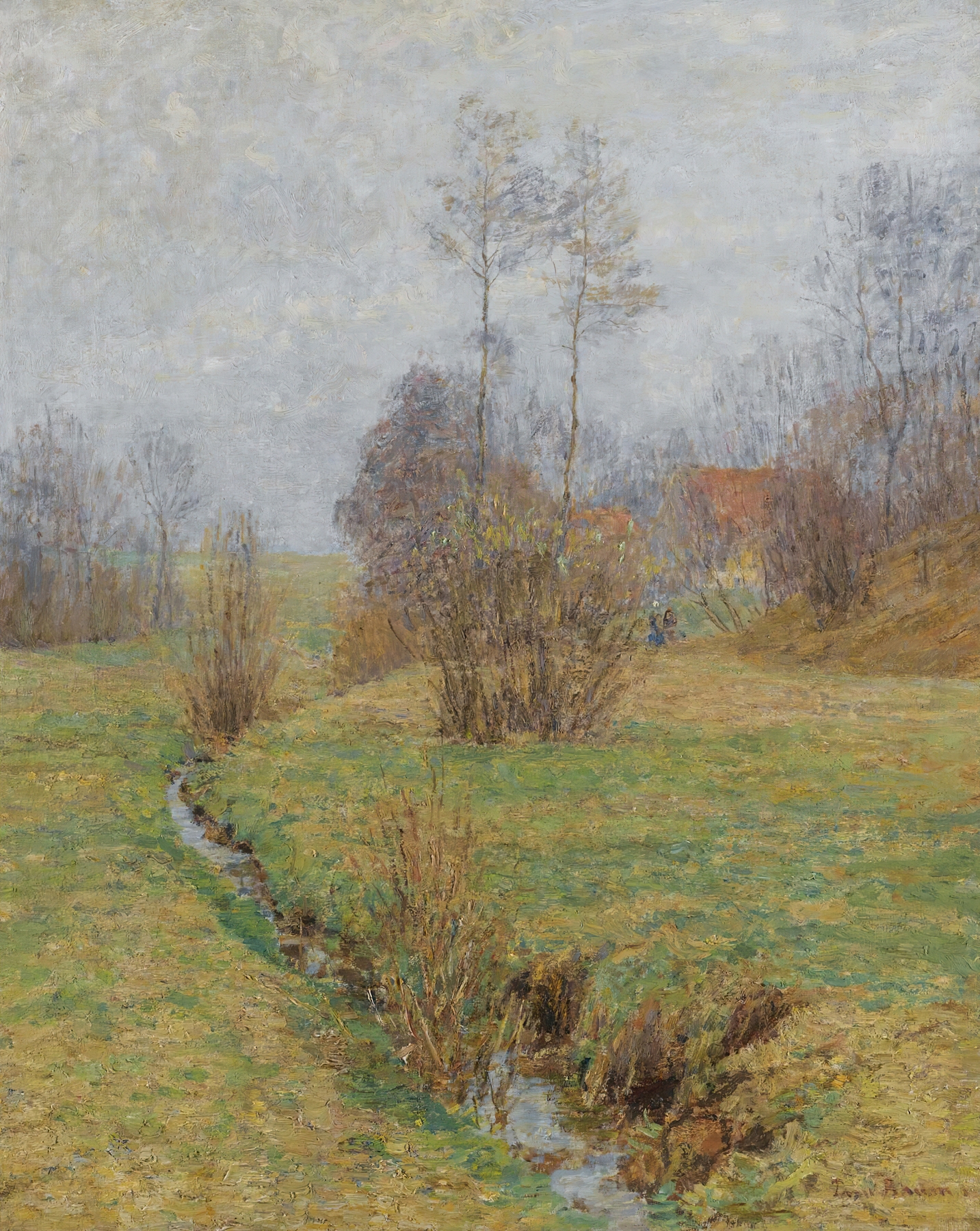
Can paint confess what words never could? In Holländische Kanallandschaft mit Windmühle, the canvas breathes with a tranquility that belies an undercurrent of violence, as the serene Dutch landscape teeters on the brink of turmoil. Look to the foreground, where a gentle canal snakes through the scene, its reflective surface mirroring the sky’s muted blues and grays. Notice the windmill standing tall against the horizon, its sails frozen mid-turn, imparting a sense of halted motion.
The delicate brushwork captures the nuanced textures of the water and foliage, while soft, diffused light blankets the landscape, creating an almost dreamlike quality that invites contemplation. Delve deeper into the painting's subtleties—observe the contrast between the serene beauty of the sky and the shadowy distortions creeping along the banks of the canal. This duality hints at the underlying tensions of the era; beneath the placid surface lies the potential for upheaval, a reminder of the land's history of conflict and struggle. The stillness of the moment feels charged, suggesting an imminent shift, as if nature itself is holding its breath.
In 1887, Paul Baum was immersing himself in the rich traditions of Dutch landscape painting, amidst a personal journey of exploration and artistic development. Living in Germany, he sought to embrace the techniques of the 17th-century masters, while simultaneously grappling with the modernity of his time. This painting reflects his desire to blend historical inspiration with a contemporary lens, capturing both the beauty and complexity of the natural world.